

Quick Answer: Is Plastic Banned?
YES, plastic food packaging is still allowed in 2026, but with strict conditions. The global market has not outright banned all plastics; rather, it has banned unrecyclable, single-use plastics (like EPS Styrofoam and thin-film bags). High-value, widely recyclable plastics such as PET (for cold foods) and PP (for hot foods) remain perfectly legal and highly demanded in most countries, provided they meet local Extended Producer Responsibility (EPR) recycling laws and food-contact safety standards.
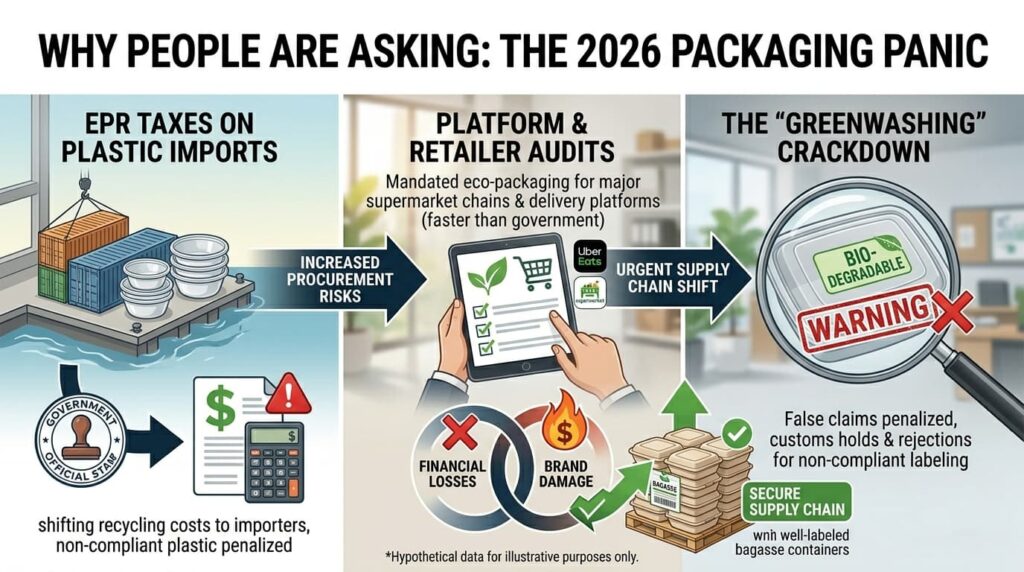
Why People Are Asking: The 2026 Packaging Panic
If you are a food packaging wholesaler or a restaurant chain procurement manager, your inbox is likely filled with confusing warnings about “global plastic bans.” The anxiety is real, and it is driven by three main factors:
-
The Rise of EPR Taxes: Governments are shifting the cost of recycling onto importers. In many European and North American regions, you can still import plastic, but you will pay a tax if it doesn’t contain a certain percentage of recycled material.
-
Platform and Retailer Audits: Major supermarket chains and food delivery platforms (like UberEats or Deliveroo) are independently mandating eco-friendly packaging for their vendors, often moving faster than government legislation.
-
The “Greenwashing” Crackdown: Consumers and regulators are actively penalizing brands that use fake “eco-friendly” labels on standard plastics. Buyers are terrified of importing containers that get stuck in customs due to non-compliant labeling.
(Curious about specific U.S. laws? Read our deep dive: [US Food Packaging Regulations 2025–2026: A Complete Supplier Guide])
Where Plastic Is Restricted (Understanding the Map)
It is a fatal business mistake to treat the entire world as one unified market. The restrictions on plastic food packaging in 2026 are heavily regionalized:
-
The “Strict Ban” Zones (e.g., EU, Canada, California): These markets have zero tolerance for Expanded Polystyrene (EPS/Styrofoam), oxo-degradable plastics, and single-use plastic cutlery. However, they do allow clear PET clamshells and PP microwaveable containers, provided the importer complies with EPR recycling contributions.
-
The “Recycled-Content” Zones (e.g., UK, various US States): Plastic is entirely legal, but there is a financial penalty. For example, the UK Plastic Packaging Tax applies to plastic packaging manufactured in, or imported into the UK, that does not contain at least 30% recycled plastic.
-
The “Utility-First” Zones (e.g., Middle East, South America, parts of Asia): While environmental awareness is growing, the primary focus remains on cost-efficiency and food safety. Standard PP and PET plastics dominate these markets without heavy penalties.
What Is Still Allowed? (The Plastic Survivors)
Do not write a death sentence for your plastic catalog just yet. Certain plastic containers are irreplaceable due to their functional maturity. The following materials are absolutely still allowed and highly profitable in 2026:
-
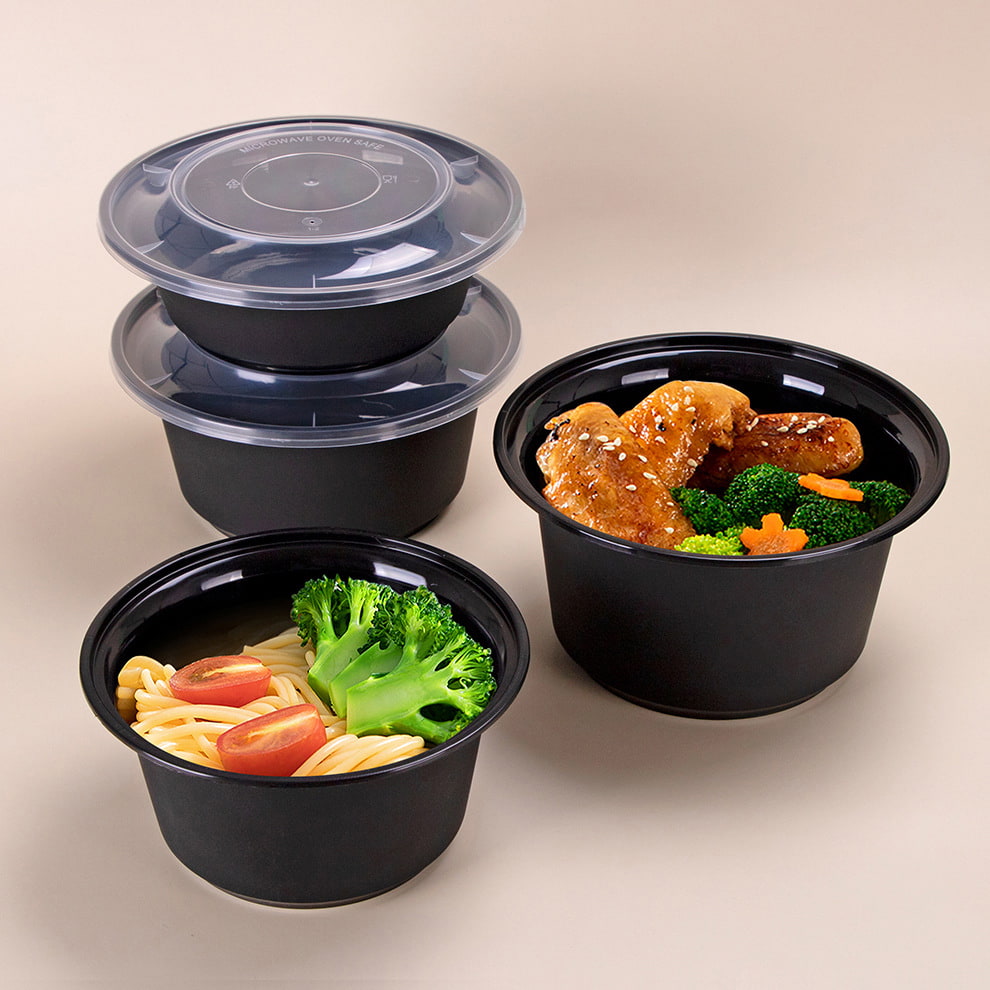
Polypropylene (PP) Containers: PP is the undisputed king of hot food delivery. Because it can withstand temperatures up to 120°C and is microwave-safe, it is widely accepted globally as a “reusable” container rather than a “single-use” one. If you sell hot soups or heavy Asian cuisine, [PP plastic bowls] are still your safest, legal bet.
-
Polyethylene Terephthalate (PET): PET is the most recycled plastic in the world. Its glass-like transparency makes it essential for supermarket cold deli displays, fresh salads, and cut fruits. As long as local recycling infrastructure supports it, [PET plastic containers] are here to stay.
Better Alternatives: Future-Proofing Your Catalog
While PP and PET are still allowed, smart importers in 2026 are diversifying their catalogs to attract premium, eco-conscious clients and avoid future EPR taxes. Here is what you should be looking at:
-
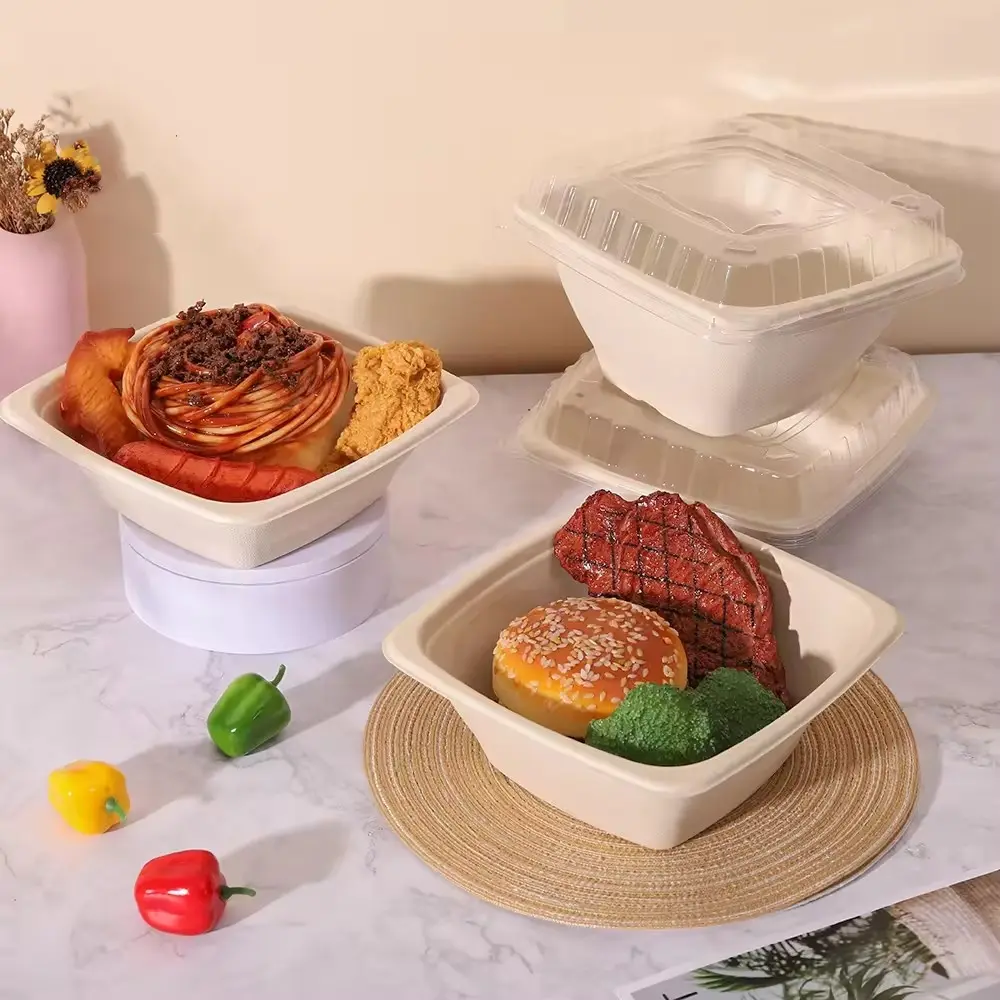
Sugarcane Bagasse: The ultimate heavy-hitter for the eco-market. Bagasse is a fibrous byproduct of sugarcane processing. It is certified compostable, naturally breathable (perfect for crispy fried foods), and bypasses almost all plastic taxes. (See our comparison: [Bagasse vs Plastic Containers: Which One Should You Import?])
-
RPET (Recycled PET): By using PET that contains post-consumer recycled content (e.g., 30% or 50% RPET), you can legally bypass plastic taxes in strict regions like the UK while maintaining the 100% transparency of traditional plastic.
-
PLA (Polylactic Acid): A bio-plastic derived from corn starch. It looks and feels like PET but is industrially compostable. It is an excellent transitional material for cold drinks and salads.
What Buyers Should Do: A Practical Strategy
Do not make panic-driven sourcing decisions based on alarming news headlines. Use this practical framework to guide your 2026 purchasing:
-
Audit by Application, Not Just Material: Never put hot soup in a compostable bagasse bowl if it needs to travel 45 minutes on a delivery bike. The material will degrade, and you will lose customers. Use PP for heavy liquids and Bagasse for dry/warm foods.
-
Audit by Destination Market: If you are importing to Florida or Texas, standard PET is highly profitable. If you are importing to Seattle or Germany, you must pivot to Bagasse or RPET.
-
Demand Transparency from Your Factory: In 2026, your supplier must be able to provide FDA declarations, migration test reports, and exact resin identification codes for recycling. (Learn how to vet factories in our guide: [How to Choose a Reliable Food Packaging Supplier in China])
Conclusion: Plastic Isn’t Dead, It’s Evolving
The era of cheap, toxic, unrecyclable Styrofoam is over. However, functional, highly recyclable plastics like PP and PET are firmly entrenched in the 2026 global food supply chain. The question isn’t whether plastic is allowed; the question is whether you are importing the right type of plastic for your specific market regulations.
Don’t navigate the 2026 regulations alone. At Dashan Packing, we manufacture a complete spectrum of compliant packaging—from high-grade, recyclable [PP plastic containers/PET plastic containers] to certified, compostable [Bagasse solutions].
[Contact our export compliance team today] for a free catalog audit. We will help you select the exact materials that maximize your profit margins while ensuring 100% customs clearance in your specific region.
FAQ: Plastic Food Packaging Compliance in 2026
1. Are black plastic food containers banned?
In many forward-thinking recycling markets (like the UK, Canada, and parts of the EU), traditional carbon-black plastic is effectively being phased out or heavily taxed. This is because the optical sorting machines at recycling facilities cannot “see” carbon black, causing these containers to end up in landfills. We strongly recommend switching to clear PET, translucent PP, or adopting bagasse if you want a premium look without the recycling penalty.
2. Is Styrofoam (EPS) completely banned globally?
While not universally banned, Expanded Polystyrene (Styrofoam) is legally dead in most major Western markets (including the EU, Australia, Canada, and dozens of US states like New York and California). Major food delivery apps are also prohibiting it. If you are still importing EPS, you must transition to Bagasse (for eco-friendly appeal) or PP plastic (for low cost and durability) immediately.
3. Does labeling a plastic container “biodegradable” make it legal in strict regions?
No. In fact, the term “biodegradable” is now heavily scrutinized. Strict regions (like the EU and California) ban “oxo-degradable” plastics because they break down into harmful microplastics. To comply with environmental laws, you need materials that are certified compostable (like Sugarcane Bagasse or PLA) with proper third-party documentation.
4. Will I be fined at customs if my plastic containers don’t have recycling symbols?
Yes, it is highly likely. The lack of proper Resin Identification Codes (RIC—the triangle symbols numbered 1-7) can lead to customs holds, rejection by retail buyers, or inaccurate assessments for EPR taxes. Always ensure your supplier molds the correct recycling symbol (e.g., #1 for PET, #5 for PP) clearly onto the bottom of every container.
5. Can I still use plastic for microwavable ready-to-eat meals?
Absolutely. PP (Polypropylene, recycling code #5) is fully allowed and remains the undisputed, safest choice for microwaveable ready-meals. Organic alternatives simply cannot match the heat resistance and moisture-barrier properties of PP for long-term food storage and reheating.
References & Authoritative Industry Standards
To ensure our packaging compliance advice aligns with the latest global legislative shifts, Dashan Packing bases its market strategies on data and directives from the following authoritative organizations:
-
European Commission: Single-Use Plastics Directive (SUPD) (The definitive legislation outlining the outright bans on Expanded Polystyrene (EPS) food containers and oxo-degradable plastics across the EU).
-
Ellen MacArthur Foundation: Extended Producer Responsibility (EPR) framework (The leading global authority on the circular economy, explaining why brands are being taxed for importing non-recyclable materials).
-
WRAP (Waste and Resources Action Programme): Recyclability of Black Plastic Packaging (The premier UK-based environmental action group detailing the technical reasons why carbon-black plastics are rejected by Near-Infrared (NIR) sorting machines).
-
CalRecycle (California Department of Resources Recycling and Recovery): Plastic Pollution Prevention and Packaging Producer Responsibility Act (SB 54) (The benchmark for strict North American state-level EPR mandates and recycling compliance for food packaging importers).
(Note: The regulatory landscape for food packaging is dynamic and varies by municipality. The information provided in this guide is for strategic sourcing purposes. We strongly advise consulting with a certified customs broker or local environmental authority to verify current regulations for your specific destination market before importing.)
Copyright & Legal Disclaimer
© 2026 Dashan Packing. All rights reserved.
This 2026 compliance guide is an original work created by the Dashan Packing editorial team. All market strategies, regulatory interpretations, and material recommendations are the result of our independent research and extensive export experience. Reproduction or redistribution of any part of this content without written permission is strictly prohibited. Dashan Packing is committed to providing accurate, evidence-based information to assist global buyers in making compliant and profitable sourcing decisions.