

Quick Summary
Custom printed PET cups OEM is a cost-effective way to scale branded beverage packaging. MOQ depends on printing method—digital starts low (1,000+), while bulk orders (10,000+) reduce unit cost significantly.
Lead time is typically 4–8 weeks, influenced by design, volume, and factory capacity. PET offers high clarity, durability, and recyclability, making it ideal for cold drinks.
Choosing an experienced custom PET cups manufacturer helps balance cost, MOQ, and delivery for efficient custom printed PET cups wholesale supply.
As a manufacturer specializing in food-grade packaging solutions, Dashan Packing has extensive experience serving global clients across foodservice, retail, and airline industries. Our insights are based on real production data, material performance testing, and long-term market feedback.
Introduction: Why Custom Printed PET Cups Matter in 2026
In today’s highly competitive beverage and foodservice market, packaging is no longer just a functional necessity—it is a strategic branding asset. From global coffee chains to emerging bubble tea startups, businesses are investing heavily in packaging that communicates identity, quality, and consistency. Among these, custom printed PET cups OEM solutions have become a cornerstone of scalable branding.
The global disposable cup market is projected to exceed $25 billion by 2028, with PET (polyethylene terephthalate) cups accounting for a significant share due to their clarity, durability, and recyclability. As takeaway and delivery culture continues to expand—especially across Asia, North America, and Europe—brands increasingly demand customized solutions that can be produced efficiently at scale.
However, one of the biggest challenges buyers face is understanding MOQ (Minimum Order Quantity) and lead times. These two factors directly influence cost structure, inventory planning, and speed to market. This guide is designed to provide a complete, practical breakdown of how OEM works in the PET cup industry, with a strong focus on real-world execution.
What Are Custom Printed PET Cups?
PET Material Overview
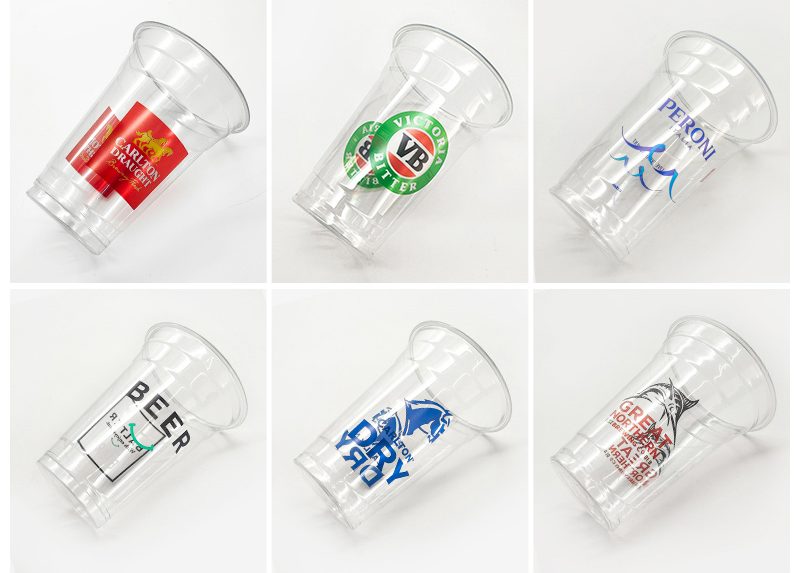
PET is a thermoplastic polymer widely used in food-grade packaging due to its excellent physical and chemical properties. It is particularly suitable for cold beverages such as iced coffee, juice, smoothies, and soft drinks.
Key material characteristics:
| Property | Typical Value |
|---|---|
| Density | 1.38 g/cm³ |
| Transparency | Up to 90% light clarity |
| Temperature Range | -10°C to 60°C |
| Tensile Strength | 55–75 MPa |
| Recyclability Code | #1 (Widely recyclable) |
Compared to other plastics, PET offers superior clarity and rigidity, making it ideal for premium beverage presentation.
Printing Methods Explained
The visual impact of a cup largely depends on the printing method used. Each method comes with its own MOQ requirements, cost implications, and quality outcomes.
1. Silk Screen Printing
- Best for simple logos (1–3 colors)
- High ink durability
- Moderate setup cost
2. Offset Printing
- Ideal for complex, multi-color designs
- High-resolution graphics
- Requires higher MOQ
3. Digital Printing
- Suitable for small batches
- No plate cost
- Increasingly popular for low MOQ custom printed PET cups wholesale
Common Use Cases
Custom PET cups are widely used across industries:
- Bubble tea and beverage chains
- Coffee franchises
- Airline catering services
- Supermarket private label drinks
- Event and promotional branding
For example, a fast-growing bubble tea brand may start with 10,000 cups per month and scale to over 300,000 units within a year, requiring a reliable custom PET cups manufacturer to maintain consistency.
Understanding Custom Printed PET Cups OEM
What Does OEM Really Include?
OEM (Original Equipment Manufacturing) in the PET cup industry goes far beyond printing a logo. A complete custom printed PET cups OEM solution typically includes:
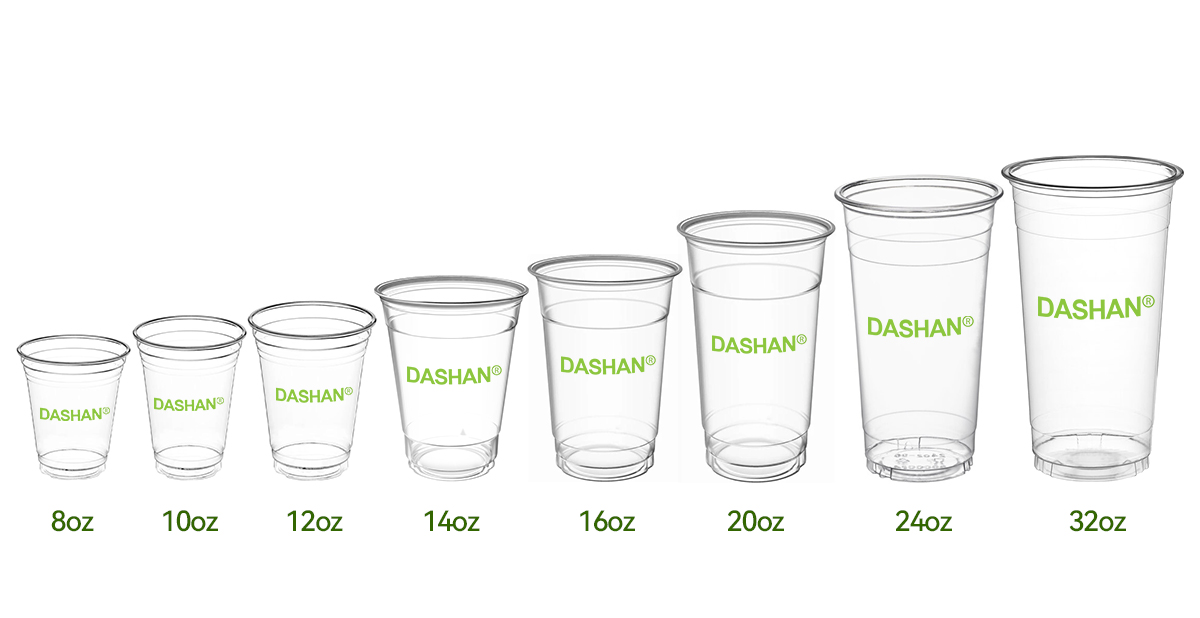
- Cup size and dimension customization
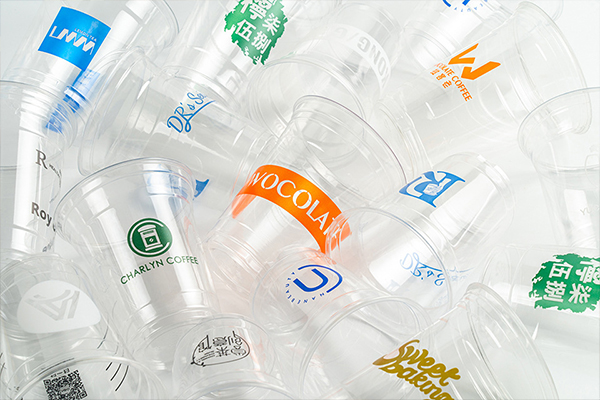
- Logo and artwork printing
- Lid compatibility (flat or dome lids)
- Packaging design (cartons, inner bags)
- Barcode and labeling integration
This allows brands to create a fully cohesive packaging system.
OEM vs ODM vs Private Label
Understanding the distinction between these models is critical when choosing a supplier.
| Model | Definition | Best For |
|---|---|---|
| OEM | Custom design based on buyer requirements | Established brands |
| ODM | Supplier-designed products with customization | Fast market entry |
| Private Label | Branding on standard products | Low-cost entry |
Buyers seeking full control over branding and specifications should work with an experienced custom plastic cups manufacturer OEM partner.
MOQ (Minimum Order Quantity): What Buyers Need to Know
Typical MOQ Ranges by Printing Method
MOQ varies significantly depending on the printing process:
| Printing Method | MOQ Range | Cost Efficiency | Use Case |
|---|---|---|---|
| Silk Screen | 10,000–50,000 | Medium | Simple branding |
| Offset | 50,000–200,000 | High | Large-scale distribution |
| Digital | 1,000–10,000 | Lower | Small businesses & testing |
Why MOQ Exists in PET Cup Manufacturing
MOQ is not arbitrary—it is driven by several operational realities:
- Printing plate setup costs (especially for offset printing)
- Machine calibration and downtime
- Material procurement efficiency
- Labor and energy optimization
For example, the cost of creating a printing plate can range from $100 to $500 per design, which must be amortized over the total production volume.
How to Negotiate Lower MOQ with a PET Cups Factory
Buyers can reduce MOQ by adopting strategic approaches:
- Use existing molds instead of custom tooling
- Limit color variations to reduce printing complexity
- Combine multiple SKUs into one production run
- Choose digital printing for initial orders
Working closely with a flexible custom PET cups factory can significantly improve negotiation outcomes.
Lead Time Breakdown: From Design to Delivery
Standard Production Timeline
A typical OEM order follows this timeline:
| Stage | Time Required |
|---|---|
| Design Confirmation | 1–3 days |
| Sample Production | 5–10 days |
| Mass Production | 15–30 days |
| Shipping | 7–35 days |
Total lead time: approximately 4–8 weeks.
Factors That Affect Lead Time
Several variables can impact production speed:
- Order quantity
- Printing complexity
- Seasonal demand (peak seasons can increase lead time by 20–30%)
- Factory production capacity
For instance, during peak summer beverage demand, lead times may extend by up to 10 days due to increased order volume.
Fast-Track OEM Options
For urgent needs, buyers can consider:
- Pre-stocked blank cups with rapid logo printing
- Digital printing solutions
- Local warehousing and distribution
These options are particularly useful for promotional campaigns or seasonal launches.
Step-by-Step OEM Process for Custom Printed PET Cups
Step 1 – Define Your Requirements
Key parameters include:
- Cup size (e.g., 12oz, 16oz, 20oz)
- Wall thickness (0.35mm–0.5mm typical)
- Lid type and compatibility
- Branding objectives
Step 2 – Artwork Preparation
Design files should meet industry standards:
- Vector formats (AI, PDF)
- Pantone color matching
- Clear print area specifications
Step 3 – Sampling and Approval
Sampling ensures alignment before mass production:
- Physical samples validate print quality
- Digital proofs speed up iteration
- Common issues include color deviation and logo distortion
Step 4 – Mass Production
During production, quality control checkpoints include:
- Dimensional accuracy
- Ink adhesion testing
- Leak resistance
Step 5 – Shipping and Delivery
Buyers must choose appropriate trade terms:
- FOB (Free on Board)
- CIF (Cost, Insurance, Freight)
- DDP (Delivered Duty Paid)
Each option affects total landed cost and logistics complexity.
Cost Structure of Custom Printed PET Cups
Key Cost Components
The total cost of custom printed PET cups OEM includes:
- PET resin (accounts for 50–70% of total cost)
- Printing (10–25%)
- Labor and energy (10–15%)
- Packaging and logistics
Price Comparison by Order Volume
| Quantity | Unit Price (USD) | Total Cost | Savings (%) |
|---|---|---|---|
| 5,000 | $0.08 | $400 | — |
| 50,000 | $0.045 | $2,250 | 44% |
| 200,000 | $0.032 | $6,400 | 60% |
This demonstrates strong economies of scale.
Hidden Costs Buyers Often Miss
- Design revisions and rework
- Fluctuating shipping rates
- Import duties and taxes
- Inventory storage costs
Quality Control and Certification Requirements
Global Food Safety Standards
Reliable custom PET cups manufacturer partners comply with:
- FDA (U.S. Food and Drug Administration)
- EU food contact regulations
- BPA-free requirements
Factory Certifications to Look For
- ISO 9001 (Quality Management)
- HACCP (Food Safety)
- BRC (Global Food Standard)
Testing Parameters
| Test Type | Standard Requirement |
|---|---|
| Drop Test | No cracking at 1.2m drop |
| Leak Resistance | Zero leakage under pressure |
| Ink Adhesion | No peeling after rubbing |
Sustainability Trends in PET Cup Manufacturing
Recyclability of PET Cups
PET is one of the most recyclable plastics globally, with recycling rates ranging from 30% to 60% depending on the region. Increasingly, manufacturers are incorporating rPET (recycled PET) into production.
Eco-Friendly Printing Innovations
- Water-based inks reduce VOC emissions
- Improved energy efficiency in production lines
- Reduced material waste through precision molding
PET vs PLA vs PP Comparison
| Material | Clarity | Cost | Recyclability | Heat Resistance |
|---|---|---|---|---|
| PET | High | Medium | High | Low |
| PLA | Medium | High | Compostable | Low |
| PP | Low | Low | Medium | High |
Real-World Case Studies

Case 1 – Bubble Tea Brand Scaling
A Southeast Asian brand scaled from 10,000 to 300,000 cups/month by switching to a high-capacity custom PET cups factory, reducing unit costs by 35%.
Case 2 – Airline Beverage Supplier
An airline supplier required strict compliance and tight lead times. By working with an experienced custom plastic cups manufacturer OEM, they reduced delays by 20%.
Case 3 – Supermarket Private Label
A European retailer optimized costs by consolidating SKUs and increasing order volume, achieving 50% cost savings.
How to Choose the Right PET Cups Manufacturer or Factory
Key Evaluation Criteria
- Production capacity and scalability
- OEM experience and portfolio
- Communication efficiency
- Certification compliance
Red Flags to Avoid
- unclear MOQ policies
- Lack of certifications
- Poor sample quality
Future Trends: Where Custom PET Cups Are Heading
- Digital printing reducing MOQ barriers
- Integration of QR codes for smart packaging
- Growing demand for custom printed PET cups OEM in emerging markets
Frequently Asked Questions (FAQ)
1. What is the typical MOQ for custom printed PET cups OEM orders?
The MOQ usually depends on the printing method and production setup. For digital printing, MOQ can be as low as 1,000–5,000 pieces, making it suitable for small businesses or test runs. For silk screen printing, MOQ typically ranges from 10,000 to 50,000 units, while offset printing may require 50,000–200,000 units due to higher setup costs. Working with a flexible custom PET cups manufacturer can help optimize MOQ based on your project needs.
2. How long does it take to produce custom printed PET cups wholesale?
The standard lead time for custom printed PET cups wholesale is around 4 to 8 weeks. This includes 1–3 days for design confirmation, 5–10 days for sampling, and 15–30 days for mass production. Shipping time varies depending on the destination and logistics method. Peak seasons may extend production timelines, so early planning is recommended.
3. Can I order low MOQ from a custom PET cups factory?
Yes, low MOQ orders are increasingly possible, especially with digital printing technology. Many custom PET cups factory suppliers now offer small-batch production for startups or promotional campaigns. However, the unit cost will be higher compared to bulk orders due to lower economies of scale.
4. Which printing method is best for custom plastic cups manufacturer OEM projects?
The best printing method depends on your design and order volume. Silk screen printing is ideal for simple logos with limited colors. Offset printing is suitable for high-volume orders with complex, multi-color designs. Digital printing is the best choice for low MOQ and fast turnaround projects. An experienced custom plastic cups manufacturer OEM can recommend the most cost-effective solution.
5. What factors affect the cost of custom printed PET cups OEM?
Several factors influence pricing, including raw material costs (PET resin), printing complexity, number of colors, order quantity, and packaging requirements. Larger order volumes significantly reduce unit cost. Additional factors such as mold fees, shipping costs, and import duties may also impact the total budget.
6.Why choose Dashan Packing as your packaging supplier?
Dashan Packing offers a combination of material expertise, strict quality control, and flexible customization. With experience serving global markets, we ensure compliance, consistency, and reliable supply for various food packaging applications.
7.Does Dashan Packing support custom packaging solutions?
Yes, Dashan Packing provides full customization services, including size, shape, material selection, and branding options to meet different market and product requirements.
Conclusion: How to Optimize Your OEM Strategy
Successfully sourcing custom printed PET cups OEM requires balancing MOQ, cost, and lead time. Businesses that plan ahead, choose experienced manufacturing partners, and leverage efficient printing technologies can achieve both cost savings and strong brand visibility.
Working with a reliable custom PET cups manufacturer ensures consistent quality, regulatory compliance, and scalable production—key factors for long-term success in today’s packaging-driven market.
Reference
1. FDA – Recycled Plastics in Food Packaging
FDA Guidance on Recycled Plastics
- Authority: U.S. Food and Drug Administration
- Key insight: FDA evaluates recycled PET safety case-by-case and sets strict contamination thresholds (e.g., migration limits).
2. FDA – Official Guidance Document (Chemistry Considerations)
FDA Industry Guidance Document
- Authority: FDA
- Focus: Chemical safety, contamination risks, and evaluation methods for recycled plastics used in food contact materials
3. European Commission – Food Contact Plastics Regulation
EU Plastic Food Contact Regulation Overview
- Authority: European Commission
- Key insight: Regulation (EU) No 10/2011 ensures plastics do not transfer harmful substances into food
4. EFSA – Plastics and Recycling Safety Assessment
EFSA Plastics & Recycling Topic Page
- Authority: European Food Safety Authority
- Focus: Risk assessment of recycled plastics and contamination control in food packaging
5. Health Canada – Recycling Process Guidelines
Health Canada Recycling Process Guidelines
- Authority: Health Canada
- Key insight: Defines primary, secondary, and tertiary recycling processes for food-grade plastics
6. Health Canada – Source Control & Quality Requirements
Health Canada Source Control Guidance
- Authority: Health Canada
- Focus: Strict source control, sorting, and contamination prevention in recycled plastic production
7. Xiamen DASHAN——PET Cups Explained: Benefits, Safety Standards, and Smart Buying Tips
PET cups Benefits, Safety Standards Buying Tips
Copyright Statement
© 2026 Dashan Packing. All rights reserved.
This article is an original publication by the Dashan Packing team, based on real-world manufacturing experience, material research, and industry expertise.
All content, including written insights, supporting data, and images, reflects our proprietary knowledge and internal development.
Any unauthorized use, reproduction, or redistribution is strictly forbidden without explicit written approval.
We are dedicated to delivering reliable, experience-driven, and transparent information to global partners.