

Quick Answer: The Bottom Line for Importers
PFAS-free food packaging refers to containers and wrappers manufactured without the intentional addition of Per- and Polyfluoroalkyl Substances (often called “forever chemicals”). For food packaging wholesalers and restaurant brands, sourcing PFAS-free products is no longer just a trendy eco-marketing tactic. It is a mandatory requirement for legal compliance, passing strict customs audits, and protecting your brand trust from severe consumer health controversies.
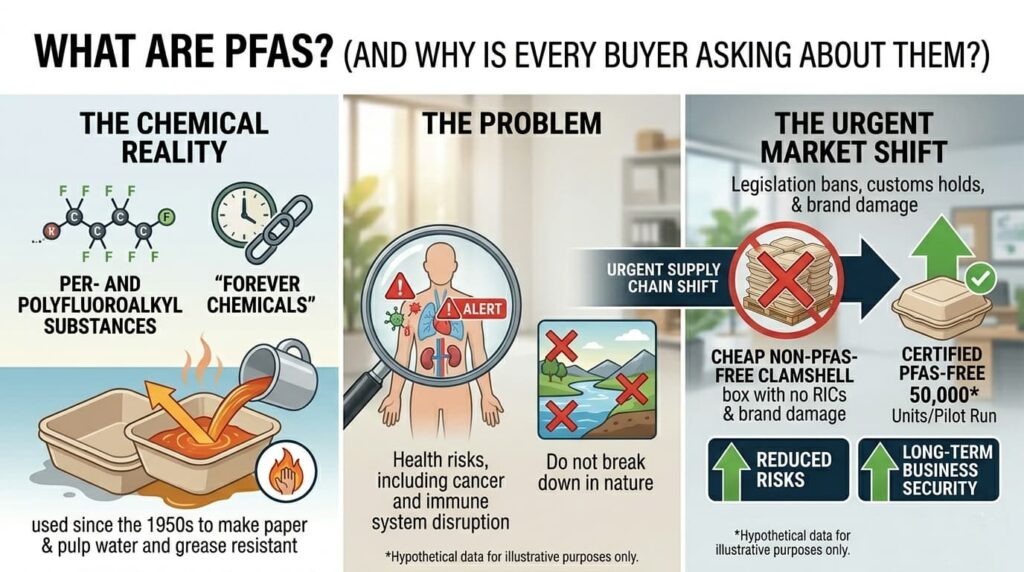
What Are PFAS? (And Why Is Every Buyer Asking About Them?)
Let’s skip the heavy chemistry and look at the practical reality.
For decades, the food packaging industry loved PFAS. These synthetic chemicals are incredibly effective at creating a barrier against grease, oil, and water. If you’ve ever eaten a greasy burger or a hot slice of pizza out of a paper box that didn’t immediately soak through and ruin your clothes, you likely have PFAS to thank for it.
So, why the sudden global panic? PFAS are known as “forever chemicals.” Their chemical bonds are so strong that they do not break down in nature—or in the human body. As scientists linked long-term PFAS exposure to severe health issues (including immune system disruption and certain cancers), consumer awareness skyrocketed.
Today, buyers aren’t asking about PFAS because they suddenly became chemists; they are asking because major fast-food chains are abandoning them, and governments are aggressively banning them.
Why PFAS-Free Matters to Your Bottom Line
If you are importing food packaging, ignoring the PFAS issue is a financial time bomb. Here is why transitioning to PFAS-free is critical:
-
Strict Legislative Bans: You simply cannot sell PFAS-containing packaging in many top-tier markets anymore. The European Union, Canada, and a rapidly growing list of US states (including New York, California, and Washington) have enacted strict laws banning intentionally added PFAS in food contact materials. (Read our deep dive: [US Food Packaging Regulations 2025–2026: A Complete Supplier Guide]).
-
Customs Seizures: Customs agencies are increasing random lab testing on imported molded fiber and paper products. If a container tests positive for high levels of fluorine (the marker for PFAS), your entire shipment will be seized or destroyed at your expense.
-
Brand Ruin: Consumers are actively looking for “PFAS-Free” labels. If a local watchdog group tests your restaurant client’s packaging and finds forever chemicals, the resulting PR nightmare could destroy their brand—and your wholesale contract.
Common Packaging Materials: The Safe vs. The Risky
Not all packaging materials carry the same PFAS risk. Here is how you should evaluate your catalog:
-
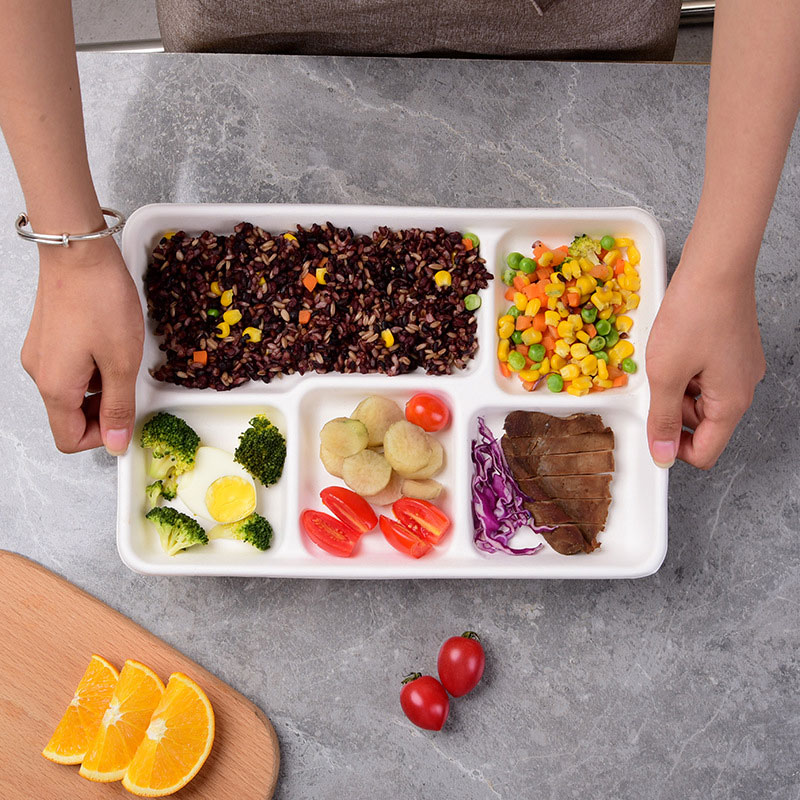
The High-Risk Area (Traditional Molded Fiber/Bagasse): Historically, bagasse and paper pulp have no natural resistance to oil. To make them hold greasy foods, factories heavily relied on PFAS additives. If you are buying cheap bagasse from an unverified supplier, it almost certainly contains PFAS.
-
The Safe Alternative (PFAS-Free Bagasse): Advanced factories, like Dashan Packing, now use innovative, organic sizing agents (like AKD) or plant-based bio-coatings to achieve excellent water and grease resistance without a single drop of PFAS. (Learn more about our certified [PFAS-Free Bagasse Solutions]).
-
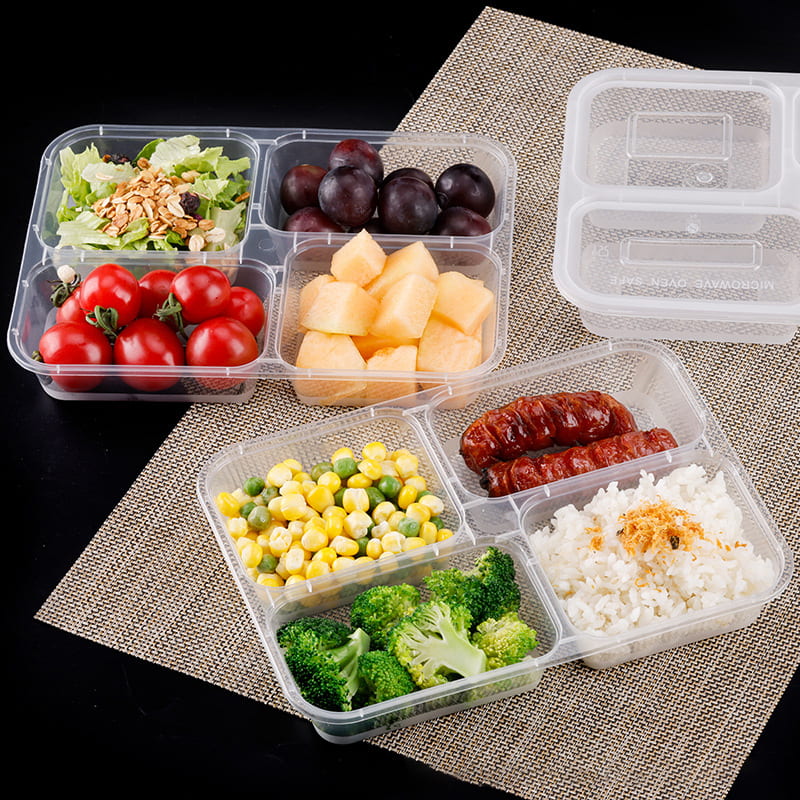
The Inherently Safe Option (Plastics): Traditional plastics like PET and PP are naturally PFAS-free. Because plastic is inherently impermeable to water and oil, it never required PFAS additives in the first place. (Debating materials? See our guide: [Bagasse vs Plastic Containers: Which One Should You Import?]).
Fatal Buyer Mistakes: Don’t Confuse “Eco” with “Safe”
The most common mistake buyers make is assuming that all “green” packaging is chemical-free.
❌ Mistake 1: “It’s compostable, so it must be PFAS-free.” False. A traditional bagasse bowl can be 100% biodegradable, but if it contains PFAS, it will break down and release forever chemicals directly into the compost soil, poisoning the earth. This is why strict certifiers like BPI now require zero intentionally added PFAS to grant a compostability certificate.
❌ Mistake 2: Trusting a verbal “Yes” from a supplier. Many trading companies will say “Yes, it is PFAS-free” just to secure your deposit. When the goods arrive, they fail local compliance tests.
How to Verify PFAS-Free Claims (The Importer’s Audit)
To protect your investment, you must treat “PFAS-Free” as a strictly verifiable metric, not a marketing slogan. Before ordering, demand the following from your supplier:
-
Total Fluorine Test Reports: Do not just ask for “FDA approval.” Demand a recent, third-party lab report (from SGS, TUV, or Intertek) specifically testing for Total Fluorine. To be considered PFAS-free, the total fluorine level generally must be under 100 ppm (parts per million), proving it was not intentionally added.
-
Declaration of Compliance (DoC): Ask the factory to provide a legally binding document stating exactly what waterproofing/oil-proofing agents they are using instead of PFAS.
-
Audit the Factory’s Supply Chain: Does the factory actually know how to manufacture PFAS-free products? It requires precise temperature controls and premium organic additives. (Use our checklist: [How to Choose a Reliable Food Packaging Supplier in China]).
FAQ: PFAS-Free Food Packaging Explained
1. How do factories make bagasse grease-resistant without PFAS? Top-tier manufacturers use alternative plant-based sizing agents (like Alkyl Ketene Dimer – AKD) or apply ultra-thin, water-based bio-coatings. These advanced methods create a physical barrier against grease and oil without relying on forever chemicals.
2. Is there an acceptable limit for PFAS in packaging? Because there are thousands of types of PFAS, labs test for “Total Fluorine” as an indicator. Generally, major certifiers (like BPI) and global regulations consider packaging to be PFAS-free if the Total Fluorine is less than 100 parts per million (ppm). This accounts for incidental, unavoidable background contamination in the environment.
3. Are all paper cups and cardboard boxes PFAS-free? Not necessarily. While a standard coffee cup uses a PE or PLA plastic lining for water resistance (which is PFAS-free), bakery boxes or pizza boxes often use PFAS coatings to stop grease stains. Always ask for specific documentation for grease-resistant paper products.
4. Can I test for PFAS myself? There is a common “olive oil test” where you leave warm oil in a bagasse bowl for 24 hours. While PFAS-free bagasse handles normal hot food perfectly, it might show slight oil penetration over a long period compared to old PFAS-laden bowls. However, the only legally binding way to prove a product is PFAS-free is through a certified laboratory test (like SGS).
5. Does PFAS-free packaging cost more? Currently, certified PFAS-free organic additives are slightly more expensive than traditional chemical coatings, adding a minor premium to the unit cost. However, this small upfront cost is negligible compared to the fines, customs rejections, and EPR taxes associated with non-compliant packaging.
Conclusion: Your Next Procurement Steps
Navigating the transition to PFAS-free packaging can be daunting, but it is entirely manageable with the right strategy:
-
Confirm Your Market: Check if your destination state or country has already banned PFAS in food packaging.
-
Confirm Your Material: Decide if you want inherently PFAS-free plastics (PP/PET) or premium PFAS-free molded fiber (Bagasse).
-
Confirm Your Supplier’s Evidence: Never buy without seeing the unredacted lab reports.
At Dashan Packing, we saw the PFAS ban coming years ago. Today, our advanced molded fiber workshops produce 100% certified PFAS-free bagasse containers that offer uncompromising grease resistance without the chemical risk, alongside our naturally safe plastic lines.
Don’t risk your container at customs. [Contact our export team today] to get free samples of our PFAS-free bagasse containers and review our latest SGS total fluorine test reports.
References & Authoritative Industry Standards
To provide the most accurate compliance guidance, Dashan Packing relies on data and regulatory frameworks from the following leading organizations:
-
U.S. Food and Drug Administration (FDA): Authorized Uses of PFAS in Food Contact Applications (Official updates on the phase-out of certain PFAS grease-proofing agents).
-
BPI (Biodegradable Products Institute): Compostable Certification Standards (The leading North American certifier, strictly requiring total fluorine levels below 100 ppm for compostability certification).
-
United States Environmental Protection Agency (EPA): PFAS Explained (Comprehensive data on the environmental impact and health risks of forever chemicals).
Copyright & Legal Disclaimer
© 2026 Dashan Packing. All rights reserved.
This PFAS compliance guide is an original work created by the Dashan Packing editorial team based on our extensive material R&D and export manufacturing experience. Reproduction or redistribution without written permission is prohibited. The regulatory landscape regarding PFAS is rapidly evolving. The information provided is for general strategic sourcing purposes and should not replace formal legal or customs clearance advice for your specific destination market.