

Quick Summary
PP (polypropylene) remains one of the most practical materials for food packaging due to its heat resistance, chemical stability, and cost efficiency. It is widely used for microwaveable meals, takeaway containers, and supermarket trays.
Compared to PET, bagasse, and CPET, PP offers a balanced performance for real-world food conditions—especially hot, oily, and delivery-based applications.
However, choosing the right PP solution depends on food type, temperature requirements, and logistics. Working with experienced suppliers like DASHAN helps ensure the material, structure, and design are properly matched to your application.
Introduction
In today’s highly competitive food industry, packaging is no longer just a container—it is a critical part of product performance, safety, logistics, and brand perception.
Among all available materials, polypropylene (PP) continues to stand out as one of the most widely used and reliable options in global food packaging. Whether it is used for ready meals, takeaway containers, or supermarket trays, PP plays a crucial role in maintaining food integrity across complex supply chains.
However, many buyers still face practical questions:
-
Is PP still the best option in 2026?
-
How to Choose Between PET, PP, and CPET for Different Food Applications
-
What are the hidden limitations of PP?
-
How can you choose the right PP packaging for your product?
This guide provides a comprehensive, decision-oriented analysis of PP plastic, specifically tailored for food packaging buyers, importers, and brand owners.
What Is PP Plastic?
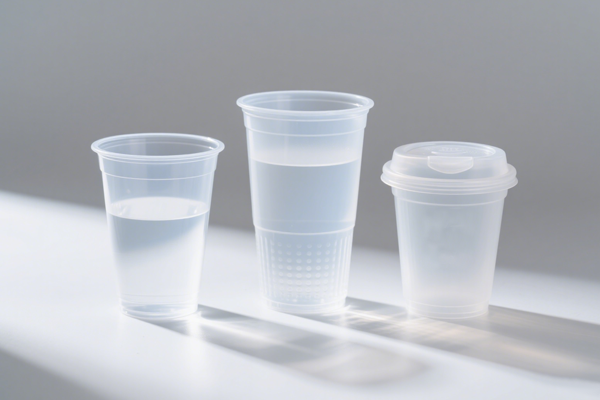
Polypropylene (PP) is a thermoplastic polymer produced from propylene monomers through polymerization. It belongs to the polyolefin family, which also includes polyethylene (PE).
Molecular and Structural Characteristics
PP has a semi-crystalline structure, which gives it a unique balance of rigidity and flexibility. This structure is also responsible for its:
-
High melting point (~160–170°C)
-
Good mechanical strength
-
Resistance to fatigue (ideal for hinged containers)
-
Stability under thermal stress
Types of PP Used in Packaging
| Type | Characteristics | Typical Applications |
|---|---|---|
| Homopolymer PP | Higher stiffness, better strength | Rigid trays, containers |
| Copolymer PP | Improved impact resistance | Cold storage, transport packaging |
| Random Copolymer PP | Better clarity and flexibility | Food containers, lids |
Understanding these variations is important because not all PP performs the same—a critical factor often overlooked by buyers.
Core Properties of PP for Food Packaging
PP’s dominance in food packaging is based on a combination of physical, thermal, and chemical properties.
1. Thermal Performance
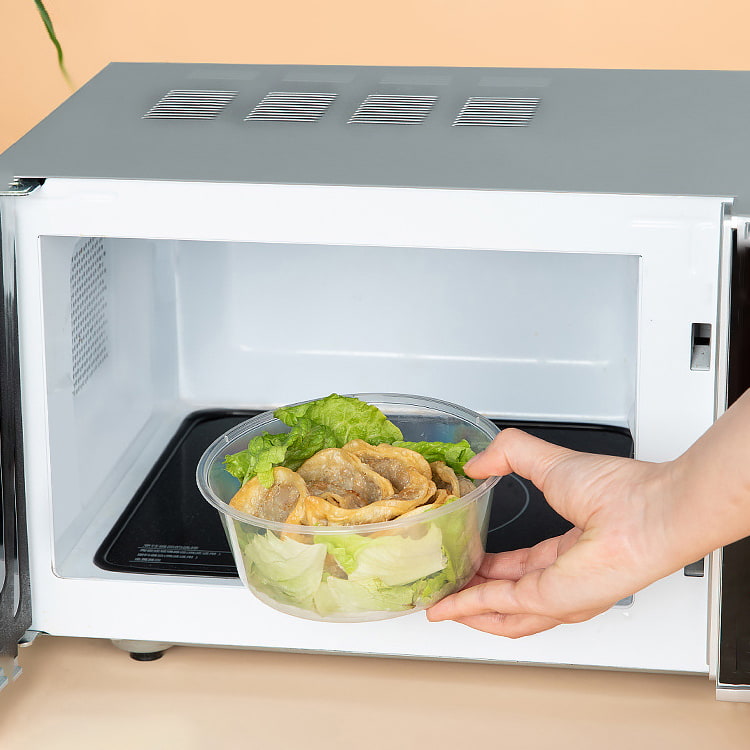
PP can withstand temperatures up to 120–130°C in real-use conditions, making it suitable for:
-
Microwave reheating
-
Hot food filling
-
Short-term heat exposure
Compared to many plastics, this is a major advantage.
2. Chemical Resistance
PP shows strong resistance to:
-
Oils and fats
-
Acids and alkaline substances
-
Food additives and sauces
This ensures no structural degradation or contamination risk during use.
3. Mechanical Strength
PP offers:
-
High tensile strength
-
Good impact resistance (especially copolymer PP)
-
Excellent fatigue resistance
This makes it ideal for:
-
Stackable trays
-
Transport packaging
-
Repeated handling scenarios
4. Barrier Properties
While not a high-barrier material, PP provides moderate resistance to:
-
Moisture
-
Oxygen (limited)
For enhanced performance, PP can be:
-
Laminated
-
Co-extruded with barrier layers
5. Lightweight and Cost Efficiency
PP has a relatively low density (~0.90 g/cm³), making it:
-
Lightweight → reduces shipping costs
-
Material-efficient → lowers production cost
Why PP Is Widely Used in Food Packaging
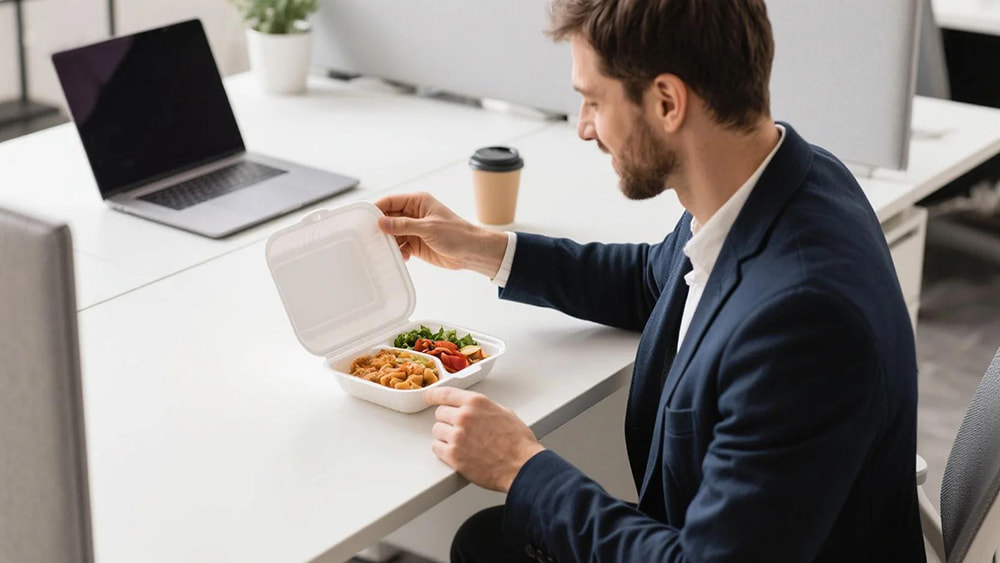
PP is not just popular—it is practically optimized for foodservice realities.
Real-World Performance Factors
| Condition | PP Performance |
|---|---|
| Hot food | Excellent |
| Oily food | Excellent |
| Long delivery times | Stable |
| Microwave use | Safe |
| Stacking & transport | Reliable |
This combination explains why PP is widely used in:
-
Meal prep businesses
-
Airline catering
-
Supermarkets
-
Food delivery platforms
PP vs Other Packaging Materials (Detailed Analysis)
Material selection is always comparative. Below is a more technical breakdown.
Expanded Comparison Table
| Property | PP | PET | Bagasse | CPET |
|---|---|---|---|---|
| Heat Resistance | 120°C | ~60°C | ~100°C | 200°C+ |
| Microwave Safe | Yes | No | Limited | Yes |
| Oven Safe | No | No | No | Yes |
| Transparency | Low | High | None | Low |
| Rigidity | Medium | High | Medium | High |
| Oil Resistance | Excellent | Moderate | Weak | Excellent |
| Cost Level | Low | Low | Medium | High |
| Sustainability | Recyclable | Recyclable | Compostable | Recyclable |
Strategic Insights for Buyers
-
Choose PP if:
You need heat resistance + cost efficiency -
Choose PET if:
Visual appeal and clarity are critical -
Choose Bagasse if:
Sustainability marketing is your priority -
Choose CPET if:
You need oven-ready packaging
Applications of PP in Food Packaging
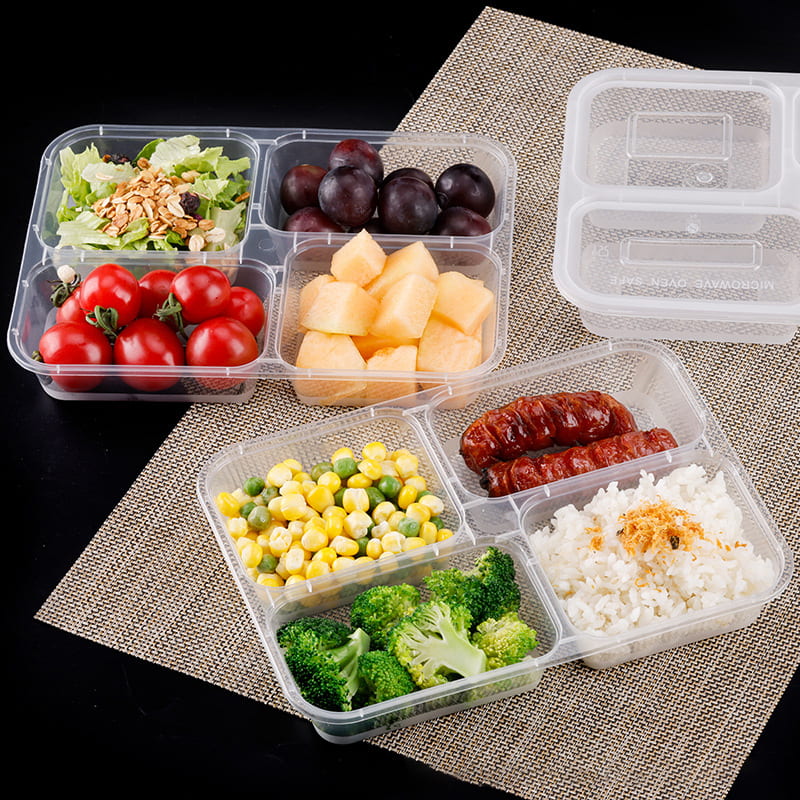
PP is extremely versatile and adaptable to different formats.
Key Application Categories
1. Ready Meal Packaging
-
Microwave-safe trays
-
Multi-compartment designs
-
High resistance to sauces and oils
2. Takeaway & Delivery
-
Leak-resistant containers
-
Stackable designs
-
Lightweight for logistics
3. Supermarket Packaging
-
Meat trays
-
Prepared food containers
-
Fresh meal packaging
4. Frozen and Chilled Foods
-
Special copolymer PP used
-
Maintains structure under low temperatures
Limitations of PP (Critical for Buyers)
Understanding limitations is essential for avoiding sourcing mistakes.
1. Limited Transparency
PP is naturally translucent.
Impact:
-
Lower shelf appeal
-
Not suitable for premium display products
2. Lower Barrier Performance
Compared to materials like EVOH or PET:
-
Oxygen barrier is limited
-
Not ideal for long shelf-life products without modification
3. Environmental Perception
Although recyclable, PP faces challenges:
-
Recycling infrastructure varies globally
-
Increasing pressure for biodegradable solutions
4. Cold Temperature Sensitivity
Standard PP can become brittle in extreme cold.
Solution:
-
Use impact-modified PP (copolymer)
How to Choose the Right PP Packaging (Buyer Framework)
This is the most critical part for decision-making.
Step-by-Step Selection Framework
Step 1: Define Food Characteristics
-
Hot / cold
-
Oily / dry
-
Shelf life requirements
Step 2: Define Usage Scenario
-
Microwave?
-
Delivery distance?
-
Storage conditions?
Step 3: Evaluate Packaging Requirements
| Requirement | Recommended Approach |
|---|---|
| Heat resistance | Standard PP |
| Impact resistance | Copolymer PP |
| Barrier needs | Co-extruded PP |
| Branding | Printed or labeled PP |
Step 4: Balance Cost vs Performance
PP is often chosen because it provides the best overall value, not necessarily the best in every category.
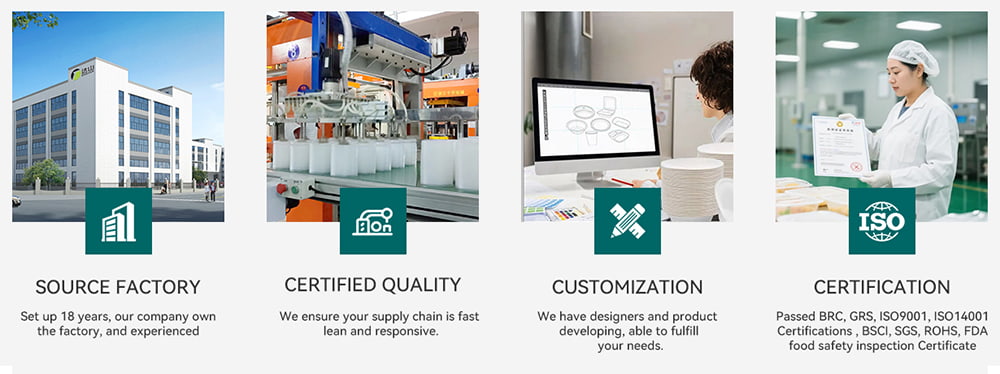
How DASHAN Supports PP Packaging Buyers
For many buyers, the challenge is not understanding PP—it is applying it correctly.
This is where DASHAN adds value.
Practical Approach Instead of Generic Supply
DASHAN focuses on:
-
Matching PP material type to food application
-
Designing trays based on real usage conditions
-
Optimizing thickness and structure for cost control
Typical PP Solutions from DASHAN
-
Microwaveable PP meal trays
-
Multi-compartment takeaway containers
-
PP meat trays for retail
-
Custom high-barrier PP solutions
What Makes the Difference
Instead of offering standard products, DASHAN emphasizes:
-
Application-based customization
-
Stable quality for bulk orders
-
Understanding of international market requirements
This is especially important for:
-
Importers
-
Private label brands
-
Foodservice chains
Future Trends of PP in Food Packaging
Despite sustainability pressure, PP remains highly relevant.
Key Industry Trends
1. Mono-Material Packaging
PP is increasingly used in recyclable mono-material systems
2. Lightweighting
Reducing material usage without compromising strength
3. Hybrid Sustainability Solutions
Combining:
-
Recyclability
-
Reduced plastic usage
-
Design optimization
4. Advanced Barrier Technologies
Multi-layer PP structures improving shelf life
FAQ
1. Is PP plastic safe for food packaging?
Yes, PP is widely considered safe for food contact. It complies with FDA and EU regulations and does not easily release harmful substances when used under recommended conditions, especially for hot and microwaveable foods.
2. Can PP containers be used in the microwave?
Yes, PP is one of the most commonly used microwave-safe plastics. It can typically withstand temperatures up to 120–130°C, making it ideal for reheating meals and hot food packaging.
3. What is the difference between PP and PET in food packaging?
PP offers better heat resistance and is microwave-safe, while PET provides higher transparency and is better for cold or display packaging. The choice depends on whether functionality or visual appeal is more important.
4. Is PP better than biodegradable materials like bagasse?
It depends on your priority. PP performs better in durability, oil resistance, and heat applications, while bagasse is more environmentally friendly. Many businesses choose PP for performance-critical packaging.
5. Can PP packaging be recycled?
Yes, PP is recyclable (resin code #5). However, recycling rates vary by region, so its environmental impact depends on local recycling infrastructure.
6. What types of food are best suited for PP packaging?
PP is ideal for:
-
Hot meals
-
Oily or saucy foods
-
Microwave-ready products
-
Takeaway and delivery meals
7. How do I choose the right PP packaging for my business?
You should consider:
-
Food type (hot, cold, oily)
-
Usage (microwave, delivery, storage)
-
Cost and branding needs
Working with experienced manufacturers like DASHAN can help you select the right PP material, structure, and design based on real application scenarios.
8. Why do many buyers choose DASHAN for PP food packaging?
DASHAN focuses on application-driven solutions rather than standard products. They provide customized PP trays and containers, stable quality for bulk orders, and practical recommendations based on food type, logistics, and market requirements.
Conclusion
PP plastic remains one of the most practical and scalable materials for food packaging in 2026.
It offers a strong balance of:
-
Heat resistance
-
Food safety
-
Durability
-
Cost efficiency
However, successful application depends on:
-
Correct material selection
-
Proper structural design
-
Matching packaging to real-world conditions
For buyers, the key is not simply choosing PP—but choosing the right PP solution for their specific product and market.
References
-
U.S. Food & Drug Administration (FDA) – Food Contact Substances
https://www.fda.gov/food/food-ingredients-packaging/food-contact-substances-fcs -
European Food Safety Authority (EFSA) – Food Contact Materials
https://www.efsa.europa.eu/en/topics/topic/food-contact-materials -
European Commission – Food Contact Materials Regulation (EU) No 10/2011
https://food.ec.europa.eu/safety/chemical-safety/food-contact-materials/plastic-materials_en -
Plastics Industry Association – Polypropylene (PP) Overview
https://www.plasticsindustry.org -
American Chemistry Council – Polypropylene (PP) & Polyolefins
https://plastics.americanchemistry.com/plastics-market-data/market-resin/polypropylene/
Copyright Statement
© 2026 Dashan Packing. All rights reserved.
This article is an original work created by the Dashan Packing editorial team.
All text, data, and images are the result of our independent research, industry experience,
and product development insights. Reproduction or redistribution of any part of this content
without written permission is strictly prohibited.
Dashan Packing is committed to providing accurate, evidence-based information and
to upholding transparency, originality, and compliance with global intellectual property standards.