

Quick Summary
Most progress in food packaging today is incremental rather than revolutionary. Instead of new materials, the industry is quietly improving performance through better material engineering, sealing reliability, lightweighting, recyclability-by-design, and manufacturing consistency. These small changes reduce failure, waste, and operational risk—often delivering more value than highly marketed “innovations.” Reliability, not novelty, is becoming the real measure of progress.
1. Introduction: Progress That Rarely Makes Headlines

When food packaging innovation is discussed, attention usually gravitates toward bold claims: compostable materials, plastic bans, or “next-generation” alternatives. Yet the most meaningful improvements in food packaging over the last decade have rarely made headlines. They are incremental, technical, and often invisible—yet they directly impact food safety, waste reduction, and operational reliability.
Rather than radical material replacements, the industry has been refining what already exists. Subtle improvements in material formulations, structural design, manufacturing precision, and performance under real-world conditions have quietly reshaped how packaging functions across restaurants, delivery platforms, airlines, and retail environments.
For buyers and operators, thesprovements often matter far more than high-profile sustainability narratives. Understanding where pace quiet imkaging is actually improving—and why those improvements are often overlooked—is essential for making better material decisions.
2. Material Engineering Over Material Replacement
One of the most significant shifts in food packaging has not been what materials are used, but how they are engineered.
Instead of abandoning materials like PP, PET, CPET, or paper-based fibers, manufacturers have focused on refining polymer blends, improving crystallinity control, and optimizing additive systems. These changes rarely appear on product spec sheets, but they materially affect performance.
Key areas of improvement include:
-
Enhanced heat resistance through molecular alignment
-
Better oil and grease resistance without heavy coatings
-
Improved rigidity-to-weight ratios
-
Reduced odor transfer and flavor interaction
Replacing materials entirely often introduces new risks—unexpected food reactions, shorter shelf life, or incompatibility with existing supply chains. Incremental engineering avoids these disruptions while delivering measurable gains.
Companies with deep manufacturing experience—such as DASHAN, which works across PP, PET, RPET, and bagasse systems—often see that small formulation or tooling adjustments outperform headline-grabbing material switches in real operations.
3. Heat and Oil Resistance: Solving Old Problems Better

Heat and oil remain the most persistent enemies of food packaging. While these challenges are not new, the way the industry addresses them has quietly evolved.
Rather than claiming universal heat resistance, newer designs focus on application-specific performance:
-
Improved PP formulations for hot meals under 100°C
-
CPET structures optimized for reheating cycles
-
PET designs that tolerate short-term heat exposure without deformation
Oil resistance has similarly improved without relying on heavy chemical barriers. Structural density, surface smoothness, and fiber treatment methods now play a larger role than coatings alone.
Table 1: Quiet Improvements in Heat & Oil Performance
| Material | Past Limitation | Quiet Improvement | Practical Impact |
|---|---|---|---|
| PP | Warping under heat | Improved polymer blends | More stable hot meals |
| CPET | Brittle edges | Better crystallization control | Safer reheating |
| PET | Low heat tolerance | Short-term heat optimization | Wider use cases |
| Bagasse | Oil seepage | Fiber density tuning | Cleaner presentation |
These refinements rarely get marketed as innovations, yet they reduce food complaints, returns, and waste at scale.
4. Lightweighting Without Performance Loss
Lightweighting has become one of the most effective—and least discussed—environmental improvements in food packaging.
Rather than switching to entirely new materials, manufacturers reduce material usage through:
-
Wall thickness optimization
-
Structural ribbing
-
Geometry redesign
When done correctly, lightweighting lowers raw material consumption, reduces transportation emissions, and maintains functional strength.
However, aggressive lightweighting without structural understanding leads to failure: cracked trays, collapsed cups, and compromised sealing.
Experienced suppliers understand the boundary between optimization and fragility. DASHAN’s production experience shows that lightweighting succeeds only when material behavior, tooling precision, and end-use conditions are considered together—not in isolation.
5. Improved Sealing, Lids, and Leak Prevention
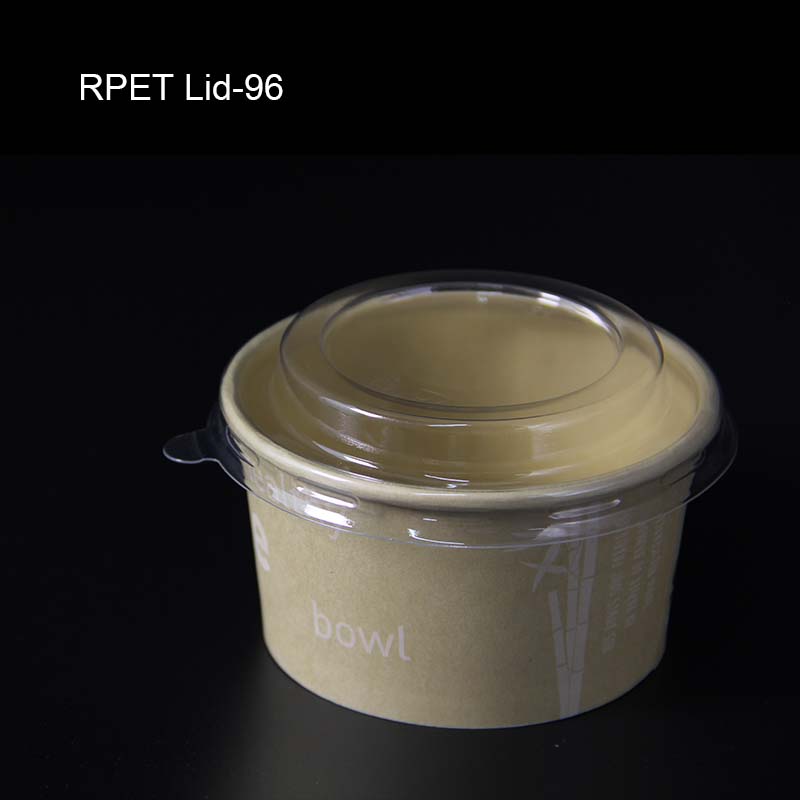
Leakage is one of the most expensive forms of packaging failure. The industry’s response has not been dramatic redesigns, but subtle improvements in lid geometry and sealing interfaces.
Quiet progress includes:
-
Enhanced snap-lock tolerances
-
Multi-point sealing rings
-
Better material memory for lids
-
Reduced deformation during transport
These small changes significantly reduce liquid leakage, especially in delivery-heavy markets.
Table 2: Why Sealing Improvements Matter More Than Material Type
| Issue | Traditional Focus | Quiet Improvement | Result |
|---|---|---|---|
| Leakage | Material choice | Lid geometry | Fewer spills |
| Sauce escape | Thickness | Seal memory | Cleaner delivery |
| Lid pop-off | Snap force | Tolerance control | Higher reliability |
These refinements directly reduce food waste, customer complaints, and refund costs—yet they are rarely highlighted in sustainability discussions.
6. Better Performance Under Transport and Delivery
Food packaging is no longer designed only for in-store consumption. Delivery has reshaped design priorities.
Packaging now accounts for:
-
Vertical stacking pressure
-
Vibration during transport
-
Temperature fluctuation
-
Handling by third parties
Rather than revolutionary materials, improvements have come from stress testing and geometry changes. Reinforced corners, stackable rims, and compression-resistant bases quietly extend packaging reliability across longer journeys.
Regional experience matters here. Suppliers serving multiple climates—such as Middle Eastern heat or Southeast Asian humidity—accumulate practical insights that laboratory tests alone cannot replicate.
7. Incremental Gains in Recyclability
Recyclability improvements rarely involve new materials. Instead, they focus on design for recycling.
Examples include:
-
Mono-material packaging replacing mixed structures
-
Reduced pigment usage
-
Clear material preference over colored variants
-
Easier separation of lids and bases
These changes do not alter how packaging looks or feels to consumers—but they significantly improve recycling outcomes.
Table 3: Design Choices That Quietly Improve Recyclability
| Design Change | Visible to Buyer? | Recycling Impact |
|---|---|---|
| Mono-material structure | No | High |
| Reduced color | Slight | Medium |
| Simplified labels | No | Medium |
| Standardized polymers | No | High |
Such improvements rarely qualify as marketing stories, yet they are among the most practical environmental gains the industry has achieved.
8. Manufacturing Precision and Quality Consistency
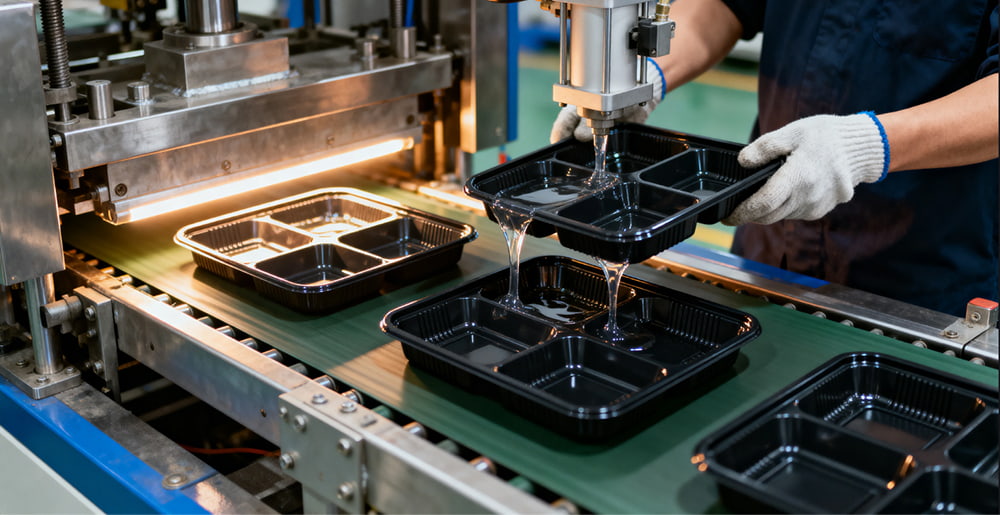
Another quiet transformation lies in manufacturing itself.
Automation, tighter tooling tolerances, and improved quality control have reduced batch variation. This consistency matters more than innovation when packaging is used at scale.
Inconsistent thickness, poor rim alignment, or unstable forming can negate even the best material choices. Manufacturers with mature production systems focus heavily on repeatability, not novelty.
DASHAN’s multi-material production experience reflects this shift: buyers increasingly value consistency across shipments more than experimental features.
9. Data-Driven Packaging Design
Packaging design is becoming more empirical.
Instead of relying on assumptions, manufacturers and buyers now analyze:
-
Failure rates
-
Customer complaints
-
Transport damage reports
-
Real-use feedback
This data-driven approach favors incremental improvement over disruptive change. It also explains why many advances are invisible—because they happen behind the scenes.
Lab testing remains important, but it cannot fully simulate delivery stress, consumer behavior, or regional climate conditions. Real-world feedback loops now guide design decisions.
10. Why These Improvements Rarely Get Marketed
Incremental improvements are difficult to market. They lack drama and are hard to explain in simple slogans.
Sustainability narratives often overshadow reliability gains because they are easier to communicate. Yet buyers increasingly recognize that operational stability delivers greater long-term value than headline claims.
Quiet improvements succeed because they reduce failure—not because they attract attention.
11. What Buyers Should Pay Attention to Now
For buyers, the challenge is learning what questions to ask.
Instead of focusing only on certifications or material labels, buyers should evaluate:
-
Performance under real food conditions
-
Consistency across production batches
-
Sealing reliability
-
Delivery stress tolerance
Table 4: Better Buyer Questions
| Common Question | Better Question |
|---|---|
| Is it eco-friendly? | How does it perform with my food? |
| Is it certified? | How consistent is batch quality? |
| Is it compostable? | What happens after delivery? |
These questions uncover quiet improvements that directly affect outcomes.
FAQ
1. Why does food packaging innovation seem slower than expected?
Because most real improvements are incremental and technical. They focus on reliability, consistency, and performance rather than disruptive material changes.
2. Are new materials driving most packaging improvements?
No. The majority of progress comes from refining existing materials through formulation, structure, and manufacturing precision.
3. Why are these improvements rarely marketed?
Incremental gains are difficult to communicate and lack strong sustainability narratives, even though they deliver measurable operational benefits.
4. How do quiet improvements reduce food waste?
Better sealing, heat resistance, and delivery durability lower leakage, deformation, and product failure during transport and use.
5. What should buyers focus on instead of innovation claims?
Buyers should evaluate real-use performance, batch consistency, sealing reliability, and delivery stress tolerance.
6. Does sustainability improve without changing materials?
Yes. Lightweighting, mono-material design, and improved recyclability often reduce environmental impact more reliably than switching materials.
Conclusion: The Future Is Quiet, Not Flashy
Food packaging is not standing still—but it is evolving quietly.
The most impactful improvements are incremental, technical, and often invisible. They reduce waste, improve safety, and stabilize operations without redefining materials or disrupting supply chains.
For brands, operators, and buyers, the future of food packaging lies not in dramatic replacements, but in steady refinement. Reliability, not novelty, is becoming the true measure of innovation.
Understanding where packaging is quietly improving allows better decisions—grounded not in marketing, but in performance.
References
-
European Commission – Packaging and Packaging Waste Directive
https://environment.ec.europa.eu/topics/waste-and-recycling/packaging-waste_en -
Ellen MacArthur Foundation – Global Commitment & Packaging Design
https://ellenmacarthurfoundation.org/topics/plastics/overview -
PlasticsEurope – Eco-design and Lightweighting in Plastics Packaging
https://plasticseurope.org/knowledge-hub/eco-design/ -
WRAP UK – Recyclability and Design for Recycling Guidelines
https://wrap.org.uk/resources/guide/recyclability-guidance -
U.S. Food & Drug Administration – Food Contact Materials
https://www.fda.gov/food/packaging-food-contact-substances-fcs -
Smithers – The Future of Food Packaging
https://www.smithers.com/services/market-reports/packaging/the-future-of-food-packaging -
McKinsey & Company – Sustainability in Packaging
https://www.mckinsey.com/industries/packaging-and-paper/our-insights -
Packaging Europe – Packaging Performance and Innovation
https://packagingeurope.com -
ISO 18601: Packaging and the Environment – General Requirements
https://www.iso.org/standard/67220.html -
ScienceDirect – Packaging Performance and Food Waste Reduction
https://www.sciencedirect.com/topics/engineering/food-packaging
Copyright Statement
© 2026 Dashan Packing. All rights reserved.
This article is an original work created by the Dashan Packing editorial team.
All text, data, and images are the result of our independent research, industry experience,
and product development insights. Reproduction or redistribution of any part of this content
without written permission is strictly prohibited.
Dashan Packing is committed to providing accurate, evidence-based information and
to upholding transparency, originality, and compliance with global intellectual property standards.