

Quick Answer: The Undisputed King of Cold Cups
Despite the rise of alternative materials, PET (Polyethylene Terephthalate) remains the undisputed dominant force in cold beverage packaging. The reason is simple: PET perfectly balances visual merchandising, structural integrity, and economic viability. It offers glass-like transparency that maximizes beverage appeal, superior flexibility that guarantees a leak-proof lid seal, and a highly efficient global recycling infrastructure. For food service brands, switching away from PET often means compromising on product presentation or facing disastrous food-delivery leaks.
1. The Clarity Advantage: Visual Merchandising and ROI
In the modern food service industry, consumers “buy with their eyes” long before they taste the beverage. This is especially true for brands selling layered iced lattes, vibrant fruit teas, matcha fusions, or boba milk teas.
-
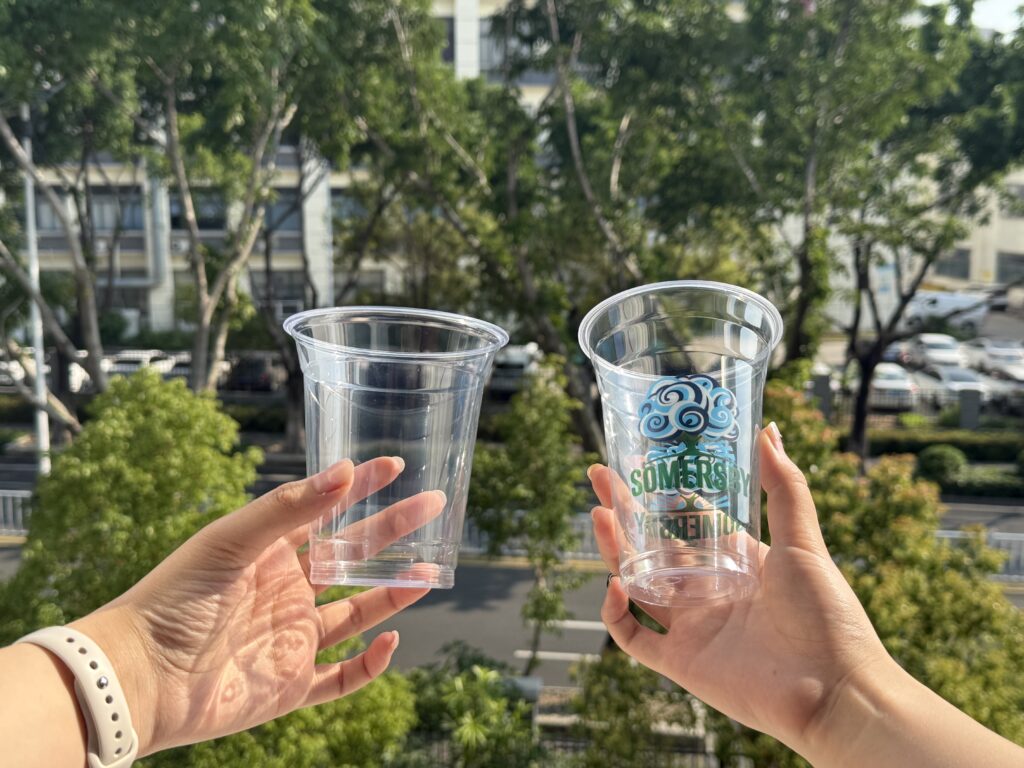
The Science of Light Transmission: High-quality PET boasts a light transmission rate exceeding 90%. It mimics the optical clarity of real glass.
-
The Problem with Alternatives: When brands try to switch to PP (Polypropylene) to save money, they are met with a “milky” or slightly frosted appearance. PP scatters light, making a vibrant strawberry smoothie look dull and unappetizing. PLA (Bioplastic) offers good clarity but can develop a slight yellowish tint in thicker sections.
-
The Marketing ROI: In the era of social media marketing, a highly transparent PET cup turns every customer into a walking billboard. The aesthetic appeal directly translates to higher perceived value, allowing brands to charge a premium for their beverages.
2. The Engineering of the Perfect Seal: Durability & Leak-Proofing
The explosive growth of third-party food delivery apps (UberEats, DoorDash, Deliveroo) has fundamentally changed what buyers demand from a cup. A leaked drink doesn’t just mean a mess; it means a refunded order, a low app rating, and a lost customer.
-
The Rolled Rim Technology: The secret to PET’s dominance lies in its manufacturing behavior. During the thermoforming process, the top edge of a PET cup is tightly curled into a perfectly smooth, uniform rolled rim.
-
Flexibility vs. Brittleness: When a barista firmly presses a flat lid or dome lid onto a PET cup, the PET material possesses the perfect amount of elasticity. It flexes slightly to accept the lid, then snaps back to grip the lid’s inner groove with immense tension.
-
Contrast with PS (Polystyrene): PS cups are incredibly brittle. If a barista applies too much pressure, the rim shatters. If a delivery driver hits a bump, the rigid PS cracks, causing catastrophic leaks. PET is virtually shatterproof, capable of absorbing impact without breaking.

3. Customization & Branding: The Blank Canvas
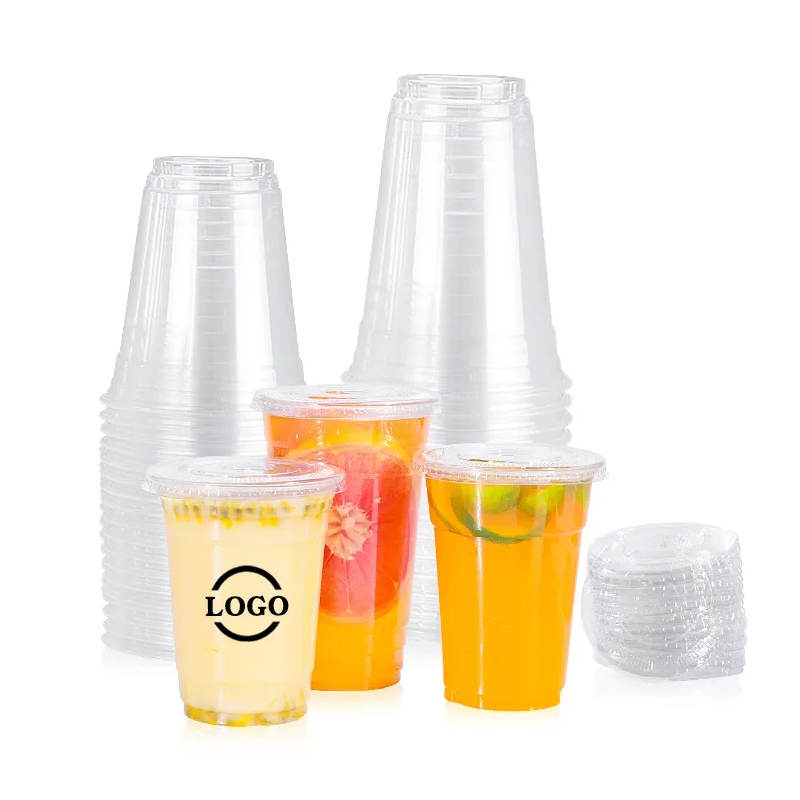
For coffee chains and franchise brands, the cup is the primary vehicle for brand exposure. The surface properties of PET make it the ultimate blank canvas for OEM customization.
-
Superior Ink Adhesion: Unlike PP, which has a low surface energy and often requires intense “corona treatment” for ink to stick, PET provides a smooth, highly receptive surface for UV-cured inks.
-
High-Definition Multi-Color Printing: Factories can easily run PET cups through 6-color dry offset printing machines. The smooth surface allows for sharp, high-definition logos, intricate patterns, and QR codes that scan perfectly. The ink bonds molecularly to the PET, meaning it won’t scratch off during transport or sweat off when the cup is filled with an iced drink.
4. The RPET Shift: Future-Proofing Against Plastic Bans
The biggest criticism of PET has historically been its fossil-fuel origin. However, the packaging industry has rapidly evolved to solve this, ensuring PET remains the dominant material for decades to come.
-
The Rise of RPET (Recycled PET): Brands do not have to rely on virgin plastic. Leading manufacturers now extrude cups using PCR (Post-Consumer Recycled) PET flakes.
-
The Circular Economy: PET is Resin Identification Code #1. It is the most widely recycled plastic in the world, backed by a massive, multi-billion-dollar global sorting and washing infrastructure. A PET cup can be recycled into a new cup, a fleece jacket, or carpet fiber.
-
Tax Exemption: In regions like the UK and the European Union, importing packaging with at least 30% recycled content exempts the buyer from steep “Plastic Packaging Taxes.” RPET allows brands to meet strict environmental targets without sacrificing the performance or clarity of traditional PET.
5. Buyer Mistakes: The Hidden Traps in PET Sourcing
Even when buying the world’s most reliable material, importers can still fall into costly traps if they don’t know what to look for.
🚩 Mistake 1: The “Thinner is Better” Weight Trap To offer a cheaper price, a dishonest supplier will reduce the gram weight of the PET cup. For example, reducing a 16oz cup from 12g to 9g. The result? The cup becomes so thin that when a customer grips it to pick it up, the walls collapse, and the drink erupts out of the top. Always specify and verify the exact gram weight in your contract.
🚩 Mistake 2: Buying Cups and Lids from Different Factories To save pennies, some buyers source cups from Factory A and lids from Factory B. Because thermoforming molds have microscopic variance (tolerances of +/- 0.1mm), the lids from Factory B will either be too tight (crushing the cup) or too loose (leaking everywhere). Always buy cups and lids as a matched set from the same manufacturer.
🚩 Mistake 3: Storing PET in Extreme Heat While PET is much more stable than PLA bioplastics, it is still a thermoplastic. Storing PET cups next to industrial heaters or in unventilated steel shipping containers exceeding 70°C (158°F) for prolonged periods can cause the stacks to warp and stick together.
Conclusion: The Clear Choice for Beverage Brands
PET cups dominate the cold beverage industry not by accident, but through superior material engineering. They offer the ultimate combination of visual clarity, structural reliability, and cost-effectiveness that alternative materials simply cannot match. As the global supply chain shifts towards RPET, this material is cementing its place as the sustainable, high-performance choice for the future.
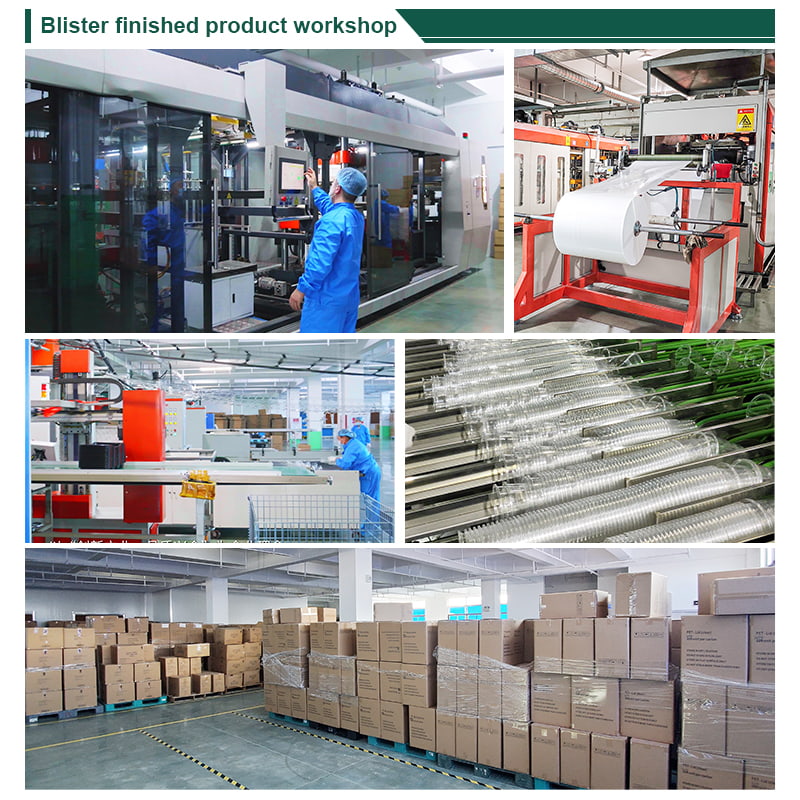
If you are suffering from leaking cups, poor printing quality, or high defect rates, it is time to upgrade your manufacturing partner. At Dashan Packing, we operate state-of-the-art thermoforming and 6-color printing lines dedicated exclusively to premium PET and RPET beverage packaging.
Our in-house quality control ensures perfect lid-matching, verified gram weights, and flawless custom branding for global franchises. Reach out to our export team today for a free sample kit and experience the clarity difference yourself.
FAQ: PET Beverage Packaging
1. What does PET stand for in packaging? PET stands for Polyethylene Terephthalate. It is a strong, lightweight, and transparent plastic belonging to the polyester family. It is globally recognized as the safest and most effective material for cold beverage and water packaging.
2. Can PET cups be used for hot beverages? No. Standard PET cups are designed exclusively for cold or ambient temperature drinks. If exposed to liquids exceeding 70°C (158°F), the plastic will rapidly soften, warp, and collapse. For hot drinks, PP (Polypropylene) or lined paper cups are required.
3. Are PET cups 100% recyclable? Yes. PET is 100% recyclable and is categorized under Resin Identification Code #1. It is the most actively recycled plastic in the world and can be processed into new food-grade packaging or polyester textiles.
4. What is the difference between PET and RPET cups? Chemically, they are nearly identical and perform the exact same way. The difference is the origin: PET is made from virgin petrochemicals, while RPET (Recycled PET) is manufactured using post-consumer recycled plastic flakes, significantly reducing its carbon footprint.
5. How do I stop my plastic cups from leaking during delivery? Leaking is caused by a poor seal between the cup rim and the lid. To prevent this, always purchase your cups and lids from the exact same manufacturer so the mold tolerances match perfectly. Additionally, specify high-quality PET rather than brittle PS (Polystyrene).
References & Authoritative Industry Research
To ensure our clients make packaging decisions based on verified material science and global sustainability goals, Dashan Packing bases its PET performance analysis on data from the following authoritative organizations:
-
The Association of Plastic Recyclers (APR): The APR Design® Guide for Plastics Recyclability (The industry-leading standard detailing the exceptional recyclability profile of PET containers and the transition to circular RPET economies).
-
Ellen MacArthur Foundation: The Global Commitment for a Circular Economy of Plastics (Authoritative guidelines validating the necessity of transitioning to Post-Consumer Recycled (PCR) PET to eliminate plastic waste and reduce virgin fossil fuel dependence).
-
McKinsey & Company: Climate Impact of Plastics Report (Comprehensive lifecycle analysis confirming that, when properly recycled, PET packaging often results in lower greenhouse gas (GHG) emissions compared to heavier alternative materials).
-
U.S. Food and Drug Administration (FDA): Inventory of Effective Food Contact Substance (FCS) Notifications (The definitive regulatory framework confirming that high-quality virgin PET and properly processed RPET are strictly non-toxic, BPA-free, and safe for direct beverage contact).
(Note: Material performance capabilities and lifecycle assessments can vary based on specific manufacturing processes and local recycling infrastructure. The technical data provided in this guide is for strategic sourcing and educational purposes. We advise buyers to request verified physical samples and lab test reports before finalizing mass production agreements.)
Copyright & Legal Disclaimer
© 2026 Dashan Packing. All rights reserved.
This PET Packaging Market Analysis is an original work created by the Dashan Packing technical and export teams. All material performance metrics, leak-proof engineering analysis, and environmental assessments are the result of our independent manufacturing experience and industry research. Reproduction, redistribution, or unauthorized use of any part of this content without explicit written permission from Dashan Packing is strictly prohibited. Dashan Packing is committed to providing transparent, evidence-based data to assist global food service brands in optimizing their packaging supply chains.