

Quick Summary
Corn starch cutlery often breaks because of its material nature: starch absorbs moisture, PLA becomes brittle, heat softens the structure, and cheaper fillers reduce strength. Weak product design and poor manufacturing make the situation worse. Corn starch works for low-heat, light-duty foods, but it is not suitable for hot, greasy, or heavy meals. Buyers should focus on formulation transparency, testing real applications, and selecting the right material for the right scenario — instead of relying on “eco” labels alone.
1. First — Corn Starch Cutlery Is Not “Pure Corn”
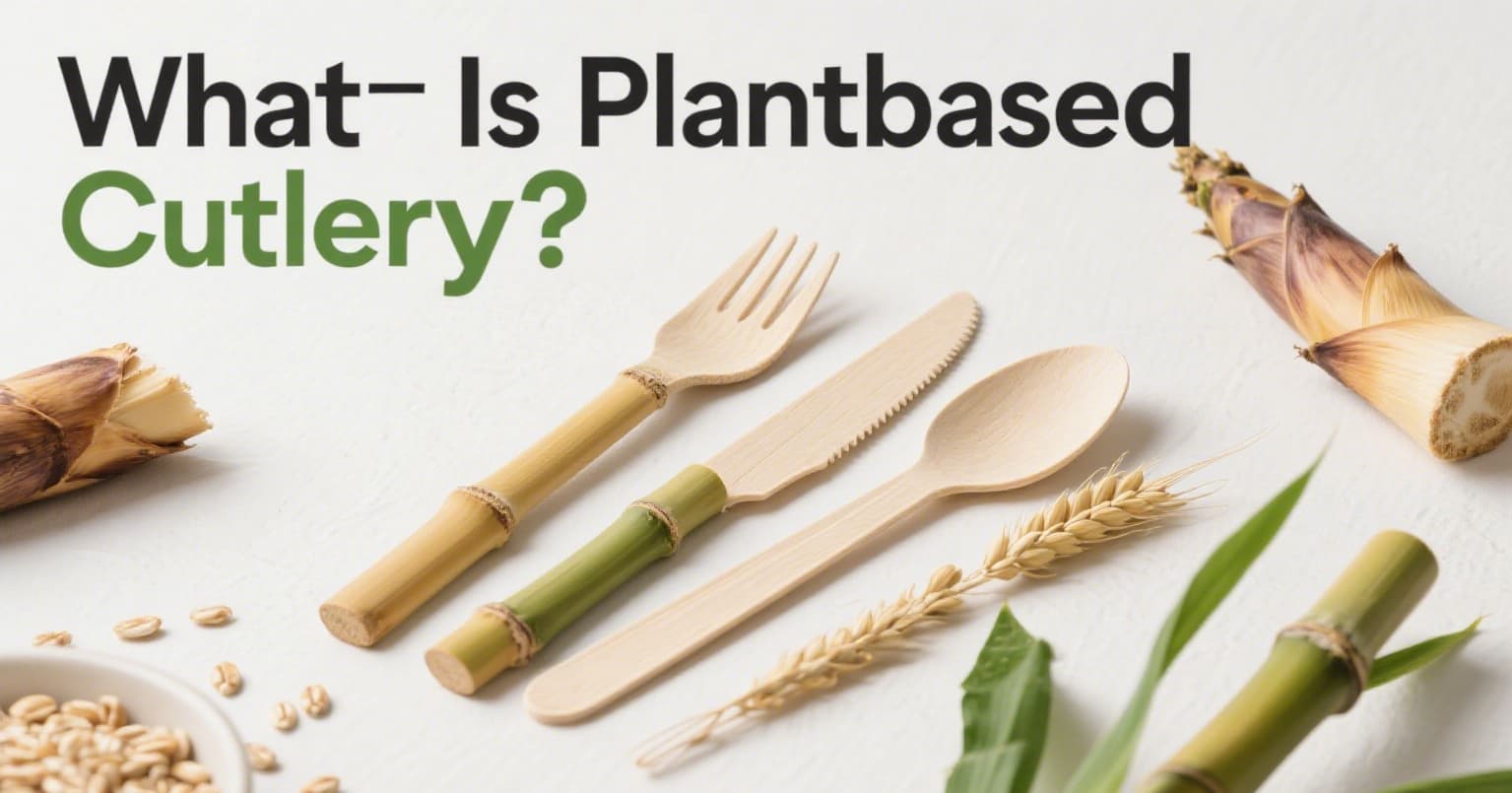
Many buyers assume:
“Corn starch cutlery = natural + biodegradable + strong”
But technically, most corn-starch cutlery is not 100% corn.
Typical composition:
| Component | Purpose | Typical % |
|---|---|---|
| Corn starch (or other plant starch) | Filler / main bulk | 40–70% |
| PLA (polylactic acid) or PBAT | Binder & structure | 20–50% |
| Talc / calcium carbonate | Reinforcement & lower cost | 0–20% |
| Additives (lubricants, antioxidants, pigments) | Processing aid | < 5% |
Corn starch is brittle by nature.
Without polymer binders, it will:
-
crack easily
-
deform when wet
-
completely fail under heat
So when you see weak cutlery, it is often because:
Too much starch, not enough structural polymer.
This is the first important truth:
Strength depends more on formulation than on “green” claims.
2. Why It Breaks: Material Science Reality
Below are the main material-science reasons corn starch cutlery fails.
(1) Starch absorbs moisture
Corn starch is hydrophilic.
Result:
-
absorbs water
-
swells internally
-
loses rigidity
-
becomes soft and crumbly
That is why customers complain:
“Fork feels soft inside hot noodles.”
“Spoon cracks in soup.”
In humid warehouses, this gets worse.
(2) PLA becomes brittle at low temperatures
PLA is commonly added to corn starch compostable products.
PLA properties:
-
rigid
-
transparent
-
compostable (under industrial conditions)
But:
PLA has low impact resistance.
So when combined with starch, a common failure pattern appears:
-
snap under bending
-
crack when pressing harder
-
fracture under lateral torsion
(3) Heat resistance is limited
PLA glass transition temperature:
~55–60°C
Meaning:
-
above 60°C → softening starts
-
above 70°C → deformation risk
-
hot oil / fried food → catastrophic failure
That is why customers report:
“Spoon bends inside hot curry.”
“Knife becomes soft cutting meat.”
(4) Cheap fillers weaken structure
Some factories use:
-
high levels of talc
-
high calcium carbonate
Motives:
-
reduce cost
-
increase hardness (on paper)
-
improve molding smoothness
But the side-effect:
-
internal micro-cracks
-
brittle edges
-
snap under small force
Cheap “eco” products often break because of filler abuse, not design.
3. Manufacturing Factors That Cause Breakage
Even with a good formula, poor production ruins performance.
(1) Poor extrusion and mixing
If starch and PLA are not fully dispersed:
-
weak bonding
-
inconsistent strength
-
unpredictable failure
Signs:
-
uneven surface
-
layered fracture patterns
-
strong in some pieces, weak in others
(2) Incorrect injection molding parameters
Incorrect:
-
temperature
-
residence time
-
cooling speed
-
mold pressure
can cause:
-
internal stress
-
micro-cracks
-
warped structure
These defects are invisible — until a customer uses the product.
(3) Weak structural design
If the design is copied from plastic cutlery directly:
-
too thin neck
-
unreinforced joint
-
shallow ribs
the cutlery will fail, because starch composites behave differently than PP or PS.
Good designs use:
| Feature | Why it helps |
|---|---|
| Thicker joints | Prevent snapping |
| Reinforced ribs | Improve bending strength |
| Optimized curvature | Distributes force |
| Rounded transitions | Reduces stress concentration |
4. Misleading “Compostable” & “Eco” Marketing
A major source of disappointment is expectation misalignment.
Buyers think:
Compostable = strong + natural + safe everywhere
But reality:
-
compostable standards (EN13432, ASTM D6400)
-
test biodegradation — not durability
Certification does NOT guarantee:
-
microwave safety
-
high-temperature resistance
-
long-term warehouse stability
-
heavy-duty use (steak, frozen desserts, etc.)
In short:
Compostable ≠ unbreakable.
5. When Corn Starch Cutlery Works Well
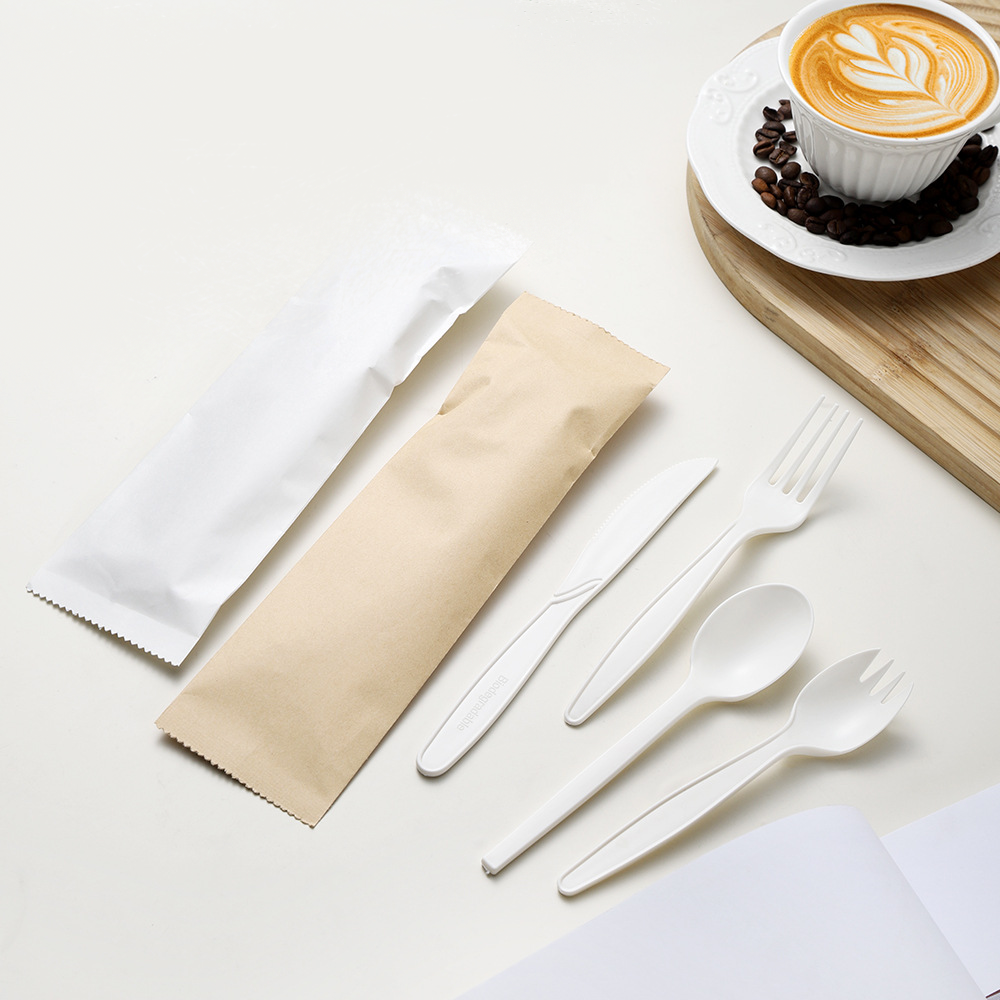
Corn starch cutlery performs reasonably when:
-
temperature below 50°C
-
light foods (salads, desserts, fruits)
-
controlled indoor environment
-
short-term single-use
Good use cases:
-
bakeries
-
cafes
-
office catering
-
institutional dining
-
airline cold meals
Bad use cases:
-
BBQ
-
greasy hot foods
-
steak / tough meat
-
hot soups
-
vending machines storing long term
6. Why Many Importers Experience High Complaint Rates
Typical complaint causes:
-
Buying purely based on price
-
No mechanical testing
-
No clear application requirement defined
-
Misunderstanding “eco labels”
-
Bad storage in humid warehouses
Common messages from buyers:
“Product breaks easily.”
“Customer rating dropped.”
“Retailers refuse to reorder.”
The risk is not only breakage — it damages the brand.
7. How to Avoid Weak Corn Starch Cutlery
Here is the buyer-oriented, practical checklist.
(1) Ask for formulation transparency (at least ranges)
Not full formula, but:
-
starch %
-
PLA/PBAT %
-
filler %
Avoid products with:
-
extreme starch > 70%
-
heavy filler > 20%
(2) Request mechanical test data
Ask for:
-
bending strength
-
impact resistance
-
heat distortion temperature
-
migration tests (food contact)
Serious suppliers will have internal data.
(3) Simulate real usage tests
Before ordering:
Test with your real food:
| Test | Why |
|---|---|
| Microwave reheating | see softening behavior |
| Hot soup | observe deformation |
| Cut meat | measure fracture force |
| Cold storage | check brittleness |
| Greasy food | test resistance |
(4) Define application clearly to the supplier
Say:
-
temperature range
-
food type
-
expected storage period
-
retail environment
This helps the manufacturer recommend realistic products.
(5) Store properly
Keep:
-
sealed packaging
-
dry warehouse
-
low humidity
-
avoid sunlight
Corn-starch composites absorb moisture quickly.
8. Alternatives When Requirements Are Higher
If your application requires:
-
high heat tolerance
-
repeated bending
-
greasy foods
Then alternatives like:
-
PP cutlery (recyclable)
-
CPLA (crystallized PLA; better heat resistance)
-
wood / bamboo cutlery
may be more appropriate.
9. Where DASHAN Fits
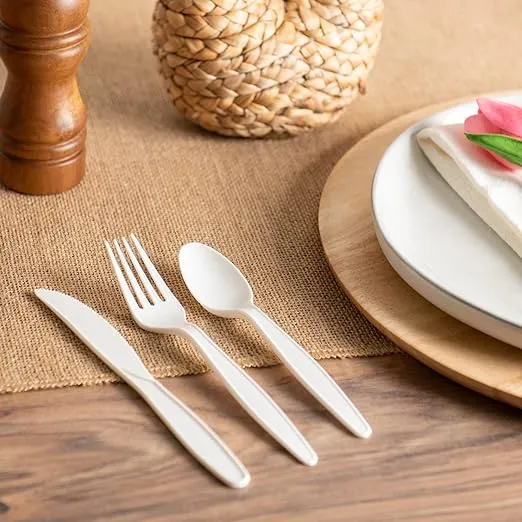
At DASHAN, we have seen many importers shift from:
-
ultra-cheap corn starch cutlery
to -
better-engineered materials depending on usage.
In practice, we often help buyers:
-
analyze real-world usage
-
avoid over-promising “eco” claims
-
balance cost, sustainability, and performance
Instead of forcing one “green” material, the right approach is:
Match the material to the application — not the marketing trend.
FAQ
1. Is corn starch cutlery 100% natural?
No. Most products combine corn starch with PLA/PBAT and fillers. These polymers hold the structure together and make molding possible.
2. Why does it snap when customers press harder?
Because the material is brittle. High starch ratios, low-quality fillers, and thin structural areas increase breakage.
3. Can corn starch cutlery handle hot foods?
Generally, no. Above 55–60°C, structural softening and deformation often occur, especially with soups or oily dishes.
4. Is it truly compostable?
Usually only in industrial composting facilities under controlled temperature and humidity. It does not fully degrade in home compost or landfill conditions.
5. Why do some suppliers claim “microwave safe”?
Marketing — not testing. Compostability certifications test biodegradation, not heat performance.
6. How can buyers reduce complaint rates?
Request test data, simulate real food usage, define temperature and application clearly, and avoid products with extreme starch or filler content.
7. When is corn starch cutlery a good choice?
Cold meals, salads, desserts, short service time, and controlled storage environments.
8. What are better alternatives for hot or heavy foods?
Depending on needs: CPLA, PP (recyclable), wood, or bamboo cutlery.
Conclusion
Corn starch cutlery breaks easily not because it is “bad,” but because:
-
starch absorbs water
-
PLA is brittle
-
heat softens structure
-
cheap fillers reduce strength
-
poor design and manufacturing increase failure risk
It works well in specific low-heat, light-duty scenarios.
It performs poorly in high-stress, hot-food applications.
For procurement teams:
-
demand data
-
define usage conditions
-
run real food tests
-
choose materials based on performance, not slogans
Done correctly, eco packaging can be sustainable — without frustrating your customers.
References
-
European Bioplastics — PLA Material Overview
https://www.european-bioplastics.org/bioplastics/materials/pla/ -
ASTM D6400 Compostability Standard Explanation
https://www.astm.org/d6400-23.html -
EN 13432 Compostability Requirements
https://environment.ec.europa.eu/topics/waste-and-recycling/biodegradable-and-bio-based-plastics_en -
NatureWorks – PLA Performance and Limitations
https://www.natureworksllc.com/What-is-Ingeo/Material-Properties -
US EPA — Understanding Biodegradable Plastics
https://www.epa.gov/recycle/composting-home#bioplastics
Copyright Statement
© 2025 Dashan Packing. All rights reserved.
This article is an original work created by the Dashan Packing editorial team.
All text, data, and images are the result of our independent research, industry experience,
and product development insights. Reproduction or redistribution of any part of this content
without written permission is strictly prohibited.
Dashan Packing is committed to providing accurate, evidence-based information and
to upholding transparency, originality, and compliance with global intellectual property standards.