

Introduction: The Tray Is No Longer Just a Container
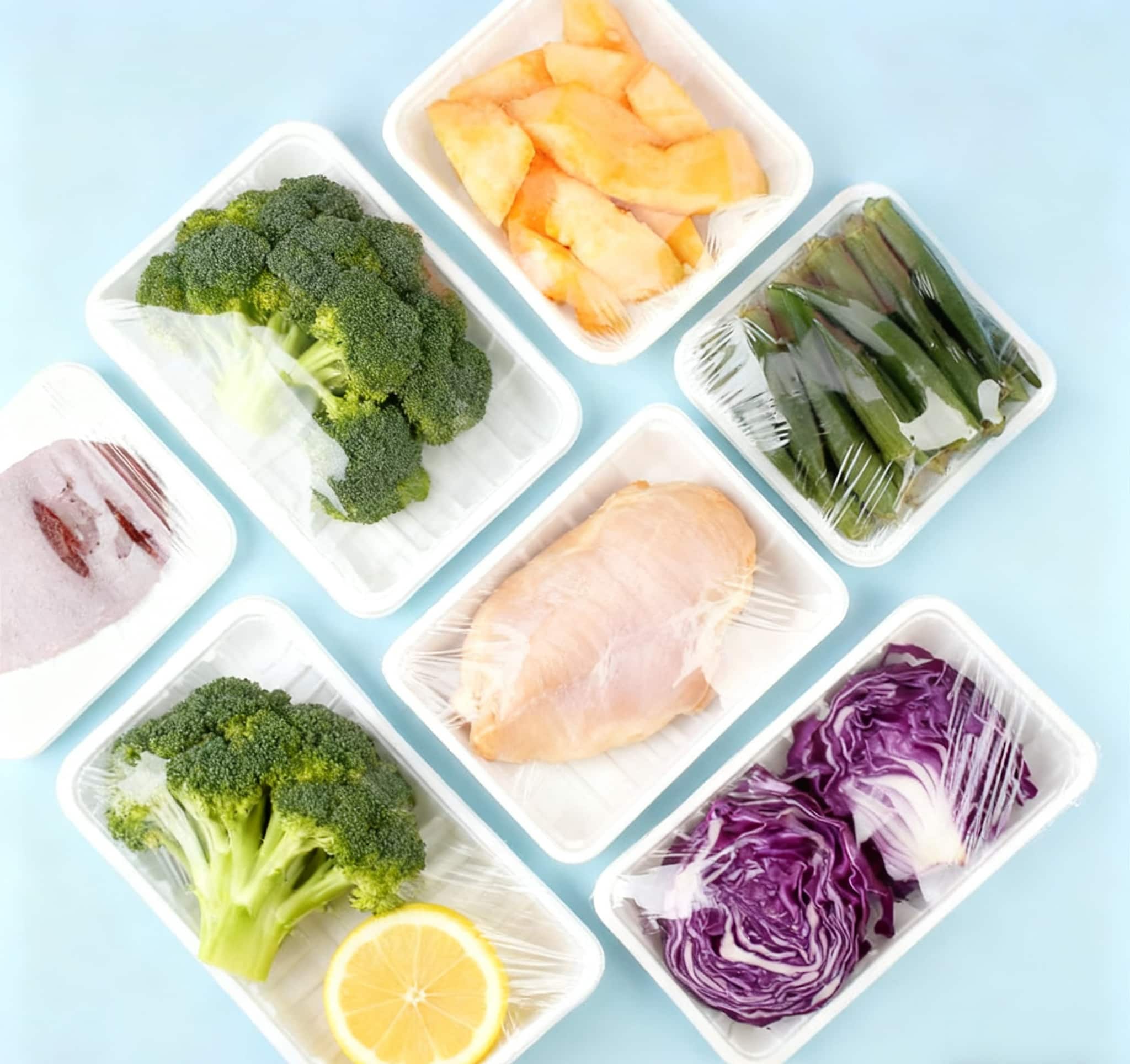
For decades, food trays were treated as standardized commodities—selected primarily on price per unit, resin cost volatility, and mold amortization. Performance was expected, but rarely engineered beyond minimum requirements.
By 2026, that era ends.
Food trays—especially those used in ready meals, chilled retail, and delivery platforms—now operate within a system defined by:
-
Thermal stress cycling
-
Recyclability mandates
-
Recycled content quotas
-
E-commerce logistics strain
-
Extended Producer Responsibility (EPR) cost exposure
-
ESG procurement scrutiny
The tray has become a performance-critical component within a regulatory and economic ecosystem. It is no longer a passive container. It is a strategic asset—and in some cases, a compliance liability.
2026 represents the inflection point where engineering, policy, and economics converge.
1. Regulatory Acceleration: Design by Law, Not Just by Function
1.1 Recyclability Definitions Are Becoming Enforceable
Global regulators are shifting from voluntary guidance to enforceable recyclability criteria. Food trays must now:
-
Be mono-material or mechanically separable
-
Avoid incompatible barrier layers
-
Use inks and adhesives that do not disrupt sorting
-
Achieve minimum recyclability classification thresholds
This shift directly affects tray construction. Multilayer PET/PE or EVOH-enhanced structures that were standard in previous years increasingly face recyclability penalties.
Design philosophy has changed from “maximum barrier” to “functional sufficiency within recyclability constraints.”
1.2 Recycled Content Mandates Reshape Procurement
Many markets now require minimum recycled content in plastic packaging.
For food trays, this primarily affects:
-
PET-based chilled trays
-
Clear lid applications
-
High-visibility retail formats
RPET demand has surged accordingly.
However, supply-side constraints remain significant:
-
Limited food-grade decontamination capacity
-
Quality variability in recycled flakes
-
Price premiums during peak demand cycles
In 2026, procurement decisions are increasingly influenced by availability modeling, not just price benchmarking.
1.3 EPR Fees Change the Cost Equation
Extended Producer Responsibility programs assign financial responsibility for end-of-life management to producers.
Tray design now influences:
-
Fee levels
-
Sorting classification
-
Recovery rates
-
Recyclability score metrics
A tray that is technically recyclable but poorly sorted may incur higher system costs.
This forces brands to integrate regulatory modeling into design selection.
2. Thermal Engineering: Surviving Multi-Stage Stress

Food trays in ready meal applications typically experience:
-
Frozen storage (-18°C or below)
-
Chilled distribution
-
Ambient exposure
-
Microwave reheating with steam pressure
Each stage alters polymer behavior.
2.1 Polypropylene Under Steam Stress
PP remains the dominant material for hot meals due to:
-
High heat deflection temperature
-
Chemical resistance to oils
-
Microwave compatibility
However, steam exposure introduces:
-
Base warping
-
Flange distortion
-
Seal relaxation
Modern engineering responses include:
-
Ribbed bottom geometries to distribute pressure
-
Controlled wall thickness gradients
-
Enhanced crystallinity through nucleating agents
-
Reinforced sealing flanges
Suppliers investing in finite element modeling (FEM) before mold production significantly reduce deformation risks.
For example, manufacturers like DASHAN increasingly integrate structural simulation during development to optimize weight reduction without sacrificing thermal resilience.
2.2 RPET Under Cold and Impact Conditions
For chilled meals, RPET trays dominate due to clarity and stiffness.
However, RPET differs from virgin PET in:
-
Impact resistance
-
Brittleness under low temperatures
-
Optical uniformity
To maintain structural reliability:
-
Blending ratios are carefully calibrated
-
Cooling cycles are adjusted during thermoforming
-
Wall thickness is fine-tuned to compensate for mechanical variation
Engineering precision becomes essential to prevent cracking during frozen transport or retail handling.
3. The Barrier Dilemma: Shelf Life vs Circularity
Historically, food trays were engineered for maximum shelf life using multilayer constructions.
But multilayer complexity compromises recyclability.
3.1 Over-Engineering Is Being Phased Out
Instead of adding barrier layers “just in case,” brands now calculate:
-
Required shelf life
-
Cold-chain reliability
-
Oxygen exposure tolerance
-
Moisture migration thresholds
This leads to:
-
Right-sized barrier layers
-
Mono-material tray systems
-
Compatible lidding films
Food waste reduction remains important—but not at the expense of making the tray unrecyclable.
3.2 Mono-Material Strategy Gains Ground
Mono PP and mono PET systems are increasingly favored.
Benefits include:
-
Improved sorting rates
-
Lower EPR penalties
-
Simplified recycling streams
However, achieving comparable barrier performance requires precision engineering rather than layering.
This marks a fundamental shift from material stacking to structural optimization.
4. Delivery Platforms: The New Stress Environment
E-commerce and delivery platforms introduce dynamic stress factors absent in traditional retail.
4.1 Vibration and Compression
Food trays in delivery bags endure:
-
Vertical stacking pressure
-
Lateral vibration
-
Rapid tilting
Leakage is the most visible failure mode.
Engineering solutions focus on:
-
Seal strength calibration
-
Flange width reinforcement
-
Lidding film elasticity
-
Structural corner reinforcement
Damage rate reduction is now a measurable procurement KPI.
4.2 Geometry Standardization
Uniform tray dimensions improve:
-
Stack efficiency
-
Load distribution
-
Transport optimization
This reduces carbon emissions per unit and improves logistics economics.
Tray design now intersects directly with supply chain strategy.
5. Fiber and Molded Pulp: Expansion with Constraints
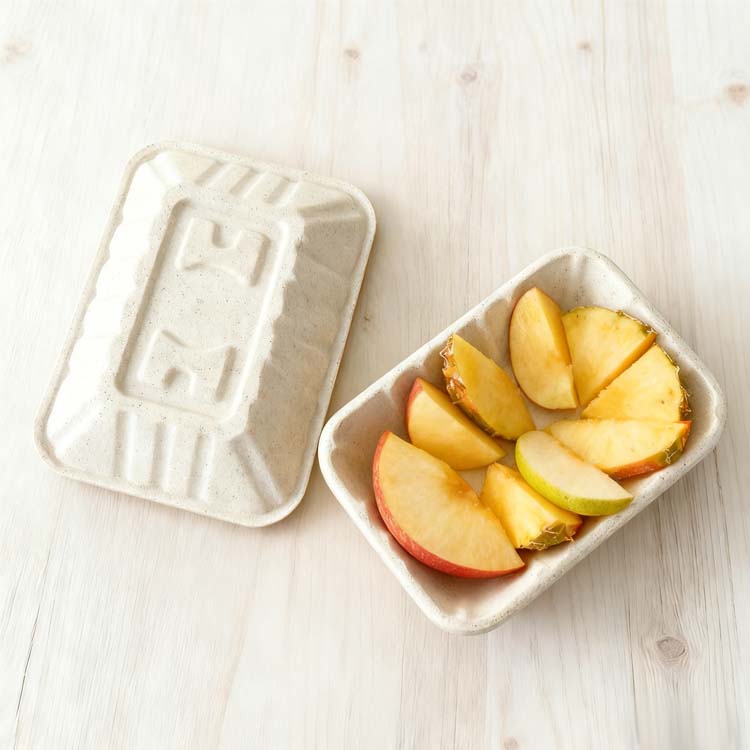
Fiber trays have gained visibility due to sustainability narratives.
Advantages:
-
Renewable feedstock
-
Lower perceived plastic impact
-
Strong rigidity in dry applications
However, technical limitations remain:
-
Oil penetration
-
Steam absorption
-
Structural weakening under moisture
Coatings improve performance but may compromise recyclability or compostability claims.
Fiber solutions perform best in:
-
Dry ready meals
-
Short-hold applications
-
Cold, low-moisture formats
They are not universal replacements for PP or PET in high-heat applications.
6. Cost Modeling: From Unit Price to System Risk
In 2026, the cost of a tray cannot be evaluated solely on resin price.
Total cost includes:
-
Material cost
-
Mold investment
-
Regulatory fees
-
Return rates due to leakage
-
Brand damage risk
-
Retail compliance penalties
A tray that saves 3% in material but increases leakage by 0.5% may be economically inferior overall.
Procurement teams increasingly apply risk-adjusted lifecycle cost modeling.
This changes supplier evaluation criteria dramatically.
7. The Evolution of Packaging Suppliers
Suppliers that survive and grow beyond 2026 share several characteristics:
-
Engineering capability
-
Regulatory literacy
-
Recyclability verification
-
Traceability documentation
-
Category-specific customization
Manufacturers such as DASHAN, for example, focus not just on producing trays but on:
-
Optimizing PP structures for microwave resilience
-
Enhancing RPET clarity while maintaining recycled content targets
-
Developing fiber formats tailored to specific meal types
This reflects a broader shift in the industry: from volume manufacturing to technical partnership.
8. Sustainability: Optimization Over Ideology
2026 marks a maturity phase in sustainability thinking.
The market is moving away from:
-
Blanket “plastic-free” narratives
-
Unverified compostability claims
-
One-material-fits-all ideology
Instead, brands increasingly apply:
-
Data-backed lifecycle assessments
-
Regional infrastructure analysis
-
Performance-driven material selection
Real circularity requires alignment between:
-
Material choice
-
Waste system capability
-
Consumer behavior
-
Regulatory frameworks
Optimization replaces symbolism.
9. Strategic Implications for Brands
Food trays now influence:
-
Compliance risk
-
ESG reporting metrics
-
Supply chain resilience
-
Consumer trust
Brands that treat trays as interchangeable commodities risk:
-
Regulatory penalties
-
Delivery damage rates
-
Sustainability backlash
Forward-looking companies invest in:
-
Long-term supplier partnerships
-
Region-specific design adaptation
-
Structural performance testing
-
Recyclability validation
2026 is not about reacting—it is about preemptively redesigning.
10. Why 2026 Marks a Structural Shift
Several forces converge simultaneously:
-
Enforceable recyclability standards
-
Mandatory recycled content
-
Delivery-driven performance stress
-
EPR financial impact
-
Consumer scrutiny of environmental claims
No previous period has combined these pressures so tightly.
Food trays are transitioning from low-margin packaging components to strategic design systems.
The companies that lead in this category will:
-
Engineer for thermal reliability
-
Balance barrier with circularity
-
Integrate recycled content intelligently
-
Model lifecycle risk
-
Collaborate with technically capable suppliers
This transformation defines the turning point.
FAQ
1. Why is 2026 considered a turning point for food trays?
Because multiple forces converge simultaneously: enforceable recyclability standards, mandatory recycled content targets, rising EPR fees, delivery logistics stress, and increased ESG scrutiny. Together, these shift trays from cost-driven commodities to engineered compliance systems.
2. How do recycled content mandates affect tray design?
Recycled content requirements—particularly for PET formats—impact sourcing strategy, material blending ratios, and mechanical performance calibration. Brands must ensure food-grade compliance while maintaining structural reliability and optical clarity.
3. Are mono-material trays replacing multilayer structures?
Increasingly, yes. Mono PP and mono PET systems are favored due to recyclability benefits and lower EPR exposure. However, performance must be achieved through structural optimization rather than barrier layering.
4. How does food delivery impact tray engineering?
Delivery environments introduce vibration, stacking pressure, and dynamic handling. This increases the importance of flange strength, seal integrity, ribbed base geometry, and controlled wall thickness distribution.
5. Are fiber trays replacing plastic trays?
Fiber trays are expanding in dry and low-moisture applications. However, high-heat, oil-rich, and microwave-ready meals still require PP or PET for reliable performance. Fiber solutions remain application-specific rather than universal replacements.
6. What role do packaging suppliers play in this transition?
Suppliers are evolving into technical partners. Companies like DASHAN focus on structural simulation, mono-material optimization, RPET integration, and compliance-aligned engineering to help brands manage both performance and regulatory risk.
7. How should brands evaluate tray cost in 2026?
Unit price alone is insufficient. Evaluation must include:
-
EPR fee impact
-
Leakage/damage rates
-
Regulatory compliance exposure
-
Recyclability classification
-
Lifecycle cost modeling
Total system economics now determine procurement decisions.
Conclusion: The End of Commodity Thinking
By 2026, food trays are no longer evaluated solely by price per thousand units.
They are evaluated by:
-
Structural integrity
-
Regulatory compliance
-
Delivery durability
-
Recyclability performance
-
Lifecycle economics
The tray has become a nexus of engineering, regulation, and sustainability.
Organizations that recognize this shift—and align material science, compliance strategy, and supply chain modeling—will define the next decade of food packaging innovation.
2026 is not simply another trend year.
It is the moment when food trays become engineered systems within a circular economy framework.
Reference
-
European Commission – Packaging and Packaging Waste Regulation (PPWR)
https://environment.ec.europa.eu/topics/waste-and-recycling/packaging-waste_en -
OECD – Extended Producer Responsibility (EPR) Guidelines
https://www.oecd.org/environment/extended-producer-responsibility.htm -
Ellen MacArthur Foundation – Global Commitment & Plastic Circularity
https://ellenmacarthurfoundation.org/topics/plastics -
Plastics Recyclers Europe – Recyclability and Design for Recycling
https://www.plasticsrecyclers.eu -
European PET Bottle Platform (EPBP) – PET Design Guidelines
https://www.epbp.org -
U.S. EPA – Sustainable Materials Management
https://www.epa.gov/smm -
World Packaging Organisation
https://www.worldpackaging.org
Copyright Statement
© 2026 Dashan Packing. All rights reserved.
This article is an original work created by the Dashan Packing editorial team.
All text, data, and images are the result of our independent research, industry experience,
and product development insights. Reproduction or redistribution of any part of this content
without written permission is strictly prohibited.
Dashan Packing is committed to providing accurate, evidence-based information and
to upholding transparency, originality, and compliance with global intellectual property standards.