

Quick Summary
Polypropylene (PP) remains widely used in food packaging not because it is trendy or “green,” but because it performs reliably under heat, steam, oil, and delivery stress. This article explains when PP is the right material choice, when it is not, and why many packaging failures are caused by material–food mismatch rather than material quality. Understanding PP’s true performance boundaries helps brands reduce failure risk, food waste, and operational cost.
Polypropylene (PP) has been part of food packaging for decades, yet few materials generate as much quiet confusion among buyers.
Some view PP as outdated—something to be phased out in favor of compostable or recycled alternatives. Others treat it as a universal, low-risk default that can be applied to nearly every food application.
Both positions oversimplify reality.
PP is not a legacy material clinging to relevance, nor is it a one-size-fits-all solution. Its continued dominance comes from something far less fashionable but far more important: predictable performance under harsh, real-world food conditions.
This article examines where PP truly excels, where it clearly fails, and where buyers most often misjudge its role. The goal is not to promote PP, but to help food brands, importers, and packaging decision-makers avoid costly material–food mismatches.
1. Why PP Still Matters in Modern Food Packaging
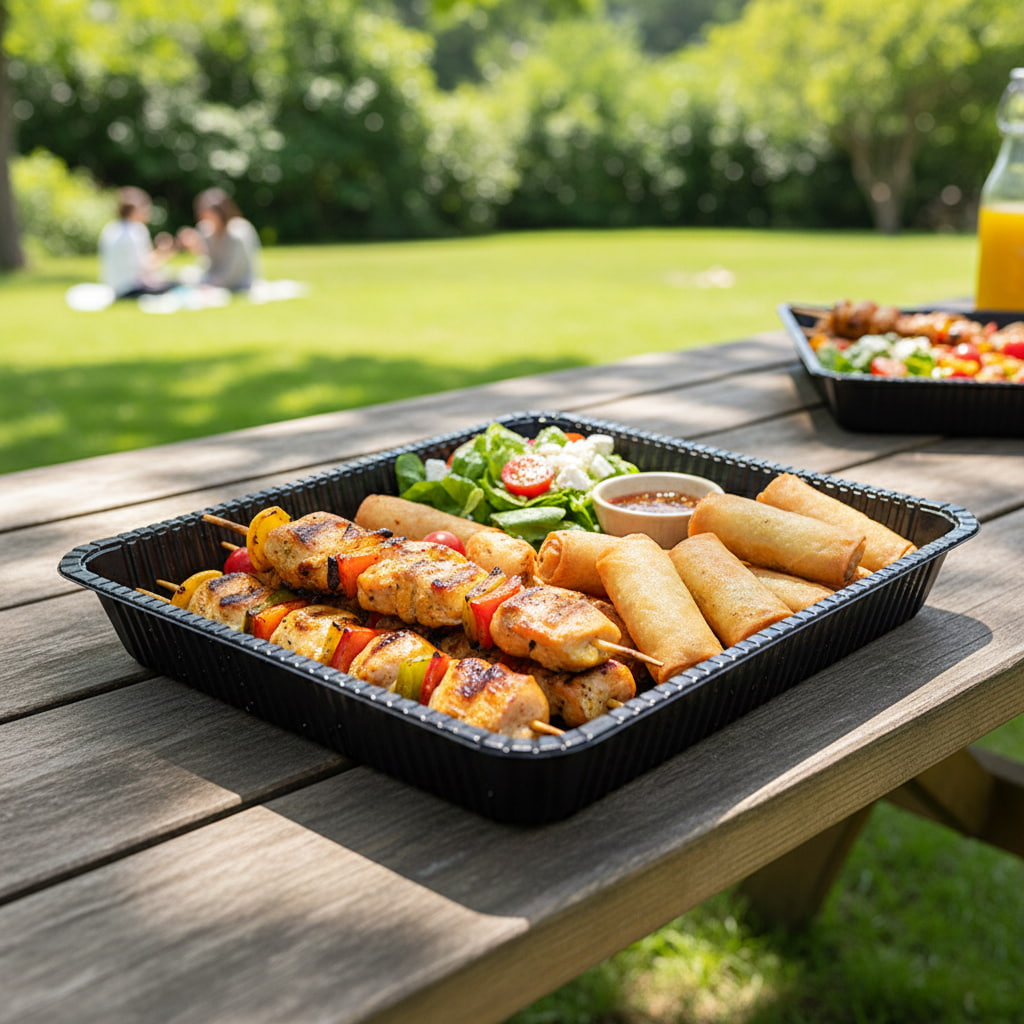
Despite rising interest in compostable and recycled materials, PP remains one of the most widely used polymers in global foodservice. This persistence is not accidental.
1.1 Packaging Is Tested in Motion, Not on Paper
Most packaging evaluations happen in controlled environments:
-
Sample trays on desks
-
Static load tests
-
Short-term heat exposure
Real food packaging, however, experiences:
-
Hot filling followed by rapid sealing
-
Steam accumulation
-
Stack pressure during transport
-
Vibration, tilting, and time delays
PP performs consistently across these stress combinations. Many alternative materials perform well under one condition, but degrade rapidly when multiple stressors overlap.
1.2 Failure Costs More Than Material Choice
When packaging fails, the cost is rarely limited to the container itself. It cascades into:
-
Food waste
-
Refunds and remakes
-
Delivery complaints
-
Brand damage
PP’s continued use is often driven not by preference, but by risk mitigation. In high-volume operations, preventing failure matters more than adopting the newest material.
2. Core Performance Strengths of PP (Explained Practically)
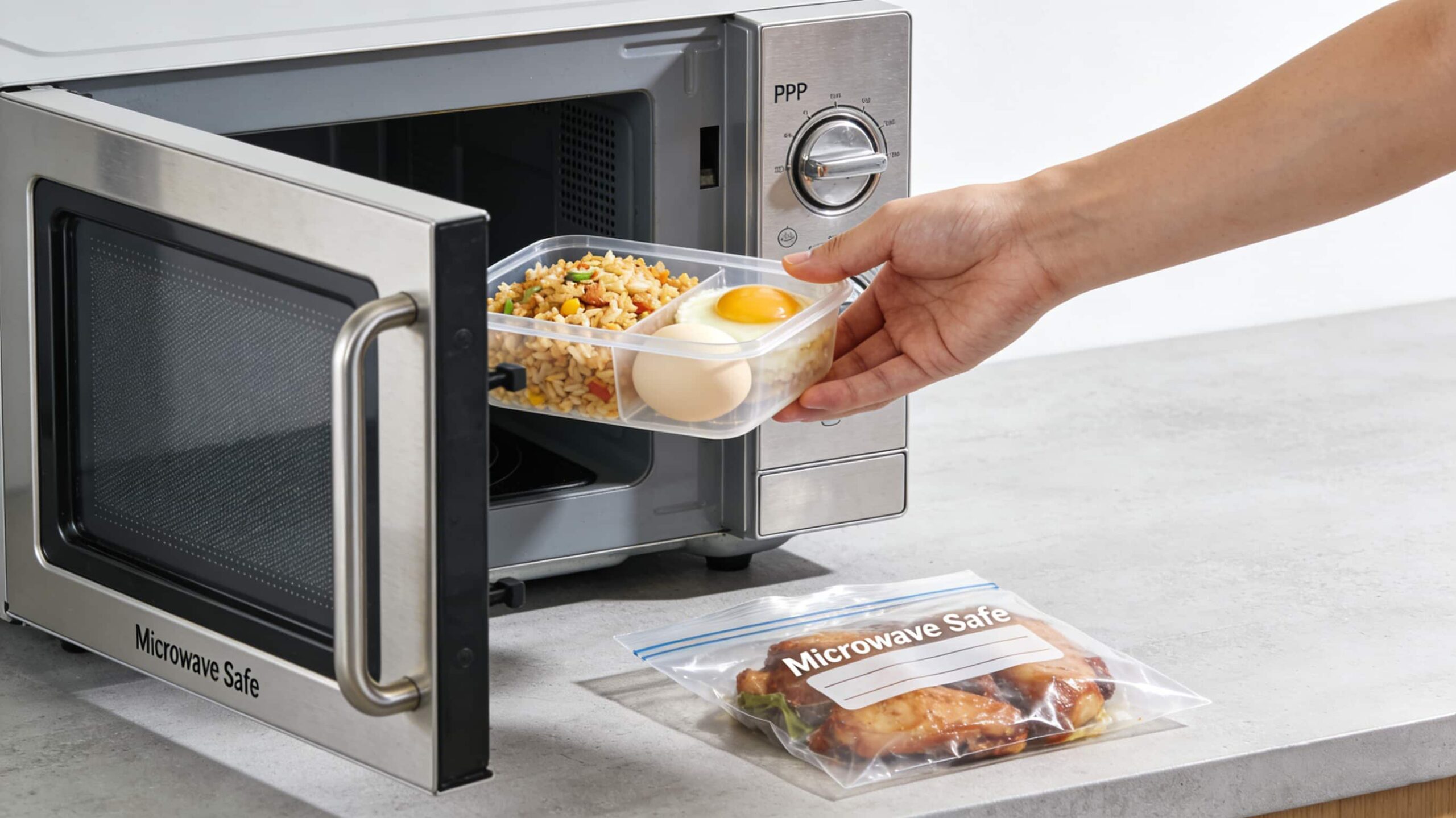
2.1 Heat Tolerance Under Foodservice Conditions
PP maintains structural integrity across a broad temperature range commonly encountered in foodservice:
-
Hot filling (80–100°C)
-
Short-term steam exposure
-
Microwave reheating
This does not mean PP is indestructible, but it deforms gradually rather than catastrophically.
In contrast:
-
PLA softens quickly near 60°C
-
Bagasse weakens when heat combines with moisture
-
PET is not designed for reheating
For hot meals, this tolerance is not a technical bonus—it is a functional requirement.
2.2 Steam Management and Lid Retention
Steam is one of the most underestimated causes of packaging failure.
Hot food releases moisture after sealing, increasing internal pressure. PP’s flexibility allows:
-
Controlled expansion
-
Better lid retention
-
Reduced cracking
Rigid or brittle materials often fail at the lid seal first, leading to leakage even if the tray itself appears intact.
2.3 Resistance to Oil, Fat, and Sauces
PP is inherently hydrophobic, which gives it a major advantage with:
-
Fried foods
-
Saucy dishes
-
High-fat proteins
Unlike fiber-based materials, PP does not absorb oil over time. This prevents:
-
Softening
-
Grease seepage
-
Odor retention
For cuisines where oil is structural—not incidental—this resistance defines usability.
2.4 Mechanical Strength in Delivery Environments
Modern food packaging rarely travels alone. Containers are stacked in bags, compressed by other orders, and handled by multiple parties.
PP’s balance of rigidity and flexibility allows it to:
-
Absorb compression without cracking
-
Maintain shape under stacking loads
-
Reduce accidental lid separation
Many “eco-friendly” materials perform well on single-item tests but fail when exposed to real delivery dynamics.
3. When PP Is the Right Choice
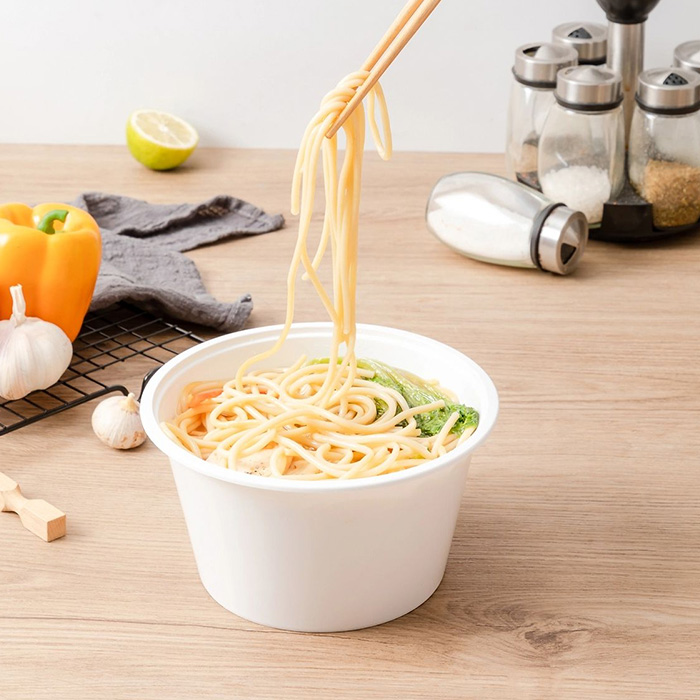
3.1 Hot Meals with Unpredictable Holding Times
If food is:
-
Hot at sealing
-
Held for 20–60 minutes
-
Delivered or transported
PP significantly reduces the risk of deformation, leakage, and collapse. This applies to:
-
Central kitchens
-
Airline catering
-
Convenience food chains
3.2 Oily or Moist Foods with Structural Load
Foods that combine oil, moisture, and weight—such as curries, stir-fries, or braised dishes—stress packaging more than dry foods.
PP maintains load-bearing capacity even as food temperature and moisture fluctuate.
3.3 High-Volume, Standardized Operations
Large-scale operators value:
-
Consistency
-
Predictable sourcing
-
Tooling stability
PP offers mature supply chains, stable resin availability, and repeatable quality—critical for operations serving thousands of meals daily.
4. When PP Is Not the Best Choice
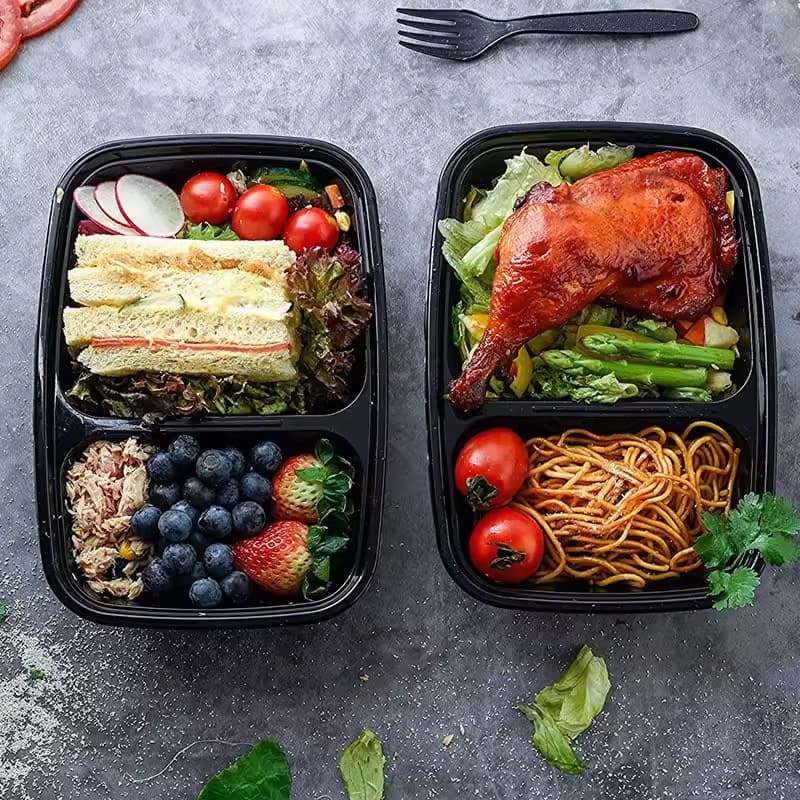
4.1 Cold Foods and Short Consumption Cycles
For salads, desserts, and cold bakery items, PP’s advantages are largely unused.
Materials like RPET or bagasse can provide:
-
Better visual presentation
-
Stronger sustainability messaging
-
Adequate performance at lower stress
Using PP here often adds cost without adding value.
4.2 Compostability-Driven Markets
In regions with industrial composting infrastructure and regulatory pressure, PP faces increasing resistance regardless of performance.
In these cases, buyer expectations may outweigh functional benefits.
4.3 Premium Retail and Display Packaging
PP has limitations in:
-
Optical clarity
-
Surface aesthetics
-
Perceived brand value
For retail shelves and premium branding, PET or RPET often outperform PP visually.
5. The Grey Zone: Where Buyers Get PP Wrong
Most mistakes happen not at extremes, but in borderline scenarios.
5.1 Assuming PP Is Always “Safe”
PP tolerates many stresses, but it is not immune to:
-
Excessive reheating
-
Poor lid design
-
Incompatible food formulations
Treating PP as fail-proof leads to poor system-level design.
5.2 Replacing PP Without Redesigning the System
When buyers switch from PP to compostable materials without adjusting:
-
Wall thickness
-
Venting
-
Lid structure
Failures are blamed on material quality rather than system mismatch.
6. PP vs Other Materials: Understanding the Boundaries
PP does not compete directly with all materials—it occupies a specific performance zone.
-
Bagasse: Good for dry or mildly moist foods, weak under oil and prolonged heat
-
PLA: Compostable, but narrow thermal tolerance
-
PET/RPET: Excellent clarity and cold use, poor heat resistance
PP’s role is not environmental leadership, but operational resilience.
7. How Experienced Buyers Actually Use PP
Seasoned buyers rarely choose a single material across all SKUs.
Instead, PP is reserved for:
-
High-risk foods
-
Heat-intensive applications
-
Scenarios where failure is expensive
At DASHAN, PP exists alongside bagasse, RPET, PET, and CPET—not as a default choice, but as part of a use-case-driven material strategy. The focus is not on promoting PP, but on preventing customers from using the wrong material for the wrong food.
8. Sustainability: The Uncomfortable Trade-Off
PP is often criticized for lacking compostability, but sustainability cannot be reduced to disposal method alone.
Packaging that fails:
-
Increases food waste
-
Requires replacement
-
Generates more total material usage
In many hot-food scenarios, PP results in lower system-level environmental impact than materials that fail under real use.
9. How to Decide: A Practical Material Check
Before choosing PP—or rejecting it—buyers should ask:
-
Is the food hot at sealing?
-
Does it release steam after closure?
-
Is oil or sauce structurally significant?
-
Will it be stacked or transported?
-
Is reheating expected?
If the answer is “yes” to several of these, PP deserves consideration—regardless of trend.
FAQ
1. Is PP safe for hot food packaging?
Yes. PP is designed to tolerate hot filling, steam exposure, and microwave reheating under typical foodservice conditions, making it suitable for hot meals and prepared foods.
2. Why is PP still used when more sustainable materials exist?
PP is often chosen because it performs consistently under harsh real-world conditions. In many hot or oily food applications, alternative materials fail more frequently, leading to food waste and higher overall environmental impact.
3. Is PP suitable for microwave reheating?
PP is one of the most microwave-tolerant food packaging plastics. It maintains structural stability better than PLA, PET, or fiber-based materials during reheating.
4. When should PP not be used for food packaging?
PP is not ideal for cold foods, short-use applications, premium display packaging, or markets that prioritize compostability over performance.
5. Is PP recyclable?
Yes. PP is widely recyclable in many regions, although recycling infrastructure availability varies by country and municipality.
6. Why do some PP containers still fail in real use?
Failures are usually caused by poor design, incorrect wall thickness, incompatible lid systems, or misuse beyond intended temperature or load limits—not by the PP material itself.
Conclusion: PP Is Not Popular Because It’s Cheap—It’s Used Because It Survives
PP remains widely used not because the industry lacks better options, but because many alternatives fail under combined stress.
It is not the most sustainable-looking material.
It is not the most marketable.
It is not suitable for every food.
But when conditions are harsh and failure is costly, PP continues to deliver reliability that many newer materials cannot yet match.
The smartest packaging decisions are not driven by labels or trends—but by a clear understanding of where materials succeed, where they struggle, and where they break.
References
-
PlasticsEurope – Polypropylene (PP) Material Overview
https://plasticseurope.org/knowledge-hub/plastics-explained/polymers/polypropylene-pp/ -
FDA – Indirect Food Additives: Polymers (PP compliance reference)
https://www.fda.gov/food/food-ingredients-packaging/food-contact-substances-fcs -
European Commission – Food Contact Materials (Plastics Regulation EU 10/2011)
https://food.ec.europa.eu/safety/chemical-safety/food-contact-materials_en -
Smithers – The Future of Foodservice Packaging
https://www.smithers.com/services/market-reports/packaging -
WRAP – Packaging and Food Waste Relationship
https://wrap.org.uk/resources/guide/packaging-and-food-waste
Copyright Statement
© 2026 Dashan Packing. All rights reserved.
This article is an original work created by the Dashan Packing editorial team.
All text, data, and images are the result of our independent research, industry experience,
and product development insights. Reproduction or redistribution of any part of this content
without written permission is strictly prohibited.
Dashan Packing is committed to providing accurate, evidence-based information and
to upholding transparency, originality, and compliance with global intellectual property standards.