
Quick Summary
Bagasse packaging is frequently labeled as “compostable,” but the term is often misunderstood. Compostability depends on material composition, coatings, certification standards, and whether disposal occurs in industrial or home composting systems. Some bagasse products are compostable only under controlled conditions, while others are not compostable at all if coated with certain materials. Importers and brands should verify certifications, understand the local waste system, and avoid exaggerated sustainability claims. Honest labeling builds credibility and reduces compliance risk.
Introduction: Why Labels on “Eco” Packaging Matter
In recent years, as single-use plastic restrictions continue to expand globally, bagasse-based products have quickly become a popular choice in the food packaging industry.
For consumers and brands alike, the “Compostable” label appears as a green badge — suggesting that the product:
-
Breaks down naturally
-
Is environmentally friendly
-
Can be simply tossed into a compost bin
However, the reality is far more complex. Many businesses focus only on marketing claims and overlook critical details, such as standards, conditions, certifications, and coating materials, which can introduce compliance risks, brand reputation risks, and even legal risks.
This article dives deep into:
-
What “compostable” truly means
-
Common misconceptions and greenwashing risks
-
How to determine whether a bagasse product is genuinely compostable
-
What buyers and importers should check when selecting suppliers
We will also share DASHAN’s practical insights in the bagasse packaging sector as neutral, illustrative examples.
01. What Bagasse Really Is and Why It’s Popular
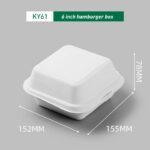
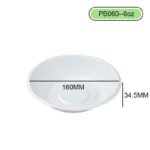
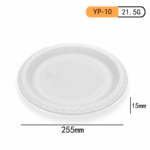
Bagasse is the fibrous by-product left after sugarcane juice extraction. After cleaning, pulping, and molding processes, it can be transformed into:
It is widely considered eco-friendly because:
-
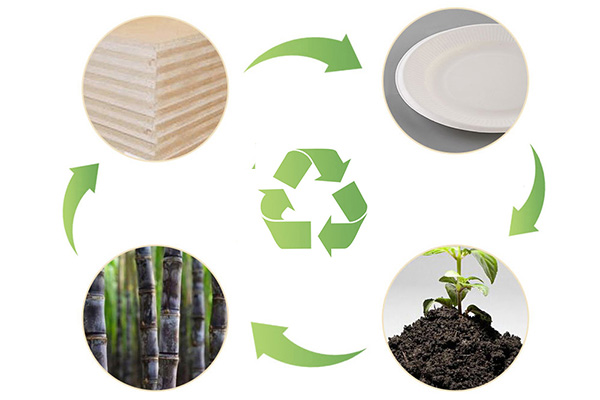
Renewable Resource
Bagasse is a by-product of agriculture, not petroleum-based plastic. -
Biodegradation Potential
Under appropriate conditions, microorganisms can decompose it. -
Physical Performance
Offers heat resistance, strength, and load-bearing capacity.
These features often lead to its association with terms like “eco-friendly,” “biodegradable,” or “compostable.”
However, these labels are not synonymous.
02. Biodegradable, Compostable, Recyclable: Key Differences
A frequent source of confusion in procurement is the difference between:
1) Biodegradable
-
Material decomposes via microorganisms.
-
Timeline may be long and conditions variable.
-
End results are not always fully harmless.
2) Compostable
-
Material breaks down under specific composting conditions into CO₂, water, and compost without harmful residues.
-
Industrial vs. home composting differs significantly in temperature, humidity, and decomposition time.
3) Recyclable
-
Can enter a recycling system for reuse.
-
Most bagasse products cannot be recycled through standard streams.
Thus, a product may be:
-
Biodegradable but not compostable
-
Industrially compostable but not suitable for home compost
-
Compostable but not recyclable
A simple “Compostable” label is insufficient.
03. What “Compostable” Standards Actually Mean
Genuine compostability usually adheres to international standards such as:
-
EN 13432 (EU)
-
ASTM D6400 (USA)
-
ISO 17088
Standards define:
-
Decomposition time
-
Temperature and moisture conditions
-
Microbial environment
-
Toxicity of residues
Industrial Composting
Industrial facilities maintain:
-
Temperatures of 55–60°C
-
Controlled humidity
-
Regular aeration and turning
Certified bagasse products typically decompose within 90 days.
Home Composting
-
Lower temperatures
-
Less controlled environment
-
Longer decomposition periods
Products certified for industrial composting cannot be assumed to decompose in home compost bins.
Labels must specify the type of composting; otherwise, they can mislead buyers and consumers.
04. Misconceptions and Greenwashing Risks
Misconception 1: “Compostable means it decomposes anywhere”
-
Landfills and oceans rarely allow full decomposition.
-
Local waste systems may not accept bagasse products.
Misconception 2: All bagasse products are additive-free
Some products include coatings for:
-
Oil resistance
-
Water resistance
-
Heat sealing
Common coatings like PLA or PE can significantly affect compostability.
Misconception 3: Certificates guarantee full compliance
-
Some certificates cover only the material, not the final product.
-
Some are expired or only valid for a specific component.
-
Some claims are marketing-driven.
Procurement must verify certificates thoroughly to avoid compliance and reputational risks.
05. Certifications and What Buyers Should Look For

Responsible procurement requires more than trust in supplier claims.
Checklist for Buyers
-
Full testing reports
-
Applicable standard (EN, ASTM, ISO)
-
Valid certificate dates
-
Scope coverage (entire product, coatings, inks, adhesives)
DASHAN’s practical approach:
When advising overseas clients, DASHAN recommends:
-
Confirming regulatory requirements for the target market
-
Determining whether compostability certification is needed
-
Reviewing coatings, inks, and glues for compliance
This workflow reduces compliance and operational risk.
06. Industrial vs Home Composting: Real-World Scenarios
Consider three bagasse products:
-
Uncoated tray
-
Close to compostability standards
-
Lower oil resistance
-
-
PLA-coated tray
-
Suitable for industrial composting
-
Good grease and heat resistance
-
-
PE-coated tray
-
Often not considered compostable
-
If the market lacks industrial composting infrastructure, even certified products may not achieve intended decomposition.
07. Design and Performance: Balancing Functionality with Sustainability
Food packaging must meet safety, hygiene, and transport requirements. Design trade-offs include:
-
Oil and water resistance vs. compostability
-
Heat performance vs. coating type
-
Cost vs. compliance
Sustainability should balance material science, recycling, and functionality.
08. How Buyers Should Evaluate Suppliers
Key evaluation points:
-
Can the supplier provide valid certificates?
-
Do certificates cover the full product?
-
Is the composting type clearly specified?
-
Are coatings fully disclosed?
-
Can third-party testing be conducted?
DASHAN experience:
-
Emphasis on transparent communication
-
Clarifying product scope and limitations
-
Avoiding exaggerated claims
This approach builds long-term trust.
09. Responsible Labeling and Brand Practices
Brands should follow three principles:
-
Accuracy
Avoid ambiguous terms or broad claims. -
Local compatibility
Ensure the product aligns with local composting systems. -
Consumer education
Explain proper disposal to reduce confusion and maximize environmental impact.
Responsible labeling protects brand reputation and ensures genuine sustainability.
FAQ: Compostable Labels on Bagasse Products
1. Does “compostable” mean the product breaks down anywhere?
No. Most compostable products require industrial composting conditions with high temperatures and controlled aeration. Many will not properly decompose in landfills or oceans.
2. Are all bagasse containers naturally compostable?
Not necessarily. Coatings such as PLA or PE can change compostability outcomes. Some coated products are compostable only in industrial facilities, while others may not qualify as compostable at all.
3. What certifications should I check?
Look for verified standards such as EN 13432, ASTM D6400, or ISO 17088, along with marks like OK Compost, OK Compost Home, BPI. Always confirm the certificate applies to the entire finished product, not just the raw material.
4. Can bagasse be composted at home?
Only if the product carries valid home-compost certification. Most items labeled “compostable” are designed for industrial composting, not backyard systems.
5. Is compostable packaging recyclable?
Generally no. Compostable bagasse packaging is usually not accepted in recycling streams, and mixing it with recyclables may cause contamination.
6. What questions should I ask suppliers?
Ask for:
-
Valid certificates and expiry dates
-
Product scope (including coatings, inks, adhesives)
-
Test reports from accredited labs
-
Clarification on industrial vs home compostability
7. What happens if certifications are unclear?
You may face:
-
Labeling violations
-
Customs delays
-
Retail audit failures
-
Reputational risk with sustainability-conscious buyers
Conclusion: Transparency Over Labels
“Compostable” is not a universal guarantee. It involves:
-
Material science
-
Certification systems
-
Waste management infrastructure
-
Regulatory compliance
For buyers, brands, and importers, the focus should be on verifiable, responsible, and transparent practices rather than just marketing slogans.
Bagasse packaging can play a significant role in sustainable packaging strategies, but its true value depends on careful design, reliable certification, and honest communication.
References
-
European Standard EN 13432 — Requirements for Packaging Recoverable Through Composting
https://environment.ec.europa.eu/topics/waste-and-recycling/packaging-waste_en -
ASTM D6400 — Standard Specification for Compostable Plastics
https://www.astm.org/d6400-23.html -
TÜV Austria — OK Compost Certification Programs
https://www.tuv-at.be/green-marks/ok-compost/ -
BPI Certification — Compostable Products Institute
-
ISO 17088 — Specifications for Compostable Plastics
-
Ellen MacArthur Foundation — Compostable Packaging Guidance