
Quick Summary
This article explores the innovative solutions in low-carbon food packaging, focusing on sustainable materials such as PLA, RPET, and sugarcane bagasse. It discusses how these materials help reduce the carbon footprint in food packaging and highlights key design strategies, such as minimizing material use and optimizing logistics. Case studies from leading brands demonstrate successful applications of low-carbon packaging. This piece provides essential insights for businesses seeking to adopt eco-friendly packaging solutions and contribute to sustainability goals.
Introduction
With growing concerns over environmental sustainability and climate change, reducing carbon footprints has become a primary goal across industries. The food packaging sector, known for its high use of plastic materials, is under increasing pressure to find solutions that minimize environmental impact. This article explores innovative low-carbon food packaging solutions and how these materials help reduce emissions while promoting a more sustainable future.
1. Understanding Carbon Footprint in Packaging
1.1 What is a Carbon Footprint?
A carbon footprint refers to the total amount of greenhouse gases emitted during the lifecycle of a product or service. For packaging materials, this includes emissions from raw material extraction, production, transportation, use, and disposal.
1.2 The Carbon Emissions of Different Packaging Materials
-
Plastic Packaging: Traditional plastic materials, often derived from petroleum, have high carbon emissions during production.
-
Paper Packaging: Although paper is biodegradable, its production is resource-intensive and consumes large amounts of water and energy.
-
Glass & Metal Packaging: These materials have a significant carbon footprint due to energy-intensive manufacturing processes, although they are highly recyclable.
-
Biodegradable Plastics (PLA, PBAT): While biodegradable plastics have lower carbon emissions compared to conventional plastics, their full environmental impact still requires more research.
1.3 Life Cycle Analysis of Packaging
The carbon footprint of food packaging is influenced by various stages:
-
Material Production: Raw material extraction and production contribute significantly to emissions.
-
Transportation: The logistics involved in distributing packaging materials also adds to their carbon footprint.
-
End-of-Life (EOL): The recycling rate and disposal method (landfill, incineration, composting) impact the final carbon footprint.
2. Choosing Low-Carbon Packaging Materials
2.1 PLA (Polylactic Acid)
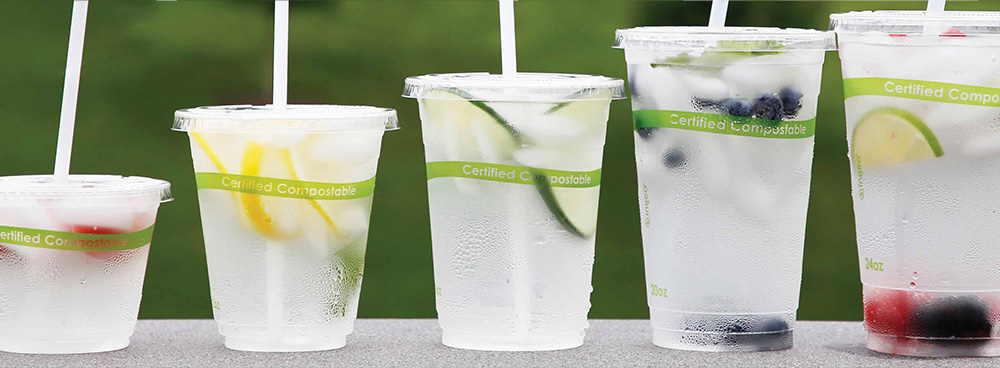
PLA is a biodegradable plastic derived from renewable resources like corn starch or sugarcane. Compared to traditional plastics, PLA has a lower carbon footprint during production.
-
Benefits: Made from renewable resources, lower carbon emissions, compostable.
-
Limitations: PLA is not suitable for high-temperature applications and needs industrial composting conditions for effective degradation.

2.2 RPET (Recycled PET)
RPET is made from post-consumer recycled PET bottles, offering significant reductions in carbon emissions compared to new plastic production. RPET reduces the demand for virgin plastic and contributes to circularity.
-
Benefits: Closed-loop recycling, lower emissions, reduces plastic waste.
-
Limitations: Current recycling rates remain low, and contamination can affect its recyclability.

2.3 Sugarcane Bagasse
Sugarcane bagasse is a byproduct of sugarcane processing, offering an eco-friendly alternative to conventional packaging materials. It is biodegradable and compostable, making it an ideal low-carbon option.
-
Benefits: Made from agricultural waste, low carbon footprint, biodegradable.
-
Limitations: Limited resistance to oil and moisture, may not be suitable for all food types.

2.4 Paper-Based Packaging
While paper is a traditional packaging material, it can be made more sustainable through innovation. Optimizing paper pulp production and increasing recycling rates can significantly reduce paper packaging’s carbon emissions.
-
Benefits: Renewable, recyclable, and widely available.
-
Limitations: Manufacturing can still have environmental impacts, and the strength and durability can be limited.
3. Innovative Packaging Design to Reduce Carbon Footprint
3.1 Minimizing Packaging
Reducing the volume of packaging material used not only cuts down on raw material consumption but also lowers transportation-related emissions. Packaging that is smaller and lighter reduces energy use during transportation.
3.2 Efficient Logistics and Packaging
Designing packaging that can be compacted or stacked effectively reduces the space taken up during shipping, increasing logistical efficiency and cutting carbon emissions associated with transportation.
3.3 Reusable and Recyclable Packaging
Designing packaging for multiple uses or making it easier to recycle further reduces its environmental impact. For example, reusable containers or refillable packaging systems can greatly lower the carbon footprint over time.
4. Case Studies: Successful Low-Carbon Packaging Practices
4.1 Coca-Cola and RPET
Coca-Cola’s “World Without Waste” initiative aims to make all of its packaging recyclable by 2030. The company is increasingly using RPET, reducing its reliance on virgin plastic and cutting carbon emissions.
4.2 Starbucks and PLA Cups
Starbucks has been transitioning to PLA cups, which are biodegradable and compostable, as part of its sustainability efforts to reduce its environmental impact and carbon footprint.
4.3 McDonald’s and Biobased Packaging
McDonald’s has started using sugarcane bagasse and paper-based packaging to replace foam and plastic in many of its products. This reduces the company’s carbon footprint while promoting the use of renewable resources.
5. Conclusion
As the demand for sustainable solutions increases, the food packaging industry is responding by developing low-carbon alternatives. Through the use of eco-friendly materials such as PLA, RPET, and sugarcane bagasse, coupled with innovative design strategies, the industry is making strides toward reducing its environmental impact. By adopting these practices, businesses not only contribute to climate action but also gain a competitive edge in a market that values sustainability.
FAQs
-
What is the carbon footprint of food packaging?
-
The carbon footprint of food packaging refers to the total greenhouse gas emissions from its production, transportation, use, and disposal.
-
-
What are some low-carbon alternatives to plastic packaging?
-
Low-carbon alternatives include PLA (polylactic acid), RPET (recycled PET), sugarcane bagasse, and paper-based packaging, each with lower environmental impact than conventional plastics.
-
-
How can packaging design reduce carbon emissions?
-
Packaging design can reduce emissions by minimizing the amount of material used, enhancing recyclability, and improving logistical efficiency during transportation.
-
-
Is PLA suitable for hot food packaging?
-
No, PLA is not suitable for hot food packaging as it has a low melting point and is best used for cold foods and beverages.
-
-
How can companies ensure their packaging is sustainable?
-
Companies can focus on using recyclable, compostable, or reusable materials, optimize packaging design, and adopt circular economy principles in their operations.
-
References
-
“Life Cycle Assessment of PLA and PET Packaging Materials” – Journal of Environmental Science & Technology, 2021. [Link to full text]
-
Coca-Cola’s “World Without Waste” Initiative – Coca-Cola.
-
Starbucks Sustainability Report 2020 – Starbucks Coffee Company.
-
Sustainable Packaging: The Future of Food Packaging – Global Food Packaging Research Institute. [Link to source]
Copyright Statement
© 2025 Dashan Packing. All rights reserved.
This article is an original work created by the Dashan Packing editorial team.
All text, data, and images are the result of our independent research, industry experience,
and product development insights. Reproduction or redistribution of any part of this content
without written permission is strictly prohibited.
Dashan Packing is committed to providing accurate, evidence-based information and
to upholding transparency, originality, and compliance with global intellectual property standards.