

Quick Answer: The True Cost of “Going Reusable”
While “reusable” food containers sound like the ultimate eco-friendly solution, the hidden costs of commercial washing, reverse logistics, and high customer theft (shrinkage) often destroy restaurant profit margins. For high-volume takeaway and food delivery operations, premium, 100% recyclable or industrially compostable disposable containers remain the absolute ROI winners. They eliminate cross-contamination risks, require zero reverse-logistics management, and ensure a pristine brand presentation with every single order.
1. The “Reusable” Illusion: Calculating the Hidden Costs
Many European and North American restaurant chains have recently experimented with shifting their takeaway operations to reusable containers, driven by new environmental mandates. However, many are quietly switching back to disposables.
The reason? Procurement managers often only compare the initial purchase price of the containers, entirely ignoring the Total Cost of Ownership (TCO). When you implement a reusable container program, you are no longer just a restaurant; you become a reverse-logistics and dishwashing facility.
Here is what is rapidly eating away at profits in reusable programs:
-
The Cost of Commercial Washing: Every returned container must be scraped, sanitized in an industrial high-temp dishwasher, dried, and visually inspected. This requires massive amounts of commercial-grade detergent, boiling water, and electricity.
-
Labor Overhead: You must pay staff to manage the return bins, run the washing cycles, and carefully inspect each bowl for scratches or lingering odors. In Western markets with high minimum wages, the labor cost per wash often exceeds the price of a brand-new premium disposable container.
-
The “Shrinkage” Disaster: Shrinkage is the industry term for lost or stolen inventory. Customers take reusable bowls home and keep them as Tupperware, or simply throw them in the trash because returning them is inconvenient. If a heavy-duty reusable bowl costs your business $4.00, and a customer throws it away after one use, your profit on that meal is completely wiped out.
-
Reverse Logistics Fees: If you use a third-party service (like Loop or local reusable networks) to collect and wash the containers, they charge a subscription fee and a per-collection fee, adding a permanent operational tax to every meal you sell.

2. Hygiene and Food Safety Compliance (The Audit Risk)
Since the global pandemic, consumer sensitivity to hygiene has never been higher. Reusable containers introduce severe food safety vulnerabilities that single-use packaging completely avoids.
-
Cross-Contamination Risks: Plastic is porous over time. After 20 or 30 runs through an industrial dishwasher, reusable plastic containers develop microscopic scratches. These micro-abrasions harbor bacteria, retain strong odors (like curry or garlic), and trap allergens (like peanut oil). If a customer has a severe allergic reaction because a reusable bowl was not perfectly sanitized, the legal liability falls entirely on the restaurant.
-
Health Inspector Scrutiny: Local health departments place reusable takeaway programs under a microscope. Restaurants must maintain strict, documented standard operating procedures (SOPs) for sanitization temperatures and drying times. Failing a health audit due to wet, improperly stacked reusable containers can result in immediate fines or closure.
3. The Disposable Advantage: Why Chains Rely on Single-Use
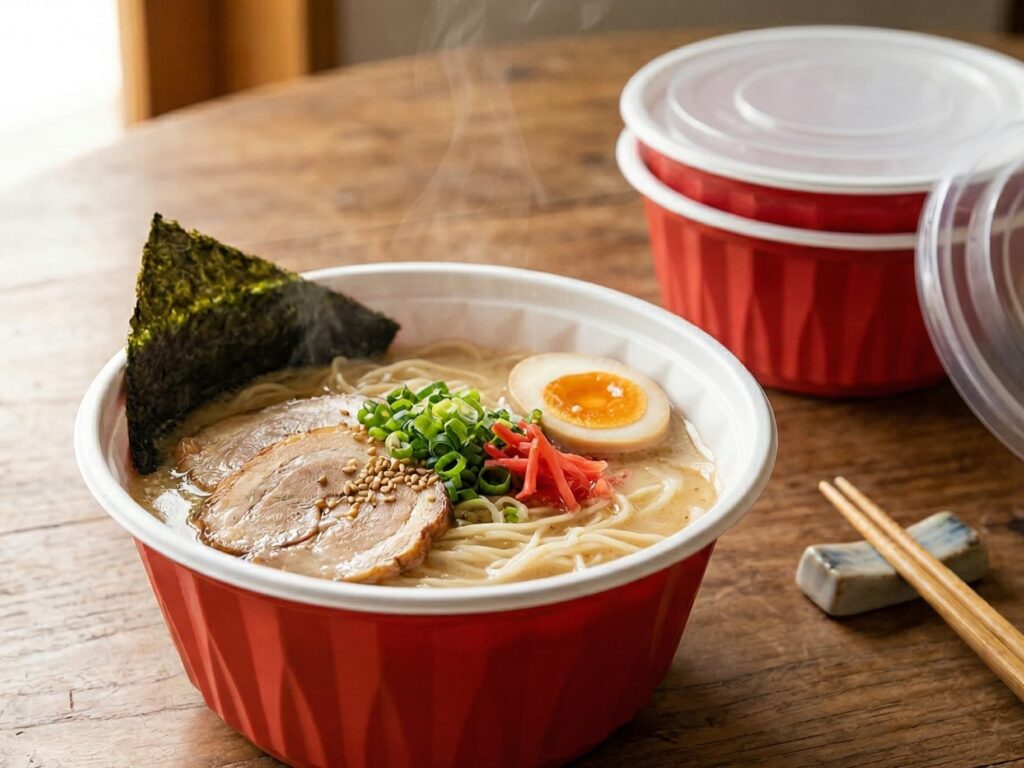
Modern disposable packaging has evolved significantly. By partnering with advanced manufacturing facilities, food service brands can achieve both their sustainability goals and their financial targets without the nightmare of reverse logistics.
-
Zero Operational Friction: Disposables offer the ultimate “pack and go” efficiency. Your kitchen staff simply fills the container, seals it, and hands it to the UberEats driver. The transaction is complete. There is no deposit to track, no app to scan, and no dirty dishes to retrieve.
-
Advanced Thermoforming Technology: Premium disposable containers are no longer flimsy. High-quality PP (Polypropylene) and PET (Polyethylene Terephthalate) containers are manufactured using highly precise thermoforming processes. Thermoforming allows factories to create incredibly lightweight yet structurally rigid containers with perfect dimensional tolerances. This ensures a flawless, leak-proof seal between the container and the lid—something heavy, warp-prone reusable containers struggle to maintain over their lifespan.
-
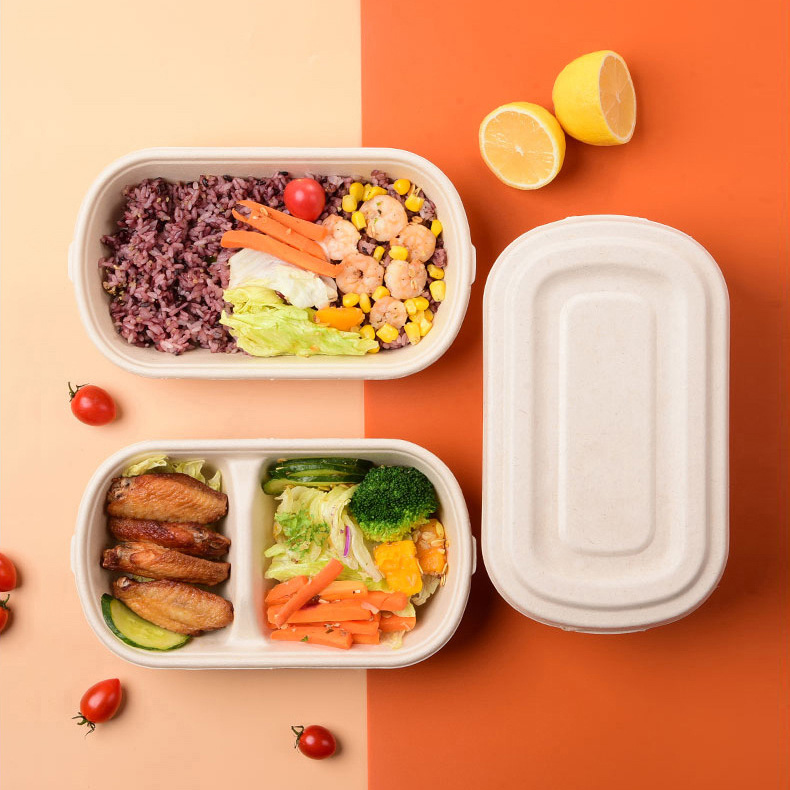
Sustainable Material Shifts: You do not have to choose between single-use and the environment. The market has shifted heavily toward 100% Recyclable PCR (Post-Consumer Recycled) plastics and PFAS-Free Sugarcane Bagasse (molded fiber). These materials provide the operational ease of single-use while participating in a verifiable circular economy or returning safely to the earth via commercial composting.
4. The TCO Comparison Table: Disposable vs. Reusable
To make an objective procurement decision, look at the hard data. Here is a breakdown of the Total Cost of Ownership for high-volume takeaway operations:
| Metric / Feature | Premium Disposable (Thermoformed PP/PET or Bagasse) | Heavy-Duty Reusable (Hard Plastic / Stainless Steel) |
| Initial Unit Price | Low ($0.05 – $0.15 per unit) | Very High ($2.00 – $6.00 per unit) |
| Cost Per Transaction | Fixed at the unit price. | Variable (Includes water, labor, detergent, and collection app fees). |
| Shrinkage (Loss) Risk | 0% (Designed for one-way transit). | 15% – 30% per month (Customers forget to return them). |
| Hygiene & Allergy Risk | Zero. Pristine, factory-sealed container every time. | High. Requires perfect industrial washing to avoid allergen cross-contact. |
| Storage Space Required | Minimal. Highly stackable/nestable design. | Massive. Requires space for clean inventory AND dirty return bins. |
| Delivery App Compatibility | Perfect. No deposit required from the customer. | Poor. Customers abandon carts when hit with a $5 container deposit. |
5. Best Use Cases: Balancing Your Operations
There is no universal correct answer, but there is a correct strategy for your specific business model.
When to Use Reusable Containers:
-
Closed-Loop Environments: University cafeterias, corporate office dining halls, or sports stadiums where customers cannot easily leave the premises with the container, making collection bins highly effective.
-
Strict Dine-In Services: Where the container never leaves the physical restaurant.
When to Use Premium Disposables:
-
Food Delivery Apps (UberEats, DoorDash): Where reverse logistics are physically impossible and drivers will not return dirty bowls to the restaurant.
-
Drive-Thru & Fast Casual Takeaway: Where speed of service is the primary metric and customers are taking the food to their cars or homes.
-
Catering and Large Events: Where collecting, transporting, and washing hundreds of dirty containers off-site would destroy the profit margin of the event.
6. Conclusion: Protect Your Margins and Your Brand
The push for reusable takeaway packaging is driven by good intentions, but for the vast majority of food service businesses, the math simply does not work. The crushing weight of reverse logistics, labor, and inventory shrinkage turns a simple meal delivery into a logistical nightmare.
For takeaway and delivery, the most financially sound and hygienic choice is to upgrade to high-quality, sustainably sourced disposable packaging. By utilizing highly recyclable, thermoformed PP/PET containers or certified compostable bagasse, you can meet modern eco-standards without sacrificing your profit margins.
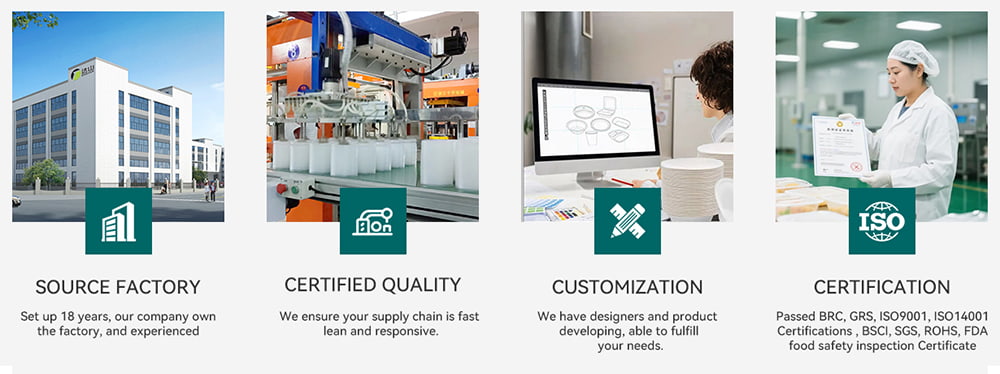
At Dashan Packing, we specialize in engineering the perfect single-use solutions for global franchises. Our precision-thermoformed containers guarantee leak-proof deliveries, impeccable food presentation, and total compliance with international food contact regulations.
👉 [Contact Dashan’s Export Team] today to request samples of our premium disposable solutions and receive a transparent, factory-direct quote.
FAQ: Disposable vs Reusable Packaging Costs
1. Are reusable containers actually better for the environment?
It depends on the return rate. Life Cycle Assessments (LCAs) show that a heavy reusable plastic bowl must be returned and washed at least 15 to 30 times to offset the higher carbon and energy footprint required to manufacture it. If a customer throws it away after 3 uses, it is significantly worse for the environment than a standard disposable container.
2. Why do delivery customers hate reusable container programs?
Friction and cost. Most reusable programs require the customer to pay a deposit (e.g., $3 to $5) upfront or download a third-party app to track the bowl. Customers ordering convenient fast food often abandon their digital shopping carts when faced with these extra steps and fees.
3. Do health departments allow reusable takeaway containers?
Yes, but with strict regulations. Restaurants must adhere to commercial sanitization codes, proving that water temperatures and chemical sanitizers are sufficient to kill all pathogens. Many smaller restaurants fail these audits because they lack the industrial dishwashing infrastructure required.
4. What does “thermoformed” mean in plastic containers?
Thermoforming is an advanced manufacturing process where a flat sheet of plastic is heated until pliable, then formed over a highly precise mold using vacuums and pressure. This creates lightweight, highly uniform, and shatter-resistant containers with perfect lid-seals, superior to older, heavier injection-molded methods.
5. How can I make my disposable packaging more sustainable?
Switch to materials that have a verifiable end-of-life path. Use RPET (Recycled PET) which utilizes post-consumer waste, or adopt PFAS-Free Sugarcane Bagasse, which can be commercially composted and returned to the soil without leaving toxic microplastics behind.
References & Authoritative Industry Research
To provide our clients with objective, data-driven procurement strategies, Dashan Packing bases its Total Cost of Ownership (TCO) and Life Cycle Assessments (LCA) on research from the following global authorities:
-
United Nations Environment Programme (UNEP): Single-Use Supermarket Food Packaging and its Alternatives (Comprehensive lifecycle comparisons highlighting the break-even points where the environmental benefits of reusable packaging are completely negated by low consumer return rates and high washing energy consumption).
-
Food and Drug Administration (FDA): Food Code – Equipment, Utensils, and Linens (Strict federal guidelines detailing the commercial sanitization, cross-contamination prevention protocols, and high water temperatures legally required for multi-use food contact surfaces).
-
McKinsey & Company: The True Cost of Packaging Sustainability (Industry analysis breaking down the hidden operational costs, reverse logistics friction, and consumer behavioral barriers associated with scaling reusable packaging systems in the fast-casual dining sector).
-
European Food Safety Authority (EFSA): Guidelines on Food Contact Materials (Regulatory framework emphasizing the hygiene risks of micro-abrasions in reusable plastics and validating the safety profile of thermoformed single-use PP/PET).
Copyright & Legal Disclaimer
© 2026 Dashan Packing. All rights reserved.
This Cost & Compliance Guide is an original work created by the Dashan Packing supply chain and technical teams. All Total Cost of Ownership (TCO) analyses, manufacturing insights (including thermoforming engineering), and compliance assessments are the result of our independent industry research and extensive B2B packaging experience. Reproduction, redistribution, or unauthorized use of any part of this content without explicit written permission from Dashan Packing is strictly prohibited. Dashan Packing provides this information for educational and strategic procurement purposes only.