

Quick Summary
Understanding the difference between FDA food grade packaging standards and third-party testing like SGS is essential for global packaging buyers.
FDA regulations define the legal requirements for food contact materials in the United States, focusing on material safety, chemical composition, and migration limits. In contrast, SGS provides independent testing and verification but does not grant regulatory approval.
Relying solely on SGS reports can lead to compliance risks, especially when importing into regulated markets. Buyers should combine FDA compliance documentation with verified testing data to ensure full safety and legal acceptance.
Choosing a reliable supplier with proven compliance experience is critical for reducing risks, avoiding shipment rejection, and maintaining long-term business success.
Introduction: Why Food Grade Standards Matter More Than Ever
Food safety has become one of the most critical concerns in global packaging procurement. As international trade expands and regulatory systems tighten, buyers are under increasing pressure to ensure that every packaging component meets strict safety requirements.
For importers, distributors, and food brands, compliance is no longer optional. A single non-compliant shipment can result in customs rejection, financial losses, and long-term damage to brand credibility.
At the center of this discussion is a common source of confusion: the difference between FDA food grade packaging standards and SGS testing reports. Many buyers mistakenly assume that an SGS report is equivalent to FDA approval. In reality, these two systems serve very different purposes.
Understanding how they work—and how they complement each other—is essential for making informed sourcing decisions, especially when working with overseas suppliers or evaluating a food packaging manufacturer China.
This article provides a clear, structured explanation of FDA regulations, SGS testing, and how buyers can ensure full compliance in real-world procurement scenarios.
Understanding FDA Food Grade Packaging Standards
What Does FDA Compliance Actually Mean?
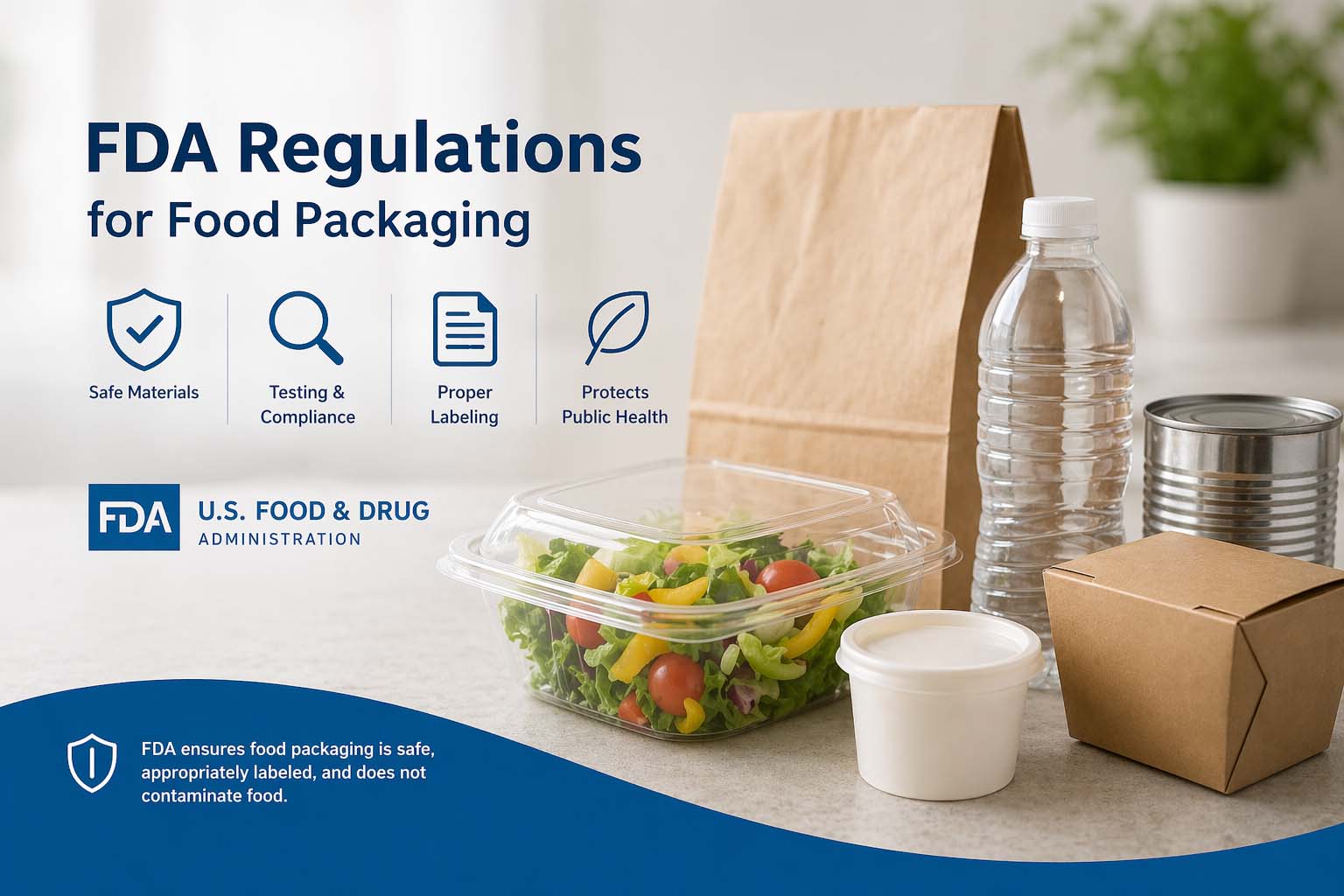
The U.S. Food and Drug Administration (FDA) regulates materials that come into contact with food under a legal framework rather than a certification system. This means there is no such thing as an official “FDA certificate” issued by the agency for packaging materials.
Instead, compliance with FDA food grade packaging standards requires that materials meet the requirements defined in the Code of Federal Regulations (CFR), particularly Title 21. These regulations govern the safety, composition, and allowable substances used in food contact materials.
Manufacturers must ensure that all materials used in packaging are safe under their intended conditions of use. This includes considerations such as temperature, food type (fatty, acidic, aqueous), and duration of contact.
For buyers, this means working with an FDA compliant packaging manufacturer that can provide documentation demonstrating that their materials meet regulatory requirements.
Key FDA Regulations for Food Packaging
The most relevant sections of FDA regulations for packaging include:
- 21 CFR 174: General provisions for food contact substances
- 21 CFR 175–178: Specific materials such as adhesives, coatings, polymers, and additives
- 21 CFR 177: Indirect food additives, including plastics like PET and PP
These regulations define which substances are permitted and under what conditions they can be used. They also establish limits on chemical migration from packaging into food.
Unlike a one-time certification, FDA compliance is an ongoing responsibility. Manufacturers must ensure consistency in raw materials, production processes, and quality control.
Common Materials That Meet FDA Standards
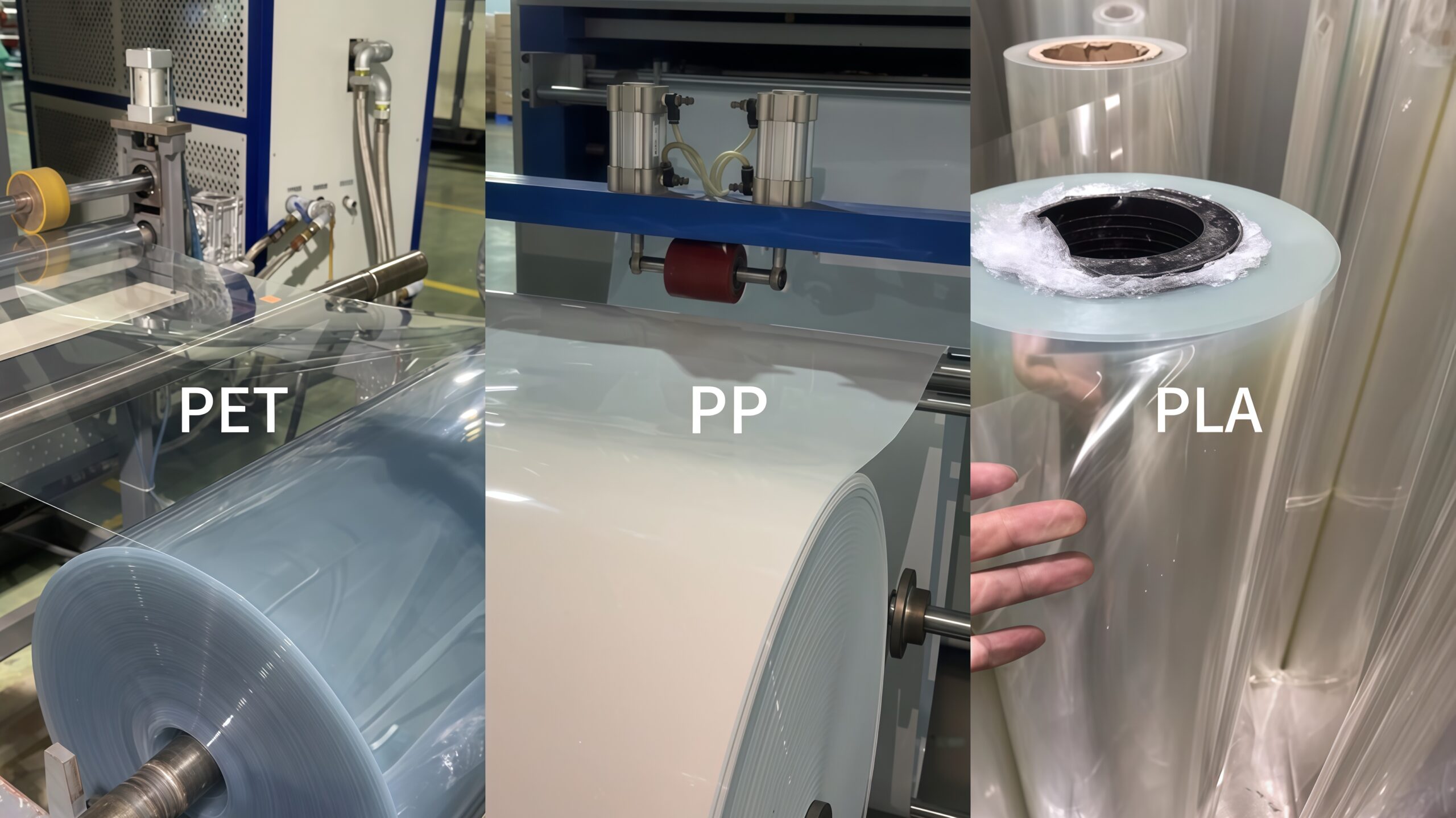
Several commonly used packaging materials can meet FDA requirements when properly formulated and processed:
- Polypropylene (PP): widely used for hot food containers
- Polyethylene terephthalate (PET): commonly used for cold food packaging
- Polystyrene (PS): used in disposable food containers
- Polylactic acid (PLA): a bio-based alternative
However, compliance depends not only on the base material but also on additives, colorants, and processing aids. This is why sourcing from a reliable FDA approved food packaging materials supplier is critical.
What Is SGS and What Does It Do in Food Packaging?
SGS as a Testing and Inspection Organization
SGS is a globally recognized third-party testing, inspection, and certification organization. Unlike the FDA, SGS does not create regulations. Instead, it provides independent verification that materials meet specific standards or testing criteria.
For packaging buyers, SGS reports are often used to validate product safety, especially when sourcing from international suppliers.
Types of SGS Tests for Packaging Materials
SGS conducts a variety of tests relevant to food packaging, including:
- Overall migration testing
- Specific migration testing (for substances such as heavy metals or plasticizers)
- BPA and phthalate testing
- Sensory and odor testing
These tests simulate real-world conditions to determine whether substances migrate from packaging into food.
A typical SGS test report for food containers includes detailed data on test conditions, results, and compliance with specific standards.
What SGS Reports Actually Prove
An SGS report demonstrates that a product has been tested under certain conditions and meets the specified criteria. However, it does not automatically mean that the product complies with all regulatory requirements in a specific country.
For example, a product may pass an SGS migration test but still fail to meet FDA regulations if it contains a substance not approved under U.S. law.
This distinction is critical. SGS provides evidence of testing, while FDA defines legal compliance.
FDA vs. SGS: Key Differences Explained Clearly
Understanding the differences between FDA and SGS is essential for avoiding costly mistakes in sourcing and importation.
| Aspect | FDA | SGS |
|---|---|---|
| Nature | Government regulation | Third-party testing organization |
| Function | Defines legal requirements | Verifies test results |
| Certification | No official certificate | Provides test reports |
| Scope | United States | Global |
| Role in Compliance | Mandatory for US market | Supporting evidence |
In simple terms, FDA sets the rules, while SGS helps verify whether a product meets certain aspects of those rules.
Real-World Scenario: Why Buyers Often Get Confused
Common Misconception: “SGS = FDA Approved”
One of the most common misunderstandings in the packaging industry is the belief that an SGS report equals FDA approval.
This misconception often arises because SGS reports are widely used in international trade and appear highly technical and authoritative. However, they do not replace regulatory compliance.
Case Study: Importing Food Containers to the US
Consider a buyer importing plastic food containers into the United States. The supplier provides an SGS report showing that the product passed migration testing.
However, during customs inspection, the shipment is flagged because the material contains an additive not permitted under FDA regulations.
As a result, the shipment is rejected, leading to:
- Financial losses
- Delayed product launch
- Additional testing and documentation costs
This scenario highlights the importance of verifying both testing and regulatory compliance.
How to Avoid Costly Compliance Mistakes
To avoid such issues, buyers should:
- Request FDA compliance declarations
- Verify material composition
- Ensure consistency between test reports and regulatory requirements
Working with a food packaging supplier FDA compliance experience can significantly reduce these risks.
Material Safety and Migration Testing Explained
What Is Migration Testing?
Migration testing measures the transfer of chemical substances from packaging materials into food under controlled conditions. It is a key method for evaluating food safety.
EU vs FDA Testing Differences
While both FDA and EU regulations focus on safety, their approaches differ. The EU uses standardized migration limits, while the FDA evaluates substances based on their intended use and toxicological data.
Key Testing Parameters
| Test Type | Typical Limit | Application |
|---|---|---|
| Overall Migration | ≤10 mg/dm² (EU standard) | General safety |
| Specific Migration | Substance-specific limits | Additive control |
| Heavy Metals | ppm level restrictions | Toxicity prevention |
These tests provide critical data for assessing material safety and regulatory compliance.
How to Verify If Packaging Is Truly Food Grade
Documents You Should Request
To ensure compliance, buyers should request:
- FDA compliance declaration
- SGS or equivalent test report
- Material safety data sheets
Questions to Ask Suppliers
When evaluating a food grade packaging manufacturer China, consider asking:
- Are all materials compliant with FDA regulations?
- Can you provide batch-specific test reports?
- How do you ensure consistency in production?
Red Flags in Supplier Claims
Be cautious of suppliers who:
- Claim “100% FDA certified” without documentation
- Provide outdated or incomplete test reports
- Cannot explain their compliance process
Reliable FDA compliant packaging factory partners will provide transparent and verifiable information.
Industry Trends: Stricter Global Food Packaging Regulations
Global regulations are becoming more stringent as governments respond to increasing concerns about food safety and environmental impact.
Countries are introducing stricter controls on chemical migration, material composition, and recyclability. At the same time, sustainability is becoming an integral part of compliance.
For buyers, this means higher expectations and greater responsibility when selecting packaging suppliers.
FDA and SGS in Different Markets: What Buyers Should Know
When exporting to the United States, FDA compliance is mandatory. SGS reports can support documentation but cannot replace regulatory requirements.
In Europe, compliance with EU regulations is required, and SGS testing is often used to verify conformity.
For global supply chains, combining regulatory compliance with third-party testing provides the most robust approach.
How to Choose a Reliable Food Grade Packaging Supplier
Selecting the right supplier is one of the most important decisions in packaging procurement.
Buyers should evaluate:
- Regulatory compliance capabilities
- Testing and certification support
- Production capacity and consistency
- Traceability systems
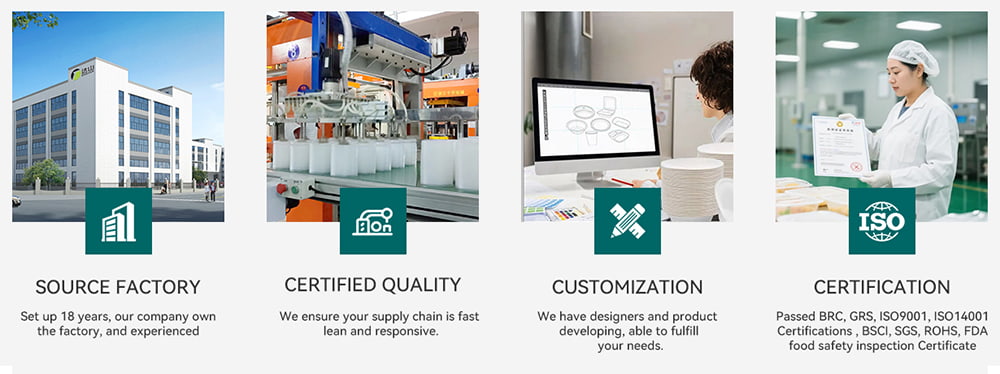
DASHAN, for example, integrates material expertise with strict quality control and compliance processes. By working closely with clients, DASHAN ensures that packaging solutions meet both regulatory requirements and practical performance needs.
For businesses seeking a reliable food packaging manufacturer or custom food packaging factory wholesale, partnering with experienced suppliers is essential for long-term success.
Common Mistakes Buyers Make (And How to Avoid Them)
Many buyers focus only on obtaining an SGS report, assuming it guarantees compliance. Others fail to verify material composition or overlook regulatory requirements in target markets.
Avoiding these mistakes requires a clear understanding of the difference between testing and regulation, as well as careful supplier evaluation.
Future Outlook: Will Global Standards Become Unified?
As international trade continues to expand, there is increasing pressure to harmonize food packaging standards across regions.
While full unification is unlikely in the short term, greater alignment between regulatory systems is expected. Advances in digital compliance tools and traceability systems will also improve transparency and efficiency.
FAQ: FDA vs SGS Food Grade Packaging
1. Is SGS certification enough for FDA compliance?
No. SGS reports support testing verification but do not replace FDA regulatory compliance.
2. Does the FDA issue certificates for packaging materials?
No. The FDA does not issue certificates; compliance is based on meeting regulatory requirements.
3. What documents are required for importing food packaging into the US?
Typically, FDA compliance declarations, material specifications, and supporting test reports are required.
4. How can I verify FDA compliance?
Review regulatory documentation, material composition, and supporting test data from suppliers.
5. Which is more important, FDA or SGS?
Both are important. FDA ensures legal compliance, while SGS provides testing verification.
6. What is food grade packaging standard?
It refers to materials and products that are safe for direct contact with food under defined conditions.
Conclusion: FDA vs SGS Is Not Either-Or
FDA and SGS serve complementary roles in food packaging safety. FDA defines the legal requirements, while SGS provides testing and verification.
For packaging buyers, the key is not choosing one over the other, but understanding how to use both effectively.
By combining regulatory compliance with reliable testing, businesses can ensure product safety, avoid costly errors, and build trust with customers and partners.
References (With Links)
- U.S. Food and Drug Administration (FDA) – Food Contact Substances Regulations
https://www.fda.gov/food/food-ingredients-packaging/food-contact-substances-fcs - Code of Federal Regulations (CFR) Title 21 – Food and Drugs
https://www.ecfr.gov/current/title-21 - SGS – Food Contact Materials Testing Services
https://www.sgs.com/en/services/food-contact-materials-testing - European Commission – Food Contact Materials Regulation (EU) No 10/2011
https://food.ec.europa.eu/safety/chemical-safety/food-contact-materials_en - PlasticsEurope – Plastics and Food Safety Overview
https://plasticseurope.org/sustainability/safe-use-of-plastics/food-contact-materials/ - Intertek – Food Contact Materials Testing and Compliance
https://www.intertek.com/food/contact-materials/ - DASHAN-FDA vs. SGS Food Grade Standards: A Guide for Packaging Importers
FDA Vs SGS Food Packaging: Key Differences Guide
Copyright Statement
© 2026 Dashan Packing. All rights reserved.
This article is an original work created by the Dashan Packing editorial team.
All text, data, and images are the result of our independent research, industry experience,
and product development insights. Reproduction or redistribution of any part of this content
without written permission is strictly prohibited.
Dashan Packing is committed to providing accurate, evidence-based information and
to upholding transparency, originality, and compliance with global intellectual property standards.