

Quick Summary
Bagasse packaging is often promoted as a sustainable alternative to plastic, but it is not suitable for every food packaging application. Limitations in moisture resistance, oil resistance, heat tolerance, and shelf-life performance mean bagasse works best in specific use cases rather than as a universal solution. Responsible packaging decisions require performance-based material selection, not assumptions driven by eco-labels alone.
Bagasse packaging is often presented as a straightforward solution to plastic reduction. As a byproduct of sugarcane processing, bagasse appears renewable, compostable, and environmentally responsible. For many buyers, this makes it an attractive alternative to plastic food packaging.
However, treating bagasse as a universal replacement for plastic oversimplifies both sustainability and performance. In real foodservice and distribution environments, materials are not interchangeable. When bagasse is applied outside of its functional limits, it can introduce operational failures, environmental inefficiencies, and hidden costs.
Sustainable packaging outcomes depend not on intention, but on material fit.
The Myth of One-Material Sustainability
The idea that a single material can replace plastic across all food packaging applications is appealing—but unrealistic.
This assumption frames sustainability as a material substitution problem: replace plastic with something renewable, and environmental impact is reduced. In reality, sustainability is the result of how packaging performs within a system that includes food type, service duration, handling conditions, logistics, and disposal infrastructure.
Bagasse is sustainable in certain contexts. In others, it simply shifts environmental and operational burdens elsewhere.
What Bagasse Does Well
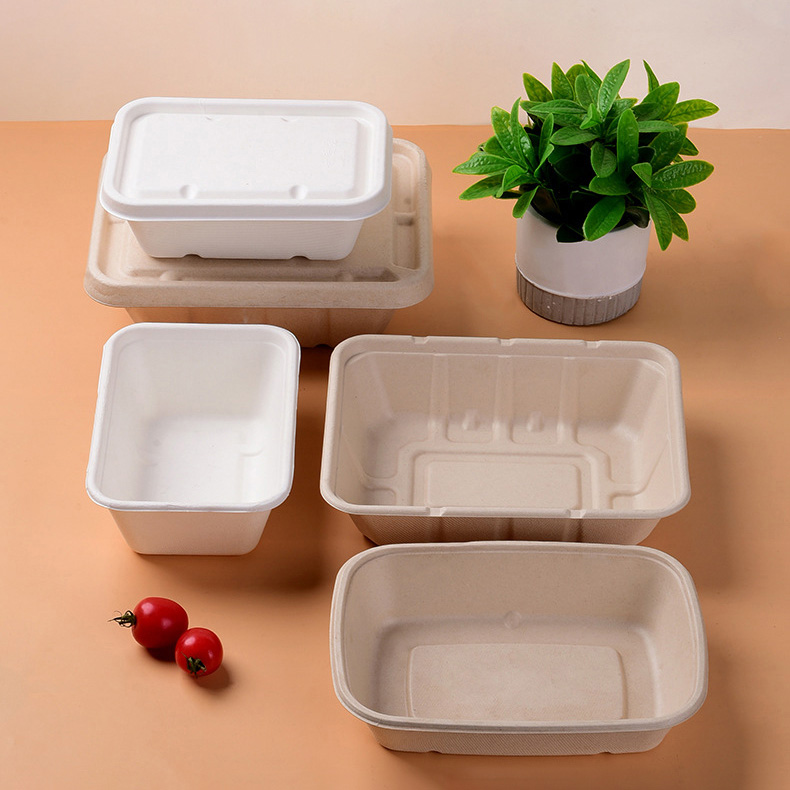
Bagasse, as a molded fiber material, offers clear advantages when used appropriately.
It is derived from renewable agricultural residue and aligns well with brand narratives around natural materials and plastic reduction. In controlled foodservice environments, bagasse performs reliably for dry or semi-dry foods with short holding times.
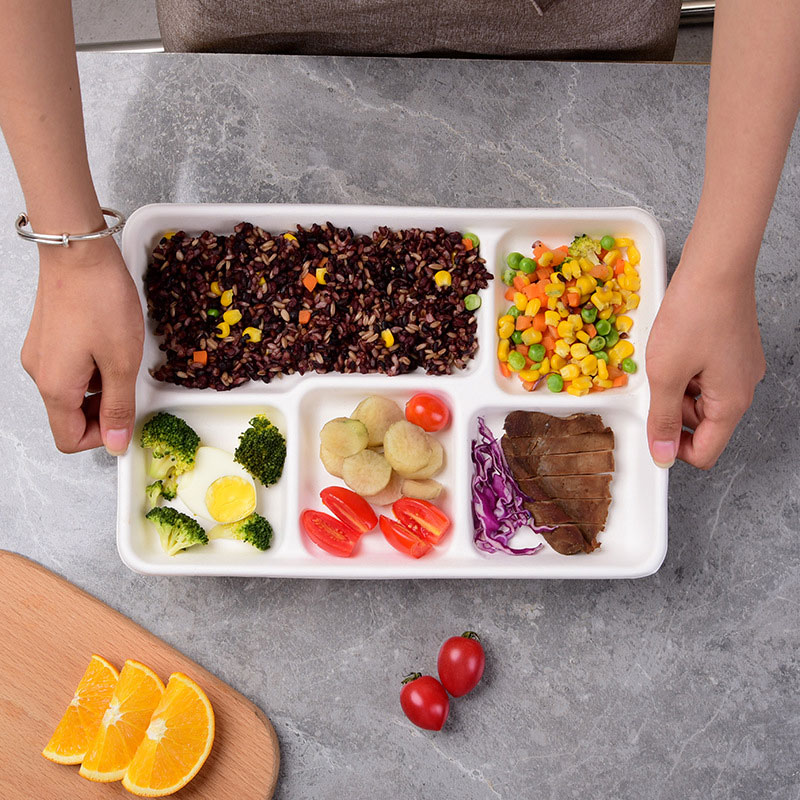
Common successful applications include takeaway meal boxes, plates, and compartment trays used for immediate consumption. Under these conditions, bagasse provides sufficient rigidity, acceptable heat resistance, and a strong visual sustainability signal to consumers.
When the use scenario matches the material’s strengths, bagasse delivers both functional and environmental value.
Where Bagasse Starts to Fail
Bagasse’s limitations become apparent when conditions move beyond short, controlled service cycles.
As a fiber-based material, bagasse naturally absorbs moisture. Extended exposure to steam, oily foods, sauces, or long holding times can lead to structural weakening, deformation, and leakage. Barrier performance is inherently limited compared to plastic, even when surface treatments are applied.
In high-throughput foodservice, delivery-heavy operations, or applications requiring long shelf life, these weaknesses become operational risks. What appears adequate during initial testing may fail under real-world variability.
This is often where buyer expectations and material reality diverge.
Operational Trade-Offs Buyers Often Overlook
When bagasse underperforms, operations adapt—often quietly.
Additional liners, outer bags, or secondary containers are added to manage leakage risk. Staff may handle packaging more carefully, slow down service, or reduce portion sizes to prevent deformation. These adjustments increase labor costs and material usage.
Food waste also becomes a concern. Deformed or leaking packaging reduces food quality perception and increases rejection or disposal rates.
These downstream consequences are rarely attributed back to the original material choice, yet they represent the true cost of misapplication.
Manufacturing Constraints That Shape Bagasse Performance
Bagasse performance is not determined by material type alone. Manufacturing conditions play a decisive role.
Fiber quality, pulp preparation, mold design, and thickness distribution all affect final strength and consistency. Small variations in process control can produce noticeable differences in rigidity and moisture resistance between batches.
From a manufacturing perspective, these constraints are visible long before products reach the market. At DASHAN, bagasse products are evaluated alongside plastic alternatives during development to determine where molded fiber can reliably perform—and where it cannot. This comparative approach helps identify application boundaries early, before performance issues appear downstream.
Consistency, not just material choice, defines reliability.
Compliance and Market-Specific Limitations
Bagasse packaging must also meet food-contact regulations, which vary by market.
While bagasse itself is widely accepted, additives, coatings, and processing aids introduce compliance complexity. Migration testing, usage condition alignment, and documentation completeness all matter—especially for importers operating across multiple regions.
Compliance confirms regulatory acceptability, but it does not guarantee functional suitability. Packaging can be compliant and still fail operationally if applied incorrectly.
Manufacturers supplying diverse markets, such as DASHAN, often encounter these regulatory and functional differences early in the product development stage.
Environmental Trade-Offs Compared to Plastic
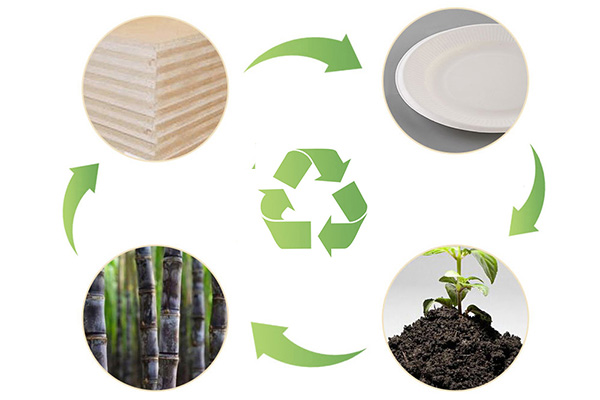
Bagasse is frequently positioned as environmentally superior to plastic, but this comparison depends on context.
Compostability only delivers value when composting infrastructure exists and is accessible. In regions without industrial composting, bagasse may end up in landfill, negating its intended benefit.
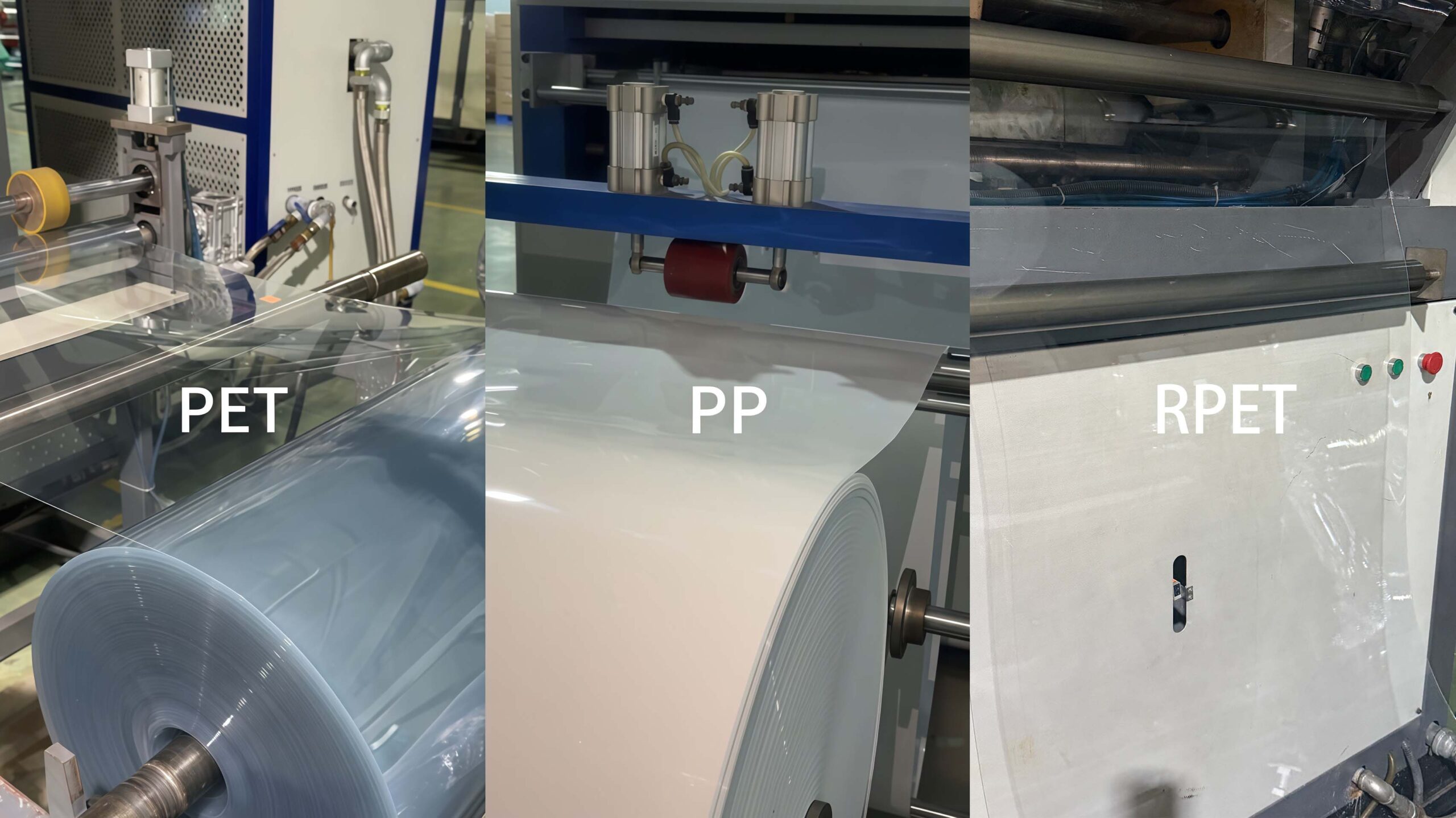
Plastic packaging, particularly PP, PET, or CPET, often offers superior dimensional stability and barrier performance. In applications where food waste prevention and transport efficiency are critical, plastic can result in a lower total environmental footprint despite its fossil origin.
Sustainability is not determined by material category, but by system-level outcomes.
When Bagasse Is the Right Choice

Bagasse excels when application conditions align with its properties.
It is well suited for short-duration use with dry or semi-dry foods, controlled service environments, and brand-facing foodservice where appearance and messaging matter. Regions with established composting infrastructure further enhance its environmental value.
In these scenarios, molded fiber solutions—including DASHAN’s bagasse trays and containers—are often selected for their balance of renewable sourcing, acceptable performance, and consumer perception.
Used correctly, bagasse delivers meaningful benefits.
When Plastic Remains the Better Option
There are applications where plastic remains the more responsible choice.
High-moisture, oily, or long-hold foods require barrier performance and dimensional stability that bagasse cannot consistently provide. Airline meals, ready meals, and delivery-intensive formats demand reliability under transport and temperature variability.
In these cases, DASHAN typically recommends PP, PET, or CPET formats where performance stability reduces food waste, operational disruption, and environmental loss.
Choosing plastic in these scenarios is not a sustainability failure—it is a risk management decision.
How Experienced Buyers Make Material Decisions
Experienced buyers do not ask whether a material is sustainable in isolation. They ask whether it performs reliably within their specific system.
They evaluate packaging through scenario-based testing, lifecycle cost analysis, and failure-risk assessment. Material choice becomes one variable among many, rather than the defining factor.
This mindset reduces misapplication and improves long-term sustainability outcomes.
Where Manufacturer Experience Makes the Difference
Manufacturer experience plays a critical role in navigating these trade-offs.
Suppliers with multi-material capabilities can evaluate bagasse and plastic objectively, without forcing a one-size-fits-all solution. Early identification of performance limits prevents costly downstream corrections.
With experience across bagasse, PP, PET, RPET, and CPET, DASHAN supports buyers in selecting materials based on real use conditions rather than sustainability labels alone. This approach positions packaging as a functional component of the food system—not a symbolic one.
FAQ
1. Can bagasse fully replace plastic food packaging?
No. Bagasse performs well in dry or short-term food contact scenarios but struggles in high-moisture, high-oil, or long shelf-life applications where plastics remain more reliable.
2. Is bagasse always more environmentally friendly than plastic?
Not necessarily. Its environmental impact depends on raw material sourcing, production energy, transportation, usage duration, and access to industrial composting facilities.
3. Is bagasse suitable for hot food or microwave use?
Some bagasse products can handle moderate heat, but they are not designed for prolonged high-temperature exposure or repeated reheating.
4. Does bagasse packaging comply with international food contact regulations?
Compliance varies by manufacturer and market. Products must meet standards such as FDA (US), EU food contact regulations, or Japan’s Food Sanitation Act.
5. When should plastic or alternative materials be considered instead?
Applications involving refrigeration, oily foods, liquid containment, long storage periods, or high barrier requirements are better served by PET, PP, or CPET.
Conclusion: Sustainability Requires Fit, Not Substitution
Bagasse is a valuable material, but it is not a universal replacement for plastic.
When misapplied, it introduces hidden environmental and operational costs. When correctly matched to application conditions, it delivers genuine benefits.
Sustainable packaging outcomes are achieved through alignment—between material properties, manufacturing capability, operational reality, and disposal infrastructure. Substitution alone is not strategy. Fit is.
References
-
European Commission – Food Contact Materials
https://food.ec.europa.eu/safety/chemical-safety/food-contact-materials_en -
U.S. FDA – Food Contact Substances
https://www.fda.gov/food/food-ingredients-packaging/food-contact-substances-fcs -
ISO 17088 – Specifications for Compostable Plastics
https://www.iso.org/standard/57955.html -
Ministry of Health, Labour and Welfare (Japan) – Food Sanitation Act
https://www.mhlw.go.jp/english/topics/foodsafety -
Ellen MacArthur Foundation – Packaging and Sustainability
https://ellenmacarthurfoundation.org/topics/plastics/overview
Copyright Statement
© 2026 Dashan Packing. All rights reserved.
This article is an original work created by the Dashan Packing editorial team.
All text, data, and images are the result of our independent research, industry experience,
and product development insights. Reproduction or redistribution of any part of this content
without written permission is strictly prohibited.
Dashan Packing is committed to providing accurate, evidence-based information and
to upholding transparency, originality, and compliance with global intellectual property standards.