
Quick Summary
Experienced buyers approach food packaging differently because they focus on real-world risk rather than specifications alone. Instead of relying solely on material labels, certificates, or data sheets, they evaluate packaging based on usage scenarios, failure modes, variability, and system interactions. This mindset helps reduce unexpected failures, complaints, and long-term sourcing costs by addressing risks before large-scale orders are placed.
Lessons Learned Beyond Specifications and Certificates
Introduction: The Difference Is Not Knowledge, but Perspective
In food packaging sourcing, the gap between inexperienced buyers and experienced buyers is often misunderstood.
It is easy to assume that experienced buyers simply know more—more materials, more standards, more suppliers. In reality, the difference runs much deeper. What separates experienced buyers is not the amount of information they possess, but how they interpret risk, uncertainty, and responsibility.
New buyers tend to focus on whether packaging meets requirements.
Experienced buyers focus on what happens when something goes wrong.
This shift in perspective fundamentally changes how packaging decisions are made.

1. Less Focus on Materials, More Focus on Use Scenarios

Inexperienced buyers often begin the packaging selection process by asking:
-
Is this material heat resistant?
-
Is it compostable or recyclable?
Experienced buyers start elsewhere.
Their first question is not what the packaging is made of, but how it will be used.
They think in terms of:
-
Fill temperature
-
Holding time
-
Oil content
-
Transportation conditions
-
Stacking height
-
Handling behavior
Material selection comes later—after the usage scenario is clearly defined.
This difference alone explains why experienced buyers encounter fewer unexpected failures. They are not choosing materials; they are choosing solutions for a defined environment.
2. Specifications Are Starting Points, Not Decision Criteria
Specification sheets are necessary. They provide structure and comparability.
However, experienced buyers treat specifications as filters, not answers.
They understand that:
-
A specification describes performance under certain conditions
-
It does not guarantee behavior under all conditions
New buyers often assume:
“If the numbers look right, the product will work.”
Experienced buyers know:
“Numbers describe potential, not outcomes.”
As a result, they look beyond the data sheet and ask how those specifications behave when variables are introduced.
3. Experienced Buyers Think in Failure Modes, Not Features
This is one of the most important mindset shifts.
Inexperienced buyers are drawn to features:
-
Heat resistant
-
Strong
-
Leakproof
-
Eco-friendly
Experienced buyers think in failure modes:
-
How does this product fail?
-
Under what conditions does failure begin?
-
How visible or disruptive is the failure?
Instead of asking, “Is this tray strong enough?” they ask:
“When does this tray start to deform, and what happens next?”
This approach does not come from pessimism—it comes from experience. Every buyer who has handled complaints, recalls, or product returns learns that failure is not binary. It is gradual, contextual, and often predictable.
4. Certificates Build Access, Not Confidence
Compliance certificates are essential for market access. Without them, packaging cannot legally be used.
However, experienced buyers do not confuse certificates with assurance.
They understand that certificates confirm:
-
Regulatory compliance
-
Material safety
-
Controlled test outcomes
They do not confirm:
-
Performance under specific foods
-
Stability during extended use
-
Reliability across logistics chains
Rather than asking whether a certificate exists, experienced buyers focus on what the certificate does not cover.
They read certificates for boundaries, not promises.
5. They Ask Different Questions — and Listen for Different Answers
The difference between inexperienced and experienced buyers is often revealed during supplier conversations.
Inexperienced buyers ask:
-
Can this hold hot food?
-
Is this oil resistant?
-
Does it meet FDA or EU standards?
Experienced buyers ask:
-
How long can it hold hot food before deformation begins?
-
What type of food causes the earliest performance change?
-
Under what conditions do you not recommend this product?
More importantly, experienced buyers listen carefully to how suppliers answer.
Clear limitations build trust.
Overly confident answers raise concerns.
6. They Assume Variability and Plan for It
New buyers often expect consistency as a default.
Experienced buyers assume variability as a reality.
They understand that:
-
Raw materials vary
-
Production conditions fluctuate
-
Transportation introduces stress
-
Handling differs between users
Instead of expecting perfect uniformity, they plan for tolerance. This leads them to:
-
Allow safety margins
-
Test multiple samples
-
Validate across batches
By planning for variability, they reduce surprise.
7. Packaging Is Evaluated as Part of a System
Experienced buyers do not evaluate packaging in isolation.
They consider how packaging interacts with:
-
Food properties
-
Filling equipment
-
Storage conditions
-
Logistics systems
-
Human handling
They understand that packaging rarely fails alone—it fails within a system.
A tray that performs well in a factory may fail in delivery. A container that survives machines may fail in consumer hands.
This systems-based thinking allows experienced buyers to identify risks earlier.
8. Clear Limitations Are Preferred Over Broad Claims
One of the strongest indicators of experience is how buyers react to limitations.
Inexperienced buyers may feel discouraged by statements such as:
“This product is not suitable for prolonged hot holding.”
Experienced buyers appreciate such clarity.
They understand that:
-
Every packaging solution has boundaries
-
Undefined boundaries are riskier than known ones
Clear limitations enable informed decisions. Broad claims create false confidence.
9. They Test for Reality, Not for Comfort
Testing philosophies differ greatly between new and experienced buyers.
New buyers often test to confirm expectations.
Experienced buyers test to challenge assumptions.
They design tests to expose weaknesses:
-
Longer holding times
-
Heavier stacking
-
Real food instead of simulants
-
Repeated handling
Their goal is not to prove the packaging works—but to understand when it stops working.
10. How This Thinking Reduces Cost Over Time
This mindset reduces cost in ways that are not immediately visible:
-
Fewer customer complaints
-
Lower return rates
-
Reduced rework
-
More stable supplier relationships
Experienced buyers understand that prevented failures are invisible savings.
11. What New Buyers Can Learn Without Paying the Full Price
Experience often comes from failure—but it does not have to.
New buyers can shorten the learning curve by:
-
Studying real use cases
-
Asking deeper questions
-
Validating assumptions early
-
Choosing suppliers who discuss limitations openly
Experience is not only accumulated—it can be shared.
12. Why Some Buyers Choose to Work With DASHAN
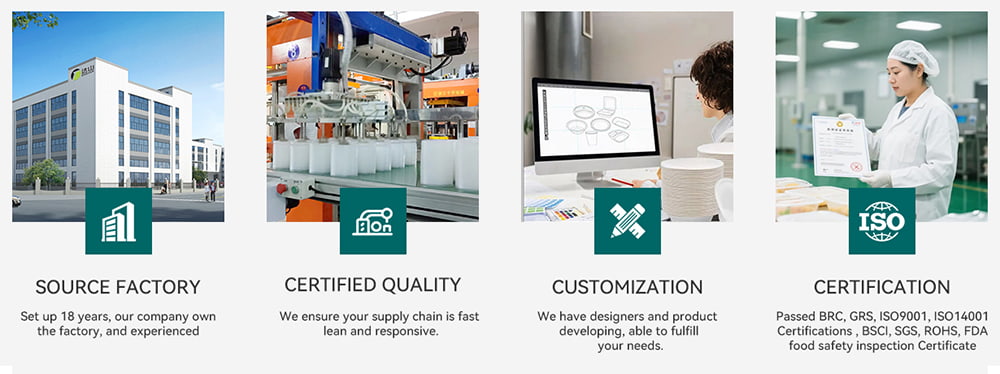
For many experienced buyers, supplier selection is no longer about finding the lowest price or the widest product range. It is about working with partners who understand how packaging behaves beyond specifications.
Buyers who choose to work with DASHAN typically do so for one reason: risk is discussed before orders are placed, not after problems appear.
Rather than focusing only on what a package can do, DASHAN emphasizes how packaging is actually used—how long food is held, how it is transported, how it is stacked, and where failure is most likely to occur. This approach allows buyers to define realistic boundaries early and avoid assumptions that often lead to costly surprises.
By treating packaging as part of an operational system rather than a standalone product, DASHAN supports buyers in making decisions that prioritize stability, predictability, and long-term performance—especially in applications where real-world conditions matter more than laboratory results.
FAQ
1. What is the main difference between experienced and inexperienced packaging buyers?
The key difference is perspective. Experienced buyers focus on how packaging fails in real use, while inexperienced buyers often focus on materials, features, and certificates.
2. Why don’t experienced buyers rely heavily on specifications?
Specifications describe performance under controlled conditions. Experienced buyers understand that real-world use involves multiple variables—heat, time, oil, stacking, and handling—that specifications alone cannot fully predict.
3. Are compliance certificates still important for experienced buyers?
Yes. Certificates are essential for regulatory access, but they do not guarantee performance. Experienced buyers use certificates as a baseline, not as proof of real-use reliability.
4. Why do experienced buyers prefer clear limitations over strong performance claims?
Clear limitations define risk boundaries. Experienced buyers see undefined or overly broad claims as a source of uncertainty and potential failure.
5. How do experienced buyers test packaging differently?
They test to expose weaknesses rather than confirm expectations—using real food, longer holding times, heavier stacking, and realistic handling scenarios.
6. Can new buyers adopt this mindset without years of experience?
Yes. By focusing on usage scenarios, asking deeper questions, and validating packaging under real conditions, new buyers can significantly reduce avoidable mistakes.
Conclusion: Experience Is a Risk Management Tool
Experienced buyers do not rely on intuition. They rely on patterns learned through consequence.
They think differently about packaging because they understand that packaging decisions are not technical exercises—they are risk management decisions.
By shifting focus from specifications to scenarios, from features to failure modes, and from claims to limitations, buyers make decisions that are not just compliant—but reliable.
In packaging, experience is not about knowing more.
It is about anticipating what others overlook.
References
-
European Commission – Food Contact Materials (FCM) Overview
https://food.ec.europa.eu/safety/chemical-safety/food-contact-materials_en -
U.S. FDA – Packaging & Food Contact Substances
https://www.fda.gov/food/packaging-food-contact-substances-fcs -
Smithers – Packaging Testing & Performance Evaluation
https://www.smithers.com/services/testing/packaging-testing -
Institute of Packaging Professionals (IoPP) – Packaging Fundamentals
https://www.iopp.org/page/Fundamentals -
FAO – Food Packaging and Food Safety
https://www.fao.org/food-safety/scientific-advice/food-packaging/en/
Copyright Statement
© 2026 Dashan Packing. All rights reserved.
This article is an original work created by the Dashan Packing editorial team.
All text, data, and images are the result of our independent research, industry experience,
and product development insights. Reproduction or redistribution of any part of this content
without written permission is strictly prohibited.
Dashan Packing is committed to providing accurate, evidence-based information and
to upholding transparency, originality, and compliance with global intellectual property standards.