

Quick Summary
World Environment Day highlights the growing importance of sustainable packaging as governments, consumers, and businesses work to reduce environmental impact and packaging waste. From recyclable PET and rPET materials to lightweight mono-material packaging systems, the foodservice and retail industries are increasingly adopting sustainable packaging solutions that balance environmental responsibility, food safety, functionality, and customer expectations.
Every year, World Environment Day reminds governments, businesses, and consumers that environmental sustainability is no longer a long-term discussion for the future — it is an immediate global priority. Among the many environmental challenges facing modern industries, packaging waste has become one of the most visible and widely discussed issues.
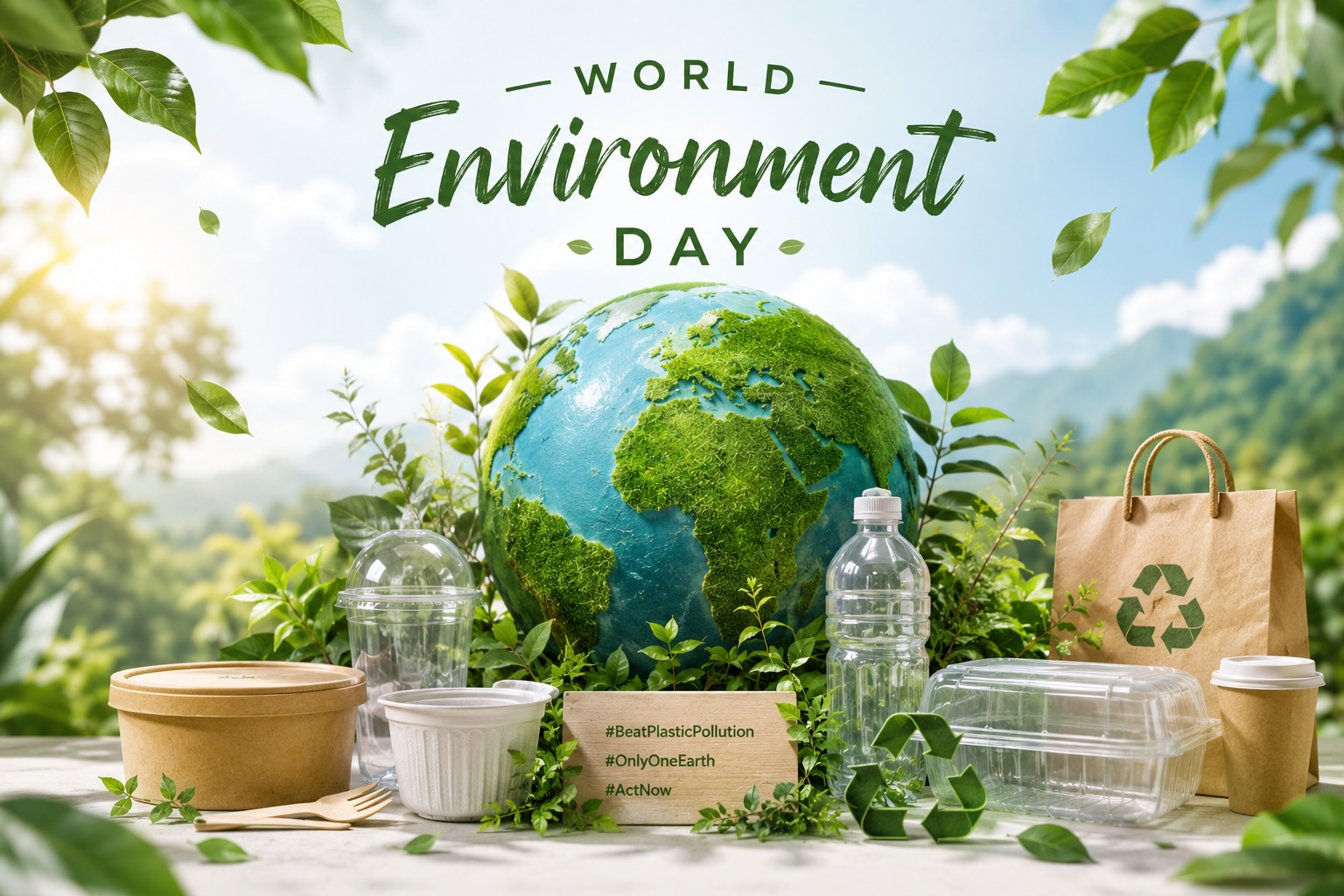
Established by the United Nations in 1972, World Environment Day is celebrated annually on June 5 and has become one of the world’s largest environmental awareness campaigns. Governments, global brands, environmental organizations, and businesses across multiple industries use this occasion to promote sustainability initiatives and encourage more responsible production and consumption practices.
Each year, World Environment Day focuses on major environmental challenges such as plastic pollution, climate change, resource conservation, and circular economy development. In recent years, packaging waste has become one of the most widely discussed topics during these global sustainability conversations because packaging directly affects everyday consumer behavior and large-scale waste generation.
For the foodservice and packaging industries, World Environment Day is no longer only a symbolic environmental event. It has increasingly become an important moment for companies to evaluate packaging strategies, sustainability goals, recyclable material adoption, and long-term environmental responsibilities.
Consumers encounter packaging every day through takeaway meals, supermarket products, beverages, e-commerce deliveries, and convenience foods. Because packaging is so closely connected to daily life, it has become one of the clearest symbols of how businesses approach environmental responsibility.
Over the past decade, the conversation around packaging has changed dramatically. Companies are no longer evaluated only on product quality and price. Increasingly, customers also pay attention to:
- whether packaging is recyclable,
- how much material is used,
- whether recycled content is included,
- and how responsibly brands manage packaging waste.
For foodservice and hospitality industries in particular, sustainable packaging has become both a business challenge and a competitive opportunity.
World Environment Day highlights an important reality: packaging decisions now influence not only operational efficiency, but also consumer trust, regulatory compliance, and long-term brand reputation.
Packaging Waste Has Become a Global Environmental Challenge
The rapid growth of modern convenience culture has significantly increased global packaging consumption.
Takeaway meals, online food delivery, ready-to-eat products, and e-commerce packaging have all expanded rapidly over the past several years. During the COVID-19 pandemic, food delivery usage increased substantially across many countries, leading to higher consumption of disposable cups, containers, bags, and cutlery.
While disposable packaging remains essential for food safety and convenience, the environmental impact of poorly managed packaging waste has become increasingly difficult to ignore.
Governments and environmental organizations worldwide continue raising concerns regarding:
- landfill expansion,
- marine pollution,
- carbon emissions,
- and low recycling efficiency for certain packaging materials.
Plastic pollution in oceans has become one of the most publicly recognized environmental issues globally. Images of marine waste and overflowing landfills have significantly influenced consumer attitudes toward packaging.
However, the challenge is more complex than simply reducing packaging usage altogether.
Food packaging still plays critical roles in:
- protecting food safety,
- extending shelf life,
- reducing food waste,
- and supporting transportation efficiency.
The industry therefore faces a difficult balancing challenge: improving sustainability without sacrificing hygiene, convenience, or product protection.
| Environmental Issue | Packaging Industry Impact |
|---|---|
| Plastic waste | Demand for recyclable materials |
| Landfill growth | Lightweight packaging trends |
| Ocean pollution | Reduced single-use plastic initiatives |
| Carbon emissions | Interest in recycled materials |
This is why many companies are now focusing not only on reducing packaging, but also on improving recyclability, material efficiency, and circular packaging systems.
Consumers Now Expect Sustainable Packaging
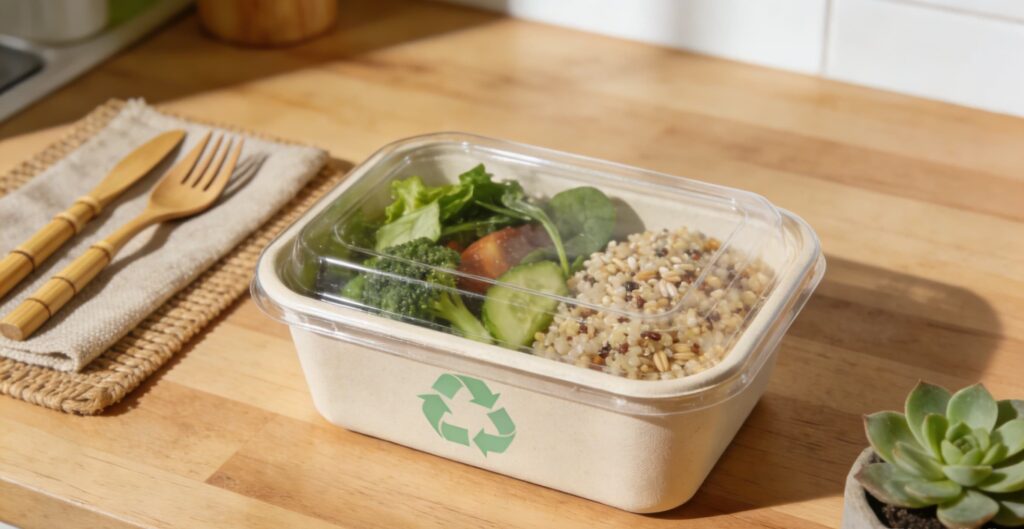
Consumer expectations surrounding packaging have changed significantly in recent years.
Environmental awareness is now influencing purchasing behavior across supermarkets, cafes, restaurants, and retail industries worldwide. Many consumers — especially younger generations — increasingly prefer brands that demonstrate visible sustainability efforts.
Packaging has therefore become part of overall brand perception.
For example, customers now often notice:
- recyclability labels,
- excessive plastic usage,
- lightweight packaging designs,
- and environmental messaging printed directly on containers.
Major coffee chains in several countries have introduced recyclable cup initiatives and reusable cup incentives as part of broader sustainability strategies. Supermarkets are also redesigning packaging structures to reduce unnecessary plastic layers and improve recycling compatibility.
In Europe, some retailers have started replacing black plastic trays with transparent recyclable alternatives because black plastics are often more difficult for recycling systems to identify and sort.
Meanwhile, many hospitality brands are reducing unnecessary packaging components such as oversized lids, secondary wrappers, and individually packaged accessories.
This shift reflects an important market reality: consumers increasingly associate sustainable packaging with responsible business practices and higher-quality brand values.
At the same time, sustainability alone is no longer enough.
Consumers still expect packaging to provide:
- durability,
- convenience,
- attractive presentation,
- and food protection.
This is pushing the packaging industry toward more advanced material engineering and smarter packaging design.
Governments and Regulations Are Accelerating Packaging Transformation
In addition to consumer pressure, governments worldwide are introducing stricter environmental regulations that directly affect packaging industries.
Many countries are implementing policies focused on:
- reducing problematic single-use plastics,
- improving recycling systems,
- increasing recycled-content usage,
- and strengthening producer responsibility.
The European Union, for example, continues expanding packaging sustainability regulations through circular economy initiatives and packaging waste reduction targets.
Australia has introduced national packaging goals aimed at making packaging reusable, recyclable, or compostable. Japan has also implemented plastic reduction policies encouraging businesses to minimize unnecessary plastic consumption.
(👉You can click to read : The Future Of Recyclable Packaging In Australia And New Zealand)
Extended Producer Responsibility (EPR) systems are becoming increasingly important as well. Under these frameworks, companies may become more financially responsible for the collection, recycling, or disposal of packaging waste.
As regulations evolve, compliance is becoming a competitive advantage.
Businesses that adapt early may benefit from:
- stronger retailer relationships,
- easier export opportunities,
- improved customer trust,
- and reduced long-term regulatory risks.
For international food packaging manufacturers, understanding global sustainability standards is becoming essential for maintaining competitiveness in export markets.
Sustainable Packaging Is No Longer Just About Paper
One of the most common misconceptions surrounding sustainable packaging is the assumption that sustainability automatically means eliminating plastic entirely.
In reality, packaging sustainability depends on multiple factors, including:
- recyclability,
- material efficiency,
- transportation weight,
- production energy usage,
- and overall lifecycle performance.
In many foodservice applications, recyclable plastics such as PET, rPET, and PP continue playing important roles because they combine:
- lightweight performance,
- food safety,
- durability,
- and recycling compatibility.
For example, rPET packaging helps reduce dependence on virgin plastic production by incorporating recycled material into new packaging systems.
Meanwhile, lightweight PP containers can reduce transportation emissions because lower packaging weight improves shipping efficiency.
This is why many sustainability experts now emphasize circular packaging systems rather than simple material bans.
Well-designed recyclable packaging can sometimes provide lower overall environmental impact than poorly optimized alternatives with higher production or transportation footprints.
As a result, the industry is increasingly focusing on:
- mono-material packaging,
- recyclable PET systems,
- lightweight engineering,
- and improved material recovery efficiency.
Foodservice and Delivery Industries Face the Greatest Pressure
Few industries rely on disposable packaging as heavily as foodservice and delivery.
Restaurants, cafes, supermarkets, airline catering providers, and takeaway operators all require large-scale packaging systems capable of protecting food during transportation and maintaining operational efficiency.
However, these industries are also under intense pressure to reduce environmental impact.
The growth of food delivery platforms has made packaging even more visible to consumers. Customers now directly evaluate:
- container quality,
- leak resistance,
- sustainability,
- and overall presentation before eating the food itself.
Poor packaging can negatively affect customer reviews even when food quality is acceptable.
As a result, many restaurants are redesigning takeaway packaging systems to improve:
- stackability,
- transportation durability,
- recyclability,
- and portion organization.
To adapt to these changing market expectations, many foodservice brands are also becoming more selective when choosing packaging suppliers. Beyond pricing, businesses increasingly prioritize suppliers that can provide stable production capacity, recyclable material options, customization support, and consistent packaging quality for long-term sustainability goals.
Companies such as DASHAN are expanding recyclable PET, rPET, and PP food packaging solutions designed to support modern takeaway, delivery, and hospitality industries that require both operational performance and environmental responsibility.
Airline catering providers are also attempting to reduce packaging weight because lighter packaging can improve fuel efficiency and reduce operational costs over time.
Sustainable Packaging Is Becoming Part of Brand Identity
Packaging today is no longer viewed only as a functional necessity. It has become part of branding strategy.
Consumers increasingly associate environmentally responsible packaging with:
- innovation,
- transparency,
- and long-term corporate responsibility.
Minimalist recyclable packaging designs are becoming especially popular because they communicate both modern aesthetics and sustainability values simultaneously.
Many brands now print recycling instructions directly onto packaging to encourage responsible disposal behavior and improve customer trust.
Transparent sustainability messaging can also strengthen brand loyalty by showing that environmental responsibility is integrated into company operations rather than used only as marketing language.
This is particularly important for younger consumers, who often expect companies to demonstrate measurable sustainability commitments.
For many businesses, sustainable packaging has therefore become both:
- an operational decision,
- and a communication tool.
The Future of Sustainable Packaging
The future of sustainable packaging will likely focus on balancing environmental responsibility with operational practicality.
Several major trends are expected to shape industry development over the coming years.
Growth of Recyclable Mono-Material Packaging
Simplified packaging structures will continue expanding because they improve recycling efficiency.
Increased Use of Recycled Content
More companies are expected to adopt recycled-content targets for packaging materials.
Lightweight Packaging Engineering
Reducing packaging weight can lower transportation emissions and material consumption simultaneously.
Smart Packaging Systems
Digital labeling and traceability systems may help improve recycling participation and waste management efficiency.
Circular Packaging Models
The industry is increasingly moving toward packaging systems designed for material recovery and reuse rather than linear disposal.
Future packaging innovation will depend on combining:
- sustainability,
- functionality,
- food safety,
- and customer experience in a balanced way.
Why World Environment Day Matters for the Packaging Industry
World Environment Day serves as an important reminder that packaging sustainability is not a temporary industry trend.
Environmental expectations from consumers, governments, and global markets will likely continue strengthening in the coming years.
For packaging companies, food brands, and hospitality businesses, this creates both responsibility and opportunity.
Businesses that invest in:
- recyclable packaging,
- material innovation,
- lightweight engineering,
- and circular economy strategies
may be better positioned for long-term competitiveness.
The packaging industry plays a major role in shaping how products are consumed, transported, and disposed of globally.
Because of this, packaging decisions increasingly influence broader environmental outcomes.
FAQ
1. Why is sustainable packaging important on World Environment Day?
World Environment Day encourages businesses and consumers to focus on environmental responsibility. Sustainable packaging helps reduce packaging waste, improve recyclability, and support long-term circular economy goals.
2. What is sustainable food packaging?
Sustainable food packaging refers to packaging designed to reduce environmental impact through recyclability, recycled content usage, lightweight materials, or improved resource efficiency while still protecting food quality and safety.
3. Why are recyclable plastics such as PET and rPET still important?
Recyclable plastics like PET and rPET remain widely used because they provide strong food safety performance, lightweight efficiency, durability, and compatibility with existing recycling systems.
4. How has food delivery increased demand for sustainable packaging?
The growth of takeaway and food delivery services has significantly increased packaging usage, leading restaurants and packaging manufacturers to seek recyclable, lightweight, and more environmentally responsible packaging solutions.
5. What is mono-material packaging?
Mono-material packaging uses a single material type, making it easier to sort and recycle compared with complex multi-layer packaging structures.
6. How are governments influencing packaging sustainability?
Many governments are introducing regulations related to recyclable packaging, recycled-content targets, plastic reduction initiatives, and Extended Producer Responsibility (EPR) systems.
7. Why do consumers care more about sustainable packaging today?
Consumers increasingly associate sustainable packaging with responsible business practices, environmental awareness, and modern brand values, especially within foodservice and retail industries.
Conclusion
Sustainable packaging has become one of the most important challenges and opportunities facing modern foodservice, retail, and hospitality industries.
Consumers increasingly expect environmentally responsible packaging solutions, while governments continue strengthening sustainability regulations and recycling requirements.
At the same time, businesses must still maintain:
- food safety,
- operational efficiency,
- product protection,
- and strong customer experience.
The future of packaging will therefore depend on finding practical solutions that balance sustainability with real-world performance.
As World Environment Day continues encouraging global environmental awareness, the packaging industry will remain at the center of discussions surrounding waste reduction, circular economy development, and responsible consumption.
Companies such as DASHAN are continuing to develop innovative recyclable food packaging solutions designed to support the evolving needs of sustainable foodservice and hospitality industries worldwide.
References
- United Nations – World Environment Day
- Ellen MacArthur Foundation – Circular Economy
- OECD Global Plastics Outlook
- European Commission – Packaging Waste Rules
- Australian Packaging Covenant Organisation (APCO)
- Japan Ministry of the Environment
- DASHAN Food Packing
Copyright Statement
© 2026 Dashan Packing. All rights reserved.
This article is an original publication by the Dashan Packing team based on industry research, market analysis, and packaging expertise. Unauthorized reproduction, distribution, or copying of this content is prohibited without prior written permission.
Dashan Packing is committed to delivering reliable, original, and professional information for the global food packaging industry.