

Quick Summary
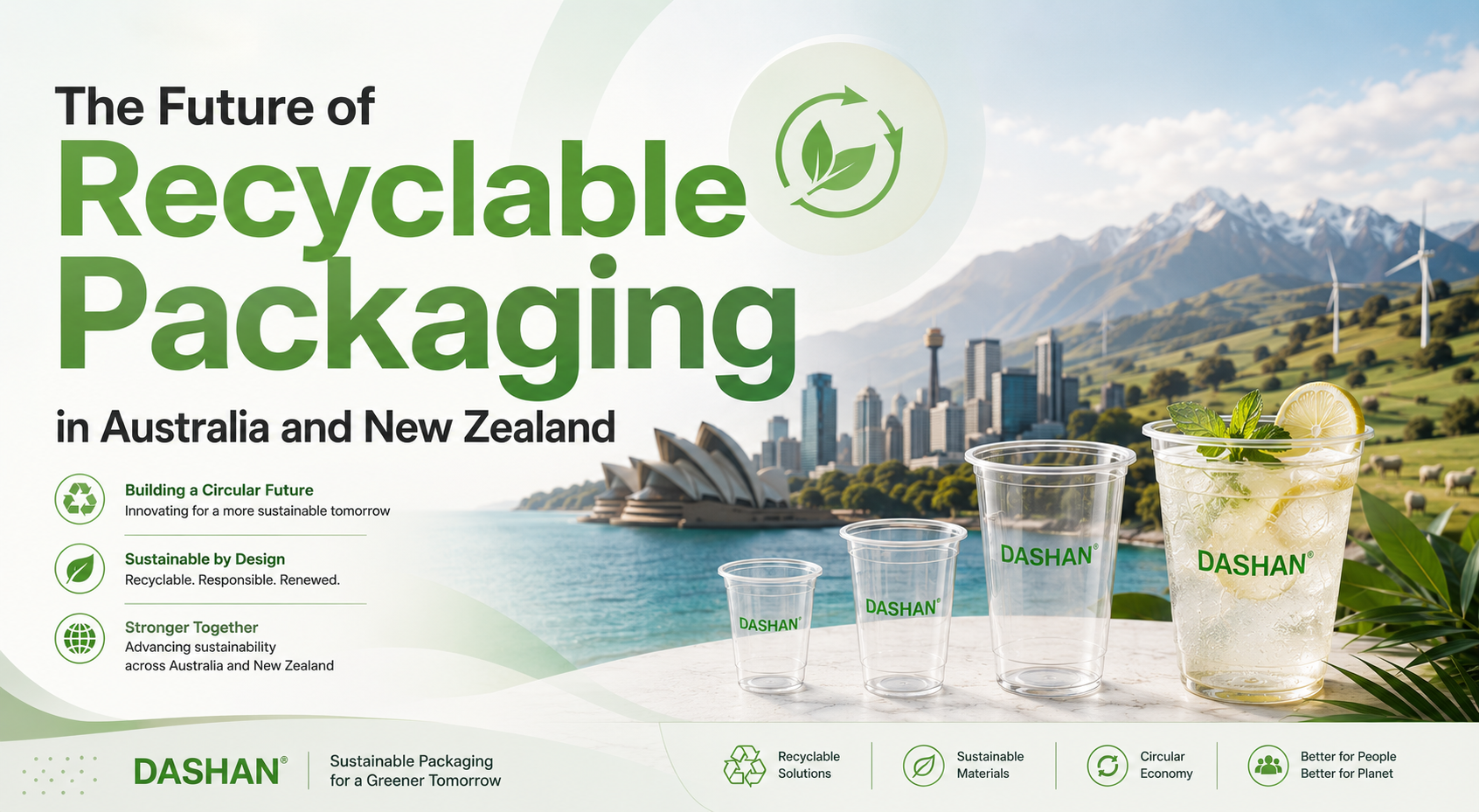
Australia and New Zealand are rapidly accelerating the transition toward recyclable packaging as governments, consumers, and businesses place greater emphasis on sustainability and circular economy goals. Foodservice, hospitality, retail, and beverage industries are increasingly adopting recyclable materials such as PET, rPET, and PP to reduce environmental impact while maintaining packaging performance and food safety. At the same time, stricter regulations, recycled-content targets, and evolving consumer expectations are driving innovation in mono-material packaging, lightweight designs, and recycling infrastructure. For global suppliers like DASHAN, the ANZ market represents a growing opportunity for scalable, recyclable, and export-focused food packaging solutions.
Australia and New Zealand are entering a new phase in packaging sustainability. Across supermarkets, cafes, restaurants, delivery platforms, and retail supply chains, recyclable packaging is rapidly moving from an optional environmental initiative to a mainstream business requirement. Governments are introducing stricter waste reduction policies, consumers are demanding more sustainable products, and brands are redesigning packaging systems to align with circular economy goals.
In both countries, the packaging industry is undergoing significant transformation. Companies are no longer focused solely on cost and functionality. Increasingly, packaging decisions are influenced by recyclability, material recovery potential, carbon reduction targets, and long-term environmental impact.
For foodservice and hospitality businesses in particular, recyclable packaging has become one of the most important strategic trends shaping future procurement and product development.
Sustainability Is Reshaping the Packaging Industry Across ANZ
Australia and New Zealand have some of the world’s strongest public awareness regarding environmental sustainability. Consumers are increasingly concerned about plastic waste, landfill growth, marine pollution, and resource consumption. As a result, businesses across multiple industries are facing growing pressure to adopt more responsible packaging solutions.
This shift is especially visible in the food and beverage sector, where takeaway culture, delivery services, and convenience packaging continue expanding rapidly.
Disposable packaging remains essential for modern foodservice operations, but businesses are now expected to reduce environmental impact while maintaining food safety, operational efficiency, and customer convenience.
This has accelerated demand for recyclable materials such as:
- PET
- rPET
- PP
- HDPE
- Mono-material packaging systems
At the same time, companies are attempting to reduce hard-to-recycle composite materials and overly complex packaging structures.
| Packaging Material | Recyclability | Common Applications |
|---|---|---|
| PET/rPET | Highly recyclable | Beverage cups, salad bowls |
| PP | Recyclable in many systems | Hot food containers |
| HDPE | Widely recyclable | Bottles and lids |
| Multi-material packaging | More difficult to recycle | Limited future growth |
The transition toward recyclable packaging is not only driven by environmental responsibility. It is also becoming a competitive advantage for brands seeking stronger consumer trust and long-term market positioning.
Government Policies Are Accelerating Industry Change
Regulatory pressure is playing a major role in shaping the future of packaging across Australia and New Zealand.
In Australia, the National Plastics Plan and the Australian Packaging Covenant Organisation (APCO) have established ambitious sustainability goals aimed at improving packaging recyclability and reducing plastic waste. Many businesses are now working toward targets that require packaging to be reusable, recyclable, or compostable within the coming years.
State governments have also introduced bans or restrictions on certain single-use plastic products, encouraging businesses to redesign packaging systems and adopt more recyclable alternatives.
Meanwhile, New Zealand is implementing similar waste reduction strategies, including phased removal of problematic plastics and expanded product stewardship initiatives.
These policies are influencing nearly every part of the packaging supply chain:
- Material selection
- Packaging engineering
- Product labeling
- Manufacturing processes
- Retail procurement standards
As regulations evolve, companies that fail to adapt may face increasing operational and reputational risks.
For packaging manufacturers, this creates strong demand for solutions that combine:
- regulatory compliance,
- food safety,
- recyclability,
- and commercial practicality.
Foodservice and Hospitality Are Leading the Transition
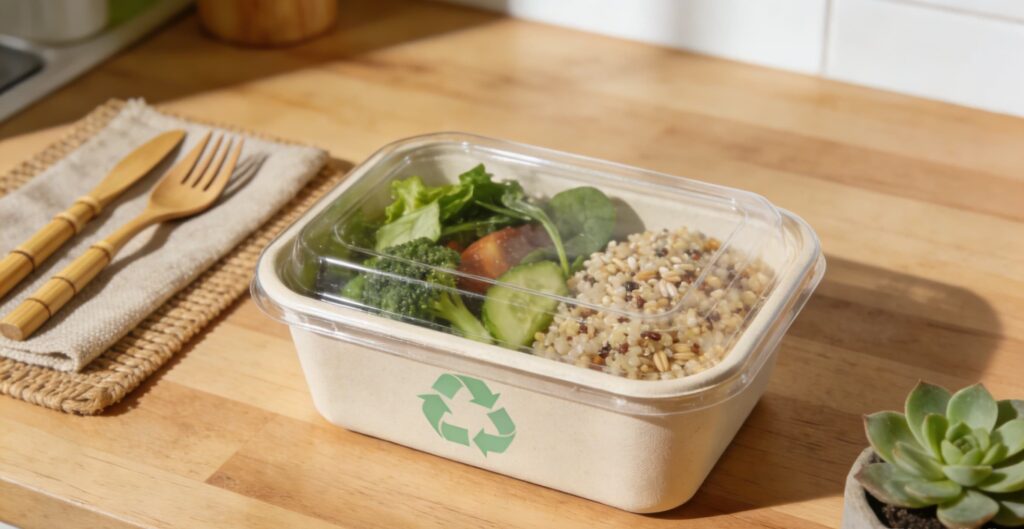
The foodservice industry is one of the largest consumers of disposable packaging throughout Australia and New Zealand. Cafes, restaurants, delivery kitchens, supermarkets, and convenience stores all require large volumes of cups, lids, bowls, trays, and takeaway containers every day.
However, customer expectations are changing rapidly.
Consumers increasingly prefer businesses that demonstrate visible sustainability efforts, especially younger customers who are highly influenced by environmental values. As a result, recyclable packaging is becoming an important part of brand image and customer experience.
For example, several major cafe and quick-service restaurant brands across Australia have started replacing traditional takeaway packaging with recyclable or recycled-content alternatives. Many independent coffee shops in Sydney and Melbourne now actively promote recyclable PET cold cups and simplified mono-material packaging as part of their sustainability branding strategy.
Some food delivery operators have also reduced multi-layer packaging structures to improve recycling compatibility while lowering transportation weight and packaging waste.
For example:
- Cafes are adopting recyclable PET cold cups
- Restaurants are shifting toward recyclable PP takeaway containers
- Delivery brands are reducing unnecessary packaging components
- Supermarkets are introducing more recyclable food packaging formats
Tourism and hospitality sectors are also placing greater emphasis on sustainability procurement standards. Hotels, event venues, and airline catering providers increasingly prefer packaging suppliers capable of supporting environmental initiatives without compromising operational efficiency.
Manufacturers such as DASHAN are responding to these market changes by expanding recyclable food packaging product lines designed for international hospitality and foodservice industries.
rPET Is Becoming One of the Fastest-Growing Packaging Materials
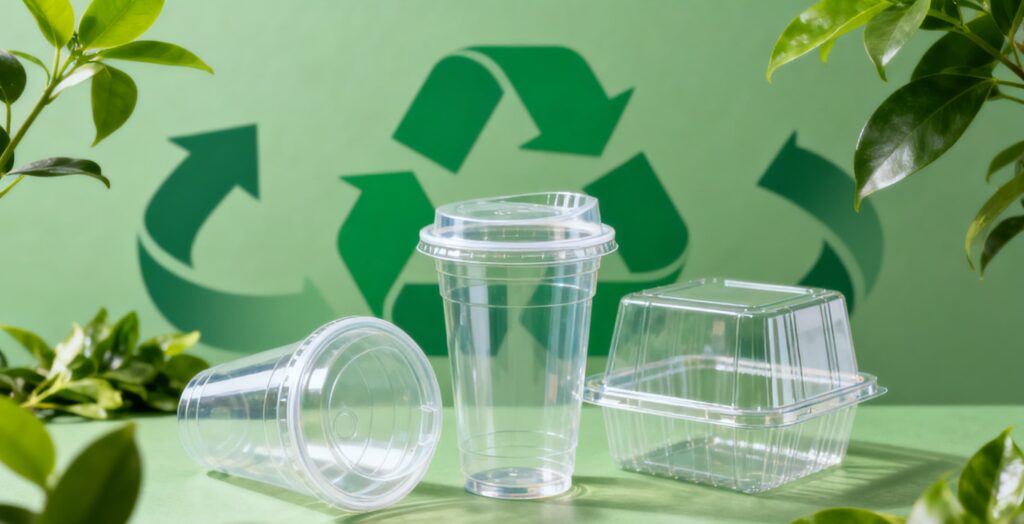
Among recyclable packaging materials, rPET is emerging as one of the most important growth categories in Australia and New Zealand.
rPET refers to recycled polyethylene terephthalate produced from post-consumer PET materials such as beverage bottles and food containers. Compared with virgin plastic production, rPET can significantly reduce energy consumption and carbon emissions.
Many global brands are now setting minimum recycled-content targets for their packaging systems, further increasing demand for rPET solutions.
Large beverage companies operating in Australia and New Zealand have already announced targets to increase recycled plastic content in beverage bottles over the coming years. This has significantly accelerated demand for food-grade rPET materials and encouraged investment in local recycling infrastructure and closed-loop recycling systems.
As more brands adopt recycled-content packaging targets, suppliers capable of delivering stable rPET quality and large-scale production capacity are becoming increasingly valuable throughout the supply chain.
| Material Type | Environmental Benefit | Market Trend |
|---|---|---|
| Virgin PET | Strong clarity and strength | Gradual reduction |
| rPET | Lower carbon footprint | Rapid growth |
| PP | Lightweight and recyclable | Stable long-term demand |
The popularity of rPET is also influenced by consumer perception. Packaging made with recycled content is increasingly associated with environmental responsibility and modern sustainability practices.
However, the rapid expansion of rPET demand also creates challenges, including:
- supply shortages,
- price fluctuations,
- recycling infrastructure limitations,
- and quality consistency concerns.
As recycling technologies improve, more packaging manufacturers are investing in high-quality rPET production systems capable of supporting food-grade applications.
Packaging Design Is Becoming More Important Than Ever
One of the biggest challenges facing recyclable packaging systems is that recyclability depends not only on material choice, but also on packaging design itself.
Complex packaging structures containing multiple materials can create sorting and recycling difficulties. Labels, coatings, adhesives, and mixed-material layers often reduce recycling efficiency.
As a result, the industry is increasingly shifting toward mono-material packaging designs that simplify recycling processes.
Key design trends include:
- Lightweight packaging structures
- Simplified packaging components
- Reduced ink coverage
- Easy-to-remove labels
- Improved sorting compatibility
This trend is particularly important in Australia and New Zealand because recycling systems can vary by region and municipality. Packaging that performs well in one recycling stream may not be accepted in another.
Businesses therefore prefer packaging suppliers that understand both international manufacturing standards and regional recycling requirements.
Cost and Supply Chain Pressures Still Remain
Although recyclable packaging demand continues growing, the transition is not without challenges.
Businesses throughout Australia and New Zealand face several ongoing concerns:
- Higher sustainable material costs
- Transportation expenses
- Recycling infrastructure gaps
- Supply consistency
- Packaging performance requirements
Foodservice operators cannot compromise food safety or operational efficiency simply to achieve sustainability targets. Packaging must still perform effectively during transportation, storage, and temperature exposure.
This is why many buyers are seeking balanced solutions rather than extreme material changes. Recyclable PP and PET products remain highly popular because they offer a practical combination of:
- durability,
- food safety,
- lightweight performance,
- and recyclability.
For export-oriented packaging manufacturers, stable production capacity and reliable logistics are becoming increasingly important competitive advantages.
During peak retail seasons and holiday periods, some foodservice businesses in Australia and New Zealand have experienced packaging supply shortages and shipping delays, particularly for imported sustainable packaging materials. This has encouraged many buyers to prioritize long-term supplier stability and inventory reliability rather than focusing only on low pricing.
As a result, export-oriented manufacturers with diversified product portfolios and international logistics experience are gaining stronger opportunities in the ANZ packaging market.
Companies like DASHAN Packing are strengthening export-focused manufacturing systems to support growing international demand for recyclable food packaging solutions across ANZ markets.
The Future of Recyclable Packaging Will Focus on Circular Systems
The future of recyclable packaging in Australia and New Zealand will likely move beyond individual products toward fully integrated circular packaging systems.
Instead of simply replacing one material with another, businesses are increasingly evaluating:
- recycled content usage,
- packaging recovery systems,
- carbon reduction strategies,
- waste management efficiency,
- and lifecycle sustainability performance.
Several important trends are expected to shape the next stage of industry development.
Increased Use of Recycled Content
Governments and major brands are expected to introduce stricter recycled-content requirements for packaging materials.
Growth of Mono-Material Packaging
Simplified packaging structures will continue expanding because they improve recycling efficiency.
Smarter Packaging Design
Packaging innovation will increasingly focus on lightweight engineering, transport efficiency, and material optimization.
Stronger Sustainability Procurement Standards
Large hospitality groups and retailers may require suppliers to meet stricter environmental standards before entering procurement systems.
Expansion of Premium Sustainable Packaging
Consumers increasingly expect sustainable packaging to also provide premium appearance and functionality.
In this evolving market, suppliers that can successfully balance:
- recyclability,
- operational performance,
- branding,
- and cost efficiency
will be best positioned for long-term growth.
FAQ
1. Why is recyclable packaging growing rapidly in Australia and New Zealand?
Growing environmental awareness, government regulations, and circular economy initiatives are encouraging businesses to adopt recyclable packaging solutions across foodservice, retail, and hospitality industries.
2. What recyclable materials are most commonly used in food packaging?
PET, rPET, PP, and HDPE are among the most widely used recyclable materials because they offer strong durability, food safety performance, and compatibility with existing recycling systems.
3. What is rPET and why is it important?
rPET stands for recycled polyethylene terephthalate. It is produced from recycled PET materials and helps reduce plastic waste, carbon emissions, and demand for virgin plastic production.
4. Why is mono-material packaging becoming more popular?
Mono-material packaging improves recycling efficiency because it is easier to sort and process compared with multi-layer or mixed-material packaging structures.
5. What challenges does the recyclable packaging industry still face?
Major challenges include recycling contamination, inconsistent recycling infrastructure, higher sustainable material costs, and maintaining packaging performance while improving recyclability.
6. How are foodservice businesses adapting to recyclable packaging trends?
Restaurants, cafes, supermarkets, and delivery brands are increasingly adopting recyclable takeaway containers, PET cups, lightweight packaging designs, and reduced packaging structures to meet sustainability expectations.
7. Why are export-oriented packaging suppliers becoming more important in ANZ markets?
Businesses increasingly prioritize stable supply chains, reliable logistics, customization capabilities, and consistent product quality as recyclable packaging demand continues growing.
Conclusion
Australia and New Zealand are rapidly accelerating the transition toward recyclable packaging systems. Government regulations, consumer expectations, and sustainability commitments are reshaping the future of foodservice, retail, and hospitality packaging throughout the region.
Recyclable packaging is no longer viewed only as an environmental initiative. It is becoming an essential business strategy that influences purchasing decisions, brand reputation, and long-term competitiveness.
As circular economy goals continue advancing, demand will grow for packaging solutions that combine sustainability with practicality, scalability, and strong visual presentation.
For manufacturers, the future opportunity lies not simply in producing packaging, but in helping businesses navigate the complex balance between environmental responsibility, operational efficiency, and customer expectations.
Companies such as DASHAN are continuing to invest in recyclable PET, rPET, PP, and sustainable food packaging solutions designed to support the evolving needs of Australia, New Zealand, and the broader global hospitality market.
References
- Australian Packaging Covenant Organisation (APCO)
- Australian Government – National Plastics Plan
- New Zealand Ministry for the Environment
- Ellen MacArthur Foundation – Circular Economy
- Packaging New Zealand
- DASHAN Food Packaging
Copyright Statement
© 2026 Dashan Packing. All rights reserved.
This article is an original publication by the Dashan Packing team based on industry research, market analysis, and packaging expertise. Unauthorized reproduction, distribution, or copying of this content is prohibited without prior written permission.
Dashan Packing is committed to delivering reliable, original, and professional information for the global food packaging industry.