

Quick Summary
No single packaging material can perform well for every food type. Heat, moisture, oil, acidity, structure, and real-world handling all affect material behavior differently. Successful food packaging decisions require matching food properties, material limits, and structural design, rather than relying on one “universal” material solution.
In food packaging, the search for a “perfect material” never stops. Buyers compare PET, PP, CPET, fiber, bagasse, and emerging bio-based plastics, hoping one option can solve every packaging challenge at once.
In reality, this expectation contradicts both material science and food behavior.
No single packaging material works for every food type—not because manufacturers lack innovation, but because food itself is highly variable, and packaging materials respond to those variables in fundamentally different ways.
Understanding this mismatch is essential for making reliable, cost-effective packaging decisions.
1. The Illusion of a Universal Packaging Material
Many packaging decisions begin with an assumption:
If a material works well in one scenario, it should work in others.
This assumption often comes from:
-
Simplified product testing
-
Marketing claims focusing on “strength” or “heat resistance”
-
Overreliance on material datasheets
However, material datasheets describe controlled conditions, not real-world food service environments.
Food packaging does not operate in isolation. It is part of a system involving:
-
Food chemistry
-
Preparation methods
-
Storage duration
-
Transport stress
-
User handling
A material that excels in one part of this system may fail in another.
2. Food Is a Multi-Variable Stress Environment
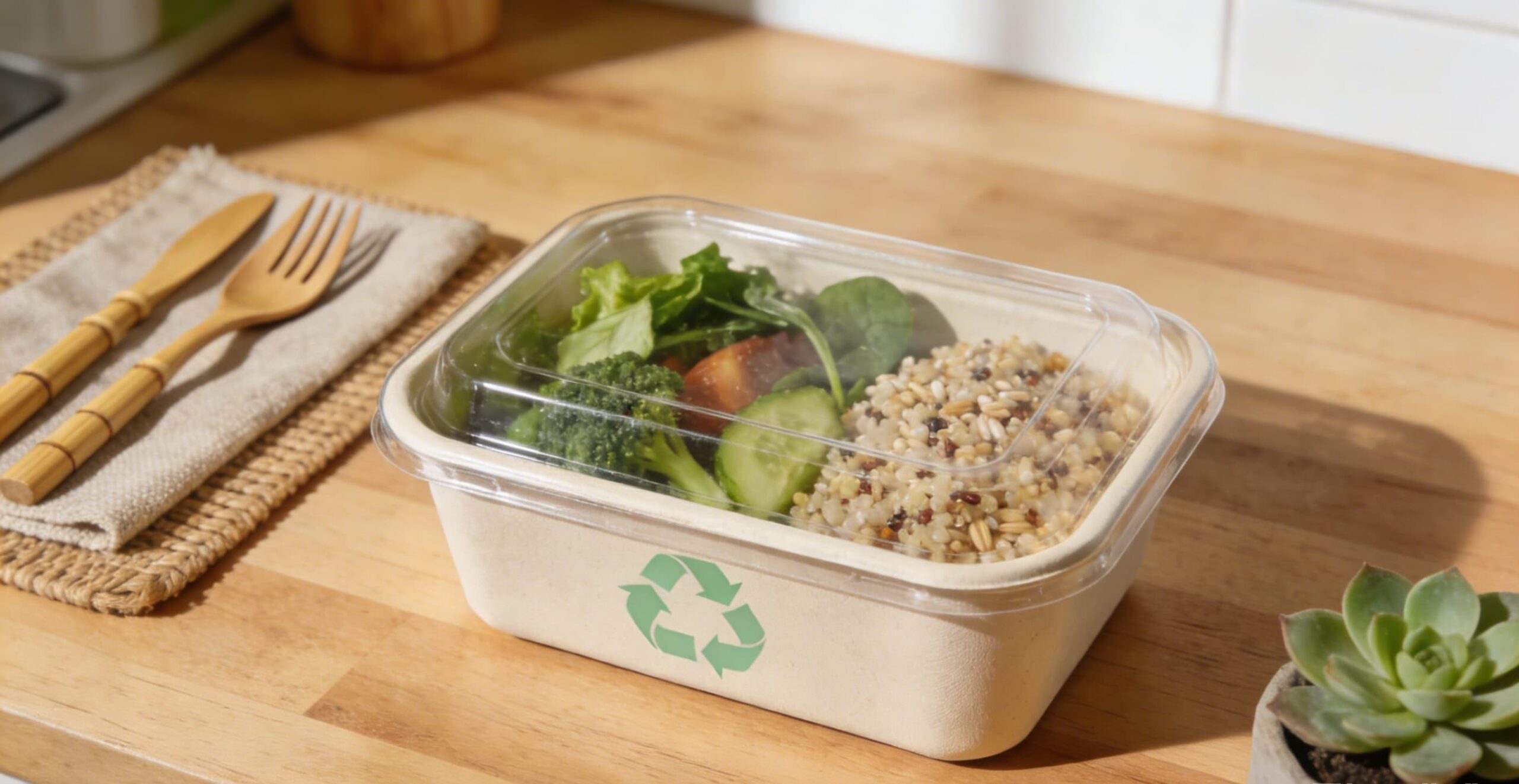
Packaging materials are stressed not by a single factor, but by multiple overlapping forces.
2.1 Temperature Is Only the Most Visible Factor
Heat resistance is often treated as the primary selection criterion. While important, temperature alone rarely determines success or failure.
Key overlooked factors include:
-
Rapid cooling after hot filling
-
Reheating after refrigeration
-
Repeated temperature cycling
Some materials maintain shape at high temperatures but lose impact resistance when cooled. Others remain flexible but warp under sustained heat exposure.
2.2 Moisture and Water Activity
High-moisture foods introduce continuous exposure to water vapor and liquid condensation.
This affects:
-
Optical clarity
-
Surface friction
-
Seal reliability
-
Structural rigidity over time
Condensation inside cold food packaging is one of the most common causes of customer complaints—not because the food is unsafe, but because the package looks compromised.
2.3 Oil and Fat Migration
Oil behaves differently from water. It penetrates surfaces, spreads along micro-textures, and highlights weak structural points.
Common consequences include:
-
Loss of stiffness in thin walls
-
Visual staining or cloudiness
-
Increased risk of leakage at corners
This is why packaging that works for steamed foods often fails with fried or sauced items.
2.4 Acidity and Chemical Interaction
Acidic foods do not usually cause immediate failure, but they introduce long-term interaction stress.
Over extended contact time, acidity can:
-
Affect surface appearance
-
Reduce rigidity
-
Expose tolerance weaknesses in lids and seals
3. How Packaging Materials Respond Differently to Food Properties
Each packaging material has a distinct performance profile. None is neutral.
Table 1: Material Response to Common Food Stress Factors
| Food Stress Factor | PET / RPET | PP | CPET | Bagasse / Fiber |
|---|---|---|---|---|
| High Heat | ❌ Limited | ✅ Good | ✅ Excellent | ❌ Poor |
| Cold Storage | ✅ Good | ⚠️ Variable | ✅ Good | ❌ Weak |
| High Moisture | ⚠️ Condensation | ⚠️ Surface softening | ✅ Stable | ❌ Absorption |
| Oily Foods | ⚠️ Visual degradation | ✅ Better resistance | ✅ Stable | ❌ Oil penetration |
| Acidic Foods | ⚠️ Long-term impact | ✅ Stable | ✅ Stable | ❌ Structural weakening |
This table alone explains why “one-material-fits-all” strategies consistently fail.
4. Structure Often Determines Performance More Than Material
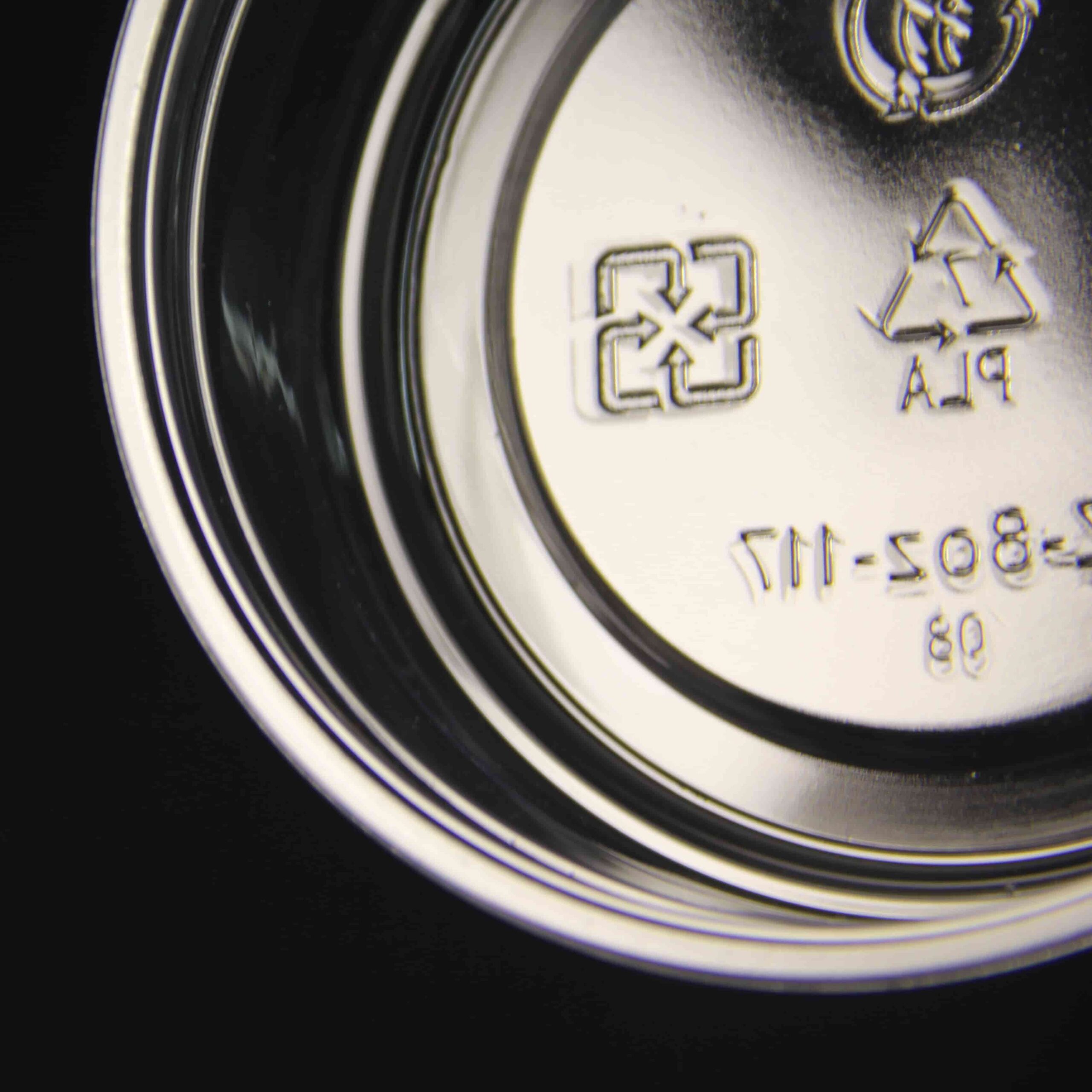
Material choice is only half the equation.
(You may read:How to Choose the Right Tray Thickness for Frozen Food Packaging)
4.1 Wall Thickness Is Not Linear Performance
Increasing thickness does not proportionally increase strength. Poor geometry can negate the benefits of thicker walls.
Effective structural design focuses on:
-
Load paths
-
Rib placement
-
Stress dispersion
4.2 Lid–Tray Compatibility
Many leaks and deformations occur at the interface between lid and base.
Problems often result from:
-
Mismatched flexibility
-
Uneven flange thickness
-
Inconsistent tolerance control
The same tray material can perform well or fail entirely depending on lid design.
4.3 Stackability and Compression Load
Stacking introduces vertical and lateral forces that concentrate stress at:
-
Corners
-
Flanges
-
Base edges
Materials with excellent flat strength may still deform under real stacking conditions.
5. Real-World Usage Exposes Hidden Material Limits
Packaging is rarely used under ideal conditions.
5.1 Handling and Transport Stress
Delivery environments introduce:
-
Vibration
-
Tilting
-
Compression
-
Sudden impact
Laboratory drop tests often fail to capture these combined stresses.
5.2 Time as a Performance Variable
A tray that performs well for 30 minutes may fail after several hours.
Common time-related issues include:
-
Moisture buildup
-
Creep deformation
-
Seal fatigue
5.3 Unpredictable User Behavior
End users may:
-
Overfill containers
-
Stack incorrectly
-
Reheat packaging beyond intended limits
Packaging must tolerate misuse, not just correct use.
6. Why Switching Materials Rarely Fixes the Real Problem
When failures occur, buyers often react by changing materials.
This approach usually fails because:
-
Structural flaws remain
-
Usage conditions are unchanged
-
Lid compatibility issues persist
Table 2: Common Buyer Reactions vs. Actual Root Causes
| Buyer Reaction | Real Root Cause |
|---|---|
| Switching PET to PP | Condensation + poor ventilation |
| Increasing thickness | Poor rib geometry |
| Changing tray material | Lid seal mismatch |
| Choosing “stronger” plastic | Overstacking during transport |
7.How Different Materials Respond to Food Properties
No material responds equally to all food challenges. Each has a performance profile—and a failure point.
| Material | Key Strengths | Typical Limitations |
|---|---|---|
| PET / RPET | High transparency, rigidity, excellent for cold display | Limited heat tolerance, condensation visibility |
| PP | Strong heat resistance, microwave-friendly | Lower transparency, possible low-temperature brittleness |
| CPET | Handles freezing, heating, and baking | Opaque, heavier, not ideal for cold food presentation |
| Bagasse / Fiber | Natural image, breathability | Weak against high moisture and oily foods |
The problem arises when one material is expected to perform outside its design envelope.
8. A Practical Framework for Choosing Packaging Materials
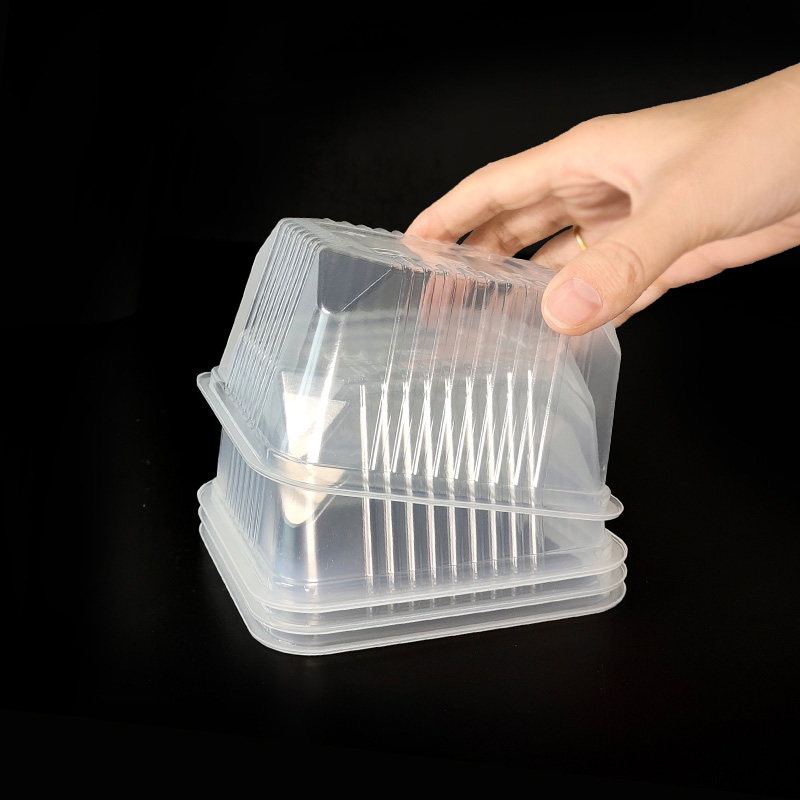
8.1 Start with Food Behavior
Define:
-
Moisture level
-
Oil content
-
Acidity
-
Temperature range
-
Storage duration
8.2 Rank Performance Priorities
Not all requirements matter equally.
| Priority Type | Examples |
|---|---|
| Functional | Leak resistance, heat tolerance |
| Visual | Transparency, surface clarity |
| Operational | Stackability, packing speed |
| Economic | Material efficiency, waste rate |
8.3 Match Material + Structure + Scenario
Reliable packaging decisions emerge from system thinking, not material substitution.
9. How DASHAN Approaches Material Selection
DASHAN does not promote a single “best” material.
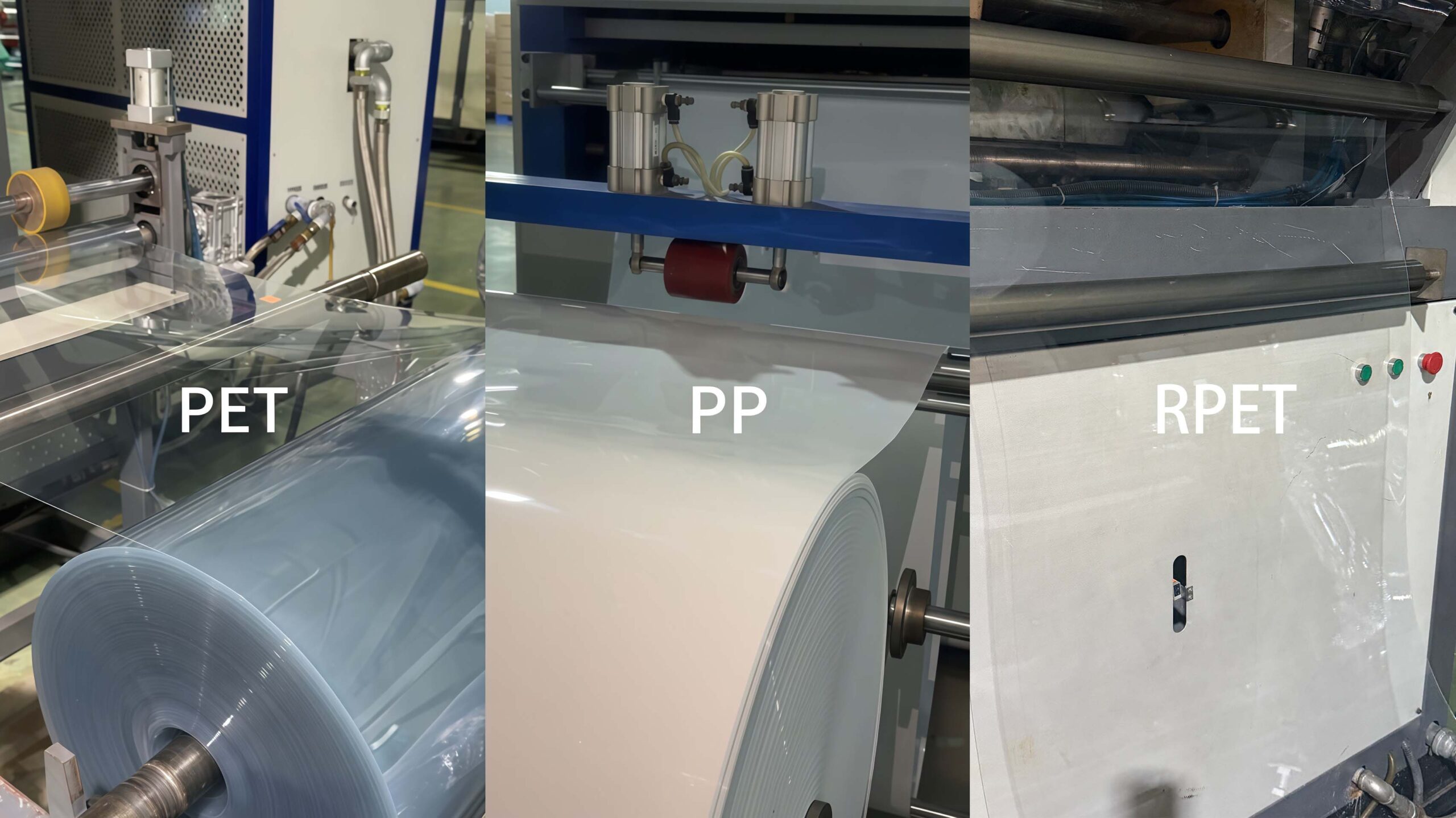
Instead, DASHAN works with multiple material systems, including PET, RPET, PP, CPET, and fiber-based solutions, each engineered for specific food behaviors and usage scenarios.
By aligning material properties with structural design and real-world application, DASHAN focuses on:
-
Reducing field failures
-
Improving consistency
-
Supporting scalable food operations
FAQ
1. Why can’t one packaging material work for all foods?
Because foods vary widely in temperature, moisture, oil content, acidity, and storage time. Each material responds differently to these factors, creating unavoidable trade-offs.
2. Is heat resistance the most important factor when choosing packaging?
No. Moisture, oil migration, condensation, stacking pressure, and handling stress often cause failures before heat limits are reached.
3. Why do oily foods cause more packaging problems than expected?
Oil penetrates surfaces, weakens thin-wall structures, and exposes sealing weaknesses, making it more aggressive than heat or water alone.
4. Does switching materials usually solve packaging failures?
In most cases, no. Failures are often caused by structural design, lid compatibility, or usage conditions rather than the material itself.
5. How should food brands choose the right packaging material?
Start with food behavior, define performance priorities, and match material, structure, and usage scenario as a system—not as a single-material decision.
Conclusion: There Is No Universal Material—Only Informed Trade-Offs
The idea of a universal packaging material is attractive—but unrealistic.
Food diversity, usage variability, and material physics make trade-offs unavoidable.
The most successful packaging strategies:
-
Accept material limitations
-
Design for real conditions
-
Optimize systems, not single components
When packaging decisions follow food reality instead of material hype, performance improves—and costs decrease.
References
-
U.S. Food & Drug Administration (FDA)
Food Contact Substances (FCS) Overview
https://www.fda.gov/food/packaging-food-contact-substances-fcs -
European Commission
Food Contact Materials – Regulatory Framework
https://food.ec.europa.eu/safety/chemical-safety/food-contact-materials_en -
PlasticsEurope
Plastics in Food Packaging: Material Properties
https://plasticseurope.org/knowledge-hub/plastics-in-food-packaging/ -
Smithers
The Future of Rigid Plastic Food Packaging
https://www.smithers.com/services/market-reports/packaging/rigid-plastic-packaging -
Packaging Europe
How Packaging Design Influences Food Performance
https://packagingeurope.com/ -
ScienceDirect
Polymer–Food Interactions in Packaging Applications
https://www.sciencedirect.com/topics/materials-science/food-packaging -
Journal of Food Packaging and Shelf Life
Material Performance and Food Contact Behavior
https://www.sciencedirect.com/journal/food-packaging-and-shelf-life -
ASTM International
Standards for Plastic Packaging Performance Testing
https://www.astm.org/industry/plastics -
European PET Bottle Platform (EPBP)
PET and RPET Food Contact Safety
https://www.petplatform.org/ -
Packaging Digest
Structural Design Considerations for Food Packaging
https://www.packagingdigest.com/food-packaging
Copyright Statement
© 2026 Dashan Packing. All rights reserved.
This article is an original work created by the Dashan Packing editorial team.
All text, data, and images are the result of our independent research, industry experience,
and product development insights. Reproduction or redistribution of any part of this content
without written permission is strictly prohibited.
Dashan Packing is committed to providing accurate, evidence-based information and
to upholding transparency, originality, and compliance with global intellectual property standards.