

Quick Summary
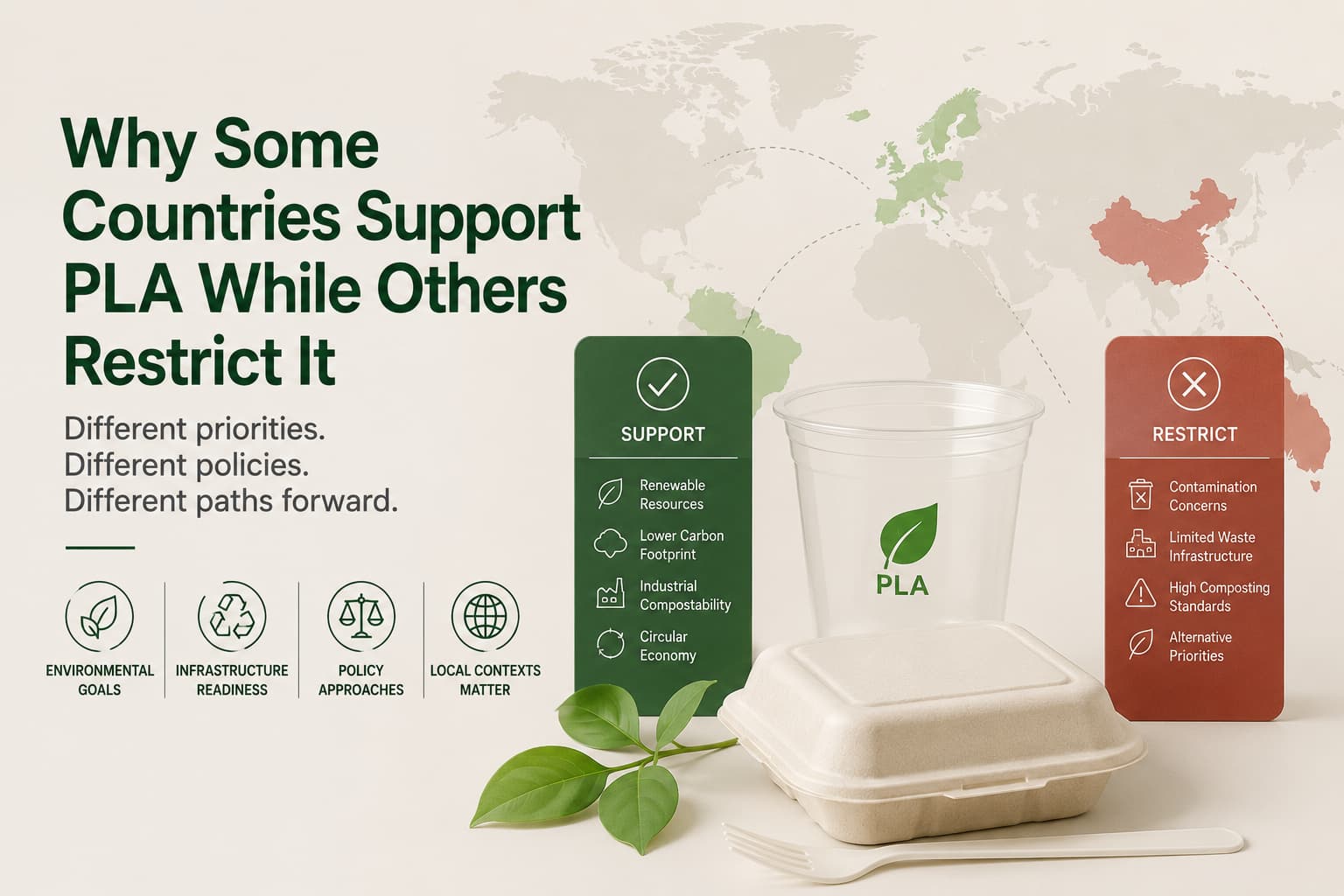
PLA has become one of the most debated materials in global food packaging because countries manage waste and recycling systems differently. Some governments support PLA due to its plant-based origin and industrial compostability, while others restrict it because of limited composting infrastructure, recycling contamination risks, and consumer disposal confusion. As sustainability regulations continue evolving, recyclable PP, PET, rPET, and compostable PLA packaging are increasingly being evaluated based on real waste management efficiency rather than environmental marketing claims alone.
As sustainability becomes a major focus in the global packaging industry, PLA has emerged as one of the most discussed materials in food packaging. Many brands promote PLA cups, lids, trays, and cutlery as environmentally friendly alternatives to traditional plastics, while governments in different regions are introducing new policies around compostable packaging. However, despite its growing popularity, PLA is also facing increasing criticism and restrictions in some markets.
This has created confusion for food brands, importers, and packaging buyers. In some countries, PLA is encouraged as part of a low-carbon future, while in others it is considered difficult to manage within existing waste systems. The difference largely comes down to infrastructure, recycling efficiency, and how each country approaches long-term sustainability goals.
For packaging manufacturers like DASHAN, understanding these policy differences is becoming increasingly important as global customers demand packaging solutions that comply with local environmental regulations while still maintaining food safety, performance, and commercial practicality.
What Is PLA and Why Did It Become Popular?
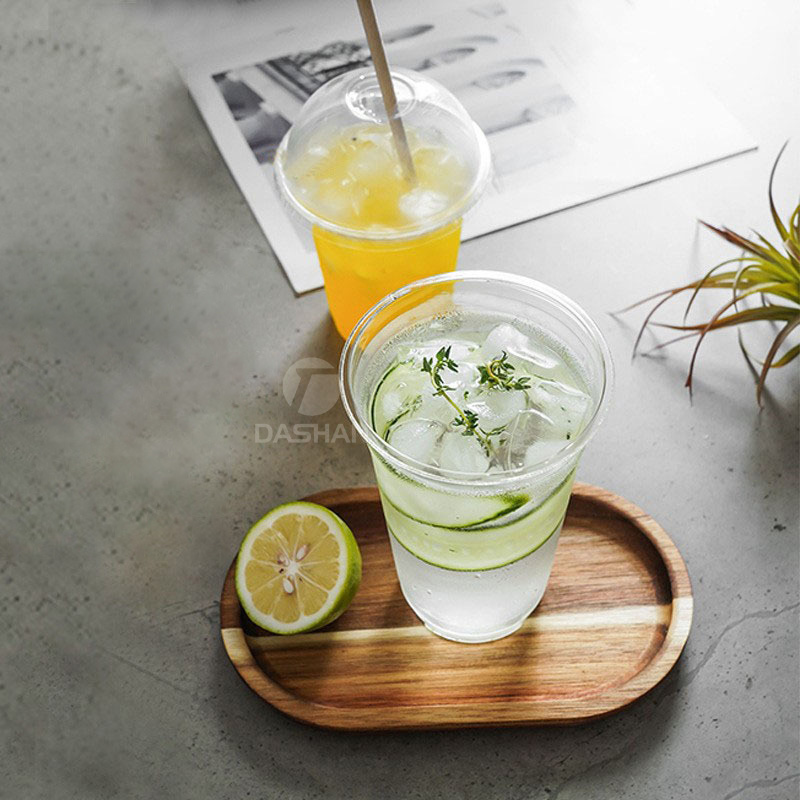
PLA, or polylactic acid, is a bio-based plastic commonly made from renewable resources such as corn starch or sugarcane. Unlike traditional petroleum-based plastics, PLA is often marketed as a compostable material and is widely used in disposable food packaging applications including cold drink cups, salad containers, lids, straws, and takeaway packaging.
The material gained attention because it appeared to offer a solution to one of the packaging industry’s biggest challenges: reducing dependence on fossil-based plastics while supporting sustainability goals.
As global brands strengthened ESG commitments and governments began restricting certain single-use plastics, PLA became increasingly attractive. Many businesses viewed it as a visible way to demonstrate environmental responsibility to consumers.
The growth of food delivery and takeaway services also accelerated demand for compostable packaging materials.
| Common PLA Applications | Typical Usage |
|---|---|
| Cold beverage cups | Coffee shops and beverage chains |
| Salad bowls and lids | Fresh food packaging |
| Disposable cutlery | Events and takeaway services |
| Food containers | Restaurants and catering |
However, while PLA offers several environmental advantages on paper, its real-world performance depends heavily on how waste systems are managed after disposal.
Why Some Countries Strongly Support PLA
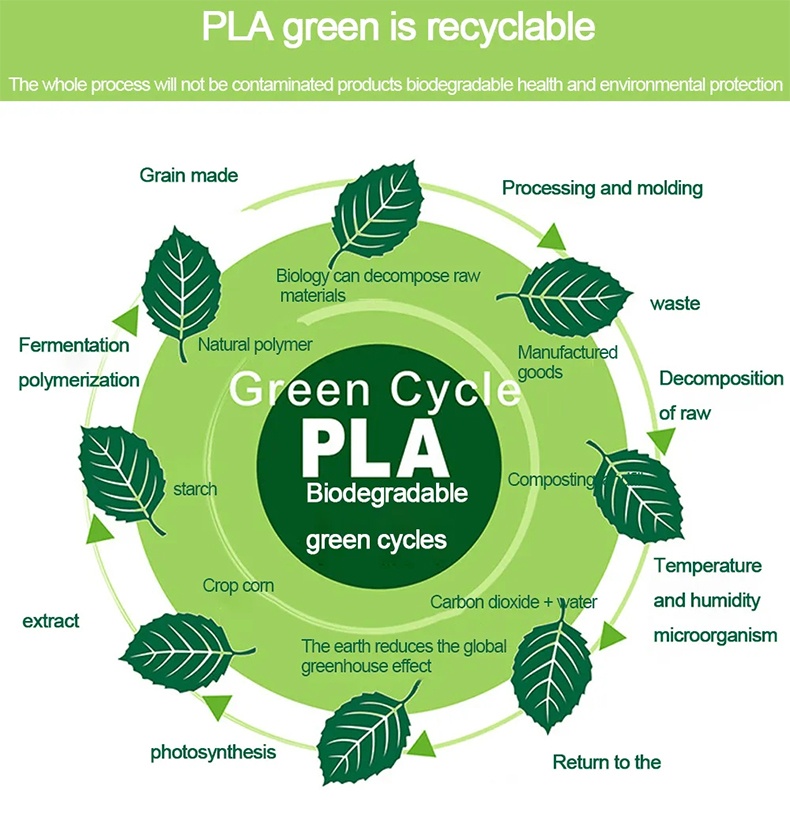
Countries that support PLA usually do so because it aligns with broader sustainability and carbon reduction policies. Since PLA is made partly from renewable plant-based resources, it can help reduce reliance on fossil fuels and lower greenhouse gas emissions during production compared with some traditional plastics.
Another major reason is the availability of industrial composting infrastructure. In countries where food waste and compostable packaging are collected together and processed through industrial composting facilities, PLA can fit more effectively into waste management systems.
In these markets, compostable packaging is often viewed as a useful solution for food-contaminated packaging that may be difficult to recycle mechanically.
Some governments also support PLA through environmental policies aimed at reducing conventional single-use plastics.
| Reason for PLA Support | Impact on Packaging Industry |
|---|---|
| Renewable material goals | Encourages bio-based packaging development |
| Industrial composting systems | Supports compostable waste processing |
| Plastic reduction policies | Expands compostable packaging demand |
| ESG and sustainability trends | Strengthens brand interest in PLA |
Consumer perception also plays an important role. Many customers associate plant-based packaging with sustainability, even if they do not fully understand the technical differences between recyclable and compostable materials. For food brands, PLA packaging can therefore provide both environmental positioning and marketing value.
Why Some Countries Restrict PLA
Despite its environmental image, PLA has become increasingly controversial in regions where waste management systems are not designed to process compostable plastics effectively.
One of the biggest issues is that most PLA products require industrial composting conditions rather than natural degradation in normal environments. High temperatures and controlled moisture levels are typically needed for proper decomposition. In countries without industrial composting infrastructure, PLA may end up in landfills or incineration systems alongside conventional waste.
This creates a major gap between marketing claims and real disposal outcomes.
Another concern is recycling contamination. PLA can look similar to PET, especially in transparent cup applications. When consumers incorrectly place PLA products into PET recycling streams, it can reduce recycling quality and create sorting challenges for recyclers.
As a result, some governments and recycling organizations argue that improving recyclable plastic systems may be more practical than expanding compostable plastics.
| Main Concern About PLA | Why It Matters |
|---|---|
| Limited composting facilities | Compostable packaging may not decompose properly |
| Recycling contamination | PLA can interfere with PET recycling |
| Consumer confusion | Disposal instructions are often misunderstood |
| Higher material costs | PLA is usually more expensive than PP or PET |
In several markets, regulators are also becoming stricter about environmental claims such as “biodegradable” and “compostable.” Authorities increasingly require companies to clarify whether materials are industrially compostable, home compostable, or only biodegradable under specific conditions.
This shift reflects a broader industry trend toward evaluating packaging based on actual waste management efficiency rather than marketing terminology alone.
Why Recyclable Plastics Still Remain Dominant
Although compostable materials receive significant attention, recyclable plastics such as PP and PET still dominate much of the global food packaging industry. The main reason is infrastructure compatibility.
Most countries already have established systems for collecting, sorting, and recycling traditional plastics, especially PET bottles and PP containers. Improving these systems is often viewed as more scalable and economically realistic than building entirely new composting networks.
In addition, PP and PET continue to provide strong performance advantages in food packaging applications.
For many foodservice businesses, packaging must still withstand heat, moisture, transportation pressure, sealing requirements, and long shelf-life conditions. In some applications, recyclable plastics currently provide better overall practicality and cost efficiency.
This is why some countries are prioritizing recyclable mono-material packaging systems over compostable alternatives.
Regional Differences in PLA Policies
Global attitudes toward PLA vary significantly by region.
In Europe, some countries support compostable packaging in specific applications such as food waste collection and organic waste bags. At the same time, parts of the European market are becoming more cautious about disposable compostable products due to concerns over waste sorting confusion.
North America has seen strong PLA adoption in foodservice packaging, especially among coffee chains, stadiums, universities, and corporate dining systems. However, composting infrastructure still varies heavily between cities and states.
In Asia, policy directions are more divided. Countries such as Japan and South Korea focus strongly on recycling efficiency and waste sorting quality, which can make large-scale PLA adoption more difficult. China has promoted biodegradable plastics in some sectors but continues adjusting regulations based on practical implementation challenges.
These regional differences mean packaging manufacturers must remain flexible rather than relying on a single material strategy.
How Packaging Manufacturers Are Adapting
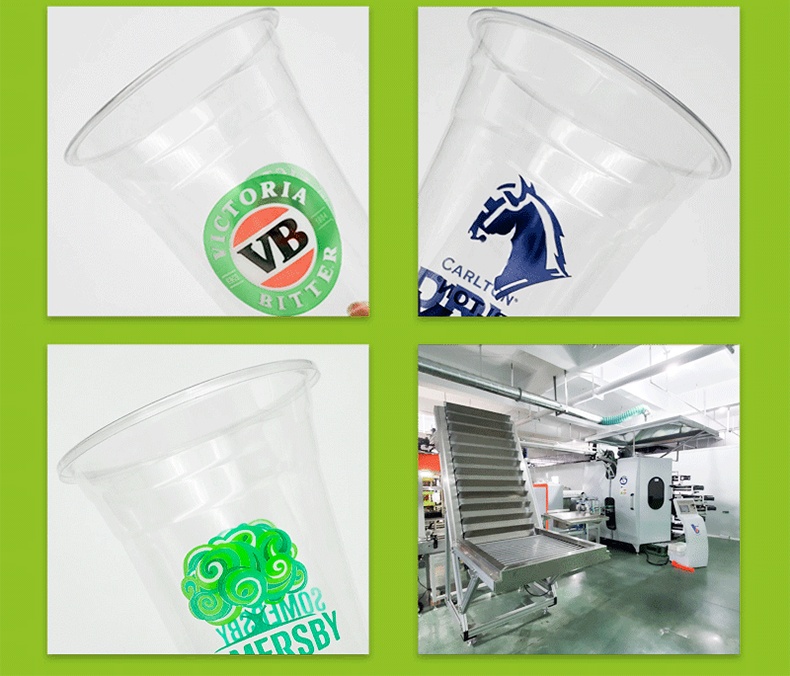
As sustainability regulations become more complex, packaging manufacturers are increasingly offering multiple material options instead of promoting one universal solution.
Rather than treating PLA as a complete replacement for conventional plastics, many companies now position it as one material among several packaging choices depending on regional regulations and customer needs.
For manufacturers like DASHAN, this means balancing sustainability with functionality, compliance, and market practicality. Different customers require different packaging strategies depending on local recycling systems, foodservice applications, transportation needs, and environmental policies.
Today’s buyers are increasingly looking for suppliers that can provide:
- Recyclable PP and PET packaging
- rPET packaging solutions
- Compostable PLA options
- Compliance documentation
- Lightweight and mono-material designs
- Packaging customized for regional regulations
This flexibility is becoming a major competitive advantage in global food packaging markets.
The Future of PLA in Global Packaging
PLA is likely to remain an important part of the sustainable packaging industry, but its future growth will depend heavily on infrastructure development and regulatory clarity.
The market is gradually recognizing that no single material can solve every environmental challenge. Instead, different packaging materials may serve different applications depending on recycling systems, composting access, food safety requirements, and economic conditions.
Future regulations will likely focus more on measurable environmental performance, waste collection efficiency, and realistic end-of-life management rather than simple material claims.
At the same time, governments are expected to tighten rules surrounding environmental labeling to reduce consumer confusion and prevent misleading sustainability marketing.
FAQ
1. What is PLA in food packaging?
PLA (Polylactic Acid) is a bio-based plastic typically made from renewable resources such as corn starch or sugarcane. It is commonly used in cups, lids, trays, and takeaway food packaging.
2. Why do some countries support PLA packaging?
Some countries support PLA because it reduces dependence on fossil-based plastics and can be processed in industrial composting systems under controlled conditions.
3. Why do certain countries restrict PLA?
Countries may restrict PLA because many regions lack industrial composting facilities, and PLA can contaminate PET recycling streams if disposed of incorrectly.
4. Is PLA biodegradable?
PLA is industrially compostable under specific temperature and humidity conditions, but it does not always break down effectively in normal natural environments or household compost systems.
5. How does PLA compare with PP and PET?
PLA is plant-based and compostable, while PP and PET are generally more recyclable within existing recycling infrastructures. PP also offers better heat resistance, while PET provides high transparency.
6. Can PLA replace all traditional plastic packaging?
No. Different packaging materials serve different applications depending on food safety requirements, recycling systems, temperature resistance, transportation needs, and local regulations.
7. Why is recycling infrastructure important for PLA?
Without industrial composting facilities, PLA packaging may end up in landfills or incineration systems, reducing its environmental advantages.
8. How are packaging manufacturers like DASHAN adapting?
Manufacturers are offering multiple material solutions, including recyclable PP, PET, rPET, and compostable PLA packaging, to meet different international regulations and customer needs.
Conclusion
PLA has become one of the most debated materials in modern food packaging because it sits between environmental ambition and practical waste management realities. Countries that support PLA often have stronger composting infrastructure and policies promoting renewable materials, while countries that restrict it usually prioritize recycling efficiency and existing waste management systems.
The global packaging industry is therefore moving toward a more balanced understanding of sustainability. Instead of asking whether one material is completely “good” or “bad,” regulators and brands are increasingly evaluating how packaging performs within real-world collection, recycling, and disposal systems.
For manufacturers like DASHAN, the key is adaptability. Providing recyclable PP and PET packaging alongside compostable PLA solutions allows packaging suppliers to meet the different environmental policies, infrastructure conditions, and commercial needs of global markets.