


Quick Summary
Rice-based meals and pasta dishes require different packaging because they behave differently during storage, transportation, and reheating. Rice meals are more sensitive to moisture balance and food separation, making multi-compartment trays ideal for maintaining presentation and texture. Pasta dishes usually contain more sauces and oils, requiring deeper containers with stronger sealing performance to reduce leakage during delivery. As takeaway and ready-meal markets continue expanding, restaurants are increasingly choosing packaging systems based on cuisine type, meal structure, and transportation requirements.
Introduction
At first glance, rice meals and pasta dishes may appear to require similar food packaging. Both are popular takeaway foods, both are commonly served hot, and both are widely used in ready-meal and food delivery markets. Because of this, some restaurants and foodservice operators assume that the same packaging systems can work equally well for both applications.
In reality, rice and pasta behave very differently inside food containers.
Their differences in moisture retention, sauce distribution, meal structure, reheating performance, and transportation stability create very different packaging requirements. A packaging solution that performs well for a pasta dish may not work effectively for a rice-based meal, and vice versa.
As food delivery and ready-meal markets continue expanding globally, packaging is becoming increasingly specialized according to cuisine type and eating habits. Restaurants, meal prep companies, convenience stores, and catering businesses are paying closer attention to how different foods interact with packaging during storage, transportation, and reheating.
Understanding these differences is important not only for food presentation, but also for leakage prevention, customer satisfaction, operational efficiency, and overall delivery performance.
Rice and Pasta Behave Very Differently Inside Packaging

Although both rice and pasta are staple carbohydrates, their physical characteristics differ significantly once packaged.
Rice is highly sensitive to moisture balance. If packaged incorrectly, it can dry out quickly or become overly wet due to trapped steam condensation. Maintaining the correct humidity level is essential for preserving texture and freshness.
Pasta creates a different challenge. Most pasta dishes contain sauces with higher oil or liquid content, which increases movement during transportation and raises the risk of leakage.
This means the main packaging concerns are not the same.
| Food Type | Primary Packaging Challenge |
|---|---|
| Rice-based meals | Moisture retention and food separation |
| Pasta dishes | Sauce control and leakage prevention |
Rice tends to remain relatively stable inside a container, but it is vulnerable to texture deterioration if ventilation and heat retention are poorly managed.
Pasta, especially when combined with cream, tomato, or oil-based sauces, moves more freely during transportation. This requires stronger sealing systems and container shapes designed to minimize sauce displacement.
Because of these differences, packaging design must be tailored to the food itself rather than treated as a universal solution.
Why Rice-Based Meals Often Use Compartment Packaging
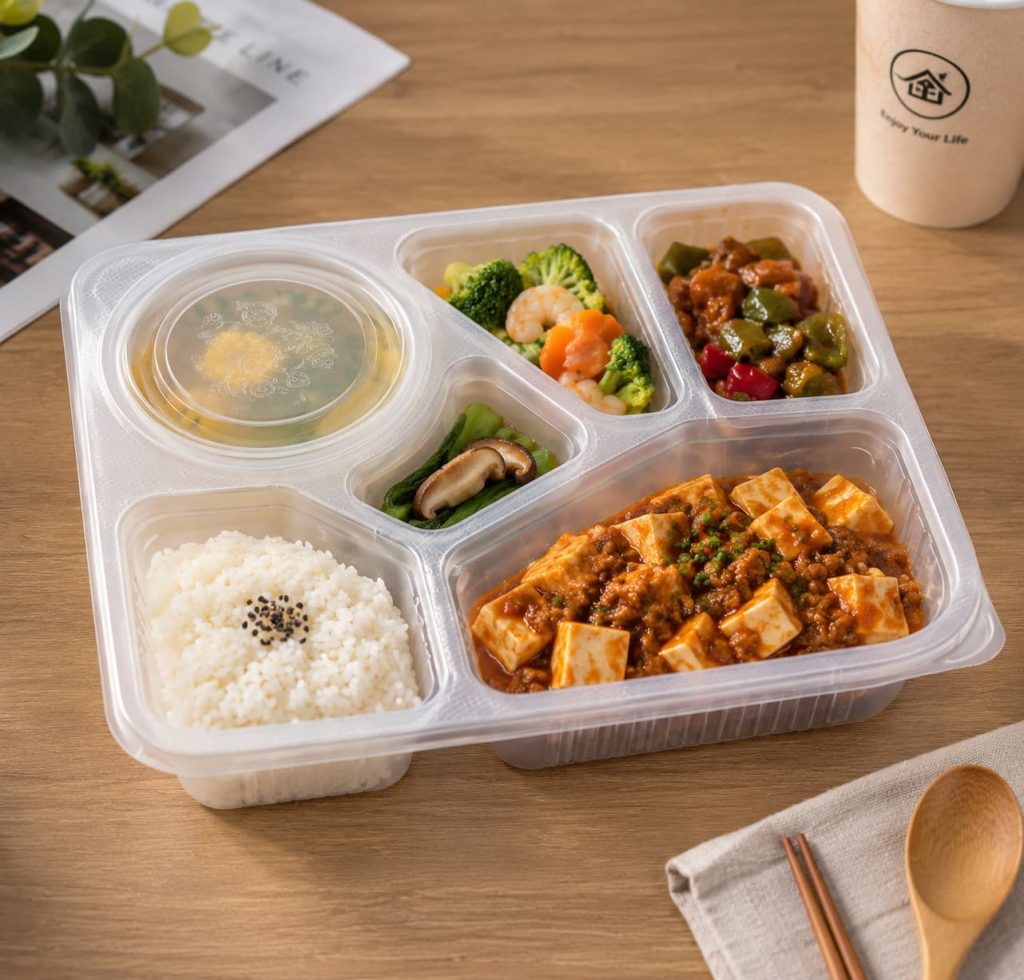
Rice meals are commonly served as combination meals rather than single-dish products.
This is especially true in:
- Japanese bento meals
- Korean lunch boxes
- Chinese takeaway combinations
- Southeast Asian rice sets
- Meal prep services
- Airline catering meals
These meals typically include multiple food categories in a single package:
- Rice
- Vegetables
- Protein dishes
- Sauces
- Pickled items
- Fried foods
Without proper separation, moisture and sauces from side dishes can spread into the rice during transportation, affecting both flavor and texture.
This is why multi-compartment packaging is widely used for rice-based meals.
Compartment structures help:
- Keep foods separated
- Maintain meal presentation
- Prevent sauces from soaking into rice
- Reduce food movement during delivery
- Improve portion organization
| Packaging Type | Common Application |
|---|---|
| Multi-compartment tray | Rice meals and bento |
| Single large bowl | Pasta and mixed noodle dishes |
Compartment trays also improve the visual appearance of delivered meals. Consumers often associate organized meal layouts with higher quality and better freshness.
For takeaway and delivery businesses, this presentation advantage can strongly influence customer satisfaction.
Pasta Packaging Focuses More on Sauce Management
Unlike rice meals, pasta dishes are usually served as a single mixed food item rather than separated meal components.
As a result, packaging priorities shift toward:
- Sauce containment
- Heat retention
- Leak resistance
- Mixing stability
Pasta sauces create continuous movement inside containers during transportation. Cream sauces, tomato sauces, and oil-based seasonings can easily spread toward lid edges when containers tilt or vibrate during delivery.
This creates higher leakage risks compared to most rice meals.
To address this, pasta packaging often uses:
- Deep bowl-shaped containers
- Tight lid sealing systems
- Rounded internal corners
- Reinforced rim structures
Deep containers reduce horizontal sauce movement and help keep pasta centralized during transportation.
Lid performance is especially important because even small sealing gaps can allow oil or liquid to escape.
Heat management also matters. Pasta texture can deteriorate quickly if excessive steam accumulates inside the container. Some packaging systems therefore balance sealing strength with controlled ventilation to reduce condensation buildup.
Different Meal Structures Require Different Container Shapes
Container shape plays a major role in packaging performance.
Rice-based meals usually benefit from structured rectangular or square trays because they support organized compartment layouts.
These shapes:
- Maximize food separation
- Improve stacking efficiency
- Support portion control
- Maintain visual organization
Pasta dishes, however, are often better suited to deep round containers.
Round bowls:
- Improve heat circulation
- Reduce corner sauce accumulation
- Make mixing easier for consumers
- Provide better central stability during transportation
| Meal Type | Preferred Container Shape |
|---|---|
| Rice meals | Rectangular compartment trays |
| Pasta dishes | Deep round bowls |
This difference reflects how consumers interact with the food itself.
Rice meals are typically eaten section by section, while pasta dishes are often mixed continuously during eating.
Packaging design must therefore support not only transportation, but also the intended dining experience.
Why PP Material Works Well for Both Applications
Although rice and pasta require different packaging structures, PP (polypropylene) remains one of the most widely used materials for both applications.
One major advantage of PP is its heat resistance.
Hot takeaway meals generate steam and temperature fluctuations during transportation. PP maintains structural stability under these conditions while remaining suitable for microwave reheating.
PP also provides:
- Strong durability
- Lightweight transportation efficiency
- Good sealing compatibility
- Stackable performance
- Cost efficiency for large-scale foodservice
Because PP can be molded into many different shapes, it supports:
- Multi-compartment rice trays
- Deep pasta bowls
- Soup containers
- Sealed takeaway packaging systems
This versatility makes PP highly suitable for modern delivery and ready-meal operations.
Delivery Conditions Affect Rice and Pasta Differently
Transportation conditions create different risks for different meal types.
Rice meals are generally more sensitive to physical compression and presentation disruption.
If side dishes shift or sauces spread between compartments, the meal may appear disorganized even if no leakage occurs.
Compartment packaging helps reduce this movement and maintain meal structure during transportation.
Pasta meals, on the other hand, are more vulnerable to leakage because of their higher liquid content.
This makes sealing performance more important.
| Meal Type | Transportation Priority |
|---|---|
| Rice meals | Maintaining organization |
| Pasta dishes | Preventing leakage |
Consumer expectations also differ.
Customers usually expect rice meals to arrive neat and visually separated, while pasta dishes are expected to remain warm, creamy, and fully contained without sauce spills.
Because of these differences, delivery packaging must be optimized according to the specific food application.
Restaurants Are Choosing Packaging Based on Cuisine Type
Foodservice businesses increasingly recognize that packaging performance affects customer satisfaction and operational efficiency.
Asian restaurants commonly prefer multi-compartment PP trays because they support:
- Bento meal presentation
- Side dish separation
- Sauce control
- Organized food layouts
Western takeaway brands often favor bowl-style packaging for:
- Pasta
- Noodle dishes
- Salad bowls
- Mixed ingredient meals
Meal prep companies sometimes combine both systems by using compartment trays alongside separate sauce or soup containers.
As delivery competition increases, restaurants are moving away from universal packaging solutions and adopting packaging systems designed specifically for their menu structures.
Manufacturers such as DASHAN increasingly support this trend by providing customized PP food packaging solutions tailored to different cuisines, delivery conditions, and ready-meal applications.
Future Trends in Meal-Specific Packaging
Food packaging is becoming increasingly specialized as consumer expectations evolve.
Several trends are becoming more important.
Packaging Designed Around Specific Cuisines
Instead of using one container type for all meals, restaurants are selecting packaging optimized for individual food categories.
Better Moisture and Ventilation Management
Packaging systems are improving steam control and condensation management to better preserve food texture during transportation.
Growth of Recyclable Mono-Material Packaging
PP mono-material systems are gaining popularity because they combine performance, recyclability, and operational practicality.
Improved Delivery-Oriented Structural Design
Manufacturers continue developing stronger sealing systems, reinforced rims, and more stable stackable structures for modern delivery environments.
FAQ
1. Why do rice meals often use compartment trays?
Rice meals usually include multiple side dishes such as vegetables, proteins, sauces, and pickles. Compartment trays help keep these foods separated, preventing sauces and moisture from affecting the rice texture during transportation.
2. Why are pasta dishes more likely to leak during delivery?
Most pasta dishes contain liquid-based sauces or oils that move easily when containers tilt or vibrate during transportation. This creates higher leakage risks compared to many rice-based meals.
3. What type of packaging is best for rice-based meals?
Multi-compartment PP trays are commonly used for rice meals because they improve food organization, maintain presentation, reduce food mixing, and support portion separation for takeaway and ready-meal applications.
4. Why are deep round containers often used for pasta packaging?
Deep round bowls help contain sauces more effectively, reduce horizontal movement during delivery, improve heat retention, and make pasta easier to mix and eat directly from the container.
5. Why is PP material widely used for both rice and pasta packaging?
PP (polypropylene) offers strong heat resistance, good structural durability, microwave-safe performance, and lightweight transportation advantages. It can also support both compartment trays and deep bowl-style packaging designs.
6. How does food structure affect packaging design?
Different foods create different transportation and storage challenges. Rice meals prioritize organization and moisture control, while pasta dishes require stronger leak prevention and sauce containment systems.
Conclusion
Rice-based meals and pasta dishes may appear similar from a packaging perspective, but they create very different functional requirements.
Rice meals prioritize moisture balance, food separation, and organized presentation. Pasta dishes require stronger sauce control, leak resistance, and heat retention performance.
Because of these differences, container shape, compartment structure, sealing systems, and transportation stability must all be adapted according to the food application.
Multi-compartment trays often perform better for rice meals, while deep sealed bowls are generally more suitable for pasta dishes. Understanding how food behaves inside packaging helps restaurants improve delivery quality, reduce operational problems, and create better customer experiences.
As takeaway and ready-meal markets continue growing worldwide, food-specific packaging design will become increasingly important across the foodservice industry.
References
- ScienceDirect – Migration from Polypropylene Food Packaging into Foods
- Nature Food – Food Delivery Packaging and Tableware Waste
- Frontiers – The Environmental Impacts of Packaging in Food Delivery Services
- MDPI Sustainability – Environmental Impact of Food Delivery Services: A Review
- U.S. FDA – Food Packaging & Food Contact Substances
- EFSA – Food Contact Materials
- ScienceDirect – Food Packaging Materials and Heat Resistance Properties
Copyright Statement
© 2026 Dashan Packing. All rights reserved.
This article is an original publication by the Dashan Packing team based on industry research, market analysis, and packaging expertise. Unauthorized reproduction, distribution, or copying of this content is prohibited without prior written permission.
Dashan Packing is committed to delivering reliable, original, and professional information for the global food packaging industry.