

Quick Summary
In 2026, recyclability is becoming more important than vague “eco-friendly” claims because brands, governments, and consumers now focus more on real-world waste recovery and circular packaging systems. Packaging that can be effectively recycled within existing infrastructure is often considered more sustainable than materials that sound environmentally friendly but are difficult to process in practice.
Over the past decade, sustainability has become one of the most influential trends in the global packaging industry. Foodservice brands, beverage chains, supermarkets, and packaging manufacturers are all trying to position themselves as environmentally responsible businesses. As a result, terms such as “eco-friendly,” “green packaging,” “sustainable materials,” and “environmentally conscious” now appear everywhere across the market.
At first glance, this seems like a positive development. Consumers are paying more attention to environmental issues, and businesses are responding with new packaging solutions designed to reduce environmental impact. However, as sustainability marketing has expanded, confusion has also increased. Many environmental claims remain vague, difficult to verify, or disconnected from how packaging is actually processed after disposal.
In 2026, the packaging conversation is shifting in a more practical direction. Governments are introducing stricter regulations, retailers are demanding measurable sustainability performance, and consumers are becoming increasingly skeptical of generic green messaging. Instead of simply asking whether packaging sounds environmentally friendly, businesses are now asking a more important question: can this packaging realistically be recovered, recycled, and reused within existing waste systems?
This shift is why recyclability is becoming more important than broad “eco-friendly” claims. Across the food packaging industry, companies are realizing that real-world recovery systems often matter more than marketing terminology alone.
The “Eco-Friendly” Packaging Boom Created New Challenges
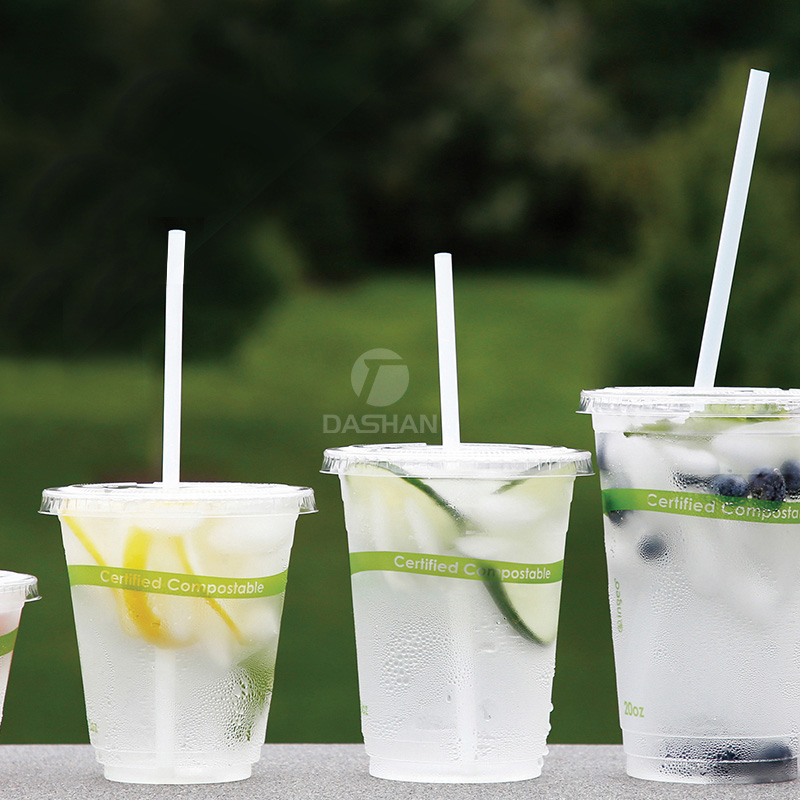
Sustainability has become a major competitive strategy in the packaging market. Over the past several years, brands have introduced a wide range of materials marketed as environmentally responsible alternatives, including biodegradable plastics, compostable cups, plant-based packaging, paper containers, and fiber-based foodservice products.
For many businesses, sustainability messaging quickly became part of brand identity. Packaging was no longer viewed only as a protective material but also as a statement about company values and environmental responsibility.
However, the rapid growth of sustainability marketing also created significant confusion. Terms such as:
- Eco-friendly
- Green packaging
- Earth-conscious
- Biodegradable
- Compostable
- Sustainable
are often used interchangeably, even though they describe very different environmental concepts.
This lack of clarity has made it difficult for both consumers and businesses to understand how packaging actually performs environmentally. For example, many consumers assume compostable packaging will naturally disappear in ordinary waste conditions, which is often not true. Some materials require highly controlled industrial composting systems that may not exist in many regions.
At the same time, certain packaging products promoted as sustainable may still end up in landfill due to poor collection systems, contamination issues, or limited infrastructure.
As environmental awareness grows, governments are beginning to challenge vague sustainability claims more aggressively. Regulatory authorities in Europe, North America, and other major markets are increasing scrutiny on greenwashing and misleading environmental marketing.
Why consumers are becoming skeptical of sustainability claims
| Common Claim | Consumer Concern |
|---|---|
| “Eco-friendly” | Too vague |
| “Biodegradable” | Conditions often unclear |
| “Compostable” | Industrial facilities may be unavailable |
| “Sustainable” | Difficult to measure |
| “Green packaging” | Often lacks verification |
Consumers increasingly want transparency, evidence, and measurable environmental performance rather than broad emotional marketing language.
Recyclability Is Becoming a More Practical Sustainability Standard
As sustainability discussions mature, recyclability is emerging as one of the most practical ways to evaluate packaging performance. Unlike vague environmental claims, recyclability can often be measured through existing collection, sorting, and material recovery systems.
In simple terms, recyclable packaging is packaging that can be collected, processed, and converted into reusable raw material after use. However, true recyclability depends not only on the material itself but also on whether infrastructure exists to recover and process it efficiently.
This distinction is becoming extremely important in the packaging industry. A material may sound environmentally advanced in theory, but if it cannot realistically be processed within existing waste systems, its actual environmental benefits may remain limited.
For example, some compostable materials require specialized industrial composting facilities with controlled heat, humidity, and processing conditions. In regions where these facilities are unavailable, compostable packaging may ultimately end up in landfill alongside conventional waste.
This is one reason why governments and retailers are increasingly focusing on circular economy principles rather than simple material labels. Circular packaging systems prioritize keeping materials in use for as long as possible through recycling and reuse.
Key factors influencing real-world recyclability
| Factor | Why It Matters |
|---|---|
| Collection infrastructure | Packaging must be recoverable |
| Sorting compatibility | Materials must be identifiable |
| Processing technology | Recycling facilities must exist |
| Consumer disposal behavior | Incorrect disposal reduces recovery |
| Material simplicity | Easier recycling improves efficiency |
Many major retailers and foodservice operators are now requesting packaging solutions that align with existing recycling systems rather than relying only on theoretical sustainability claims.
Consumers are also changing how they evaluate packaging. Instead of asking whether packaging sounds environmentally friendly, many now want answers to more practical questions:
- Can it actually be recycled?
- Is recycling infrastructure available locally?
- Does the packaging contain recycled content?
- Is the material widely accepted in waste systems?
- Can the packaging realistically support circularity?
This shift is significantly reshaping how businesses choose food packaging materials.
PET and PP Are Reentering the Sustainability Conversation
For many years, plastic packaging discussions were often simplified into a basic assumption that “plastic equals unsustainable.” However, industry perspectives are becoming more nuanced as businesses focus more heavily on recyclability and material recovery systems.
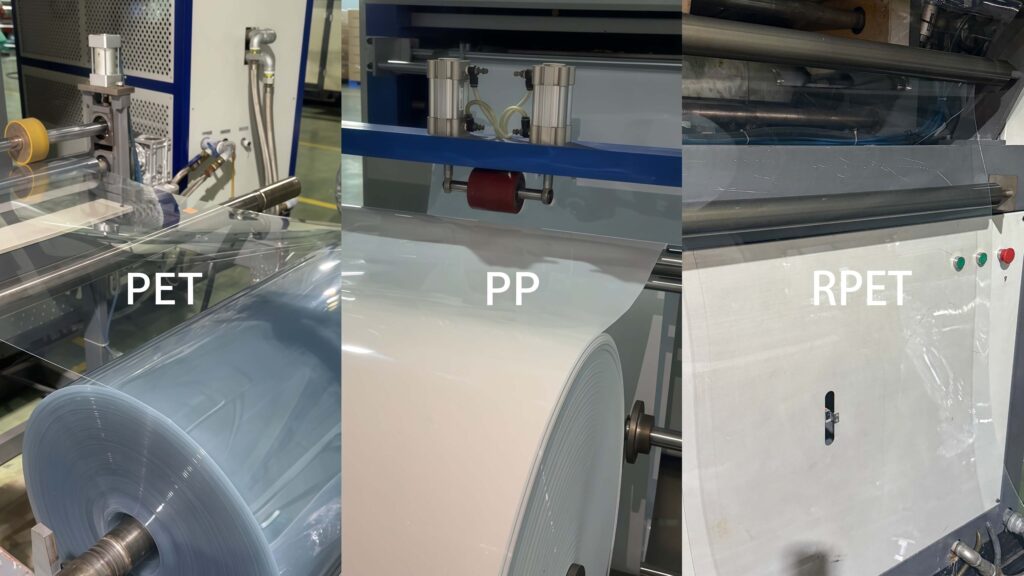
Today, many companies recognize that some plastics may offer strong environmental advantages when effective recycling infrastructure exists. This is especially true for materials such as PET and PP, which are increasingly viewed through the lens of circular economy performance.
PET remains one of the most widely recycled packaging materials globally, particularly in beverage packaging applications. Established recycling systems in many countries allow PET containers to be collected, processed, and reused in new packaging products.
This has contributed to the rapid growth of rPET solutions across the foodservice industry. Beverage brands, supermarkets, and restaurant chains are increasingly adopting recycled PET packaging as part of broader sustainability strategies.
Why many brands still use PET packaging
| PET Advantage | Sustainability Benefit |
|---|---|
| Widely recyclable | Supports circular systems |
| Lightweight | Reduces transport emissions |
| Strong durability | Reduces product waste |
| High transparency | Improves product presentation |
| rPET compatibility | Supports recycled content goals |
At the same time, mono-material PP packaging is also gaining attention. Many packaging companies are developing simplified mono-material structures because they are easier to sort and recycle compared with complex multi-layer packaging systems.
PP packaging is increasingly used in:
- Takeaway containers
- Microwave-safe packaging
- Food delivery applications
- Beverage cups
- Ready-meal packaging
Another important sustainability factor is lightweighting. Packaging manufacturers are continuously reducing material usage while maintaining structural performance. Lighter packaging can reduce transportation emissions, lower raw material consumption, and improve supply chain efficiency.
This reflects a broader industry realization that sustainability is no longer based on a single factor. Instead, companies must evaluate how packaging performs across the entire lifecycle.
Sustainability Must Also Work in Real Commercial Environments
Although environmental performance is becoming increasingly important, packaging must still function effectively in real-world foodservice operations. Consumers expect packaging to protect food and beverages properly while maintaining convenience and product quality.
A package that performs poorly operationally can create additional waste, product damage, or customer dissatisfaction, which may ultimately reduce its sustainability benefits.
Foodservice brands therefore face a balancing challenge. Packaging must support:
- Product safety
- Leak resistance
- Transportation durability
- Branding requirements
- Shelf appeal
- Operational efficiency
- Sustainability goals
For example, beverage cups must maintain structural stability during takeaway and delivery operations. Food containers must preserve temperature, resist leakage, and protect presentation quality.
In many cases, the most sustainable packaging solution is not necessarily the one with the strongest environmental marketing claims. Instead, it may be the packaging that consumers can easily dispose of correctly within existing recovery systems.
Cost pressures also remain extremely important. Sustainable packaging often carries higher production costs, especially when using specialty materials or limited-scale manufacturing systems. Brands therefore need packaging strategies that are environmentally responsible while still commercially realistic.
This is why many companies are moving toward data-driven sustainability evaluation methods such as:
- Lifecycle assessments (LCA)
- Carbon footprint analysis
- Recycled content tracking
- Material recovery measurement
- Supply chain transparency
The industry is gradually shifting away from emotional sustainability messaging toward measurable environmental performance.
What Businesses Should Look for in Sustainable Packaging in 2026
As sustainability standards become more sophisticated, businesses must evaluate packaging more strategically. Instead of relying only on marketing language, companies should focus on practical long-term packaging performance.
One of the most important considerations is whether packaging can realistically be recovered within existing waste systems. Packaging designed for recyclability often performs better in real-world environmental conditions than materials requiring specialized infrastructure that may not exist locally.
Simplified packaging structures are also becoming increasingly important. Complex multi-material packaging combinations can create major recycling challenges because materials are difficult to separate during processing.
What modern packaging buyers now prioritize
| Packaging Priority | Industry Trend |
|---|---|
| Recyclability | Rapidly increasing |
| Mono-material design | Growing adoption |
| Recycled content | Strong retailer demand |
| Supply chain transparency | Increasing importance |
| Regulatory compliance | Essential requirement |
Businesses must also work with suppliers that understand evolving global packaging regulations. Policies such as Extended Producer Responsibility (EPR) systems and the European Union’s PPWR framework are reshaping how companies evaluate packaging materials.
At the same time, sustainability should not focus only on material type. Efficient manufacturing, lightweight packaging design, transportation optimization, and waste reduction throughout the supply chain also contribute significantly to overall environmental performance.
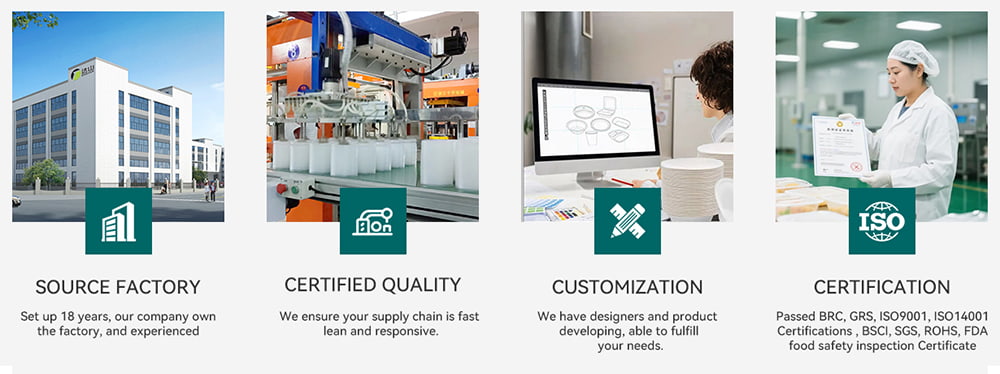
DASHAN supports practical food packaging solutions designed to balance recyclability, operational performance, and scalable manufacturing efficiency. By focusing on reliable PET and PP packaging solutions, customizable production capabilities, and stable product quality, DASHAN helps foodservice businesses adapt to changing sustainability expectations without compromising commercial practicality.
The Future of Sustainable Packaging Will Focus on Circularity
The future of packaging sustainability will likely depend less on emotional marketing claims and more on measurable circular economy performance. Governments, retailers, and consumers increasingly expect companies to provide evidence-based sustainability strategies supported by realistic recovery systems.
This means recyclability will continue becoming a core requirement in packaging development. Brands will face growing pressure to use materials compatible with established collection and recycling infrastructure while also increasing recycled content usage.
At the same time, regulatory standards surrounding sustainability marketing will likely become stricter. Businesses using vague or unverifiable environmental claims may face increased legal and reputational risks.
Consumers are also becoming more educated about packaging sustainability. Many now recognize that labels alone do not guarantee environmental performance. Instead, they are looking for transparency, material traceability, and realistic waste management compatibility.
Future packaging innovation will therefore focus on achieving balance across multiple factors simultaneously:
- Recyclability
- Material efficiency
- Product protection
- Operational performance
- Cost control
- Consumer convenience
- Supply chain scalability
Rather than searching for a single “perfect” sustainable material, the packaging industry is increasingly moving toward practical circular solutions that can function effectively within real-world commercial and waste management systems.
FAQs
1. Why is recyclability more important than “eco-friendly” claims?
Because recyclability can be measured through real waste recovery systems, while many “eco-friendly”claims are vague and difficult to verify.
2. What is the difference between recyclable and compostable packaging?
Recyclable packaging is processed into reusable raw materials, while compostable packaging breaks down under specific composting conditions, often requiring industrial facilities.
3. Why are PET and PP packaging materials still widely used?
PET and PP remain popular because they offer strong recyclability potential, lightweight performance, durability, and compatibility with existing packaging infrastructure.
4. Are biodegradable plastics always better for the environment?
Not necessarily. Some biodegradable materials require special processing systems that may not be available in many regions, limiting their real-world environmental benefits.
5. What is mono-material packaging?
Mono-material packaging uses a single material type, making recycling easier compared with complex multi-layer or mixed-material packaging structures.
6. How are packaging regulations changing in 2026?
Governments are introducing stricter rules targeting recyclability, recycled content, packaging transparency, and misleading environmental marketing claims.
Conclusion
In 2026, sustainability is becoming more evidence-based, infrastructure-focused, and operationally realistic. While “eco-friendly” messaging continues to influence packaging marketing, businesses and consumers are increasingly prioritizing recyclability because it offers a more measurable and practical approach to environmental responsibility.
Packaging that can be effectively collected, processed, and reused within existing systems often provides stronger real-world sustainability performance than materials relying on ideal conditions that may not exist at scale.
As regulations tighten and consumer awareness grows, brands must move beyond vague environmental claims and focus on packaging strategies that balance sustainability, functionality, and commercial practicality. Recyclability, circularity, and material efficiency will continue shaping the future of foodservice packaging.
For businesses navigating these changing expectations, practical packaging innovation and responsible material selection will become far more important than simple marketing terminology alone.
References
- Ellen MacArthur Foundation – Plastics and Circular Economy
- U.S. EPA – Sustainable Materials Management
- European Environment Agency – Packaging Waste
- European Bioplastics
- PET Resin Association (PETRA)
- NAPCOR – PET Recycling Information
- OECD Global Plastics Outlook
- Food Packaging Forum
Copyright Statement
© 2026 Dashan Packing. All rights reserved.
This article is an original work created by the Dashan Packing editorial team.
All text, data, and images are the result of our independent research, industry experience,
and product development insights. Reproduction or redistribution of any part of this content
without written permission is strictly prohibited.
Dashan Packing is committed to providing accurate, evidence-based information and
to upholding transparency, originality, and compliance with global intellectual property standards.