

Quick Summary
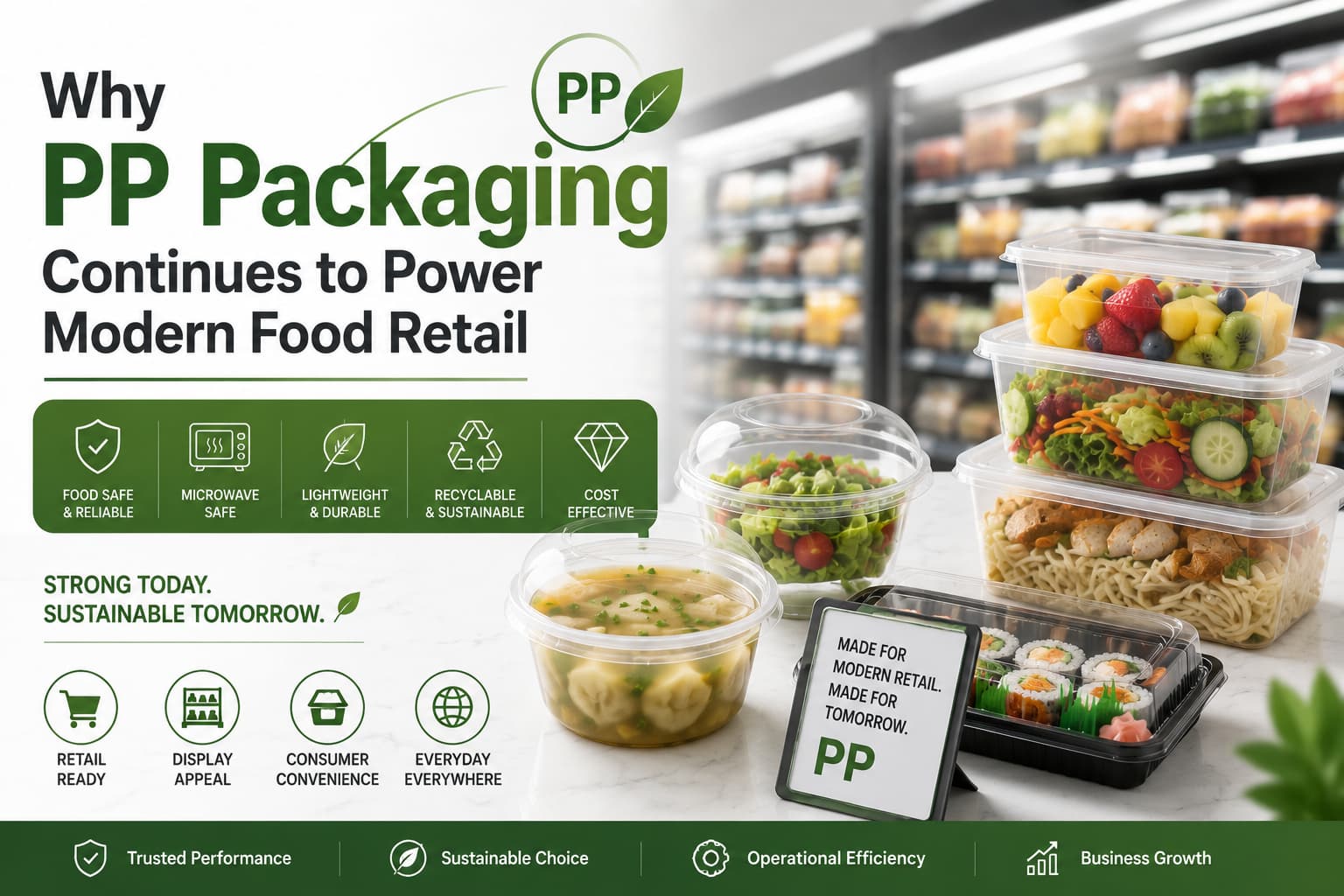
PP packaging remains one of the most important materials in modern food retail because it combines heat resistance, durability, food safety, and operational efficiency in a single solution. While many new packaging materials continue to emerge, PP has evolved beyond traditional takeaway containers into advanced applications such as ready meals, food delivery packaging, high-barrier fresh food packaging, and Modified Atmosphere Packaging (MAP). Its adaptability, compatibility with large-scale food production, and established recycling infrastructure ensure that PP continues to play a central role in global food supply chains.
Introduction
Walk through any supermarket, convenience store, food court, airport terminal, or food delivery platform today, and one packaging material appears almost everywhere: polypropylene, better known as PP.
From ready meals and takeaway containers to fresh food trays and microwaveable packaging, PP has become one of the most important materials supporting modern food retail. While newer materials regularly attract attention for their sustainability claims or innovative designs, PP has quietly maintained its position at the center of the global food packaging industry.
Its continued success is not simply the result of low cost. In fact, PP remains widely used because it solves several of the food industry’s most persistent challenges simultaneously. It offers durability, heat resistance, food safety, manufacturing flexibility, and increasingly sophisticated barrier performance that few alternative materials can match at scale.
As food retail continues to evolve toward convenience, freshness, and operational efficiency, PP remains a foundational material powering modern food supply chains around the world.
The Evolution of PP Packaging
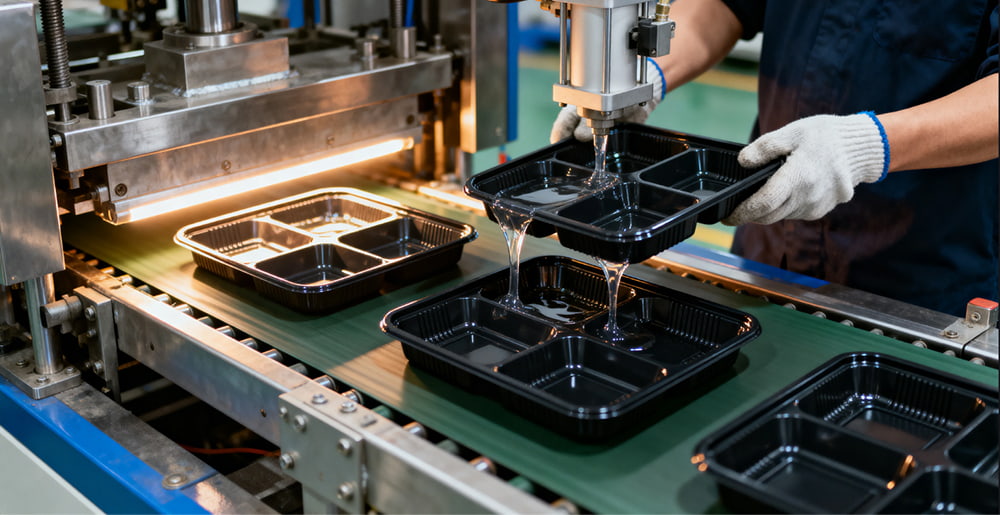
Many people still associate PP packaging primarily with disposable takeaway containers. Twenty years ago, that perception was largely accurate. PP was commonly used for meal boxes, foodservice trays, and microwaveable containers because of its excellent heat resistance and affordability.
Today, however, PP packaging has evolved far beyond these traditional applications.
Advances in material science, co-extrusion technology, and food preservation systems have transformed PP into a highly versatile packaging platform capable of serving a wide range of retail environments.
Modern PP packaging is now used for:
- Ready meals
- Airline catering trays
- Fresh meat packaging
- Prepared food programs
- Frozen foods
- Meal-prep containers
- Food delivery applications
- Modified atmosphere packaging (MAP)
Rather than being replaced by newer materials, PP has adapted to changing market requirements and expanded into increasingly sophisticated applications.
Modern Food Retail Demands More from Packaging
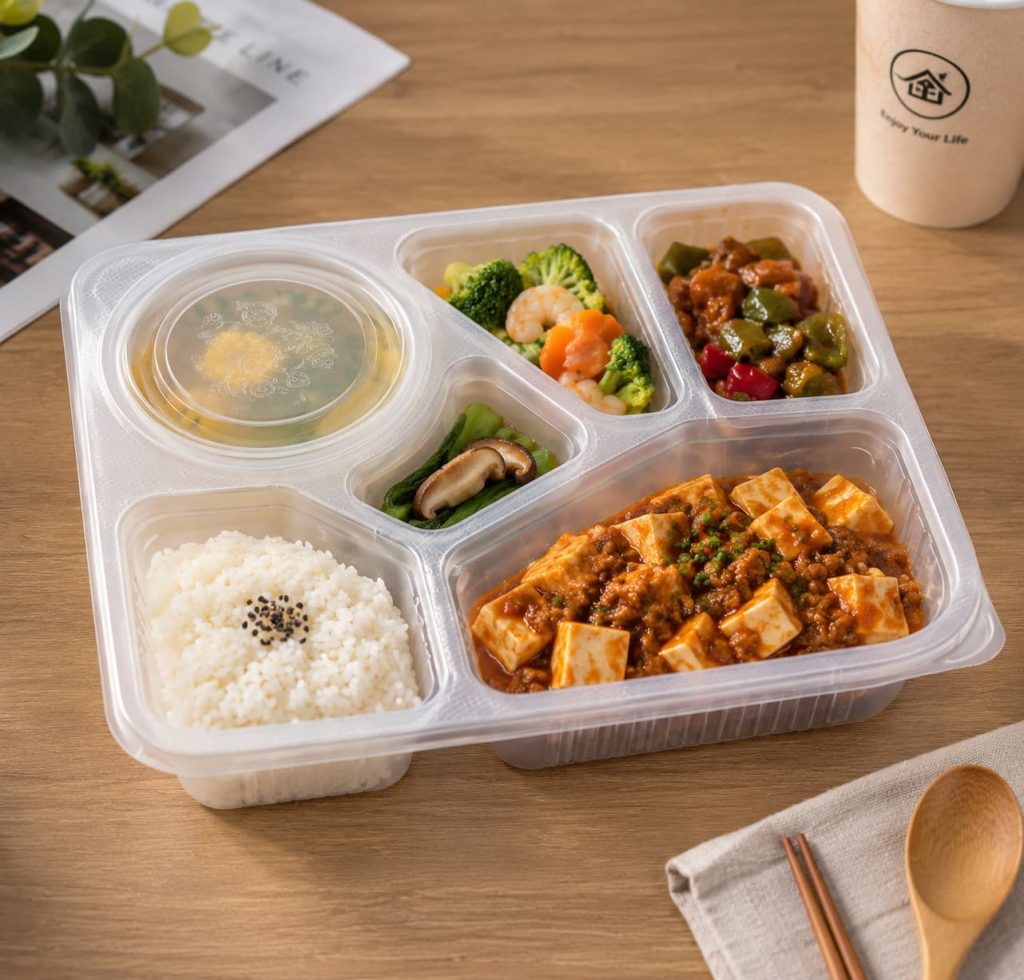
The food industry has changed dramatically over the past decade.
Consumers expect food to be:
- Convenient
- Safe
- Fresh
- Portable
- Easy to reheat
- Available year-round
At the same time, retailers face growing pressure to reduce food waste, improve logistics efficiency, maintain product quality, and comply with increasingly strict food safety requirements.
These changes have elevated the role of packaging.
Packaging is no longer simply protecting products during transportation. It is now expected to contribute to product preservation, operational efficiency, food safety, and customer satisfaction.
PP continues to thrive because its performance aligns closely with these evolving requirements.
Heat Resistance Remains One of PP’s Greatest Advantages
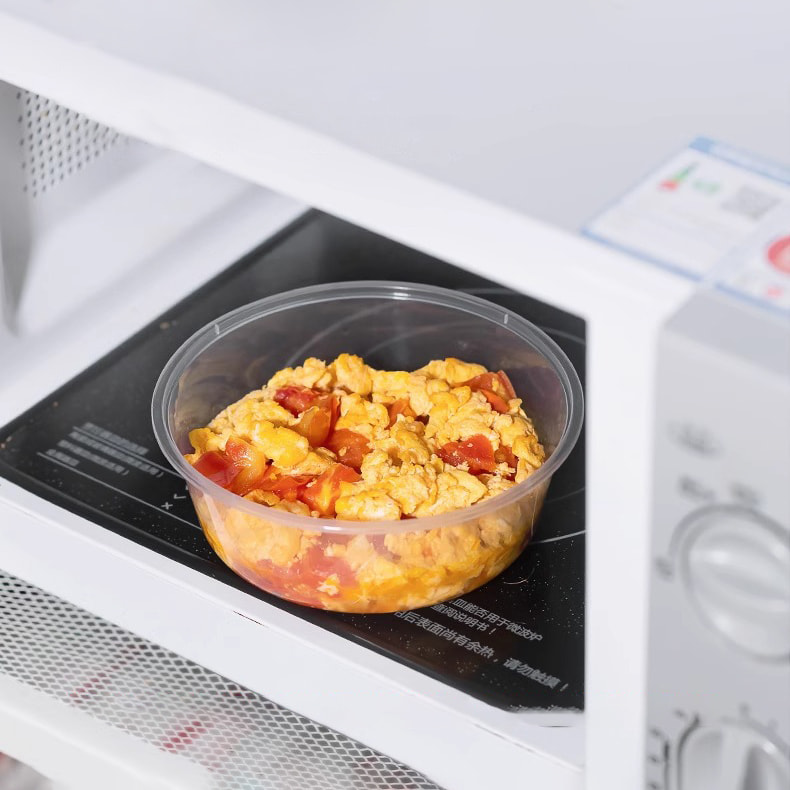
One of the clearest reasons for PP’s continued dominance is its ability to withstand elevated temperatures.
Unlike many packaging materials, PP can perform effectively in environments where food is:
- Filled hot
- Stored refrigerated
- Reheated in microwaves
- Delivered over long distances
This versatility makes PP particularly valuable for modern foodservice operations.
The Growth of Ready Meals
Ready meals have become one of the fastest-growing categories in food retail.
Consumers increasingly seek products that require minimal preparation while still offering convenience and quality.
These meals often move through multiple stages:
Manufacturing → Distribution → Retail → Consumer Storage → Microwave Reheating
PP is uniquely positioned to support this entire process.
Its ability to maintain structural integrity throughout the product lifecycle helps reduce packaging failures and improves consumer convenience.
Food Delivery Has Strengthened Demand for PP Packaging
The rapid growth of food delivery services has introduced new challenges for packaging.
A container that performs well on a supermarket shelf may fail during transportation.
Delivery packaging must withstand:
- Vehicle vibration
- Stacking pressure
- Temperature changes
- Frequent handling
Packaging failures can result in leakage, damaged presentation, and dissatisfied customers.
Why PP Performs Well During Delivery
PP offers several advantages for transportation-intensive applications.
These include:
- Strong structural stability
- Secure lid compatibility
- Impact resistance
- Lightweight construction
- Reliable performance under heat
For restaurants and food delivery operators, these characteristics help protect both food quality and brand reputation.
This is one reason why PP remains one of the most widely used materials in takeaway and delivery packaging worldwide.
Fresh Food Preservation Has Expanded the Role of PP
Perhaps the most significant change in recent years has been PP’s growing role in fresh food preservation.
Historically, fresh food packaging often focused primarily on visibility and transportation protection.
Today, retailers are increasingly focused on extending shelf life and reducing waste.
This shift has driven the development of advanced PP packaging systems designed to support product freshness.
The Challenge of Fresh Foods
Fresh foods continue to deteriorate after processing and packaging.
Key challenges include:
- Oxygen exposure
- Moisture management
- Microbial growth
- Product oxidation
- Shelf-life limitations
Packaging must actively help manage these factors rather than simply contain the product.
High-Barrier PP Packaging Has Changed Fresh Food Retail
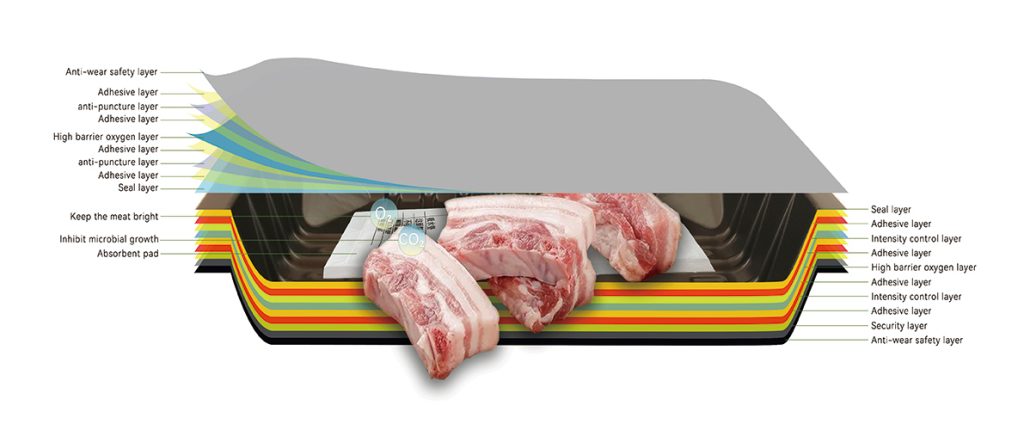
One of the most important developments in food packaging has been the emergence of high-barrier PP structures.
Modern co-extruded PP packaging often incorporates multiple functional layers designed to protect food quality throughout distribution and storage.
These structures may include:
- Protective outer layers
- Security layers
- Oxygen barrier layers
- Adhesive layers
- Seal layers
- Moisture-control components
Each layer performs a specific function within the overall packaging system.
Why Oxygen Control Matters
Oxygen is one of the primary causes of food deterioration.
Excessive oxygen exposure can contribute to:
- Color changes
- Flavor degradation
- Nutritional loss
- Reduced shelf life
High-barrier PP structures help reduce oxygen transmission, allowing products to maintain quality for longer periods.
This technology has become increasingly important in applications such as fresh meat, prepared foods, and refrigerated meal programs.
PP Plays a Key Role in Modified Atmosphere Packaging (MAP)
Few packaging innovations have influenced fresh food preservation as significantly as Modified Atmosphere Packaging (MAP).
MAP works by adjusting the gas composition inside a package to create conditions that slow product deterioration.
Instead of ordinary air, packaging may contain carefully controlled levels of:
- Oxygen (O₂)
- Carbon dioxide (CO₂)
- Nitrogen (N₂)
These modified atmospheres help maintain product quality and extend shelf life.
Why PP Works Well in MAP Systems
Advanced PP structures provide several characteristics required for successful MAP packaging:
- Reliable sealing performance
- Strong barrier properties
- Structural stability
- Compatibility with high-speed production lines
In fresh meat packaging, for example, multi-layer PP structures can help preserve product appearance while reducing spoilage and food waste.
As retailers continue focusing on inventory efficiency and sustainability, MAP-compatible PP packaging is becoming increasingly important throughout global food supply chains.
Operational Efficiency Matters More Than Ever
Retailers today operate in an environment where labor costs continue to rise.
As a result, packaging is increasingly evaluated not only on product performance but also on operational efficiency.
PP packaging supports efficiency in several ways.
Benefits for Retailers
Modern PP packaging can be designed for:
- Efficient stacking
- Automated filling
- Automated sealing
- Optimized transportation
- Improved shelf management
These advantages help reduce handling costs and improve overall supply-chain performance.
For large-scale food operations, even small efficiency gains can generate significant cost savings.
Sustainability Is Helping PP Remain Relevant
Discussions about packaging often focus on emerging materials such as PLA, paper, or molded fiber.
While these materials serve important roles in certain applications, PP continues to offer several sustainability advantages that support its long-term relevance.
Established Recycling Infrastructure
One of PP’s strengths is its compatibility with existing recycling systems in many markets.
Compared with newer materials that may require specialized waste-management infrastructure, PP benefits from:
- Established collection systems
- Existing processing capacity
- Mature global supply chains
Material Efficiency
PP also delivers strong performance with relatively low material usage.
Its combination of lightweight construction and durability can help reduce transportation emissions while maintaining product protection.
As sustainability strategies increasingly focus on both resource efficiency and recyclability, PP continues to remain a practical solution for many food packaging applications.
How DASHAN Supports Modern PP Packaging Programs
As food packaging requirements become more specialized, businesses increasingly seek suppliers capable of supporting multiple retail and foodservice applications.
DASHAN offers a broad range of PP packaging solutions designed for modern food retail environments.
These include:
PP Meal Containers
Suitable for:
- Ready meals
- Takeaway foods
- Meal-prep programs
- Food delivery applications
PP Bowls
Designed for:
- Hot foods
- Soups
- Noodle dishes
- Prepared meals
Custom PP Packaging Solutions
DASHAN also supports OEM development projects that help customers create packaging tailored to their operational, branding, and regulatory requirements.
As food packaging continues to evolve, PP remains one of the most adaptable materials available, supporting applications that range from microwaveable meals to advanced fresh food preservation systems.
Frequently Asked Questions (FAQ)
1. Why is PP still widely used in food packaging despite the emergence of newer materials?
PP offers a unique combination of heat resistance, durability, lightweight performance, and cost efficiency. It can be used for hot foods, microwaveable meals, food delivery, and fresh food applications, making it one of the most versatile packaging materials available.
2. Is PP packaging suitable for microwave reheating?
Yes. One of PP’s biggest advantages is its ability to withstand high temperatures, making it suitable for microwaveable ready meals, takeaway foods, meal-prep containers, and airline catering applications.
3. What role does PP play in fresh food preservation?
Modern PP packaging can incorporate high-barrier structures that help control oxygen transmission and support longer shelf life. These technologies are increasingly used in fresh meat packaging, prepared foods, and refrigerated meal programs.
4. How does PP support Modified Atmosphere Packaging (MAP)?
PP can be used in multi-layer packaging structures that maintain controlled gas environments inside the package. When combined with oxygen-barrier layers, PP helps preserve product freshness, reduce spoilage, and extend shelf life for products such as fresh meat and prepared foods.
5. What PP packaging solutions does DASHAN offer?
DASHAN provides a wide range of PP food packaging products, including meal containers, foodservice bowls, airline catering trays, dual-color PP cups, and customized OEM packaging solutions. These products are designed to support foodservice, retail, catering, and delivery applications worldwide.
Conclusion
PP packaging continues to power modern food retail because it consistently adapts to changing industry demands.
Its success is built on far more than affordability. PP provides heat resistance, durability, food safety, transportation performance, operational efficiency, and increasingly sophisticated barrier technologies that support modern food preservation.
From ready meals and food delivery programs to high-barrier fresh food packaging and MAP applications, PP has evolved from a simple container material into a critical component of global food supply chains.
As retailers and food manufacturers continue seeking solutions that balance performance, efficiency, sustainability, and product protection, PP is likely to remain one of the most important packaging materials in the food industry for years to come.
References
Food Packaging & Food Contact Materials
- U.S. Food and Drug Administration (FDA) – Food Ingredients & Packaging
- European Food Safety Authority (EFSA) – Food Contact Materials
Packaging Industry Research
Packaging Sustainability & Recycling
Modified Atmosphere Packaging (MAP)
Copyright Statement
© 2026 Dashan Packing. All rights reserved.
This article is an original publication by the Dashan Packing team based on industry research, market analysis, and packaging expertise. Unauthorized reproduction, distribution, or copying of this content is prohibited without prior written permission.
Dashan Packing is committed to delivering reliable, original, and professional information for the global food packaging industry.