

Quick Summary
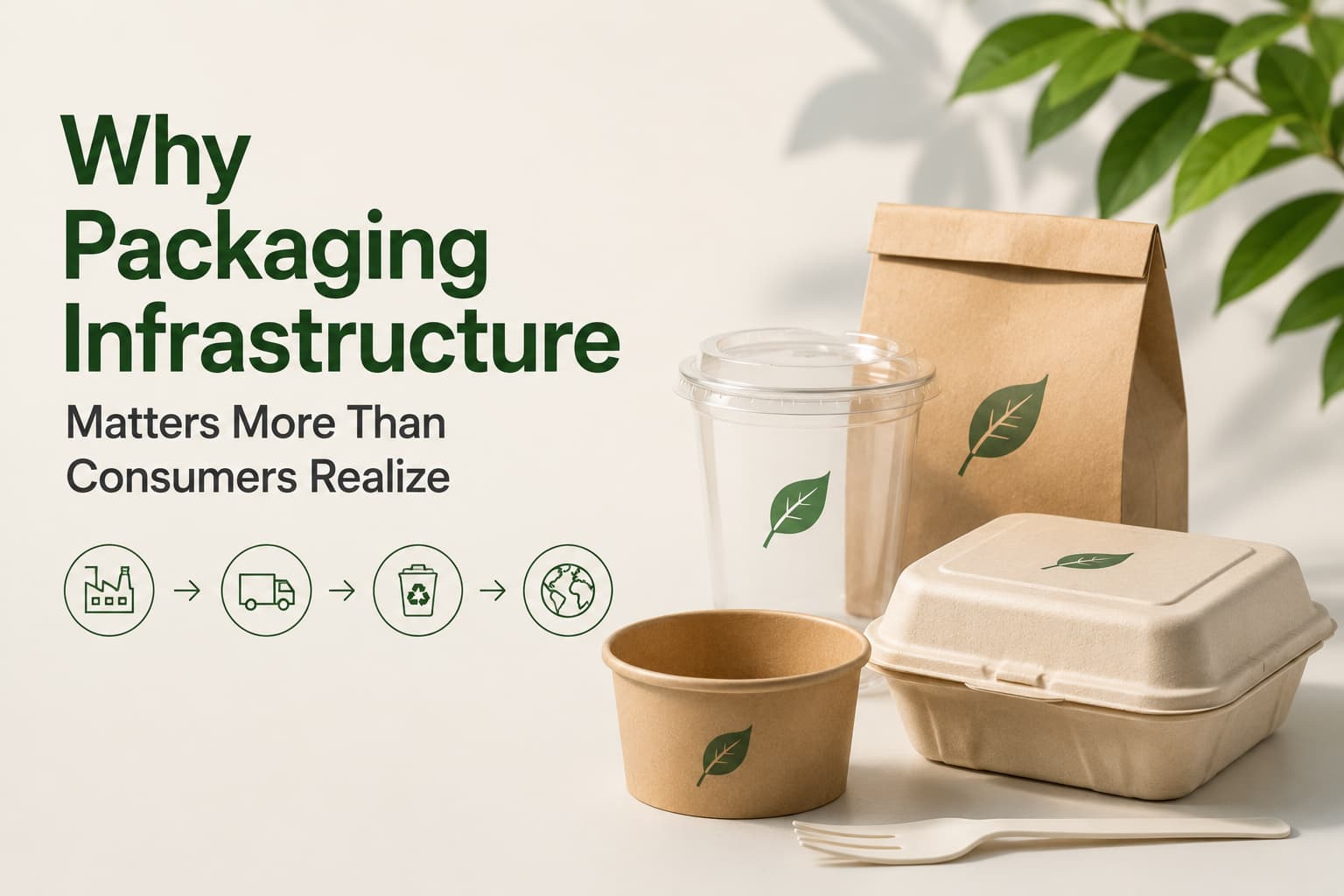
Packaging infrastructure plays a critical role in supporting modern foodservice, takeaway, and retail industries, even though consumers rarely notice the systems behind food packaging production. From automated manufacturing and logistics coordination to recycling systems and material engineering, packaging infrastructure directly affects food safety, operational efficiency, packaging consistency, sustainability performance, and long-term supply chain reliability.
Most consumers rarely think about packaging infrastructure.
When people purchase a takeaway coffee, order food delivery, or buy fresh meals from a supermarket, they usually focus on the final product they can see and touch:
- the cup,
- the container,
- the lid,
- or the tray.
However, behind every food package is a far more complex industrial system that supports manufacturing, logistics, food safety, scalability, and sustainability.
Packaging infrastructure includes:
- raw material sourcing,
- mold engineering,
- automated production systems,
- quality control,
- warehouse coordination,
- transportation compatibility,
- recycling systems,
- and long-term supply chain management.
Without this infrastructure, modern foodservice industries would struggle to operate efficiently.
As global takeaway, delivery, and convenience food markets continue expanding, packaging is no longer just a disposable accessory. It has become part of the operational foundation supporting restaurants, supermarkets, beverage chains, airline catering systems, and retail food distribution worldwide.
Consumers may only notice packaging when something goes wrong — a leaking cup, a broken lid, or a damaged takeaway container. But for businesses, packaging infrastructure directly affects:
- customer satisfaction,
- operational efficiency,
- product consistency,
- and long-term brand reliability.
Modern Foodservice Depends on Packaging Infrastructure

The modern food industry operates at enormous scale.
Every day, millions of food containers, beverage cups, lids, trays, and takeaway boxes move through restaurants, cafes, supermarkets, convenience stores, and delivery platforms worldwide.
This level of consumption requires highly organized packaging infrastructure capable of supporting:
- large-scale production,
- consistent quality,
- rapid logistics,
- and stable inventory management.
For example, large beverage chains depend heavily on standardized cup-and-lid systems. A minor inconsistency in lid dimensions can create leakage problems across thousands of daily orders.
Similarly, airline catering providers require meal trays manufactured to highly specific dimensions in order to fit onboard service carts and maximize operational efficiency inside limited cabin spaces.
| Foodservice Sector | Packaging Infrastructure Requirement |
|---|---|
| Takeaway restaurants | High-volume container supply |
| Beverage chains | Cup and lid standardization |
| Airline catering | Consistent tray systems |
| Supermarkets | Stable packaging inventory |
Bubble tea chains provide another strong example. During peak seasons, some beverage brands may require millions of transparent PET cups within short timeframes. Without scalable production systems and reliable logistics coordination, supply shortages can quickly disrupt operations.
This demonstrates that packaging is not simply a product — it is part of the infrastructure that enables modern foodservice systems to function.
Packaging Consistency Directly Influences Brand Reputation
Consumers often associate packaging quality with overall brand quality.
Even when food itself meets expectations, packaging failures can damage customer trust and negatively affect brand perception.
For example:
- leaking beverage lids,
- cracked takeaway containers,
- weak sealing systems,
- or inconsistent cup dimensions
can quickly create operational problems and poor customer experiences.
In food delivery environments, packaging consistency becomes especially important because transportation conditions add additional pressure on container durability and sealing performance.
A delivery beverage that spills before reaching the customer may generate complaints regardless of drink quality.
This is one reason why major foodservice brands increasingly prioritize stable packaging suppliers capable of maintaining:
- consistent production tolerances,
- reliable material quality,
- and standardized product specifications.
Packaging infrastructure therefore plays a direct role in protecting brand reputation.
For large-scale restaurant groups and beverage chains, packaging consistency is not simply a manufacturing issue — it is a customer experience issue.
Packaging Infrastructure Supports Food Safety

Food packaging must do far more than simply hold food.
It also helps protect:
- hygiene,
- freshness,
- transportation stability,
- and shelf life.
This is where manufacturing infrastructure becomes critically important.
Food packaging production environments require strict quality-control systems capable of reducing contamination risks and ensuring material consistency. Even small variations in production quality can affect packaging performance during transportation, storage, or heating applications.
For example, microwave-safe PP containers require carefully controlled material engineering to maintain structural stability under heat exposure.
Fresh food packaging often uses anti-fog PET lids that preserve product visibility while preventing condensation buildup.
Tamper-evident packaging systems have also become increasingly important for delivery applications because consumers now expect stronger food safety assurance during transportation.
Why Packaging Engineering Matters
Modern food packaging design often includes highly technical considerations such as:
- heat resistance,
- sealing performance,
- stackability,
- impact resistance,
- and transportation durability.
These engineering factors are usually invisible to consumers, yet they significantly affect real-world packaging performance.
The infrastructure supporting packaging development therefore includes not only manufacturing equipment, but also technical design capabilities and material research.
Sustainability Depends on Infrastructure, Not Just Consumer Behavior
Public sustainability discussions often focus heavily on consumer responsibility.
While consumer participation remains important, packaging sustainability ultimately depends on much larger infrastructure systems.
Recyclable packaging only works effectively when supported by:
- collection systems,
- sorting facilities,
- recycling technologies,
- and compatible packaging design.
For example, mono-material packaging is increasingly promoted because it improves recycling efficiency compared with multi-layer structures that are difficult to separate.
Similarly, rPET production depends on large-scale material recovery systems capable of collecting, processing, and converting used PET into new packaging materials.
| Sustainability Factor | Infrastructure Requirement |
|---|---|
| Recyclable packaging | Recycling collection systems |
| rPET production | Material recovery supply chains |
| Lightweight packaging | Advanced manufacturing technology |
| Circular economy | Industry-wide coordination |
This means sustainability cannot be achieved by consumers alone.
Long-term progress requires coordination between:
- manufacturers,
- governments,
- recyclers,
- foodservice operators,
- and logistics providers.
Packaging infrastructure therefore plays a major role in determining whether sustainability goals can function at industrial scale.
Automation Is Reshaping Packaging Manufacturing
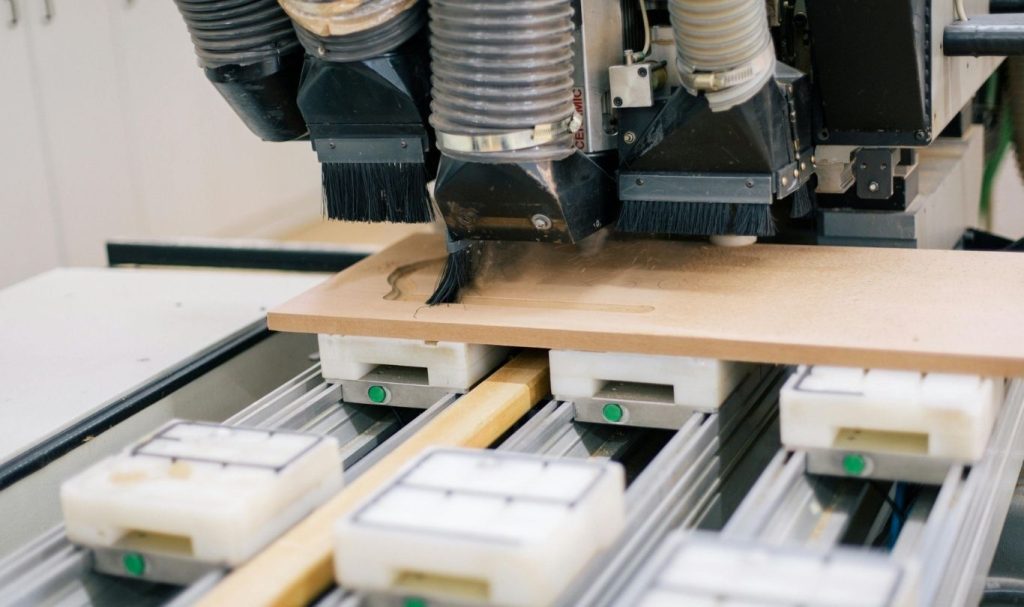
As food packaging demand continues growing globally, automation is becoming increasingly important throughout packaging production systems.
Rising labor costs and higher consistency requirements are encouraging manufacturers to invest in:
- automated thermoforming lines,
- precision mold systems,
- robotic stacking systems,
- and AI-assisted quality inspection technologies.
Automation improves:
- production speed,
- dimensional consistency,
- operational efficiency,
- and scalability.
For foodservice industries operating at extremely high volumes, these advantages are essential.
Precision manufacturing is particularly important for products such as:
- PET cold cups,
- PP food containers,
- matching lids,
- and stackable takeaway packaging systems.
Even minor production deviations can affect sealing compatibility and transportation performance.
This is why advanced manufacturing infrastructure increasingly determines packaging competitiveness in international markets.
Logistics Infrastructure Shapes Packaging Design
Many consumers assume packaging design decisions are based mainly on appearance.
In reality, packaging design is heavily influenced by logistics infrastructure.
Packaging must support:
- warehouse storage efficiency,
- freight optimization,
- transportation durability,
- and export requirements.
For example, nestable takeaway containers reduce storage space requirements during transportation and warehousing.
Lightweight packaging reduces shipping costs and improves transportation efficiency, especially in international export markets.
Stackable beverage cup systems also improve operational efficiency for restaurants and cafes managing high daily order volumes.
Packaging infrastructure therefore extends far beyond factory production. It also includes:
- distribution systems,
- inventory coordination,
- freight planning,
- and supply chain management.
These operational factors strongly influence how packaging products are engineered long before consumers ever see them.
Long-Term Packaging Partnerships Are Becoming More Important
As packaging systems become more technically complex, many foodservice brands are moving away from purely price-driven sourcing strategies.
Instead, businesses increasingly seek long-term packaging partners capable of supporting:
- product consistency,
- scalable manufacturing,
- sustainability goals,
- and custom packaging development.
Packaging now directly affects:
- operational reliability,
- customer experience,
- brand image,
- and regulatory compliance.
Because of this, supplier relationships are becoming more collaborative and strategic.
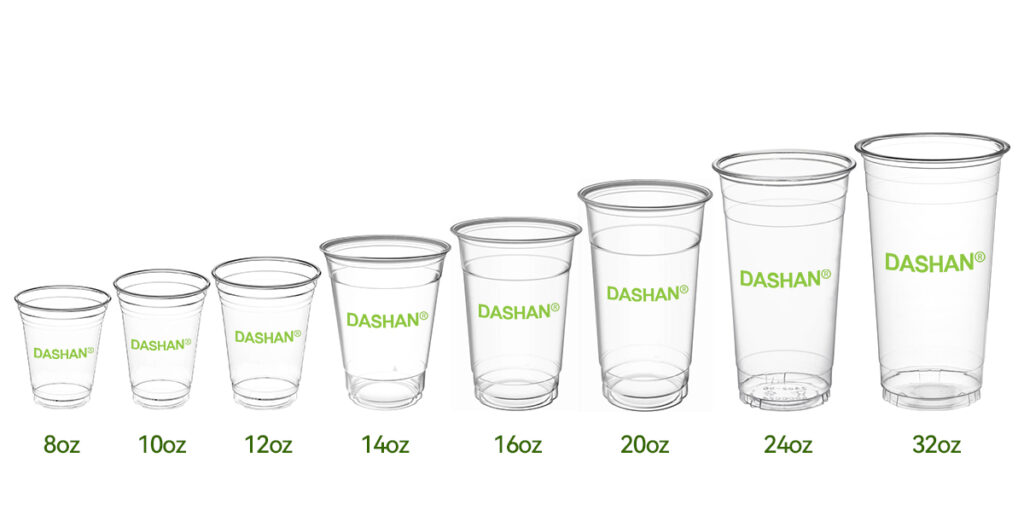
Manufacturers such as DASHAN support foodservice industries through integrated packaging manufacturing systems, recyclable packaging development, stable production capacity, and customized food packaging solutions designed for global takeaway and hospitality markets.
Increasingly, packaging partnerships involve not only product supply, but also:
- packaging optimization,
- sustainability planning,
- and long-term operational coordination.
The Future of Packaging Infrastructure
The future of packaging infrastructure will likely become more advanced, digitalized, and sustainability-focused.
Several major trends are expected to shape industry development:
- smart manufacturing systems,
- AI-assisted quality monitoring,
- recyclable mono-material packaging,
- increased recycled-content integration,
- and digital traceability systems.
At the same time, foodservice industries will continue demanding packaging systems capable of balancing:
- sustainability,
- operational efficiency,
- food safety,
- and cost control.
Future packaging competitiveness will therefore depend not only on product appearance, but also on the infrastructure supporting:
- scalability,
- consistency,
- logistics efficiency,
- and circular economy integration.
FAQ
1. What is packaging infrastructure?
Packaging infrastructure refers to the systems and processes behind packaging production, including material sourcing, mold engineering, manufacturing equipment, logistics coordination, recycling systems, and supply chain management.
2. Why is packaging infrastructure important for foodservice industries?
Foodservice industries depend on stable packaging systems to maintain operational efficiency, food safety, transportation reliability, and consistent customer experience.
3. How does packaging consistency affect brand reputation?
Inconsistent packaging can cause leakage, damaged containers, poor sealing performance, and delivery failures, which may negatively affect customer trust and brand image.
4. Why is automation important in packaging manufacturing?
Automation improves production speed, dimensional accuracy, product consistency, scalability, and operational efficiency for high-volume food packaging production.
5. How does packaging infrastructure support sustainability?
Sustainable packaging depends on recycling systems, recyclable material compatibility, lightweight engineering, and circular economy supply chains that support large-scale material recovery.
6. Why do food brands prefer long-term packaging partners?
Long-term packaging partners help businesses maintain stable supply, consistent quality, custom packaging development, and sustainability compliance across changing market conditions.
7. How does logistics infrastructure influence packaging design?
Packaging must support stacking efficiency, transportation durability, warehouse storage optimization, and export logistics, which directly influence packaging structure and material selection.
Conclusion
Packaging infrastructure is one of the least visible yet most important parts of the modern food industry.
Consumers experience the final package, but businesses depend on the complex systems behind it to maintain:
- food safety,
- operational efficiency,
- product consistency,
- and sustainability performance.
As takeaway, delivery, and convenience food industries continue expanding globally, packaging infrastructure will become even more critical for supporting modern foodservice operations.
At the same time, sustainability expectations and supply chain complexity are increasing pressure on manufacturers to improve both production systems and recyclable packaging capabilities.
As global foodservice industries continue evolving, companies such as DASHAN are investing in advanced packaging infrastructure, recyclable packaging systems, and scalable manufacturing capabilities designed to support long-term industry growth and changing market demands.
References
- Smithers – The Future of Global Packaging to 2028
- McKinsey & Company – The Future of Packaging Design
- World Packaging Organisation (WPO)
- PMMI – Packaging Industry Manufacturing Trends
- Ellen MacArthur Foundation – Circular Economy for Packaging
- European Commission – Packaging Waste and Recycling
- Food Packaging Forum
- DASHAN Food Packing
Copyright Statement
© 2026 Dashan Packing. All rights reserved.
This article is an original publication by the Dashan Packing team based on industry research, market analysis, and packaging expertise. Unauthorized reproduction, distribution, or copying of this content is prohibited without prior written permission.
Dashan Packing is committed to delivering reliable, original, and professional information for the global food packaging industry.