

Quick Summary
Corn starch tableware is rapidly emerging as one of the fastest-growing eco-friendly packaging solutions in 2025. Made from renewable plant-based materials, it offers compostability, strong performance, and compliance with global sustainability policies. DASHAN provides a complete line of cornstarch products—including clamshell boxes, take-out boxes, bowls, salad containers, plates, cups, and cutlery—designed to meet the needs of restaurants, retailers, and food delivery services worldwide. These products provide strength, heat resistance, food safety, and a significant reduction in plastic usage, making them ideal for markets shifting toward sustainable packaging.
1. Executive summary
Corn starch–based tableware (starch polymers and starch-polymer blends used for cups, bowls, trays, lids and cutlery) has surged in adoption across foodservice, retail ready-meals and delivery platforms in 2024–2025. The drivers are straightforward: (1) rapidly expanding regulatory pressure on single-use plastics worldwide, (2) measurable environmental benefits in life-cycle assessments, (3) improved technical performance through formulation and additive innovation, and (4) expanding manufacturing capacity (especially in Asia), which is lowering unit costs and improving availability. As a result, corn starch tableware is one of the fastest-growing segments within the broader compostable/bioplastic market in 2025.
2. What exactly is “corn starch tableware”?
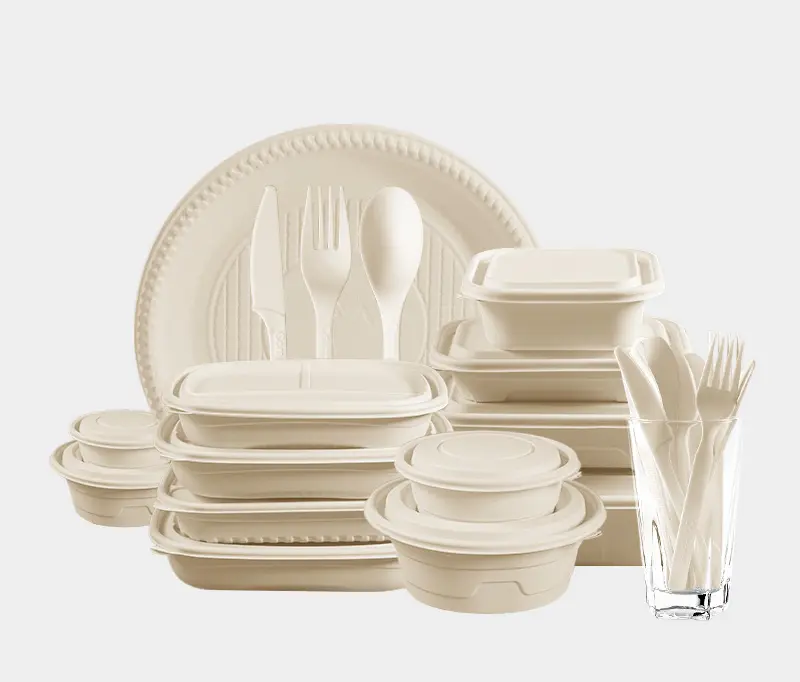
Definition.
- Corn starch tableware refers to disposable food containers and utensils manufactured primarily from corn starch (thermoplastic starch or TPS) or blends where corn starch is the main bio-based filler. Typical commercial formulations are starch + plasticizer (glycerol/sorbitol) + reactive compatibilizer + small ratio of biopolymer such as PLA or PBS to improve mechanical properties. Recent research shows optimized formulations (e.g., starch:glycerol:fillers) can balance strength, heat stability and biodegradability.
Production overview.
- The industrial production chain generally includes: starch extraction → plasticization and compounding (twin-screw extrusion) → pelletizing → thermoforming or injection molding → post-processing (coating, printing). Compared to purely polymeric bioplastics (PLA), starch-based systems often require less energy in production because they rely more on agricultural feedstock and simpler thermal processing. Technical papers and lab studies in 2023–2025 document multiple successful routes to improve mechanical strength (e.g., reinforcing with microcrystalline cellulose, adding compatibilizers), which directly addresses historical weaknesses of starch plastics.
3. The regulatory and market drivers accelerating adoption in 2025
3.1 Global policy pressure on single-use plastics
Between 2019 and 2025, multiple jurisdictions implemented SUP bans or heavy regulation (EU SUP Directive and follow-up PPWR proposals, various national single-use bans, municipal procurement rules). These legal trends force foodservice and retailers to adopt alternatives that are demonstrably compostable, recyclable or reusable. Corn starch materials — when properly certified — clearly fit within many of these transitions because they are bio-based and have demonstrable biodegradability profiles. For foodimporters and retailers, early switching avoids future compliance costs and reduces regulatory risk.
3.2 Market growth & industry adoption
Industry market reports show the starch-polymers segment is growing rapidly: the global starch polymers market was valued in the low billions of USD in 2024 and is forecast to grow at ~7–8% CAGR through 2030, with corn starch being the dominant feedstock segment. This growth is driven by packaging and tableware applications where biodegradability and low carbon footprint are prioritized. Major food retailers and QSR chains have begun pilots and rollouts using starch-based bowls, cups and clamshells in Europe and North America.
4. Technical performance: what corn starch tableware can (and cannot) do
This section covers performance dimensions buyers care about: heat resistance, mechanical strength, barrier properties, sealing, and compostability.
4.1 Heat resistance and thermal stability
Traditional starch thermoplastics had limited heat resistance (suitable for cold and warm foods, but not long-duration hot meals). However, industrial formulations improved by:
-
blending starch with PLA or small amounts of crystallized PLA (CPLA) or PBS;
-
adding nucleating agents or reinforcing fillers (microcrystalline cellulose);
-
using post-processing crystallization steps.
Typical modern corn starch tableware performance ranges (manufacturer / lab data consolidated):
-
Short-term heat resistance: up to 110–120°C for engineered blends (short reheating/microwave bursts).
-
Operating range: many products are safe for chilled to warm meals (−20°C to ~100°C) — careful formulation can push short bursts to 120°C.
-
Recommendation for buyers: specify target use case (hot meal reheating vs warm serving) and request specific thermal-distortion/microwave tests from suppliers. (See technical study summaries for CPLA and starch blends.)
4.2 Mechanical strength & rigidity
Unmodified starch plastics can be brittle and moisture-sensitive. Reinforcement strategies (cellulose fibers, nano-fillers) and compatibilizers dramatically improve tensile strength and flexural modulus. Controlled annealing or adding small PLA fractions improves toughness but may slightly reduce biodegradation speed under home compost conditions. Buyers should ask for tensile / bending test reports (e.g., ASTM D638/D790 equivalents) when comparing suppliers.
4.3 Barrier properties (oil, grease, water vapor)
Starch materials are intrinsically hydrophilic; for oily/juicy foods they often require a thin water-resistant coating (compostable coatings exist) or blending strategies to improve oil resistance. For dry foods, salads, cold dishes and many ready meals, current corn starch tableware performs well. For long-term liquid storage (hours) or very oily meals, bagasse or coated fiber might still be preferable.
4.4 Compostability & end-of-life
Laboratory and industrial composting studies show starch-based products can biodegrade rapidly under composting conditions (often within 90–180 days), depending on formulation and presence of biopolymer fractions. It’s critical to check whether products require industrial composting (high heat) or are suitable for home compost — the distinction affects buyer decisions and labeling claims. Recent peer-reviewed work demonstrates that starch-based blends with appropriate additives can reach high degradation rates while maintaining functional performance.
5. Comparative table — corn starch vs common alternatives
The table below compares the performance of corn starch tableware (modern blends), bagasse (sugarcane fiber), PLA/CPLA, and PP (conventional plastic) across key purchasing dimensions (to facilitate quick assessment by overseas buyers):
| Evaluation metric | Corn starch (modern blends) | Bagasse (sugarcane fiber) | PLA / CPLA | PP (polypropylene) |
|---|---|---|---|---|
| Renewable feedstock | ✔ (corn) | ✔ (sugarcane) | ✔ (fermentation) | ✖ |
| Compostability (industrial) | ✔ (90–180 days typical) | ✔ (fast) | ✔ (industrial) | ✖ |
| Home-compostable | Varies (formulation dependent) | Sometimes | No (usually) | No |
| Heat resistance | Moderate — up to ~110–120°C (short bursts) | High — up to 140°C+ | PLA moderate; CPLA improved up to ~90–110°C | High (microwave safe if formulated) |
| Oil/grease resistance | Moderate — often needs coating | High | Moderate | High |
| Mechanical toughness | Good (with reinforcement) | Good | Good | High |
| Performance stability in humid environment | Sensitive (can be mitigated) | Stable | Stable | Very stable |
| Typical applications | Cold/warm meals, cups, lids, cutlery | Hot meals, trays, airline trays | Cups, clear lids, premium bowls | Meal trays, lids, durable containers |
| Cost (2025 trend) | Competitive, decreasing | Competitive | Slightly higher | Lowest per unit |
| Consumer perception | Strongly positive | Very positive | Positive | Neutral/negative (eco) |
Note: This table is based on publicly available research, industry reports, and manufacturing practice summaries. For specific values and performance, please request test reports and sample verification from the supplier at the time of purchase. Some technological advancements (such as CPLA and reinforced starch films) can significantly improve thermal and moisture properties.
6. Cost and Total Cost of Ownership (TCO) considerations
Buyers frequently ask: is corn starch more expensive than conventional plastic? The honest answer: unit price may be higher in some markets, but TCO often favors eco materials when considering regulatory fees, waste disposal costs, brand value, and potential premium pricing for sustainable offerings.
Cost drivers to consider:
-
Raw material price volatility: corn starch is agricultural and regionally variable, but less directly tied to crude oil than PP/PET.
-
Manufacturing & yields: modern extrusion and thermoforming lines for starch plastics are capitalized; economies of scale are improving unit costs.
-
Logistics & storage: starch pellets and finished products behave similarly to other plastics for shipping; many starch products are stackable and space-efficient.
-
Waste & compliance: in jurisdictions with SUP bans, EPR fees or landfill levies, non-compliant plastic costs more in the long run. For buyers selling to eco-sensitive consumers, sustainable packaging can increase conversion and loyalty.
-
Testing & certification costs: buyers should budget for migration/food contact testing, compostability certification (EN 13432 / ASTM D6400) and possibly custom testing for heat & seal performance.
Quick TCO example (illustrative): for a medium QSR chain, switching to starch tableware may raise unit purchase cost by 5–25% but reduce disposal fees and improve customer retention — resulting in net positive ROI within 12–24 months depending on local regulation and customer willingness to accept modest price premiums.
7. Real-world adoption & market evidence (2024–2025)
-
Market size & growth: industry analysts estimate the starch polymers market (corn starch major share) is ~USD 3.1B in 2024 and forecast healthy growth through 2030 driven by packaging/tableware demand. Europe is a major adopter and procurement hub for compostable tableware.
-
Product R&D advances: peer-reviewed studies in 2023–2025 demonstrate reinforced starch films and starch-PLA laminates with improved thermal stability and mechanical performance — enabling new product classes (microwaveable cups, reinforced trays).
-
Market announcements & trends: trade publications and market reports in 2025 point to rapid expansion of compostable tableware in Europe and Asia, with biodegradable cutlery & tableware markets showing multi-billion USD valuations and steady CAGR.
8. Key challenges buyers must understand
While corn starch tableware is very promising, buyers should be mindful of these limitations:
8.1 Heat & wet sensitivity
Some formulations soften with prolonged exposure to hot liquids; always confirm the exact use-temperature with supplier test reports.
8.2 Certification clarity & greenwashing risks
Not all “biodegradable” claims are equal. Verify standards (EN 13432, ASTM D6400, OK Compost INDUSTRIAL / HOME) and ask for test certificates and third-party lab reports. Regulatory frameworks differ by country — in some markets only industrial compostability is recognized.
8.3 Composting infrastructure availability
Even fully compostable products need appropriate waste streams; if customers dispose of compostable items in general landfill or mixed waste, benefits are reduced. Work with retail partners to map local composting or municipal organic waste programs.
8.4 Variation in supplier quality
Spec sheets vary. Require migration, heavy metal tests, heat-distortion and sealability tests before scaling procurement.
9. Practical procurement checklist for importers & brands
When selecting corn starch tableware suppliers, use this checklist:
-
Request certificates: EN 13432 / ASTM D6400, food contact (EU 10/2011 or FDA).
-
Ask for thermal & mechanical test reports: max operating temp, short-term heat exposure, tensile strength, bending modulus.
-
Verify end-of-life claims: industrial vs home compostability, degradation time, test method.
-
Sample validation: run real-world use tests (microwave, oil exposure, sealing).
-
Traceability: raw material origin, % starch content, additives list (NIAS concerns).
-
Supply reliability: production capacity, minimum order quantities, lead times.
-
Price & TCO analysis: include waste & compliance savings in decision model.
-
Labeling assistance: correct disposal instructions and compliance labels for target markets.
10. Future outlook (2025–2030): where corn starch tableware is headed
-
Material innovation: expect more hybrid blends (starch + PLA + cellulose nanofillers) that push heat resistance and moisture stability while remaining compostable. MDPI and other polymer journals show active research into starch-based laminates and reinforced composites.
-
Improving infrastructure: as municipal composting grows in Europe and North America, compostable tableware becomes more practical at scale. Policy incentives and corporate procurement commitments will further accelerate adoption.
-
Market positioning: corn starch tableware will establish a distinct niche — attractive for businesses that need good branding (smooth surface, printable), moderate heat performance, and clear compostability messaging.
-
Cost parity: with scaling and process optimization, corn starch products will approach price parity with mid-tier plastic disposables in many regions by late 2020s.
11. Recommended product categories for phased adoption
As global demand for sustainable and plastic-free packaging continues to rise, businesses are increasingly looking for reliable, high-performance alternatives that meet both environmental standards and practical foodservice needs. To support this transition, DASHAN has developed a complete range of cornstarch food packaging products that cover nearly every application in restaurants, retail, catering, and delivery services. Below is an overview of our key product categories, each designed to offer strong functionality, food safety, and an improved environmental footprint.
If your company or clients are piloting corn starch packaging, these product categories typically provide the best balance of performance and market acceptance:
Cornstarch Clamshell Box
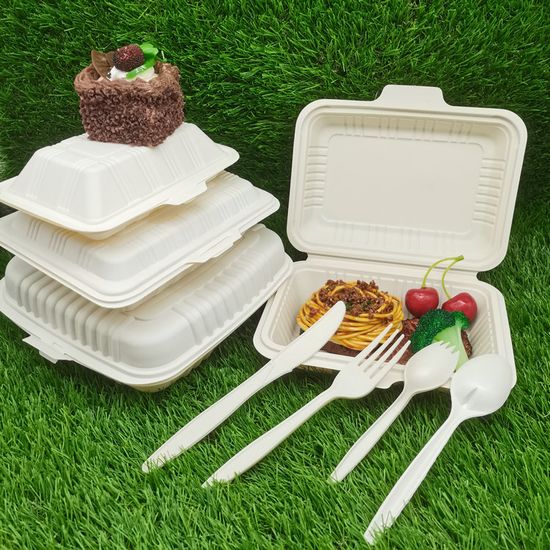
DASHAN’s cornstarch clamshell boxes are designed for hot meals, burgers, snacks, and take-out dishes. They offer strong rigidity, heat resistance, and leak prevention—making them a practical replacement for traditional plastic clamshells.
Cornstarch Take-Out Box
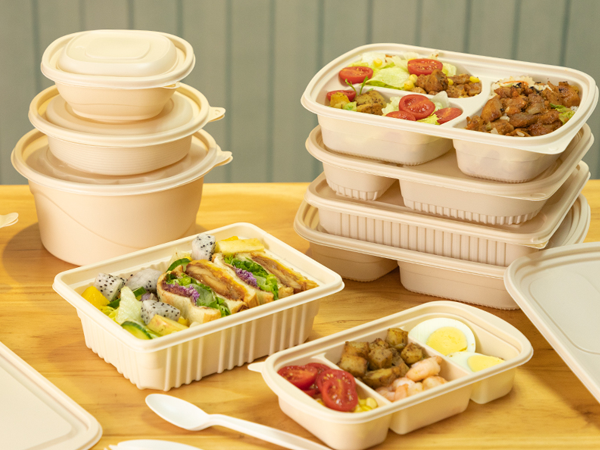
These multipurpose take-out boxes are ideal for rice dishes, combo meals, and everyday restaurant packaging. With stable structure and oil resistance, they maintain shape under hot and heavy foods, suitable for delivery and dine-in service.
Cornstarch Bowl
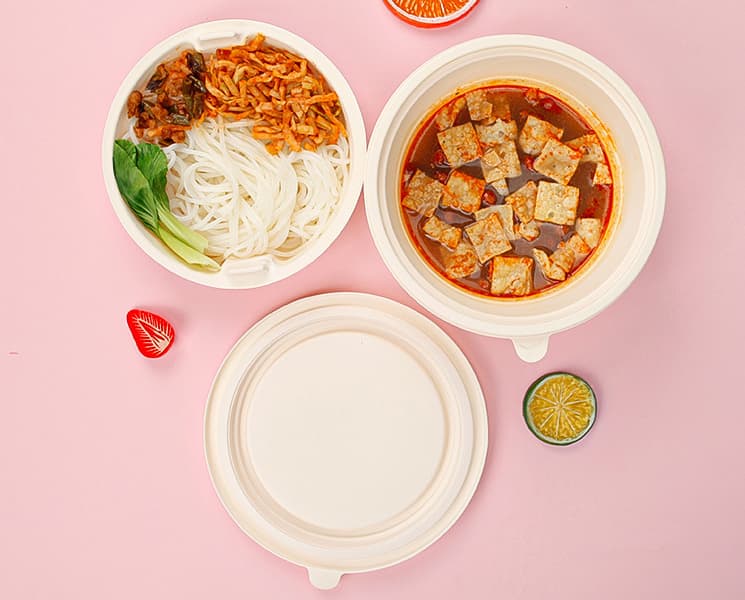
DASHAN cornstarch bowls are suitable for soups, noodles, salads, and rice meals. They are resistant to heat and deformation, providing a reliable solution for both restaurants and delivery services.
Cornstarch Salad Container
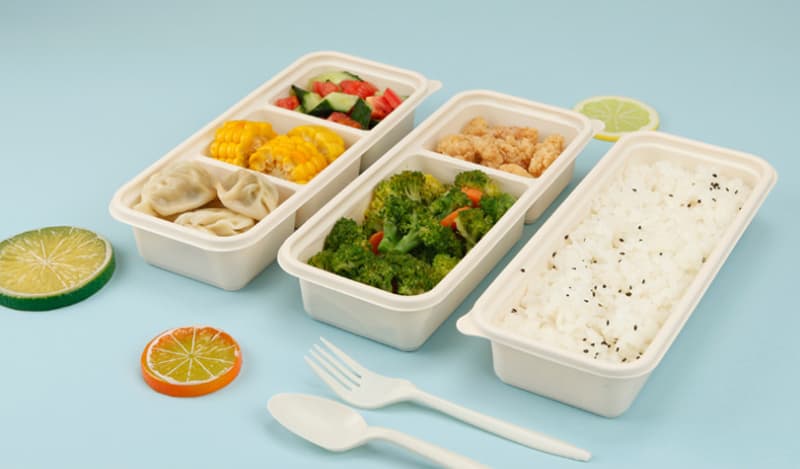
Lightweight and clean-looking, these containers are perfect for salads, cold dishes, fruits, and healthy meal prep. They preserve freshness without absorbing moisture or grease.
Cornstarch Plate
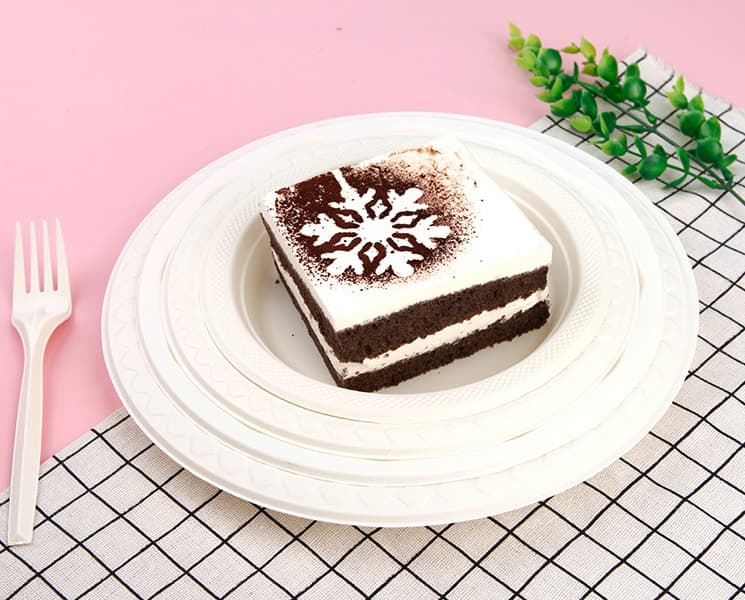
DASHAN’s cornstarch plates provide a compostable, plastic-free option for catering, hotels, cafeterias, and events. They maintain structural strength even with hot or oily foods.
Cornstarch Cup
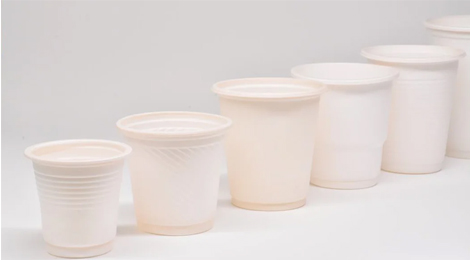
Designed for drinks, desserts, and small portions, cornstarch cups offer a more sustainable alternative to traditional plastic cups while maintaining durability and food safety.
Cornstarch Cutlery
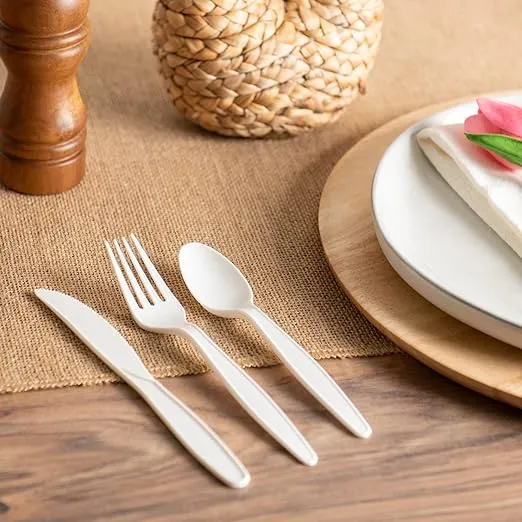
The cornstarch cutlery range (forks, spoons, knives) provides strong and reliable performance without bending easily. It is suitable for restaurants, outdoor events, and food delivery kits.
FAQ
1. Is cornstarch tableware fully biodegradable?
Yes. Corn starch tableware is made from renewable plant-based materials and can biodegrade under industrial composting conditions. It breaks down into water, carbon dioxide, and biomass without producing microplastics.
2. Is cornstarch packaging microwave- and heat-safe?
DASHAN’s cornstarch products are designed with enhanced heat resistance, making them suitable for warm and moderately hot foods. However, extreme high temperatures (such as baking or long-term microwave heating) are not recommended.
3. What is the difference between cornstarch tableware and PLA?
Corn starch products biodegrade more easily and do not require high-temperature industrial composting like PLA. They also offer a more natural, matte texture and better oil resistance for certain food applications.
4. Is cornstarch packaging safe for food contact?
Yes. DASHAN’s cornstarch tableware complies with major global food-contact standards including EU, FDA, and LFGB requirements. All products are tested for safety, migration, and material purity.
5. Can cornstarch tableware be used for cold foods and refrigerated meals?
Absolutely. Corn starch trays, bowls, and salad boxes maintain structural strength in low temperatures, making them suitable for cold dishes, salads, desserts, and supermarket ready-meals.
6. Are cornstarch products waterproof and oil-resistant?
Yes. DASHAN’s cornstarch products maintain excellent performance with oily, saucy, or moist foods. The material resists softening and keeps its structure during typical foodservice use.
7. What types of cornstarch tableware does DASHAN supply?
DASHAN offers a full product line including:
-
Cornstarch clamshell boxes
-
Cornstarch take-out boxes
-
Cornstarch bowls
-
Cornstarch salad containers
-
Cornstarch plates
-
Cornstarch cups
-
Cornstarch cutlery
This covers nearly all foodservice and delivery needs.
8. Can DASHAN customize sizes, shapes, or packaging for large orders?
Yes. DASHAN supports OEM and ODM customization, including product shape, weight, lid compatibility, branding, and packaging design for distributors, supermarket chains, and restaurant groups.
9. Are cornstarch products more expensive than plastic?
While unit prices may be slightly higher, many buyers find the total cost reasonable considering policy compliance, brand sustainability, consumer preference, and reduced environmental impact. Bulk supply from DASHAN helps keep costs competitive.
10. Why choose DASHAN’s cornstarch tableware?
DASHAN offers stable quality, strong production capacity, strict global certifications, and a complete product range. Our solutions help global buyers transition smoothly from plastic to eco-friendly packaging while maintaining performance and safety.
Conclusion
Corn starch tableware is growing fastest in 2025 because it occupies the sweet spot between environmental credibility, technical feasibility, cost trajectory, and regulatory acceptance. Advances in formulation and reinforcement have materially improved heat and mechanical performance; supply chains and production capacity are expanding; and policy drivers make the switch economically rational for many buyers. For importers and brands looking to future-proof their packaging, corn starch tableware deserves top consideration — provided procurement is disciplined about technical validation, certification and local end-of-life infrastructure.
References & recommended reading (open/accessible items)
-
Grand View Research. Starch Polymers Market Size & Share (2024–2030 market overview). Grand View Research
-
Scientific Reports. Development and characterization of starch bioplastics as a sustainable alternative for packaging (2025). Nature
-
MDPI — Polymers (2024). Stability and Composting Behaviour of PLA–Starch Laminates… MDPI
-
ScienceDirect / Journal articles on starch reinforcement (2022–2024): Improving properties of corn starch films via microcrystalline cellulose reinforcement. 科学直通车
-
Industry market reports & press: biodegradable tableware market outlook 2025 (multiple sources). GlobeNewswire+1
-
European Commission — Food contact materials (Plastic recycling; regulatory context for food contact). Food Safety
Copyright Statement
© 2025 Dashan Packing. All rights reserved.
This article is an original work created by the Dashan Packing editorial team.
All text, data, and images are the result of our independent research, industry experience,
and product development insights. Reproduction or redistribution of any part of this content
without written permission is strictly prohibited.
Dashan Packing is committed to providing accurate, evidence-based information and
to upholding transparency, originality, and compliance with global intellectual property standards.