

Quick Summary
Clear PET containers increase fresh food sales by improving product visibility, enhancing perceived freshness, reducing purchase hesitation, and strengthening shelf impact. Compared with PP or fiber-based alternatives, PET offers superior clarity, rigidity, and cold performance. When combined with recyclability (including RPET options), it balances commercial performance and sustainability. For suppliers like DASHAN, PET containers function as strategic retail tools—driving conversion, reducing shrink, and improving brand positioning in competitive fresh food categories.
Introduction: Visibility Is a Sales Strategy, Not Just a Design Choice
In modern retail environments, packaging functions as a silent salesperson. For fresh food categories—fruits, salads, bakery items, sushi, ready meals—purchase decisions are often made within seconds. Clear packaging, particularly containers made from Polyethylene Terephthalate (PET), has become a dominant format in supermarkets and convenience stores worldwide because it leverages a simple psychological driver: what consumers can see, they are more likely to trust and buy.
For food brands, retailers, and packaging suppliers like DASHAN, understanding why transparent PET containers outperform opaque alternatives is not a matter of aesthetics—it is a matter of measurable revenue impact.
1. The Psychology of Transparency in Food Retail
1.1 Visual Trust and Perceived Freshness
Fresh food is judged primarily by:
-
Color
-
Texture
-
Moisture appearance
-
Portion size
-
Cleanliness
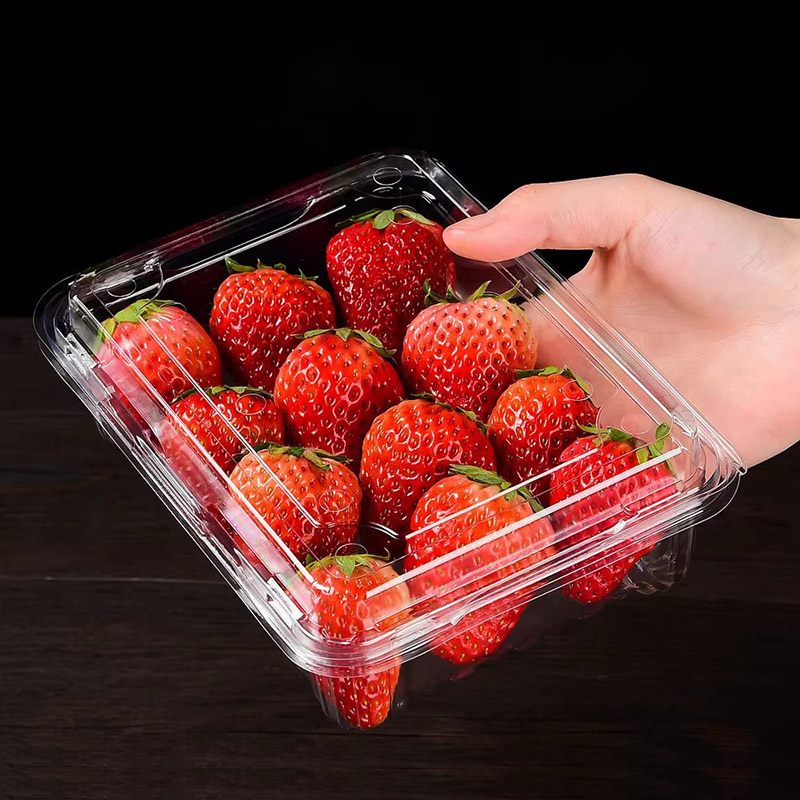
Opaque packaging forces customers to rely on printed claims. Transparent PET containers allow direct visual inspection. When shoppers see vibrant greens in a salad or bright red strawberries, they subconsciously associate visibility with honesty and freshness.
Key effect: Reduced perceived risk = increased purchase probability.
1.2 The “Quality Proof” Effect
Clear containers act as real-time proof of product condition:
-
No hidden bruising in fruits
-
No soggy vegetables
-
No leakage or contamination
In contrast, solid PP or coated paperboard packaging introduces uncertainty, particularly in high-turnover retail categories.
2. Why PET Performs Better Than Other Transparent Materials
Not all transparent materials deliver equal commercial performance. Below is a technical comparison relevant to fresh food retail.
Material Comparison for Fresh Food Containers
| Property | PET | PP (Clarified) | RPET | PLA |
|---|---|---|---|---|
| Transparency | Excellent | Moderate | Excellent | Good |
| Gloss | High | Medium | High | Medium |
| Rigidity | Strong | Moderate | Strong | Moderate |
| Impact Resistance | High | Good | High | Lower |
| Cold Performance | Excellent | Good | Excellent | Limited |
| Recyclability | Widely recyclable | Recyclable | Recyclable | Industrial compost |
Commercial insight: PET offers the best balance between clarity, strength, and cost efficiency for fresh retail packaging.
3. Shelf Impact: Why Clear Containers Win in Retail Environments
3.1 Merchandising Advantage
Retail shelves are competitive ecosystems. Products must:
-
Stand out under LED lighting
-
Maintain structural integrity during stacking
-
Resist condensation distortion
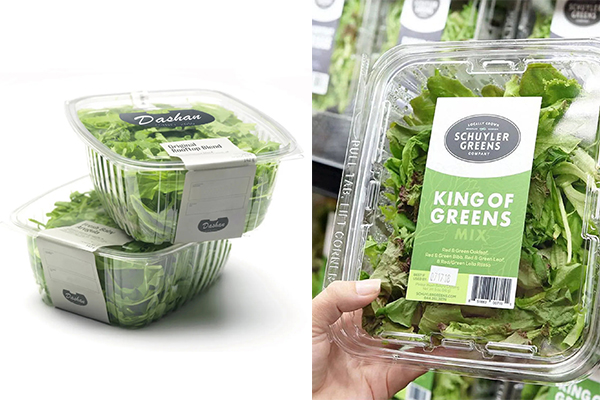
High-clarity PET containers amplify product color contrast and maintain shape under stacking loads, ensuring visual consistency from the top shelf to the bottom bin.
3.2 Reduced Shrink and Returns
Clear PET containers:
-
Resist cracking during transport
-
Maintain seal integrity
-
Show tampering clearly
This reduces shrinkage caused by damage or suspected contamination.
For retailers operating on thin margins, even a 1–2% reduction in shrink can significantly improve profitability.
4. Functional Performance in Fresh Categories
4.1 Fruits and Berries
Fresh fruits require:
-
Breathability control
-
Condensation resistance
-
Stackability
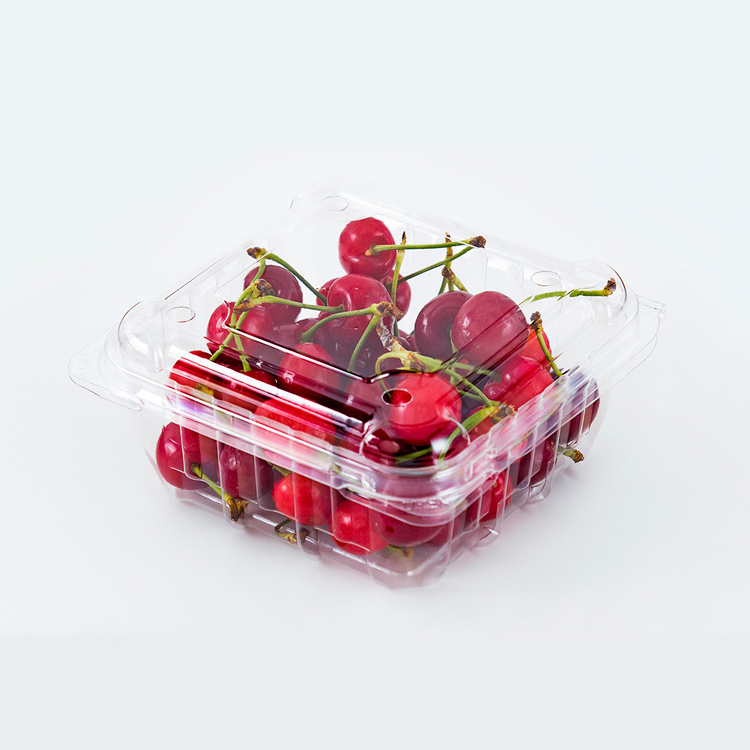
PET containers maintain structural strength at refrigeration temperatures and can be designed with precision ventilation patterns.
4.2 Salads and Ready-to-Eat Meals
Clarity allows:
-
Layer visibility
-
Ingredient differentiation
-
Portion transparency
Consumers increasingly prefer “what you see is what you get” packaging—particularly in premium fresh categories.
4.3 Bakery and Desserts
For cakes, pastries, and desserts:
-
High gloss improves perceived premium positioning
-
Structural rigidity protects decoration integrity
Clear domed PET containers are widely used because they protect product height without sacrificing visibility.
5. Sustainability Considerations: PET vs Environmental Pressure
Plastic packaging is under regulatory scrutiny globally. However, the conversation is more nuanced than “plastic vs non-plastic.”
5.1 Recyclability Advantage
PET is one of the most widely recycled polymers globally. Its closed-loop potential allows conversion into:
-
RPET food containers
-
Textile fibers
-
Strapping materials
For companies like DASHAN, offering both PET and RPET container solutions enables retailers to balance performance and sustainability goals.
5.2 Food Waste vs Packaging Waste
Opaque or poorly performing packaging can increase food waste through:
-
Spoilage
-
Mechanical damage
-
Leakage
Food waste carries a significantly higher carbon footprint than packaging. If clear PET packaging reduces spoilage and increases sell-through rates, total environmental impact may decrease.
6. Sales Data Insights: Why Visibility Drives Conversion
Retail behavioral studies consistently show:
-
Transparent packaging increases impulse purchases.
-
Consumers are more likely to try new fresh products when they can visually assess quality.
-
Premium pricing is more acceptable when product quality is visible.
In high-margin fresh categories, even small conversion improvements translate to substantial revenue gains.
7. Strategic Use of PET Containers in DASHAN’s Product Portfolio
DASHAN focuses on performance-driven packaging solutions, including:
-
Clear PET food containers
-
RPET sustainable options
-
PP solutions for hot-fill needs
-
CPET trays for dual-oven airline catering
-
Bagasse trays for fiber-based alternatives
For fresh food retail specifically, clear PET containers serve as a high-performance category driver.
Rather than positioning PET as a universal solution, the strategy is material matching:
| Application | Recommended Material |
|---|---|
| Fresh fruits & salads | PET / RPET |
| Hot ready meals | PP |
| Airline reheating trays | CPET |
| Eco-focused takeaway | Bagasse |
This material-matching approach optimizes both sales performance and compliance.
8. Cost-Benefit Analysis: Is Clear PET Worth the Investment?
While PET containers may carry slightly higher material costs compared to thin PP alternatives, total ROI must include:
-
Higher sales conversion
-
Reduced damage returns
-
Stronger shelf appeal
-
Lower complaint rates
When evaluated holistically, clear PET packaging often generates higher net profitability.
9. Future Trends in Transparent Food Packaging
Emerging developments include:
-
Increased RPET content integration
-
Lightweighting without clarity compromise
-
Smart labeling overlays
-
Anti-fog treatments for chilled products
Retailers are not abandoning clear packaging—they are optimizing it.
FAQ
1. Why do clear PET containers increase fresh food sales?
Clear PET containers allow consumers to directly evaluate color, texture, and portion size. This reduces perceived purchase risk and increases impulse buying. Visibility builds trust, which directly improves conversion rates in fresh retail environments.
2. Is PET better than PP for fresh food packaging?
For transparent applications, PET provides higher clarity and gloss than clarified PP. PET also offers superior rigidity and cold-temperature performance, making it ideal for refrigerated fruits, salads, bakery items, and ready-to-eat meals.
3. Are PET containers recyclable?
Yes. Polyethylene Terephthalate is one of the most widely recycled plastics globally. Many markets support closed-loop recycling systems. Recycled PET (RPET) can be used in new food containers where regulations permit.
4. Does clear packaging increase food waste?
On the contrary, transparent PET containers can reduce food waste. Consumers can inspect quality before purchase, and retailers can monitor spoilage more easily. Better structural integrity also reduces transport damage and shrink.
5. How does PET compare to fiber-based packaging like bagasse?
Bagasse offers strong sustainability positioning but lacks full product visibility. In fresh retail, where visual appeal drives purchase decisions, PET containers often outperform opaque fiber alternatives in sales conversion.
6. Is PET suitable for hot food?
Standard PET is primarily designed for cold and ambient fresh foods. For hot-fill or reheating applications, materials such as PP or CPET are more appropriate. Material matching is critical for performance optimization.
7. How can suppliers like DASHAN support retailers?
DASHAN offers PET and RPET clear food containers alongside PP, CPET, bagasse, and cornstarch solutions. This enables retailers to select materials based on product category, temperature requirements, sustainability goals, and cost structure.
Conclusion: Visibility Converts
Clear PET containers are not merely protective shells; they are active retail tools. By enabling transparency, maintaining structural integrity, and supporting recyclability goals, PET packaging enhances both consumer trust and commercial performance.
For fresh food brands seeking measurable shelf impact, clarity is not optional—it is strategic.
Companies like DASHAN that combine material expertise (PET, RPET, PP, CPET, bagasse, cornstarch) with application-specific design can support retailers in aligning packaging choice with sales growth objectives.
In fresh food retail, what customers see truly determines what they buy.
References
-
European PET Bottle Platform
https://www.epbp.org -
Association of Plastic Recyclers
https://plasticsrecycling.org -
U.S. Environmental Protection Agency – Facts and Figures about Materials, Waste and Recycling
https://www.epa.gov/facts-and-figures-about-materials-waste-and-recycling -
FAO – Global Food Loss and Waste
https://www.fao.org/food-loss-and-food-waste -
Ellen MacArthur Foundation – Plastics and Circular Economy Reports
https://ellenmacarthurfoundation.org/topics/plastics/overview
Copyright Statement
© 2026 Dashan Packing. All rights reserved.
This article is an original work created by the Dashan Packing editorial team.
All text, data, and images are the result of our independent research, industry experience,
and product development insights. Reproduction or redistribution of any part of this content
without written permission is strictly prohibited.
Dashan Packing is committed to providing accurate, evidence-based information and
to upholding transparency, originality, and compliance with global intellectual property standards.