

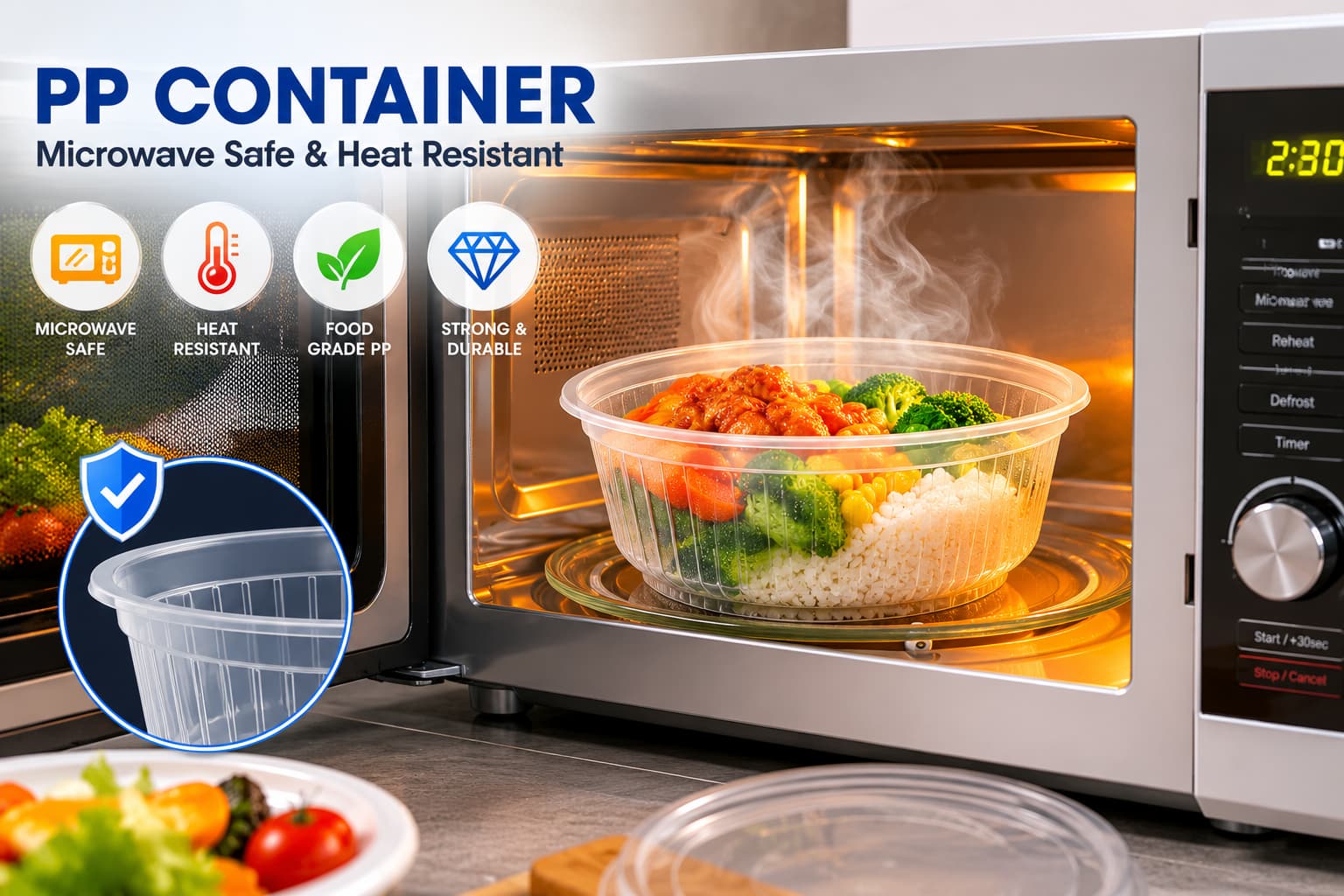
Polypropylene (PP) food containers are everywhere today.
From takeaway meals and meal-prep packaging to supermarket ready meals and microwaveable lunch boxes, PP containers have become one of the most widely used food packaging solutions in the world. Their popularity comes from several practical advantages: lightweight structure, good heat resistance, cost efficiency, excellent moldability, and compatibility with hot foods.
However, many consumers and foodservice businesses eventually encounter a frustrating problem:
The container bends, softens, twists, or warps after microwave heating. 😖
Sometimes the lid deforms.
Sometimes the bottom becomes unstable.
Sometimes the side walls collapse slightly.
In more serious situations, the container permanently changes shape after only one microwave cycle.
This issue is especially common with very cheap PP food containers.
For restaurants, distributors, meal-prep companies, supermarkets, and packaging importers, warped packaging can quickly damage customer trust and brand reputation. Consumers may assume the packaging is unsafe, low quality, or poorly manufactured even when the food itself is perfectly fine.
The truth is that microwave warping is usually not caused by a single factor.
Instead, it is typically the result of multiple problems combined together, including:
- Low-quality raw materials
- Poor structural design
- Inconsistent wall thickness
- Weak thermoforming control
- Excessive material reduction
- Improper mold engineering
- Inferior heat resistance performance
- Manufacturing shortcuts designed only to reduce cost
Understanding why PP containers warp in microwaves is extremely important for both packaging buyers and foodservice brands because the issue directly affects:
- Consumer satisfaction
- Packaging reliability
- Food safety perception
- Product performance
- Brand image
- Long-term packaging costs
This article explores the real technical reasons behind microwave warping, how professional manufacturers prevent it, and what importers should evaluate before purchasing PP food packaging. 📦🔥
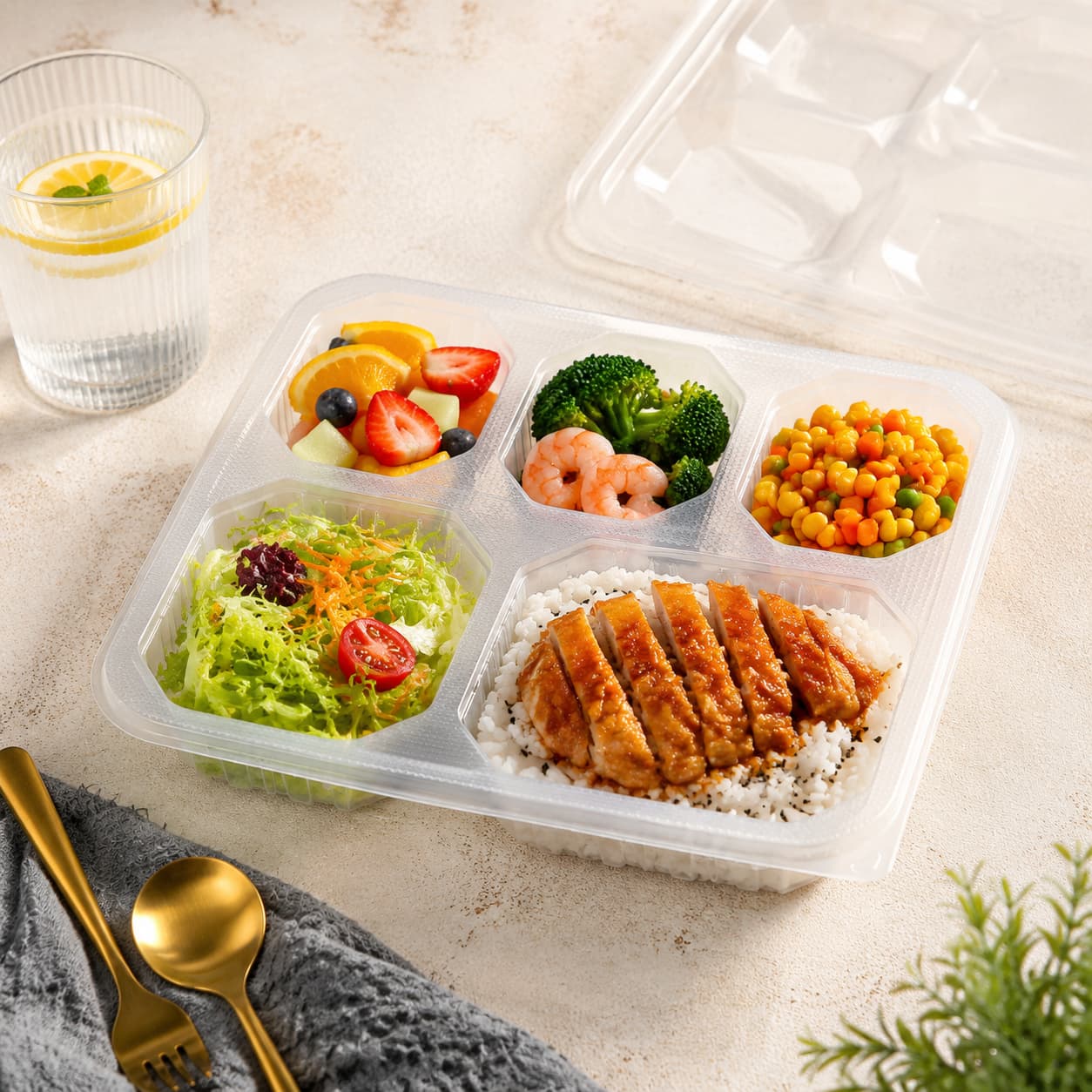
Why PP Is Commonly Used for Microwave Food Packaging
PP is one of the most popular materials for microwaveable food packaging because it offers a relatively strong balance between:
- Heat resistance
- Cost efficiency
- Structural strength
- Lightweight performance
- Food safety compatibility
Compared with materials like PET, standard PP can generally tolerate much higher food temperatures.
This makes PP suitable for:
- Hot takeaway meals
- Microwave reheating
- Meal-prep containers
- Airline catering trays
- Ready meals
- Frozen-to-microwave packaging
Professional food-grade PP containers are specifically engineered to maintain shape stability during heating cycles.
However, not all PP containers are manufactured equally.
Cheap packaging often sacrifices long-term performance in order to reduce production cost.
That is where warping problems begin.
Microwaveable PP food container solutions
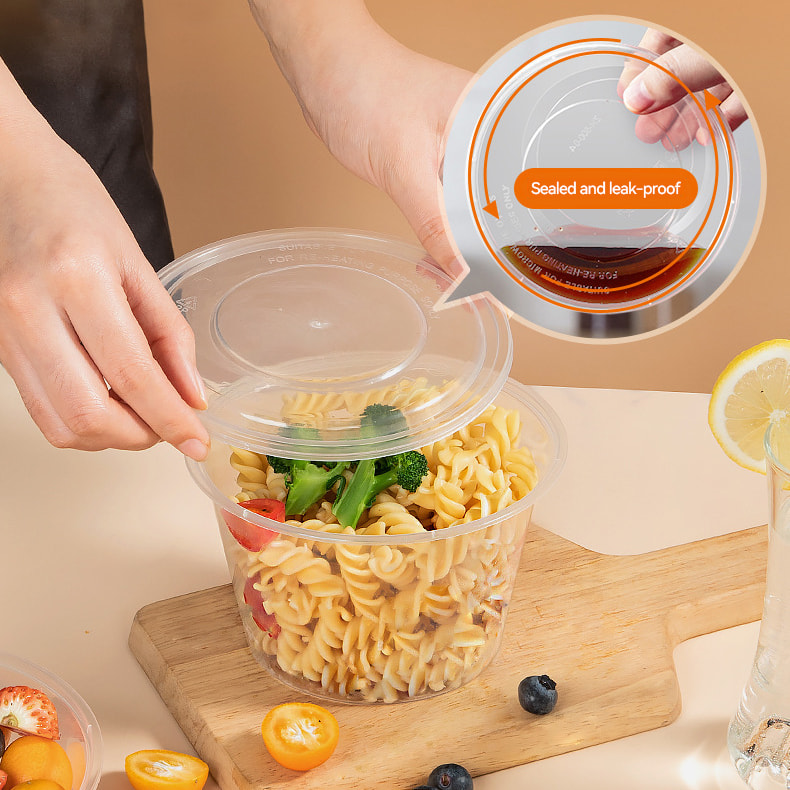
What Actually Causes PP Containers to Warp?
Warping occurs when the container structure loses dimensional stability under heat stress.
During microwave heating, temperatures inside the container can rise very unevenly.
Some sections of the packaging may become significantly hotter than others depending on:
- Food oil content
- Water concentration
- Heating duration
- Microwave power
- Food distribution
- Container thickness
When weak packaging materials experience uneven thermal stress, the plastic begins softening irregularly.
This causes:
- Sidewall bending
- Bottom distortion
- Corner shrinkage
- Lid mismatch
- Structural collapse
Cheap PP containers are especially vulnerable because manufacturers often reduce material performance aggressively to lower production costs.
In many cases, the container may technically survive microwave heating but still lose its intended shape.
Consumers immediately notice these deformations because they visually signal poor quality.
Low-Quality Raw Materials Are One of the Biggest Problems ⚠️
One major reason cheap PP containers warp is the use of low-grade or inconsistent raw materials.
High-quality PP resin provides better:
- Heat stability
- Structural consistency
- Dimensional control
- Thermal resistance
However, extremely low-cost containers may use:
- Inferior recycled materials
- Mixed polymer content
- Unstable resin batches
- Excessive filler materials
When resin quality becomes inconsistent, heat performance also becomes unstable.
Some low-cost manufacturers prioritize raw material savings over structural reliability.
This may reduce manufacturing cost temporarily, but it increases the risk of:
- Microwave deformation
- Brittleness
- Cracking
- Weak corners
- Poor lid sealing
Professional manufacturers usually maintain much stricter raw material control systems because stable resin quality directly affects long-term packaging consistency.
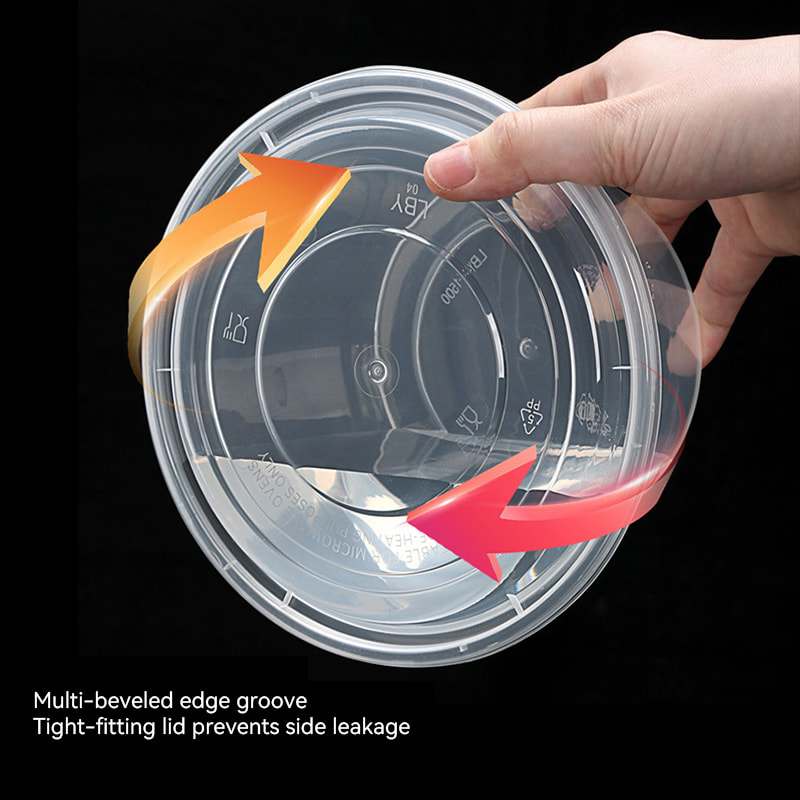
Thin Walls Create Major Heat Stability Problems
One of the easiest ways manufacturers reduce production cost is by making containers thinner.
Reducing wall thickness slightly across millions of containers can save significant material cost.
However, excessively thin structures create major microwave stability problems.
Thin walls become more vulnerable to:
- Thermal expansion
- Uneven heating
- Structural stress
- Weight pressure from food
This is especially problematic for large-capacity takeaway containers holding:
- Rice meals
- Pasta
- Curry
- Soup
- Hot oil-based foods
When heated, thin sections soften faster and begin deforming under food weight.
Consumers often mistake this as “unsafe plastic,” when in reality the main issue is poor engineering and insufficient structural reinforcement.
Professional PP packaging manufacturers carefully balance:
- Weight reduction
- Heat resistance
- Structural rigidity
- Stackability
- Microwave performance
This balancing process requires real engineering experience.
PP takeaway packaging products
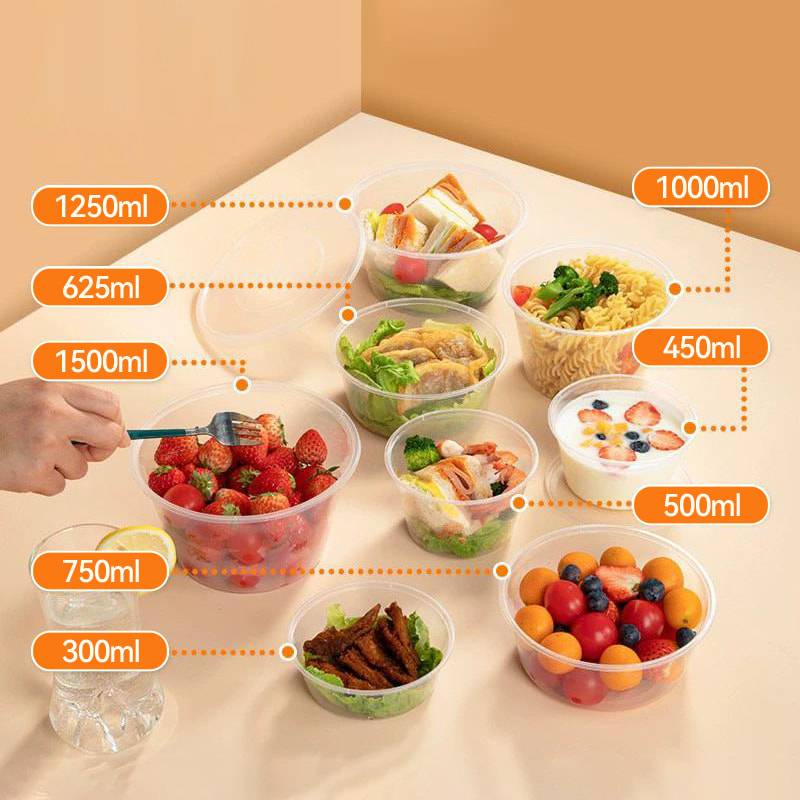
Poor Mold Design Can Cause Uneven Stress Distribution
Container design itself plays a huge role in microwave performance.
Cheap packaging factories sometimes use overly simplified mold structures that fail to distribute heat stress evenly.
Weak mold engineering often creates problems such as:
- Uneven thickness
- Weak corners
- Thin bottom centers
- Poor rib reinforcement
- Inconsistent edge support
During microwave heating, these weak points become the first areas to deform.
Professional packaging molds are carefully engineered to improve structural stability through:
- Reinforcement ribs
- Curved stress distribution
- Balanced wall geometry
- Stable corner transitions
- Controlled material flow
Good mold design helps containers maintain shape even during high-temperature reheating cycles.
Cheap Containers Often Sacrifice Structural Reinforcement
Many consumers focus only on material type.
However, structural engineering is equally important.
Two containers made from PP may perform completely differently depending on structural design quality.
Professional microwaveable containers often include:
- Reinforced corners
- Ribbed sidewalls
- Stable bottom structures
- Anti-collapse geometry
- Heat-distribution support patterns
Cheap containers may eliminate many of these features to simplify molds and reduce material usage.
Unfortunately, this often weakens thermal stability significantly.
The result is packaging that feels acceptable before heating but becomes unstable during actual use.
Uneven Thermoforming Control Creates Hidden Weak Points 🔬
Thermoforming quality strongly affects microwave performance.
During thermoforming production, heated plastic sheets are stretched into molds.
If the process is poorly controlled, some sections become thinner than intended.
This creates hidden weak areas throughout the container.
Professional manufacturers monitor:
- Sheet temperature
- Stretch ratio
- Forming pressure
- Cooling speed
- Material distribution
Without proper control, thickness inconsistency becomes unavoidable.
The container may appear visually normal but still contain structurally weak zones vulnerable to microwave deformation.
This is why high-quality thermoforming expertise matters far more than many buyers realize.
Thermoformed food packaging manufacturing
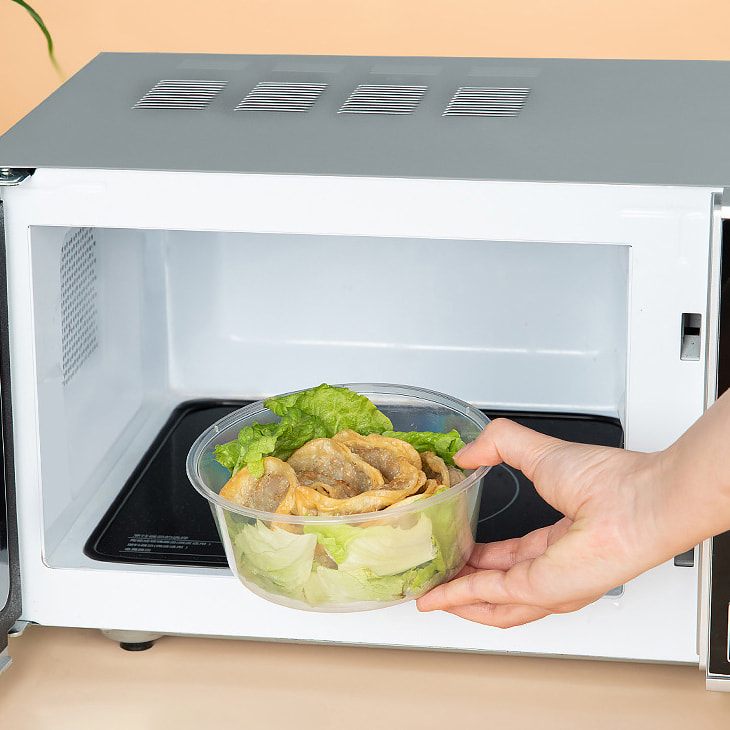
Lid Design Also Affects Warping Performance
In many microwave situations, consumers leave the lid partially attached during heating.
Poor lid engineering can worsen warping problems.
Weak lids may:
- Shrink unevenly
- Lose fit accuracy
- Collapse inward
- Trap excessive steam pressure
Professional microwave-safe packaging systems usually consider both:
- Container performance
- Lid compatibility
Some lids are designed specifically for venting steam more effectively during reheating.
This helps reduce internal pressure buildup and structural stress.
Excessive Heat Exposure Can Overwhelm Cheap Packaging 🔥
Not all microwave use conditions are equal.
Containers experience much more stress when heating:
- Oily foods
- Dense meals
- High-fat sauces
- Large food portions
- Extended heating times
Oil-rich foods often reach higher temperatures than water-based foods.
Cheap PP containers may survive mild reheating but fail under more demanding real-world food applications.
Professional packaging testing therefore often includes multiple food simulation conditions rather than simple short microwave exposure.
Why Foodservice Brands Should Care About Warping
Some businesses assume slight warping is not important.
In reality, consumers notice packaging quality immediately.
Warped containers create negative impressions such as:
- Cheap packaging
- Unsafe materials
- Poor food quality
- Weak brand standards
This is especially damaging for:
- Meal-prep companies
- Restaurant chains
- Premium takeaway brands
- Airline catering
- Supermarket ready meals
Packaging strongly influences perceived food quality.
Even excellent food may appear lower quality if the container deforms noticeably after heating.
Professional brands increasingly understand that packaging is part of the customer experience, not just transportation material.
How Professional Manufacturers Prevent Microwave Warping 🏭
High-quality PP packaging manufacturers use multiple strategies to improve microwave stability.
These often include:
- Stable food-grade resin sourcing
- Optimized wall thickness
- Reinforced structural design
- Precision thermoforming control
- Heat-resistance testing
- Load-bearing evaluation
- Dimensional consistency monitoring
Professional manufacturers also perform repeated testing cycles under realistic heating conditions.
Testing may include:
- Microwave simulation
- Hot food filling
- Compression testing
- Stackability testing
- Oil resistance testing
- Freezer-to-microwave performance checks
Factories focused only on low prices often skip many of these procedures.
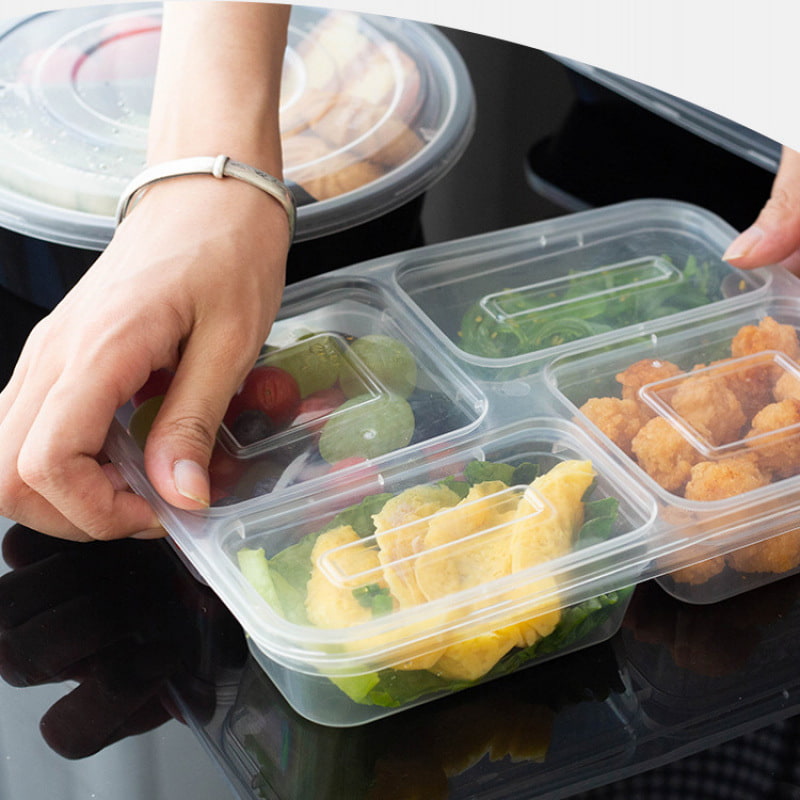
Why Importers Should Not Buy Packaging Based Only on Price 💰
One of the most common sourcing mistakes is focusing only on unit price.
Cheap packaging may initially appear attractive because the cost savings seem significant at high volume.
However, poor packaging performance often creates much larger hidden costs later, including:
- Customer complaints
- Product returns
- Brand damage
- Negative online reviews
- Packaging replacement costs
- Retail contract risks
For foodservice businesses, packaging reliability directly affects operational consistency.
Experienced importers increasingly evaluate:
- Heat performance
- Structural reliability
- Supplier quality systems
- Production consistency
- Export experience
- Material traceability
rather than choosing suppliers based purely on the lowest quotation.
Sustainability Trends Are Also Changing PP Packaging Development 🌱
Modern PP packaging development is increasingly balancing:
- Lightweighting
- Structural performance
- Recyclability
- Cost efficiency
- Heat resistance
Manufacturers now face pressure to reduce plastic usage while still maintaining microwave reliability.
This requires more advanced engineering rather than simple material reduction.
The future of PP packaging will likely focus on smarter structural optimization instead of aggressively thinning containers beyond functional limits.
How DaShan Supports High-Performance PP Packaging
DaShan specializes in food-grade packaging solutions for global foodservice and retail markets.
Our packaging range includes:
- PP microwaveable food containers
- PET salad containers
- RPET fruit packaging
- CPET trays
- Thermoformed takeaway packaging
- Beverage cups and lids
We focus on:
- Stable thermoforming quality
- Structural consistency
- Reliable heat resistance
- Professional mold development
- Export-oriented production
- Food safety compliance
Our manufacturing systems emphasize balanced packaging engineering rather than extreme cost reduction that compromises performance.
Premium PP meal container solutions
For customized packaging development and OEM projects, our technical team supports buyers throughout product optimization and production coordination.
As global foodservice packaging demands continue evolving, reliable microwave performance remains one of the most important quality indicators for modern PP containers.
Learn more about our packaging manufacturing capabilities
For packaging cooperation, sampling inquiries, and export support:
Contact our packaging specialists
Conclusion
Cheap PP containers warp in microwaves for many interconnected reasons.
The problem is usually not caused by PP itself, but by poor manufacturing decisions designed to reduce production cost at the expense of structural stability.
Low-grade materials, excessive lightweighting, weak mold design, uneven thermoforming, and poor engineering all contribute to packaging deformation during microwave heating.
As food delivery, takeaway meals, and ready-to-eat packaging continue growing globally, consumers increasingly expect packaging that performs reliably under real heating conditions.
For importers and foodservice brands, choosing professional packaging manufacturers is no longer just about appearance or price. It is about ensuring consistent customer experience, operational reliability, and long-term brand trust. 🚀
FAQ
1. Are all PP containers microwave safe?
No. While PP material generally has good heat resistance, not all PP containers are engineered for microwave use. Cheap or poorly manufactured containers may deform under heat.
2. Why do some PP containers warp after heating oily foods?
Oil-based foods can reach much higher temperatures during microwave heating than water-rich foods. Cheap containers often cannot handle these higher heat levels effectively.
3. Does thicker packaging improve microwave performance?
In many cases, yes. Proper wall thickness helps improve structural stability and reduces the risk of thermal deformation.
4. Can poor mold design affect microwave stability?
Absolutely. Weak structural design and uneven thickness distribution are major causes of warping during heating.
5. Why do some lids deform faster than containers?
Lids are often thinner and exposed directly to steam pressure during microwave heating, making them more vulnerable to distortion.
6. Is warped packaging dangerous?
Minor deformation does not automatically mean the packaging is unsafe. However, severe warping may indicate poor material quality or unsuitable microwave performance.
7. Why do professional foodservice brands avoid ultra-cheap packaging?
Because packaging directly affects customer experience, brand image, operational reliability, and long-term product consistency.
8. What should importers evaluate before purchasing PP microwave containers?
Importers should evaluate:
- Material quality
- Heat resistance
- Thermoforming consistency
- Structural design
- Supplier quality control
- Microwave testing capability
References
- U.S. Food & Drug Administration (FDA)
https://www.fda.gov - Packaging Strategies
https://www.packagingstrategies.com - Smithers Packaging Industry Research
https://www.smithers.com - PMMI Packaging Industry Reports
https://www.pmmi.org - European Food Safety Authority (EFSA)
https://www.efsa.europa.eu - Plastics Industry Association
https://www.plasticsindustry.org - Sustainable Packaging Coalition
https://sustainablepackaging.org - Packaging Europe
https://packagingeurope.com - DaShan Packaging Official Website
DaShan Packaging
Copyright Notice
© 2026 DaShan Packaging. All Rights Reserved.
This article and all related content, including packaging analysis, thermoforming explanations, material discussions, manufacturing insights, and technical observations, are the intellectual property of DaShan Packaging unless otherwise stated. No part of this publication may be copied, reproduced, distributed, modified, republished, or transmitted in any form without prior written authorization from DaShan Packaging.
The information provided in this article is intended for educational and informational purposes only. Packaging performance may vary depending on microwave conditions, food type, material specifications, and regional compliance standards.
Readers are encouraged to independently verify packaging suitability and testing requirements before commercial use.
For OEM food packaging solutions, product customization, or export cooperation inquiries, please visit: