
Quick Summary
Choosing the right packaging for hot meals and delivery affects food quality, safety, brand image, and cost. PP, CPET, bagasse, paperboard, and PET each perform differently in terms of heat retention, moisture control, leak resistance, sustainability, and regulatory compliance. The optimal solution depends on food type, delivery distance, and business objectives — often requiring a mix of materials rather than one “universal” option.
The explosive growth of takeaway, delivery, and ready-meal services has changed how restaurants, central kitchens, meal-prep brands, and retailers think about packaging.
Hot meals do not simply need “containers.” They require packaging that protects food quality, maintains safety, survives transportation, and meets increasingly strict sustainability expectations.
Choosing the wrong material can lead to:
-
warped or leaking containers
-
soggy food caused by condensation
-
unpleasant odors transferring to food
-
customer complaints and refund costs
-
regulatory non-compliance issues
-
unnecessary plastic waste and brand damage
In this guide, we explore which types of packaging work best for hot meals and delivery — and how to choose the right solution based on your menu, logistics, and market.
1. What Makes “Good” Packaging for Hot Meals?
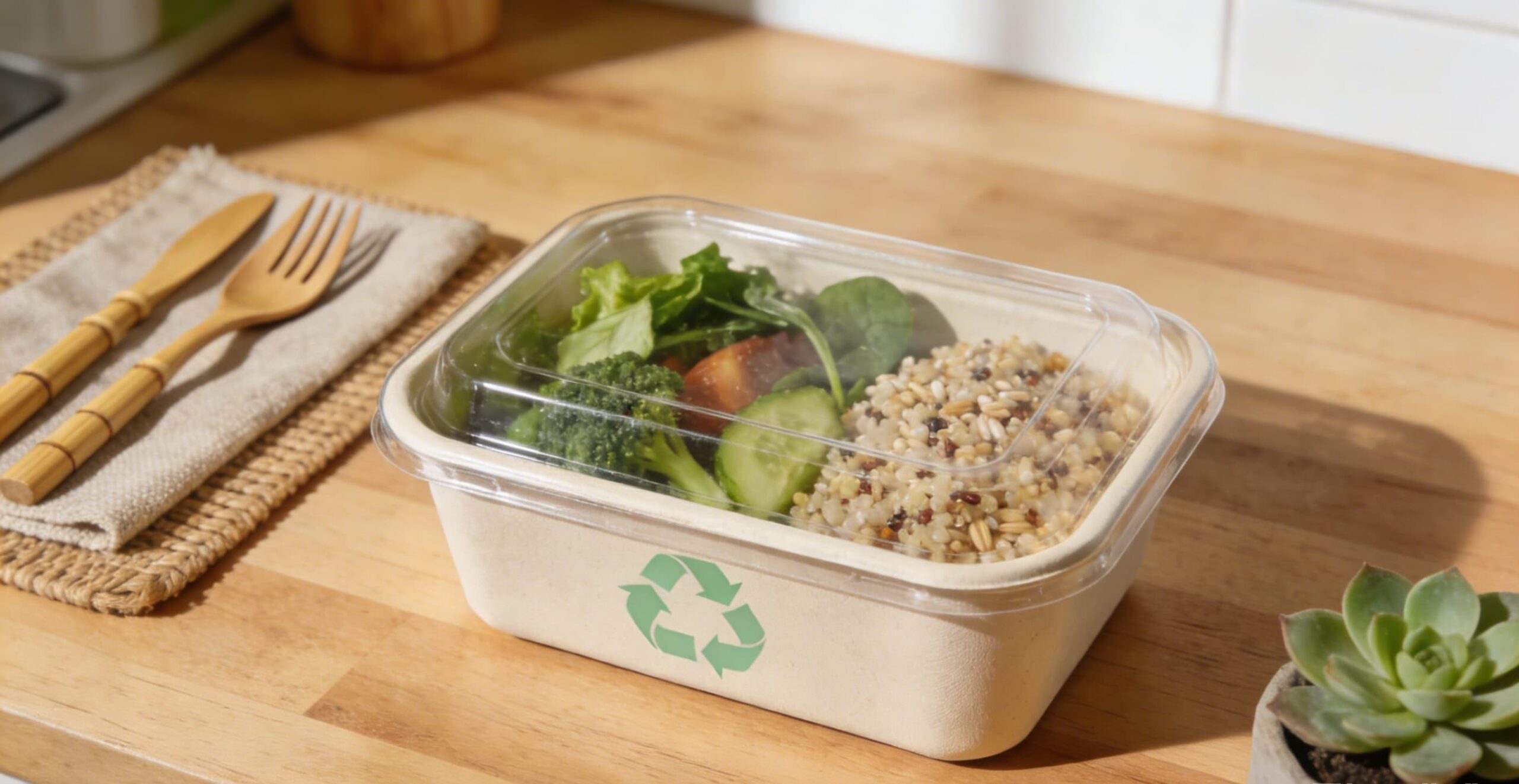
Before choosing materials, it is essential to define performance criteria.
Heat resistance
Can the packaging withstand:
-
microwaving
-
oven heating
-
boiling or steaming
-
hot oil and sauces
Different materials behave differently at 70°C, 90°C, and 120°C+.
Structural strength
Hot food softens some materials. Strong packaging must:
-
hold heavy portions
-
resist cracking
-
handle vibration during transport
-
maintain shape when stacked
Temperature retention
Insulation helps keep food warm longer, which improves customer satisfaction.
Leak-proof performance
Snap lids, sealing film, and tight fit designs reduce spills and grease leakage.
Food-contact safety
Packaging must meet relevant testing standards and certifications required in destination markets.
Sustainability
Buyers increasingly expect:
-
recyclability
-
reduced plastic content
-
bio-based options where appropriate
Cost and availability
The best solution balances:
-
performance
-
budget
-
stable supply chain
-
consistency across batches
With those principles in mind, let us review the major materials used for hot meal delivery.
2. Comparing Materials for Hot Meals and Delivery
2.1 PP (Polypropylene)
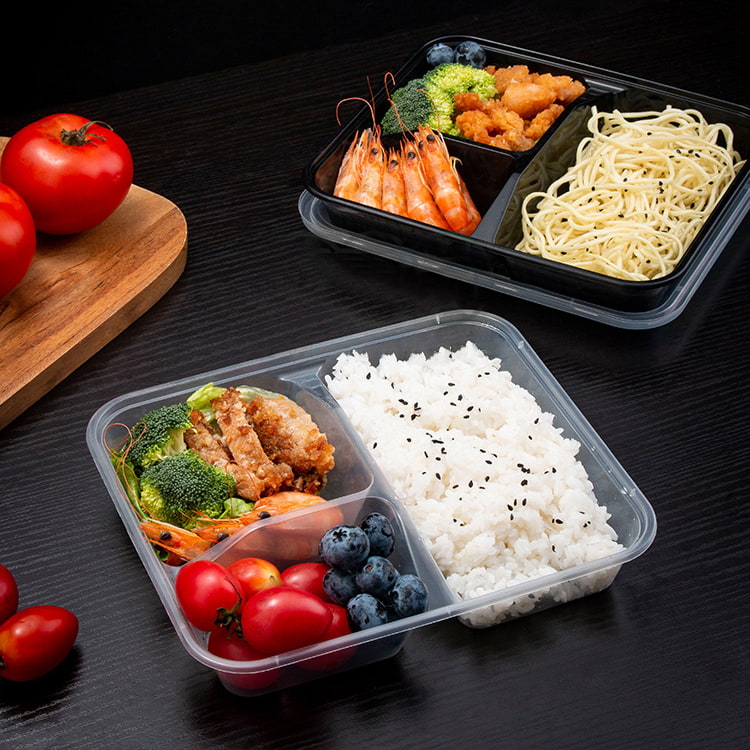
PP is one of the most widely used packaging materials for hot meals.
Advantages
-
Good heat resistance (microwave safe when properly designed)
-
Affordable and reliable
-
Resistant to oil and sauces
-
Strong, flexible, not brittle
-
Widely accepted in food-service industries
Limitations
-
Not suitable for traditional ovens
-
Perceived by some markets as “plastic,” even when recyclable
-
Requires correct molding to avoid warping
Best for
-
takeout bowls
-
lunch boxes
-
microwave reheatable meals
-
soups and rice dishes
DASHAN frequently supports customers using PP trays and bowls for delivery operations because they offer strong performance-to-cost value.
2.2 CPET (Crystallized PET)
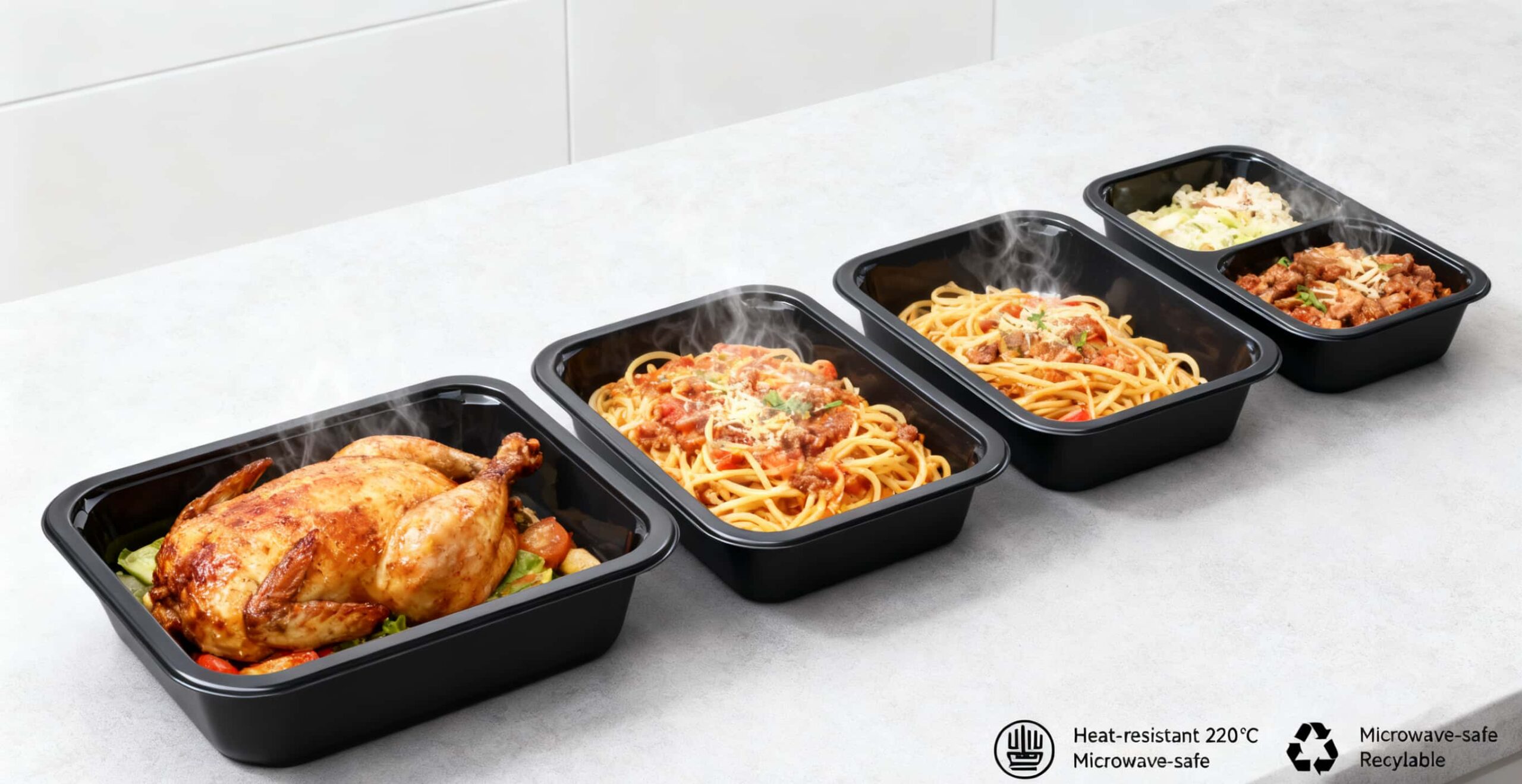
CPET is designed specifically for heat applications.
Advantages
-
Withstands conventional ovens and microwaves
-
Keeps shape under high temperature
-
Excellent sealing performance with lidding film
-
Premium presentation (widely used in ready meals and airlines)
Limitations
-
Higher cost compared to PP
-
Heavier than some alternatives
-
Typically single-color (usually black or white)
Best for
-
ready-to-heat supermarket meals
-
airline meals
-
central kitchen packaging
-
premium delivery meals
For businesses offering reheatable meals, CPET is often the safest and most professional option.
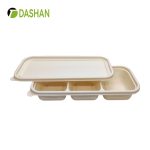
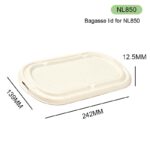
2.3 Bagasse (Sugarcane Fiber)
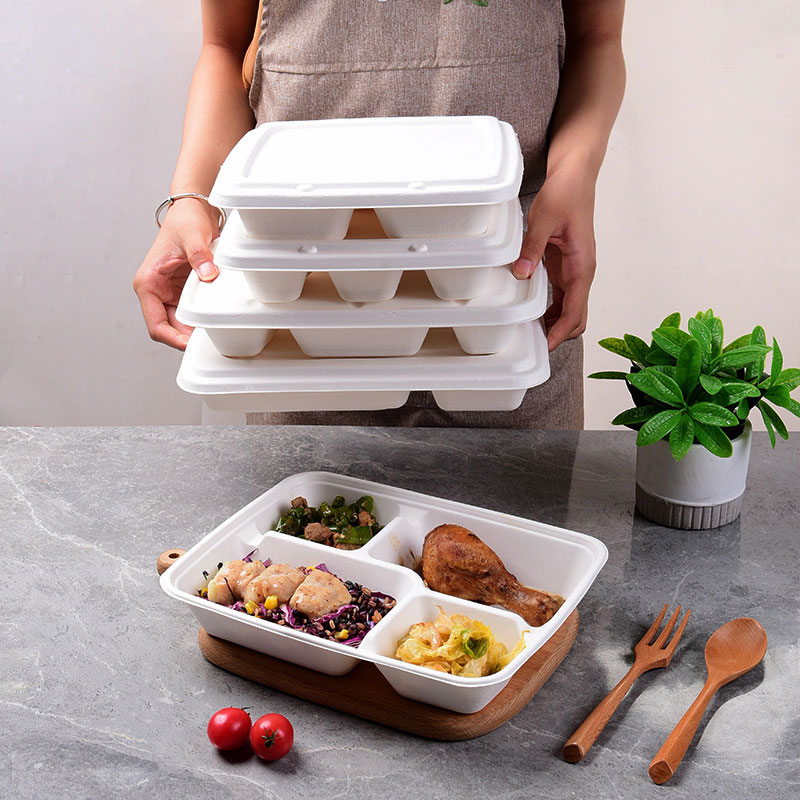
Bagasse is made from agricultural by-products and is highly valued for its natural look.
Advantages
-
Good heat resistance
-
Breathable structure reduces condensation
-
Strong even under hot and oily food
-
Perceived as eco-friendly and compostable in many markets
-
Suitable for branding as a “green choice”
Limitations
-
Not suitable for long oven baking
-
Requires careful storage to avoid absorbing moisture
-
Often paired with lids made from other materials
Best for
-
rice and noodle dishes
-
grilled meals
-
combo plates
-
takeaway restaurants promoting sustainability
Bagasse performs particularly well when brand image and sustainability matter.
2.4 Corn Starch / Bio-Based Blends
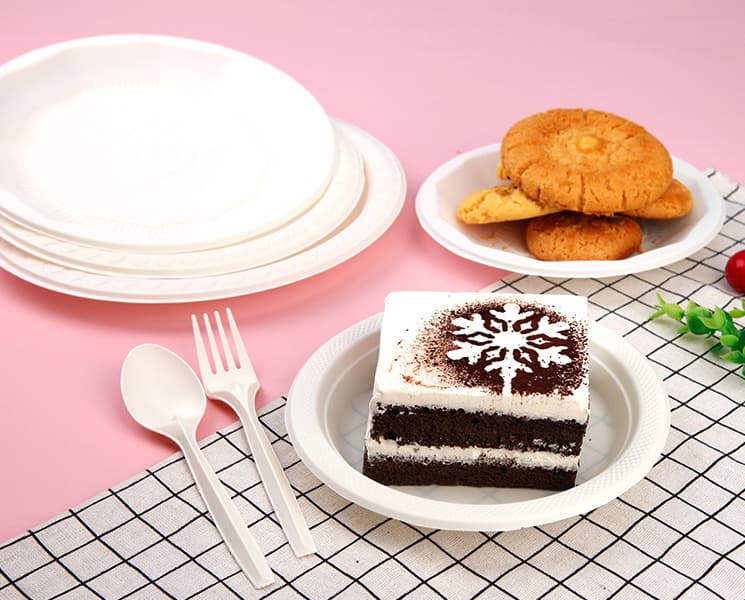
Corn starch tableware and containers are often selected for their environmental perception.
Advantages
-
Plant-based content
-
Appealing “eco product” perception to consumers
-
Suitable for certain warm (not boiling) foods
Limitations
-
Limited heat resistance
-
Not always industrially compostable unless certified
-
Performance varies considerably by formulation
Best for
-
light takeaway meals
-
dry foods
-
short delivery distances
Businesses should understand actual technical properties rather than assuming that all bio-based materials behave the same.
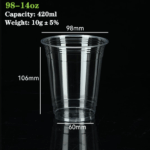
2.5 RPET / PET
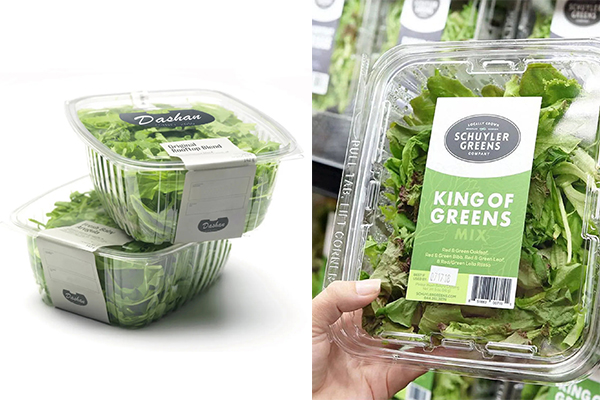
PET and RPET are excellent for cold foods, desserts, salads, and beverages — but limited for hot meals.
Advantages
-
Crystal-clear presentation
-
Strong structure
-
Recyclable, especially when clearly labeled
-
RPET supports circular economy goals
Limitations
-
Not suitable for high heat
-
Can deform with hot soup or oily dishes
Best for
-
cold dishes
-
sushi
-
bakery products
-
beverage lids
2.6 PLA
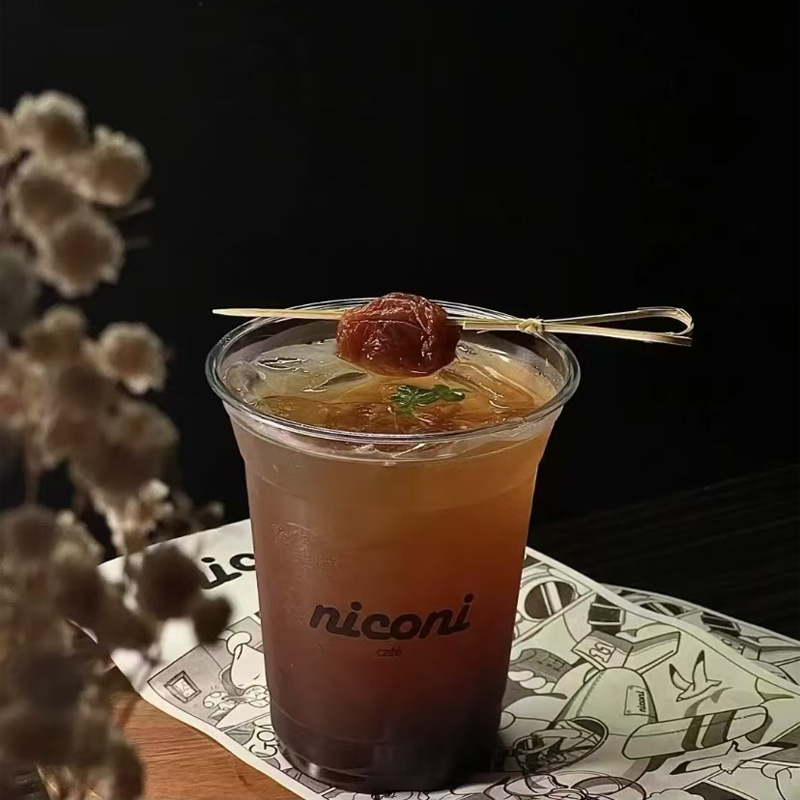
PLA is commonly used in cups and some lids.
Advantages
-
bio-based
-
clear and attractive
-
suitable for cold foods
Limitations
-
poor high-temperature resistance
-
softens easily under heat
-
usually not suitable for hot meals
PLA fits sustainability-positioned cold products rather than hot meal delivery.
3. Packaging Formats: Design Matters as Much as Material
Even the right material can fail without proper design.
Clamshells vs. compartment trays
Compartment trays help separate sauces and prevent soggy textures. Clamshells work better for fast-service operations.
Lidded bowls vs. hinged containers
Bowls are ideal for noodles, soups, and saucy foods. Hinged containers suit rice boxes and combos.
Sealed trays vs. snap lids
Film-sealed trays improve leak-proof performance, especially in delivery environments.
Venting systems
Venting prevents condensation buildup — essential for fried and crispy foods.
Anti-fog lids
Visibility matters for presentation and customer perception, especially in delivery apps and retail channels.
4. Matching Food Types to the Right Packaging
Soups and broths
Best: PP bowls with tight lids
Avoid: PET, PLA
Oily stir-fry and curries
Best: PP or CPET
Bagasse is acceptable depending on oil level.
Rice and noodles
Best: PP, Bagasse
Consider multi-compartment trays.
Grilled or baked foods
Best: CPET for reheating; Bagasse for takeaway service.
Delivery platforms
Use tamper-evident options and avoid fragile containers.
5. Testing and Quality Validation
Professional buyers should not rely only on catalog descriptions.
Important tests include:
-
microwave and oven testing
-
drop and vibration tests
-
leak tests
-
sealing strength testing
-
odor and taste transfer evaluation
-
stacking and load tests
DASHAN often supports customers by providing samples for side-by-side comparison across PP, CPET, Bagasse, and other materials.
6. Sustainability and Compliance
Sustainability does not mean choosing any “eco” label.
Key considerations:
-
recyclability infrastructure in destination markets
-
realistic compostability (industrial vs home)
-
applicable standards and testing documentation
-
alignment with local plastic regulations
Many brands adopt a mixed strategy:
-
Bagasse for dine-in and eco branding
-
PP or CPET where performance must be guaranteed
-
RPET for cold categories
-
bio-based solutions where appropriate and certified
This pragmatic portfolio balances performance, compliance, and environmental responsibility.
7. Cost and Total Value
The lowest unit price may create hidden costs:
-
food returns
-
leakage compensation
-
negative reviews
-
wasted meals and logistics
Smart brands evaluate total value rather than price per piece.
8. Practical Recommendations by Scenario
Restaurants and Takeaway Shops
PP and Bagasse typically provide the best balance.
Meal Delivery and Cloud Kitchens
PP for soups and saucy foods; Bagasse for set meals; CPET for reheatable meals.
Supermarkets and Ready Meals
CPET trays with sealing films often deliver the most professional look and performance.
Distributors and Importers
Offer a portfolio — do not rely on one single material.
9. How DASHAN Helps Buyers Decide
DASHAN works with multiple materials — PET, RPET, CPET, PP, Bagasse, Cornstarch, and more — which allows customers to compare options objectively.
Support typically includes:
-
sample testing for hot meal scenarios
-
guidance on compliance requirements
-
customized shapes, sizes, and branding
-
long-term, stable supply planning
The goal is to help customers choose what fits their market — not simply the most expensive or most fashionable option.
FAQ
1. What packaging material is safest for very hot meals?
Polypropylene (PP) and CPET trays generally perform best for high-temperature foods due to their heat resistance and structural stability. Always verify food-contact compliance and migration test reports from suppliers.
2. Can compostable packaging handle greasy or oily foods?
Bagasse can manage moderate grease, but extremely oily or soupy dishes may require coatings or alternative formats such as PP bowls. Testing in real delivery conditions is essential.
3. Is PET suitable for hot food delivery?
Standard PET works better for cold or moderately warm foods. For hot meals, it may warp. RPET is more sustainable but has the same heat limitations.
4. What is the most cost-effective option?
PP typically offers the best balance of performance and price. However, total cost of ownership should include losses from leaks, replacements, and customer complaints.
5. Are compostable materials always better for the environment?
Only when proper collection and industrial composting exist. Without appropriate waste management, the environmental advantage may be limited.
6. How can restaurants reduce packaging complaints?
Choose containers with reliable lids, proper venting, and suitable heat resistance. Conduct small delivery trials before full rollout.
7. Can one packaging type work for all menu items?
Rarely. Most operations benefit from a combination: PP for soups and curries, CPET for reheatable meals, bagasse for sandwiches and rice bowls, and paperboard for bakery and pizza.
Conclusion
There is no single “best” packaging for all hot meals.
The right solution depends on heat, food type, delivery conditions, sustainability objectives, and budget. By understanding material properties — and validating through testing — food businesses can protect quality, reduce risk, and build stronger brands.
References
-
Food and Agriculture Organization – Food Packaging and Safety
https://www.fao.org/3/y4036e/y4036e04.htm -
U.S. FDA — Food Contact Materials Guidance
https://www.fda.gov/food/chemicals-food/food-contact-substances -
European Commission — Food Contact Materials
https://food.ec.europa.eu/safety/chemical-safety/food-contact-materials_en -
Ellen MacArthur Foundation — Plastics and Circular Economy
https://www.ellenmacarthurfoundation.org/plastics-and-the-circular-economy -
UNEP — Single-use Packaging and Alternatives
https://www.unep.org/resources/report/single-use-plastics-roadmap-sustainability
Copyright Statement
© 2026 Dashan Packing. All rights reserved.
This article is an original work created by the Dashan Packing editorial team.
All text, data, and images are the result of our independent research, industry experience,
and product development insights. Reproduction or redistribution of any part of this content
without written permission is strictly prohibited.
Dashan Packing is committed to providing accurate, evidence-based information and
to upholding transparency, originality, and compliance with global intellectual property standards.