

Quick Summary
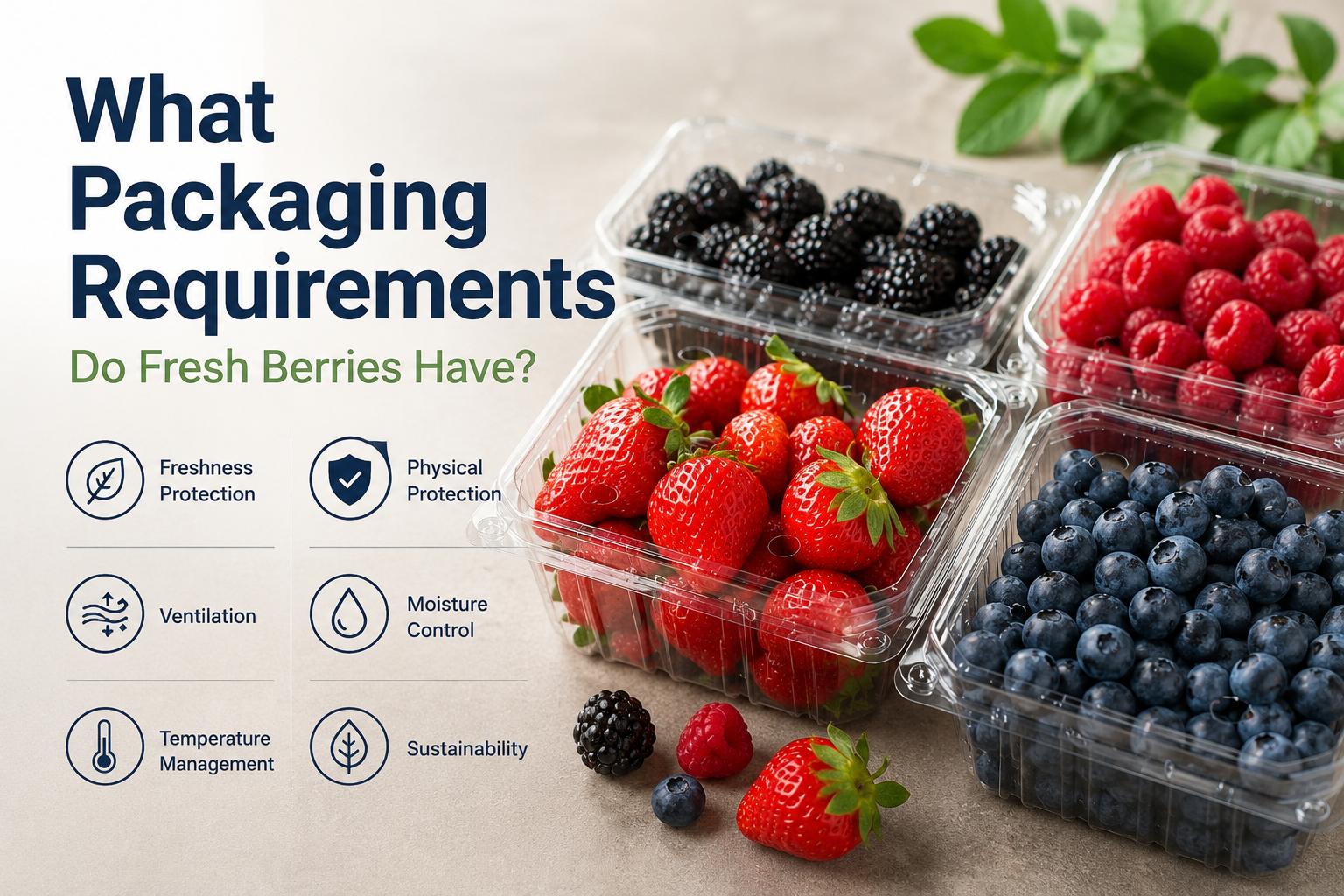
Fresh berries are among the most delicate fresh produce products and require packaging that can protect against bruising, manage moisture, support cold-chain logistics, and enhance retail presentation. Effective berry packaging must balance ventilation, structural strength, product visibility, and sustainability while maintaining fruit quality from harvest to consumption. Transparent PET clamshell containers remain one of the most widely used solutions because they provide excellent visibility, protection, and compatibility with modern berry supply chains.
Introduction
Fresh berries are among the most challenging products in the fresh produce industry when it comes to packaging.
Unlike apples, oranges, or many other fruits, berries have delicate skins, high moisture content, and relatively short shelf lives. Even minor compression during transportation can lead to bruising, juice leakage, mold growth, and reduced market value. At the same time, consumers expect berries to look fresh, vibrant, and ready to eat when they purchase them.
For growers, packers, retailers, and distributors, packaging serves a much larger purpose than simply containing the product. It must protect berries from physical damage, manage moisture, support cold-chain distribution, and present the fruit attractively at retail.
As global demand for strawberries, blueberries, raspberries, and blackberries continues to grow, packaging has become one of the most important tools for maintaining quality from harvest to consumption.
Fresh Berries Are Highly Vulnerable to Physical Damage
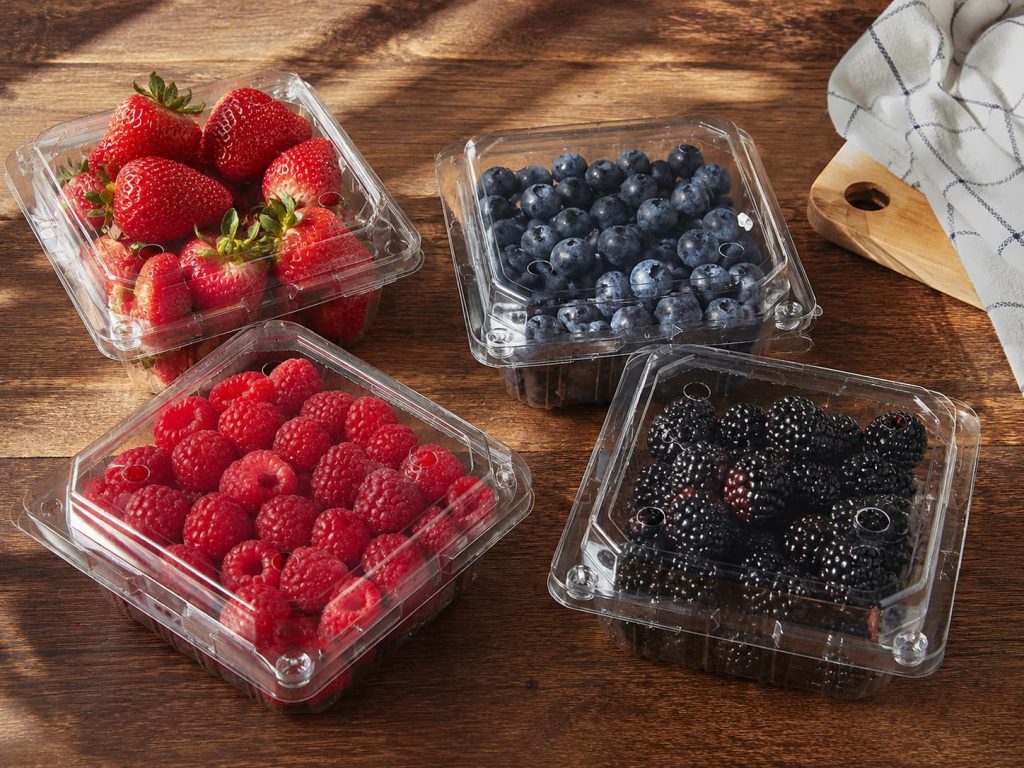
One of the biggest challenges in berry packaging is preventing mechanical damage.
Fresh berries are often harvested by hand and may pass through multiple handling stages before reaching consumers. During packing, transportation, warehousing, retail display, and home storage, berries are exposed to vibration, stacking pressure, and accidental impacts.
Unlike firmer fruits, berries have very limited resistance to compression. Even slight pressure can cause bruising that may not be immediately visible but can quickly reduce shelf life.
For this reason, berry packaging must provide structural protection throughout the supply chain.
Important protective features often include:
- Rigid container walls
- Reinforced corners
- Adequate headspace above the fruit
- Anti-crush lid designs
- Stable stacking structures
| Potential Risk | Packaging Function |
|---|---|
| Stacking pressure | Reinforced lid and walls |
| Transportation vibration | Product stabilization |
| Handling impacts | Structural rigidity |
| Compression damage | Headspace protection |
A successful berry package minimizes direct pressure on the fruit while maintaining efficient logistics and retail display performance.
Moisture Management Is Critical
Many consumers assume that keeping berries completely sealed will preserve freshness. In reality, moisture management is one of the most complex aspects of berry packaging.
Fresh berries remain biologically active after harvest. They continue to respire, releasing heat and moisture into the package environment.
If excess moisture becomes trapped inside the package, condensation may form on the fruit surface. This creates favorable conditions for microbial growth and can accelerate spoilage.
On the other hand, excessive airflow may cause dehydration and weight loss.
Berry packaging therefore requires a carefully balanced approach.
Packaging designers often incorporate:
- Ventilation holes
- Controlled airflow pathways
- Moisture-management features
- Optimized package geometry
The goal is not to eliminate moisture completely but to maintain conditions that help preserve freshness throughout storage and transportation.
Cold Chain Compatibility Is Essential
Fresh berries depend heavily on cold-chain management.
In most commercial supply chains, berries move through several temperature-controlled stages:
- Harvest and pre-cooling
- Cold storage
- Refrigerated transportation
- Retail refrigeration
- Consumer refrigeration
During this journey, packaging must maintain performance despite repeated temperature changes.
Materials used for berry packaging should offer:
- Stability at low temperatures
- Resistance to cracking
- Consistent structural strength
- Protection during refrigerated transportation
Packaging must also withstand temporary temperature fluctuations that may occur during loading, unloading, retail display, or consumer handling.
Because berries are highly perishable, even small disruptions in cold-chain performance can significantly affect product quality.
Retail Success Depends on Product Visibility
When consumers purchase fresh berries, visual appearance strongly influences buying decisions.
Unlike many packaged foods, berries are evaluated almost entirely through appearance before purchase. Consumers look for:
- Bright color
- Uniform size
- Fresh appearance
- Absence of mold
- Minimal bruising
This is why transparent packaging dominates the berry category.
Clear packaging allows shoppers to inspect the product from multiple angles while maintaining protection.
| Retail Objective | Packaging Solution |
|---|---|
| Showcase freshness | High transparency |
| Build consumer confidence | Full product visibility |
| Support impulse purchases | Attractive presentation |
| Highlight product quality | Minimal visual obstruction |
Packaging that allows consumers to easily assess quality often contributes directly to stronger retail performance.
For berry producers and retailers, visibility is not simply a packaging feature—it is a sales tool.
Packaging Size Matters More Than Many Buyers Realize
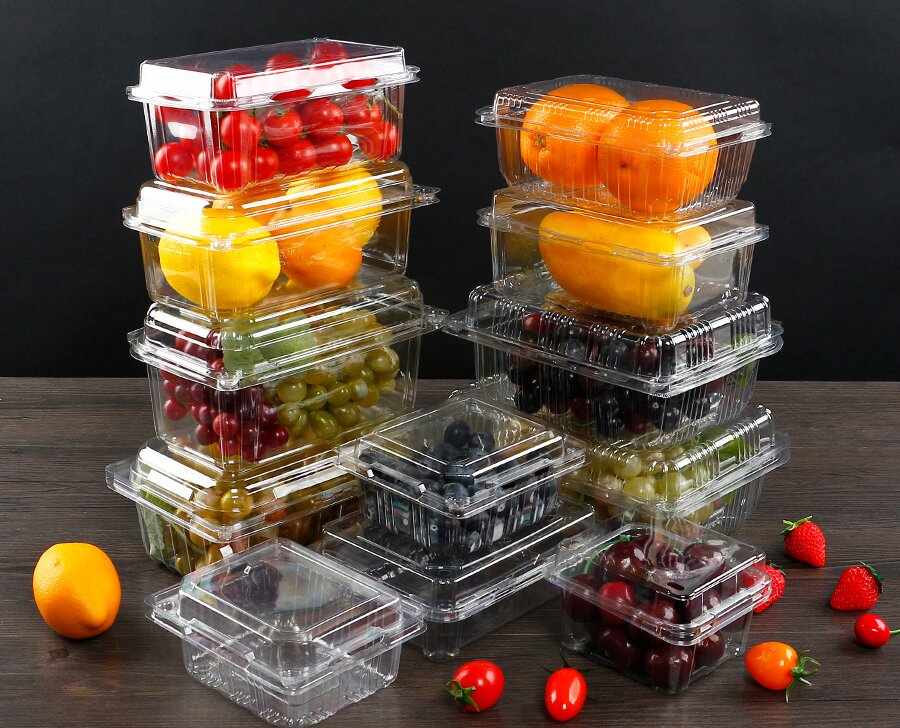
Package size plays an important role in both product protection and consumer convenience.
Larger packages may improve logistics efficiency, but they can also increase the risk of fruit movement and compression.
Smaller retail formats often provide several advantages:
- Reduced fruit-to-fruit pressure
- Improved freshness perception
- Easier handling
- Better portion control
- Lower risk of product damage after opening
Consumer purchasing habits also influence packaging size selection.
Single-person households may prefer smaller portions, while family shoppers may choose larger formats designed for multiple servings.
Successful berry packaging programs often offer multiple pack sizes to address different market needs.
Sustainability Is Influencing Berry Packaging Development
Sustainability has become a major consideration across the fresh produce industry.
Retailers and consumers increasingly expect packaging solutions that balance environmental responsibility with product protection.
However, berry packaging presents a unique challenge.
Reducing packaging material is beneficial only if product protection remains effective. Damaged berries generate food waste, which can have a greater environmental impact than the packaging itself.
As a result, many berry packaging programs focus on:
- Lightweight designs
- Recyclable materials
- rPET incorporation
- Improved packaging efficiency
- Material optimization
The industry’s objective is not simply to use less packaging but to use packaging more effectively.
How PET Clamshell Packaging Supports Berry Programs
Among the various packaging formats available, PET clamshell containers remain one of the most widely used solutions for fresh berries.
Their popularity is driven by several practical advantages.
First, PET provides excellent transparency, allowing retailers to showcase fruit quality while giving consumers confidence in their purchase.
Second, rigid clamshell structures offer strong protection against compression and handling damage.
Third, integrated ventilation designs can help support airflow and moisture management during refrigerated storage and transportation.
PET clamshells are commonly used for:
- Blueberries
- Strawberries
- Raspberries
- Blackberries
- Mixed berry packs
Their combination of visibility, protection, and retail functionality makes them particularly suitable for modern berry supply chains.
How DASHAN Supports Fresh Berry Packaging Programs
As fresh produce markets become more competitive, packaging suppliers must deliver solutions that balance protection, presentation, and operational efficiency.
DASHAN supports berry producers, distributors, and retailers through a range of transparent PET packaging solutions designed specifically for fresh produce applications.
High-Visibility Retail Presentation
Fresh berries rely heavily on appearance to drive sales.
DASHAN’s PET containers provide excellent clarity, allowing consumers to inspect fruit quality while enhancing shelf appeal.
The transparent design helps showcase:
- Fruit color
- Uniformity
- Freshness
- Product quality
Structural Protection for Distribution
Berry supply chains often involve long transportation distances and multiple handling stages.
DASHAN packaging solutions incorporate structural features that help improve package strength and stacking performance, reducing the likelihood of product damage during distribution.
Customization for Different Berry Programs
Different berry varieties and retail channels often require different packaging specifications.
DASHAN can support customization options such as:
- Multiple package sizes
- Ventilation configurations
- Labeling areas
- Retail-ready formats
- rPET material options
This flexibility allows packaging solutions to better align with specific market requirements.
Supporting Sustainability Goals
As demand for recyclable packaging grows, DASHAN also offers solutions that help customers pursue sustainability objectives while maintaining the protection levels required for delicate fresh produce.
By combining visibility, functionality, and supply-chain performance, packaging becomes a strategic tool for preserving berry quality and improving consumer satisfaction.
FAQ
1. Why do fresh berries require specialized packaging?
Fresh berries have delicate skins, high moisture content, and short shelf lives. They are easily damaged by pressure, vibration, and temperature fluctuations, making specialized packaging essential for maintaining quality and reducing waste.
2. What is the biggest packaging challenge for fresh berries?
Preventing bruising and physical damage is one of the biggest challenges. Berries can be damaged during harvesting, transportation, storage, and retail handling, so packaging must provide adequate structural protection.
3. Why do berry packages have ventilation holes?
Fresh berries continue to respire after harvest, releasing moisture and heat. Ventilation holes help improve airflow, reduce condensation, and minimize the risk of mold growth while maintaining freshness.
4. Why is transparency important in berry packaging?
Consumers often judge berry quality based on appearance. Transparent packaging allows shoppers to inspect fruit color, freshness, size consistency, and overall quality before purchasing.
5. Why is PET commonly used for berry packaging?
PET offers excellent clarity, strong structural performance, lightweight durability, and recyclability. These characteristics make it ideal for protecting berries while maximizing retail visibility.
6. How does cold-chain transportation affect berry packaging?
Fresh berries rely heavily on refrigeration throughout distribution. Packaging must maintain its structural integrity and protective performance under refrigerated conditions while supporting airflow and product stability.
Conclusion
Fresh berries present unique packaging challenges because they are highly sensitive to pressure, moisture, temperature fluctuations, and handling conditions.
Effective berry packaging must do far more than contain the product. It must protect against bruising, support airflow, maintain cold-chain performance, enhance retail presentation, and align with evolving sustainability goals.
PET clamshell packaging continues to play an important role because it balances protection, visibility, and operational efficiency. At the same time, innovations in package design, ventilation, and recyclable materials are helping the industry improve performance even further.
For berry producers, retailers, and distributors, successful packaging is ultimately about maintaining fruit quality from harvest to the moment consumers open the package. In a category where freshness directly influences purchasing decisions, packaging remains one of the most important investments in product success.
References
Fresh Produce Packaging & Postharvest Handling
- University of California Agriculture and Natural Resources – Postharvest Technology Center
- USDA Agricultural Research Service – Postharvest Research and Information
- FAO – Food Loss and Food Packaging Resources
Berry Storage & Quality Management
- North Carolina State University – Strawberry Postharvest Handling Information
- Oregon State University Extension – Berry Crop Resources
Food Packaging & Food Contact Materials
- U.S. FDA – Food Packaging & Other Substances that Come into Contact with Food
- European Food Safety Authority (EFSA) – Food Contact Materials
PET Packaging & Sustainability
- PET Resin Association – PET Packaging and Recycling Information
- Association of Plastic Recyclers (APR)
Copyright Statement
© 2026 Dashan Packing. All rights reserved.
This article is an original publication by the Dashan Packing team based on industry research, market analysis, and packaging expertise. Unauthorized reproduction, distribution, or copying of this content is prohibited without prior written permission.
Dashan Packing is committed to delivering reliable, original, and professional information for the global food packaging industry.