

Quick Summary
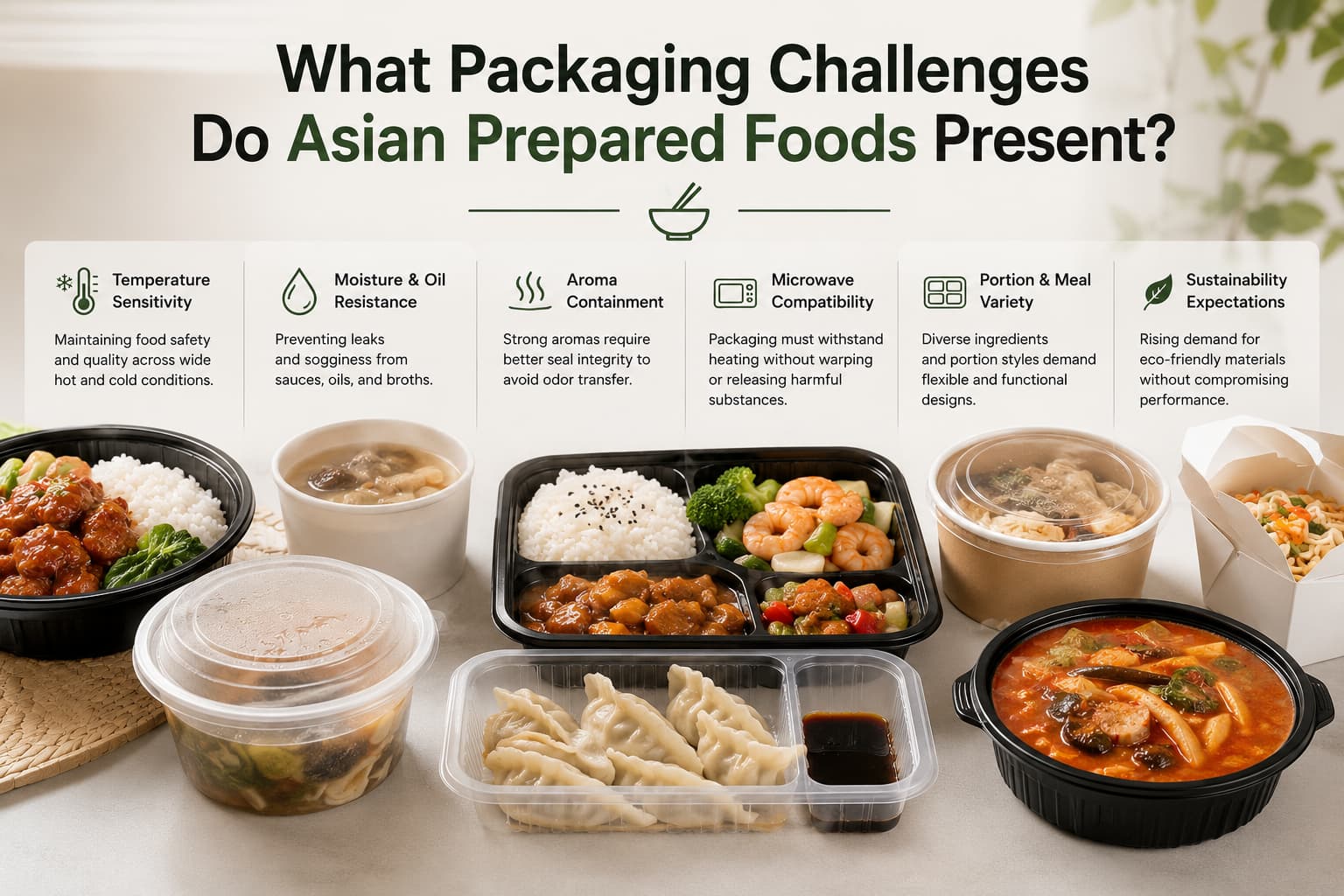
Asian prepared foods present unique packaging challenges because they often combine multiple ingredients, sauces, rice, noodles, and side dishes within a single meal. Unlike many Western ready meals, Asian foods require careful food separation, moisture management, leak prevention, and texture preservation. Packaging must also withstand transportation and microwave reheating while maintaining meal presentation. As global demand for Asian ready meals and food delivery continues to grow, packaging has become a critical factor in protecting food quality, improving customer satisfaction, and supporting operational efficiency.
Introduction
Asian prepared foods have become one of the fastest-growing categories in the global convenience food market. From Japanese bento boxes and Korean lunch sets to Chinese rice meals, Thai curries, and Southeast Asian noodle dishes, consumers around the world are increasingly embracing Asian cuisine as part of their everyday eating habits.
This growth is being driven by several factors. International travel has expanded consumer familiarity with Asian foods, food delivery platforms have increased accessibility, and supermarkets are dedicating more shelf space to ready-to-eat and ready-to-heat Asian meals. At the same time, busy lifestyles have fueled demand for convenient meal solutions that offer both flavor and nutritional value.
However, as Asian prepared foods gain popularity, they are also presenting unique packaging challenges. Unlike many Western ready meals that consist of a single dish, Asian meals often combine multiple ingredients, sauces, textures, and cooking methods within a single package. Maintaining food quality from production to consumption therefore requires more sophisticated packaging solutions.
For food manufacturers, retailers, and packaging suppliers, understanding these challenges is essential to ensuring food safety, consumer satisfaction, and operational efficiency.
The Complexity of Asian Meals Requires More Sophisticated Packaging
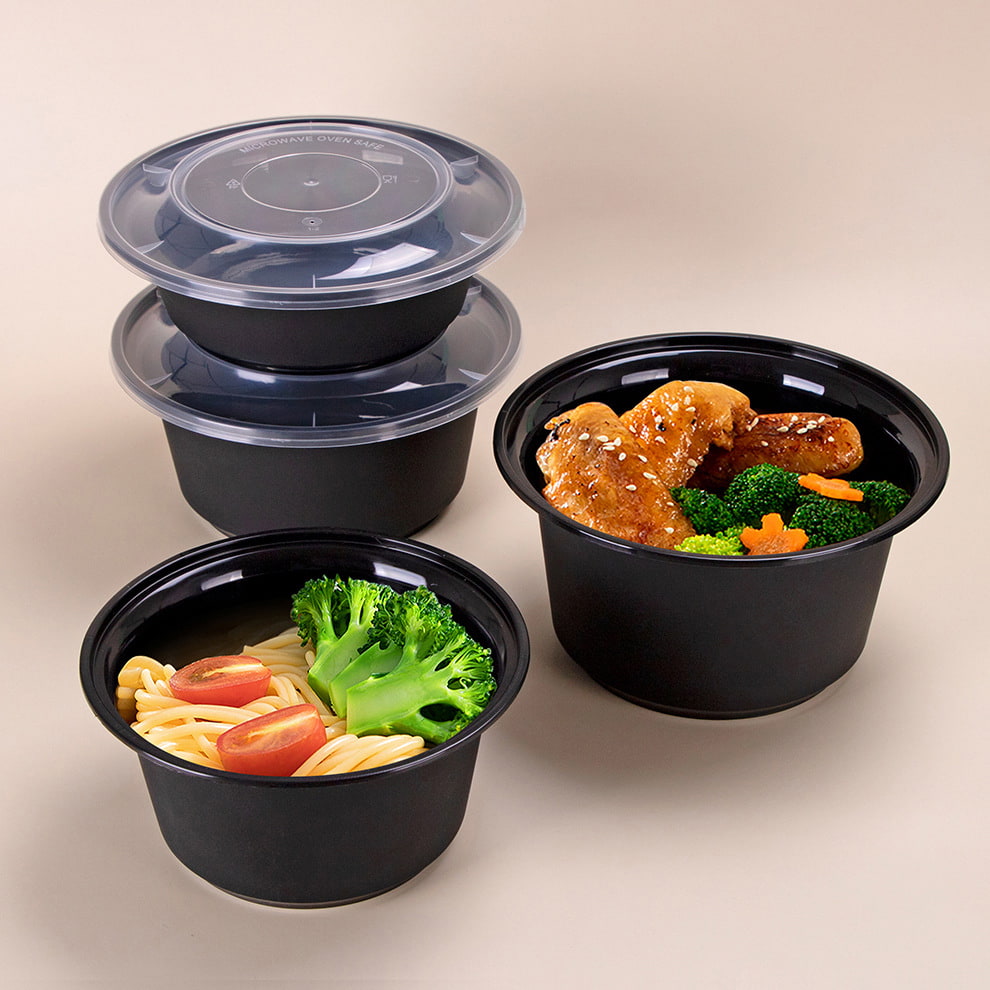
One of the defining characteristics of Asian cuisine is variety. A typical prepared Asian meal often contains several distinct components that are intended to be enjoyed together while maintaining their individual textures and flavors.
A standard meal may include:
- Rice or noodles
- Protein such as chicken, beef, seafood, or tofu
- Vegetables
- Sauces or condiments
- Pickled side dishes
- Fried items
Unlike a pasta dish or casserole where ingredients are mixed together, many Asian meals rely on separation to preserve the intended eating experience.
For example, crispy fried foods can quickly lose their texture if they come into direct contact with moist rice or sauce-covered vegetables. Likewise, pickled side dishes may alter the flavor profile of adjacent foods if not properly isolated.
This is why compartment-based packaging has become a common solution for Asian prepared foods. By separating ingredients within the same container, packaging helps preserve texture, appearance, and flavor while also improving meal presentation.
Beyond functionality, compartmentalized designs align with consumer expectations. Many customers associate organized food layouts with freshness, quality, and premium value.
Moisture Management Is One of the Biggest Challenges
Many Asian dishes naturally contain significant amounts of moisture.
Examples include:
- Japanese curry rice
- Chinese braised dishes
- Korean stir-fried meals
- Thai curries
- Teriyaki-based products
- Rice bowls with sauces
During storage, transportation, and reheating, moisture continues to move within the package. Steam generated by hot foods can condense on the lid and eventually drip back onto the meal.
This process may seem minor, but it can significantly affect food quality.
Excess moisture can lead to:
- Soggy vegetables
- Softened fried foods
- Rice texture deterioration
- Reduced visual appeal
On the other hand, insufficient moisture retention can cause rice or noodles to dry out, creating a poor eating experience.
The challenge is therefore not simply removing moisture but managing it effectively.
Successful packaging must strike a balance between retaining enough humidity to preserve freshness while preventing excessive condensation that damages texture.
This balance becomes even more important as prepared meals move through increasingly complex distribution networks.
Leakage Risks Are Higher Than Many Other Ready Meals
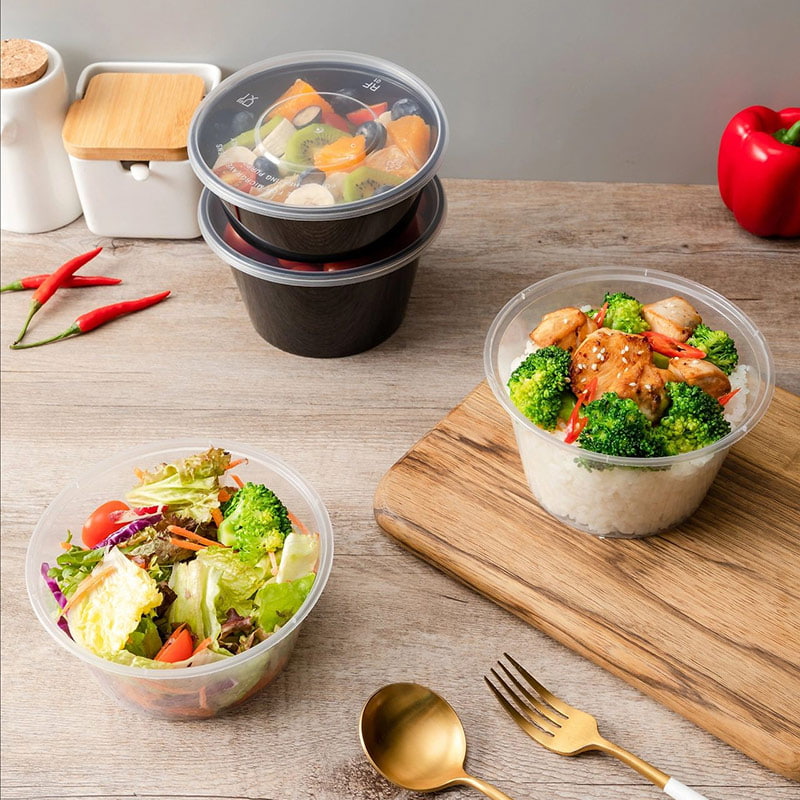
Another challenge unique to many Asian prepared foods is the presence of sauces, gravies, and broths.
Many popular dishes contain liquid components, including:
- Curry sauces
- Soy-based marinades
- Stir-fry sauces
- Soup bases
- Braising liquids
These liquids enhance flavor but create packaging complications.
As prepared meals move through distribution channels or food delivery networks, containers are exposed to vibration, tilting, and sudden movement. Even small amounts of leakage can create significant problems.
Consequences of leakage may include:
- Food contamination
- Damaged product presentation
- Customer complaints
- Reduced shelf appeal
- Product waste
For this reason, sealing performance has become a critical consideration in Asian food packaging.
Strong lid fit, precision rim design, and structurally stable containers help minimize leakage risks during transportation and handling.
As food delivery continues growing throughout Asia, Europe, and North America, leak resistance is becoming an increasingly important competitive advantage.
Rice Requires Different Packaging Than Other Carbohydrates
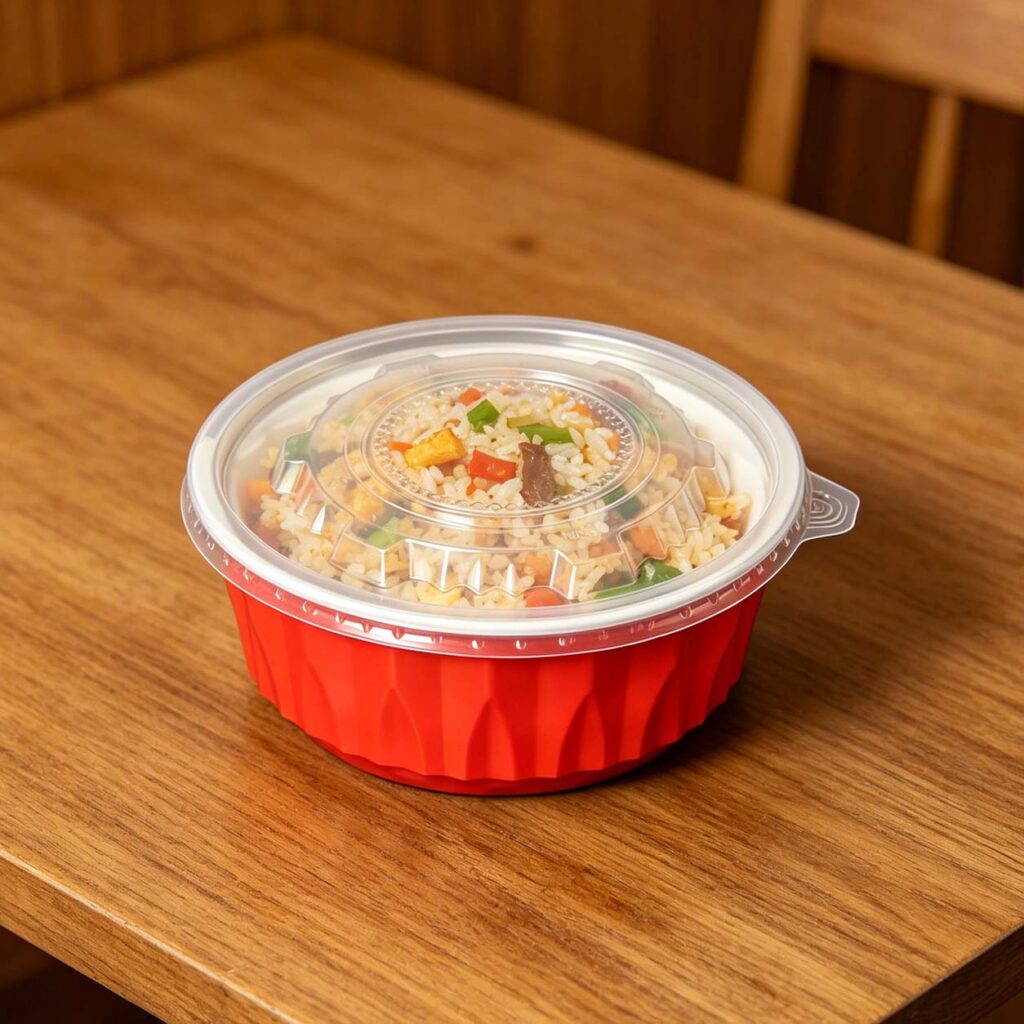
Rice remains the foundation of many Asian prepared meals, yet it presents packaging challenges that are often underestimated.
Unlike bread or pasta, rice is highly sensitive to changes in moisture levels.
If moisture escapes during storage, rice can become dry and hard. If excessive condensation accumulates, rice may become sticky and lose its desired texture.
Maintaining rice quality requires packaging that can help regulate humidity while protecting the product from external environmental conditions.
Temperature fluctuations can further complicate this issue.
Meals may move between production facilities, refrigerated storage, transportation systems, retail shelves, and consumer homes before consumption. Throughout this process, packaging plays a key role in preserving the texture consumers expect.
Because rice is often the largest component of an Asian prepared meal, its quality frequently determines the overall perception of the product.
Noodle Dishes Present Their Own Challenges
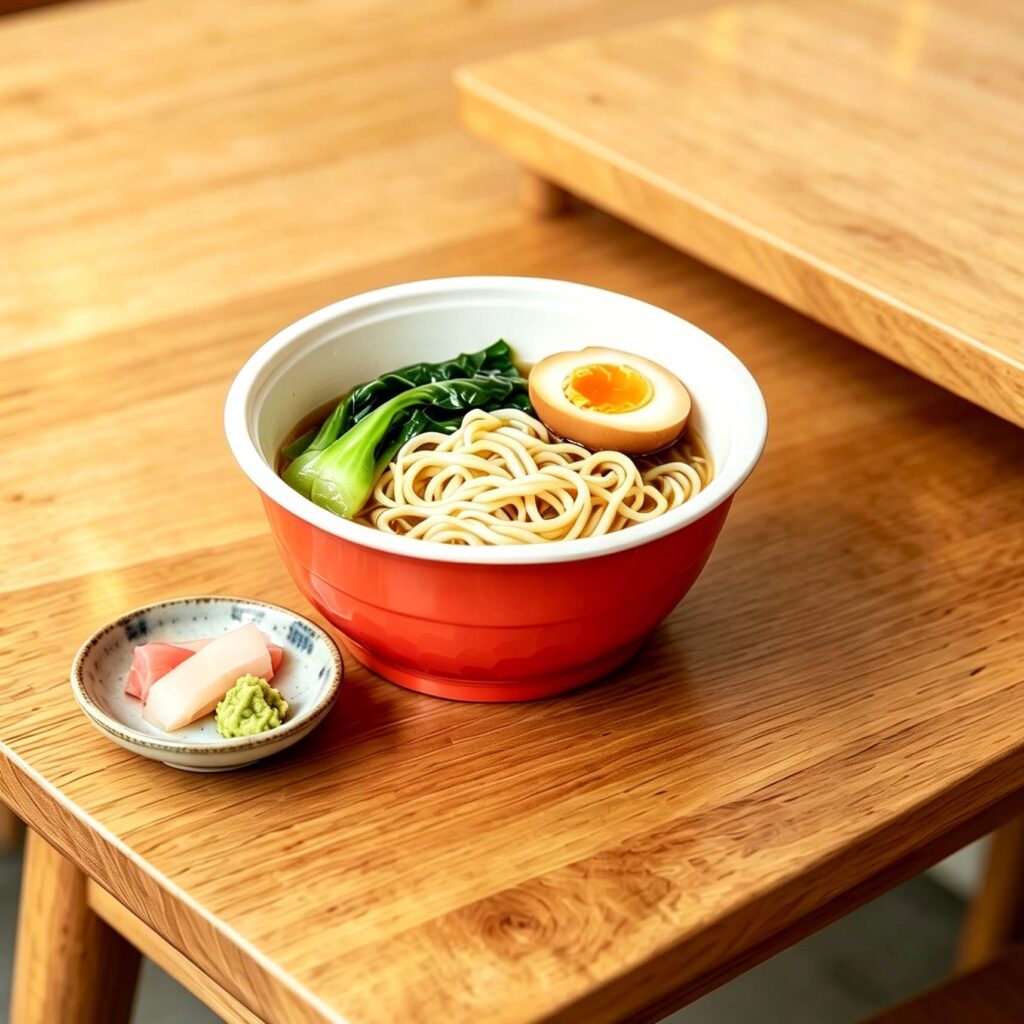
While rice requires moisture management, noodles introduce a different set of packaging concerns.
Fresh and prepared noodle dishes are highly sensitive to:
- Overheating
- Excessive moisture accumulation
- Compression during transportation
When packaged improperly, noodles can stick together, become overly soft, or lose their intended texture.
Consumers often judge noodle quality based on mouthfeel, making texture preservation especially important.
Packaging must therefore provide sufficient space and structural support to reduce compression while also helping manage heat and moisture levels.
This challenge is particularly important for takeaway and delivery applications where transportation times may exceed 30 minutes or more.
Different noodle varieties may also require different packaging approaches, further increasing complexity for food manufacturers.
Microwave Compatibility Has Become Essential
Consumer expectations have changed significantly in recent years.
Today’s prepared food buyers increasingly expect meals that can move directly from refrigerator to microwave with minimal effort.
As a result, microwave compatibility has become a standard requirement for many Asian ready meals.
Packaging must be able to withstand reheating temperatures without:
- Warping
- Cracking
- Losing structural integrity
- Affecting food quality
This is one reason PP (polypropylene) packaging has become widely used throughout the prepared food industry.
PP offers several advantages:
- Good heat resistance
- Microwave-safe performance
- Strong structural durability
- Lightweight design
- Cost efficiency
For manufacturers of Asian prepared foods, these characteristics make PP particularly suitable for products intended for both retail sale and food delivery.
Presentation Matters More Than Many Brands Realize
Asian cuisine is highly visual.
Consumers expect meals to look organized, colorful, and appetizing before they even take the first bite.
Packaging therefore serves an important marketing function in addition to its protective role.
A well-designed package helps maintain:
- Food separation
- Ingredient visibility
- Color contrast
- Portion organization
Clear lids have become increasingly popular because they allow consumers to view the meal before purchase.
Research consistently shows that product appearance influences purchasing decisions, particularly in ready-to-eat food categories where visual freshness is a key quality indicator.
For Asian prepared foods, packaging often acts as a silent salesperson on the shelf.
Delivery Growth Is Raising Packaging Standards
The rapid growth of food delivery has fundamentally changed packaging requirements.
Many Asian dishes that were traditionally consumed immediately after preparation are now expected to maintain quality throughout transportation.
Packaging must protect meals from:
- Vibration
- Stacking pressure
- Temperature fluctuations
- Accidental tilting
Consumers also expect delivered meals to arrive in a condition that closely resembles restaurant presentation.
Meeting these expectations requires packaging that combines:
- Structural stability
- Leak resistance
- Heat retention
- Food separation
As delivery becomes a larger part of the food industry, packaging is increasingly viewed as an extension of the dining experience rather than simply a transport container.
The Future of Asian Prepared Food Packaging
As the global market for Asian prepared foods continues expanding, packaging solutions are becoming more specialized.
Manufacturers are increasingly developing products tailored to specific applications such as:
- Rice meal trays
- Noodle containers
- Curry packaging systems
- Bento-style compartment trays
- Delivery-focused meal containers
At the same time, sustainability remains an important consideration. Food brands are seeking packaging solutions that balance performance, recyclability, and operational efficiency.
Packaging suppliers such as DASHAN are responding by developing PP food containers that combine microwave safety, structural strength, leak resistance, and compartment functionality to meet the evolving needs of prepared food manufacturers and foodservice operators.
FAQ
1. Why do Asian prepared foods require different packaging than many Western ready meals?
Asian prepared meals often contain multiple components such as rice, noodles, proteins, vegetables, sauces, and side dishes. These foods require better separation, moisture control, and presentation preservation than many single-dish Western meals.
2. Why is food separation important in Asian meal packaging?
Many Asian dishes are designed with distinct flavors and textures. Compartment packaging helps prevent sauces, moisture, and side dishes from affecting rice, noodles, fried foods, or vegetables during storage and transportation.
3. Why are leakage risks higher in Asian prepared foods?
Many Asian meals contain curry sauces, broths, stir-fry sauces, marinades, or braising liquids. These liquid components increase the risk of spills during transportation, making leak-resistant packaging essential.
4. What challenges does rice create for food packaging?
Rice is highly sensitive to moisture changes. Too much moisture can make rice sticky, while moisture loss can cause it to become dry and hard. Packaging must help maintain an appropriate moisture balance throughout storage and distribution.
5. Why do noodle dishes require specialized packaging?
Noodles can easily absorb moisture, stick together, or lose their texture during storage and transportation. Packaging must help control condensation and minimize compression to preserve product quality.
6. Why is PP packaging commonly used for Asian prepared meals?
PP (polypropylene) offers excellent heat resistance, microwave compatibility, durability, and structural stability. These properties make it suitable for ready-to-eat and ready-to-heat Asian food applications.
7. How does food delivery affect Asian food packaging requirements?
Food delivery exposes meals to vibration, stacking pressure, and movement. Packaging must provide strong sealing performance, leak resistance, food separation, and structural stability to maintain meal quality until consumption.
Conclusion
Asian prepared foods present a unique set of packaging challenges that differ significantly from many conventional ready meals.
The combination of multiple ingredients, high moisture content, liquid sauces, rice and noodle texture requirements, and growing delivery demands requires packaging solutions that go beyond simple food containment.
Successful packaging must preserve freshness, prevent leakage, maintain presentation, support reheating, and withstand transportation stresses while delivering a convenient consumer experience.
As Asian cuisine continues gaining popularity worldwide, packaging will play an increasingly important role in ensuring that consumers enjoy these meals exactly as intended. Businesses that invest in packaging specifically designed around the characteristics of Asian foods will be better positioned to meet customer expectations and succeed in a highly competitive prepared food market.
References
Food Packaging & Food Contact Materials
- U.S. FDA – Food Packaging & Other Substances that Come into Contact with Food
- European Food Safety Authority (EFSA) – Food Contact Materials
- Food and Agriculture Organization (FAO) – Food Packaging and Food Safety Resources
Packaging Science & Prepared Food Research
- ScienceDirect – Food Packaging Overview
- ScienceDirect – Shelf-Life Packaging Technologies
- MDPI Foods – Food Packaging Research Collection
Ready Meal & Convenience Food Industry
Copyright Statement
© 2026 Dashan Packing. All rights reserved.
This article is an original publication by the Dashan Packing team based on industry research, market analysis, and packaging expertise. Unauthorized reproduction, distribution, or copying of this content is prohibited without prior written permission.
Dashan Packing is committed to delivering reliable, original, and professional information for the global food packaging industry.