

Quick Summary
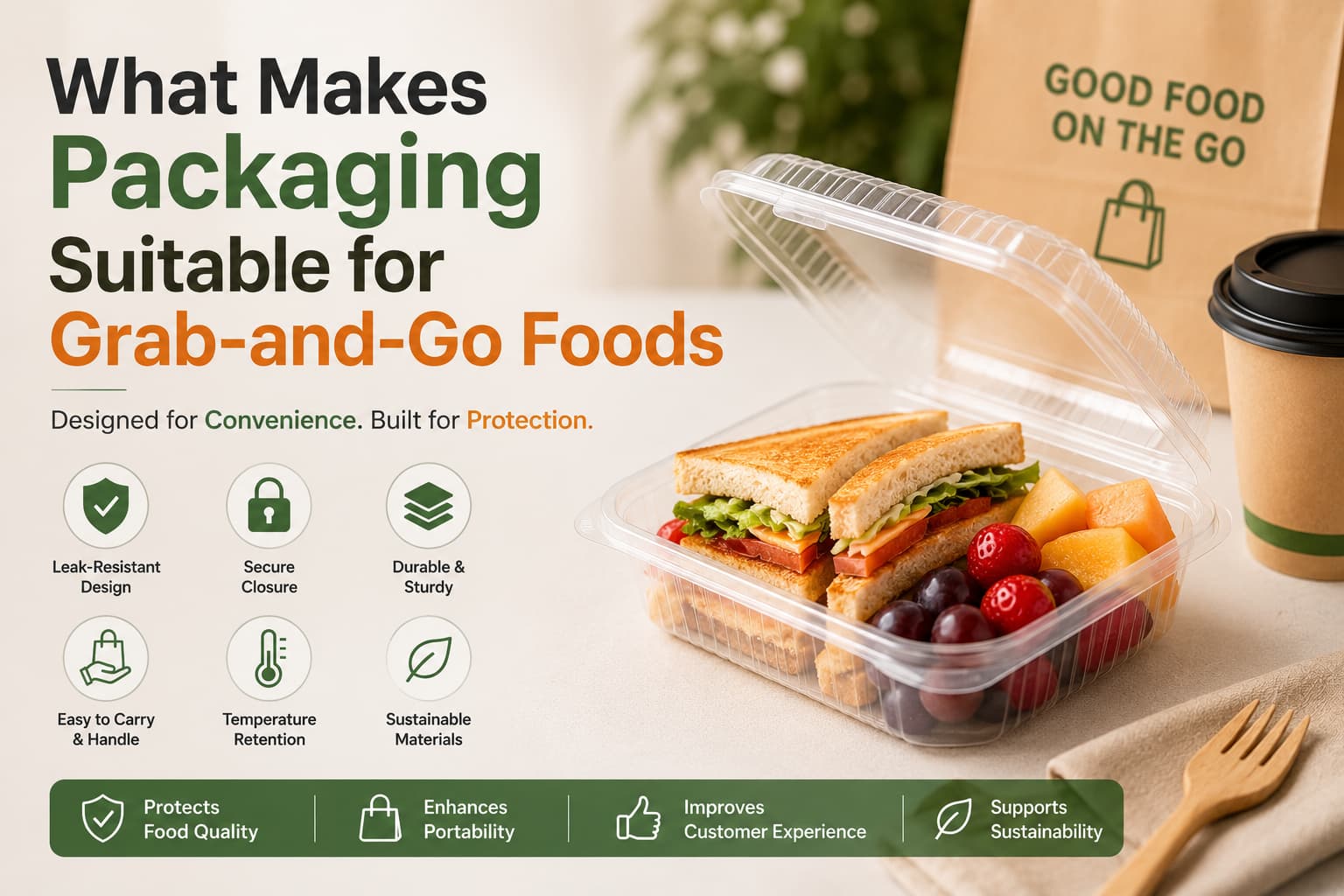
Grab-and-go food packaging is designed to support convenience, portability, and immediate consumption. Unlike traditional food packaging, it must protect food quality while remaining easy to carry, leak-resistant, visually appealing, and suitable for eating on the move. Effective grab-and-go packaging combines structural stability, secure sealing, food visibility, temperature performance, and user-friendly design. As ready-to-eat meals continue growing in convenience stores, supermarkets, and foodservice channels, packaging has become a key factor influencing consumer satisfaction and purchasing decisions.
Introduction
Grab-and-go foods have become one of the fastest-growing segments in modern food retail. From convenience stores and supermarkets to airports, coffee shops, and office cafeterias, consumers increasingly expect meals that are ready to purchase, easy to carry, and convenient to eat.
The growth of grab-and-go foods is closely tied to changing lifestyles. Busy schedules, hybrid work patterns, commuting, and the demand for quick meal solutions have encouraged retailers to expand their ready-to-eat offerings. Industry reports show that prepared foods and grab-and-go categories continue gaining importance across convenience retail and foodservice channels.
However, simply placing food inside a container does not create a successful grab-and-go product. Packaging has become a critical part of the consumer experience. It must protect food quality, maintain presentation, support transportation, and allow convenient consumption—all while remaining cost-effective for retailers.
So, what actually makes packaging suitable for grab-and-go foods?
Convenience Starts with Portability
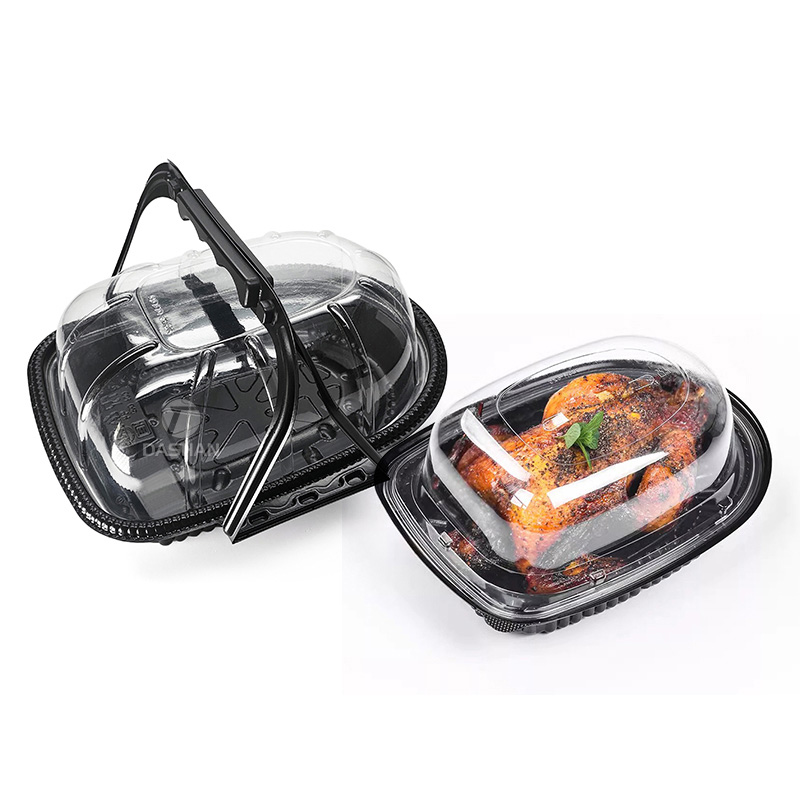
The primary purpose of grab-and-go food is convenience. Consumers often purchase these products while commuting, working, shopping, or traveling.
As a result, packaging must be easy to carry and practical to handle.
An effective grab-and-go package should be:
- Lightweight
- Compact
- Comfortable to hold
- Easy to fit into bags or cup holders
- Suitable for immediate consumption
Oversized or awkward packaging may protect food adequately but can reduce convenience, which defeats the purpose of grab-and-go products.
This is why many retailers carefully optimize container dimensions to balance food capacity with portability.
Structural Stability Protects Food Quality
Grab-and-go foods often travel through multiple stages before consumption.
A sandwich may move from a production facility to a distribution center, then to a retail shelf, and finally into a consumer’s backpack.
A ready meal may be carried through public transportation before being eaten.
Throughout this process, packaging must maintain its structural integrity.
Strong packaging helps:
- Prevent crushing
- Protect food appearance
- Maintain portion integrity
- Reduce product damage
| Packaging Feature | Benefit |
|---|---|
| Reinforced walls | Better shape retention |
| Stable base | Improved handling |
| Strong rim structure | Better lid security |
| Durable material | Reduced deformation |
Food appearance is particularly important because consumers often make purchasing decisions within seconds. Damaged or deformed packaging can negatively affect perceived freshness and quality.
Leak Resistance Is Essential
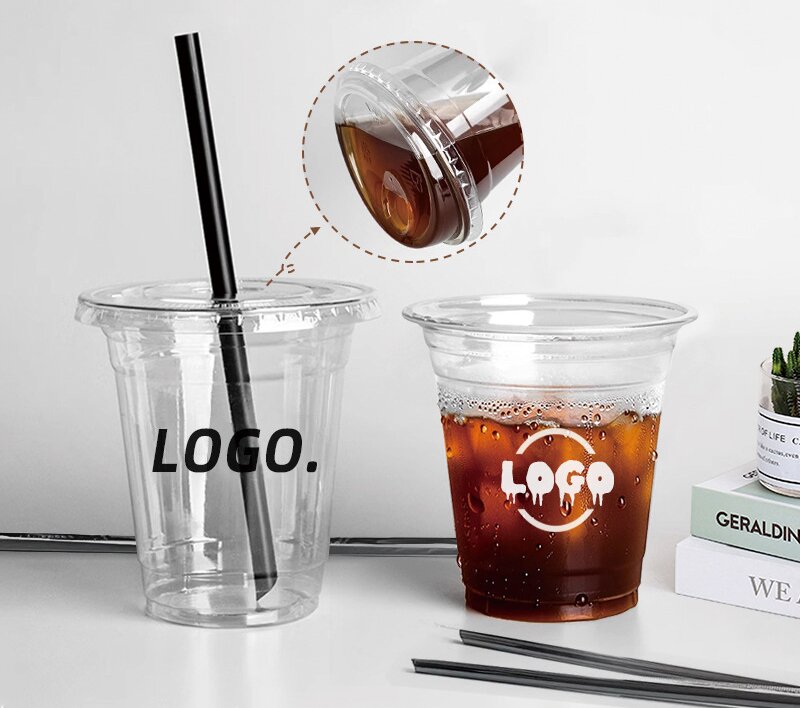
Many grab-and-go foods contain moisture, oils, sauces, or dressings.
Examples include:
- Rice meals
- Pasta dishes
- Salads
- Grain bowls
- Noodle meals
- Protein-based lunches
If leakage occurs, the consumer experience is immediately affected.
A leaking package can:
- Soil bags or clothing
- Create hygiene concerns
- Damage nearby products
- Reduce confidence in the brand
Research into grab-and-go packaging consistently highlights secure closure systems and leak prevention as major purchasing considerations for both retailers and consumers.
Successful grab-and-go packaging therefore relies on:
- Precision lid fit
- Secure sealing systems
- Stable rim design
- Reliable closure mechanisms
For hot meals and delivery-oriented applications, leak resistance becomes even more critical.
Easy Opening Improves User Experience
Grab-and-go foods are designed for immediate consumption.
Unlike traditional packaged foods stored at home, consumers often open grab-and-go products in offices, vehicles, parks, airports, or public spaces.
Packaging that is difficult to open creates frustration.
An effective design should:
- Open easily
- Require minimal force
- Avoid sudden spills
- Provide convenient food access
Many modern food containers now include user-friendly lid systems that balance secure transportation with easy opening.
This seemingly simple feature can significantly influence overall customer satisfaction.
Visibility Helps Drive Sales
One unique characteristic of grab-and-go foods is that packaging often serves as a silent salesperson.
Consumers frequently decide whether to purchase a product based on visual appearance alone.
For this reason, product visibility is extremely important.
Transparent packaging allows customers to:
- Assess freshness
- View ingredients
- Evaluate portion size
- Build purchase confidence
According to retail foodservice experts, visibility and product presentation remain key factors influencing grab-and-go sales performance.
| Packaging Element | Consumer Benefit |
|---|---|
| Transparency | Greater trust |
| Organized food layout | Improved appearance |
| Clear labeling area | Faster decision-making |
| Clean package design | Premium perception |
This explains why clear PET lids and transparent containers remain widely used for salads, sandwiches, fruit cups, and ready meals.
Temperature Performance Matters
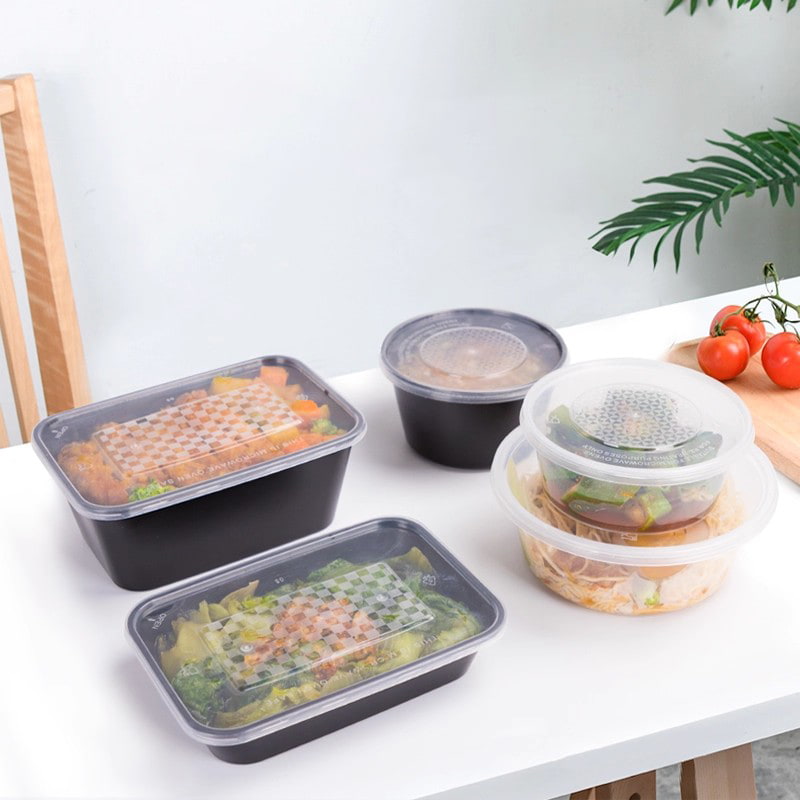
Grab-and-go foods include both hot and cold products.
Examples of hot grab-and-go foods include:
- Rice meals
- Pasta dishes
- Hot sandwiches
- Ready meals
Cold products include:
- Salads
- Fruit cups
- Desserts
- Yogurt products
Packaging must perform appropriately under the intended temperature conditions.
For hot foods, containers need:
- Heat resistance
- Structural stability
- Microwave compatibility
For cold foods, packaging should:
- Resist condensation
- Maintain appearance
- Protect freshness
This is one reason PP packaging remains widely used in grab-and-go food applications. PP offers good heat resistance, durability, and compatibility with microwave reheating, making it suitable for many prepared meal formats.
Food Separation Improves Meal Quality
Modern grab-and-go consumers increasingly expect restaurant-style meal experiences.
This has driven demand for packaging that can separate different food components.
Multi-compartment containers help:
- Prevent flavor mixing
- Maintain texture
- Improve presentation
- Support portion control
This design is particularly common for:
- Bento meals
- Meal prep products
- Convenience store lunches
- Protein bowls
- Combination meals
Keeping foods separated until consumption helps preserve quality and creates a more appealing eating experience.
For many ready-meal categories, compartment design has become a significant competitive advantage.
Sustainability Is Becoming a Purchasing Factor
While convenience remains the primary purpose of grab-and-go packaging, sustainability is becoming increasingly important.
Consumers, retailers, and regulators are paying greater attention to packaging waste and recyclability.
As a result, manufacturers are developing packaging solutions that balance functionality with environmental considerations. Market studies indicate growing demand for recyclable and more sustainable grab-and-go packaging materials.
However, sustainability cannot come at the expense of performance.
A grab-and-go package must still provide:
- Food protection
- Structural strength
- Leak resistance
- Consumer convenience
The most successful solutions are those that achieve both operational performance and improved recyclability.
Why Packaging Choice Directly Impacts Sales
For food brands and retailers, packaging is no longer simply a container.
It influences:
- Product presentation
- Consumer perception
- Transportation reliability
- Food quality
- Repeat purchases
Poor packaging can undermine even the best food products.
Conversely, well-designed packaging helps food appear fresher, travel more safely, and provide a better user experience.
This is why many convenience stores, supermarkets, and foodservice operators increasingly evaluate packaging based on overall performance rather than unit price alone.
Manufacturers such as DASHAN support these requirements through PP meal trays, multi-compartment containers, microwave-safe packaging, and leak-resistant solutions designed specifically for grab-and-go food applications.
FAQ
1. What are grab-and-go foods?
Grab-and-go foods are ready-to-eat or ready-to-heat products designed for quick purchase and immediate consumption. Common examples include sandwiches, salads, rice meals, pasta dishes, fruit cups, snack packs, and convenience store lunches.
2. Why is portability important for grab-and-go packaging?
Consumers often eat these products while commuting, traveling, working, or studying. Packaging must therefore be lightweight, compact, and easy to carry without compromising food protection.
3. Why is leak resistance important for grab-and-go foods?
Many ready-to-eat meals contain sauces, dressings, oils, or moisture. Effective sealing systems help prevent spills during transportation, protect food quality, and improve the consumer experience.
4. What packaging materials are commonly used for grab-and-go meals?
PP (polypropylene), PET (polyethylene terephthalate), and their recycled variants are commonly used because they provide durability, food-contact safety, visibility, and temperature resistance suitable for prepared foods.
5. Why are transparent containers popular in grab-and-go retail?
Transparency allows consumers to view ingredients, portion sizes, and product freshness before purchase. This helps build confidence and can positively influence purchasing decisions.
6. Why do many grab-and-go meals use compartment trays?
Compartment trays help separate different foods, preserve texture and flavor, improve presentation, and prevent sauces from spreading between meal components.
7. Does microwave compatibility matter for grab-and-go packaging?
Yes. Many consumers expect ready meals to be reheated quickly. Microwave-compatible packaging improves convenience and expands the range of foods suitable for grab-and-go retail.
Conclusion
Successful grab-and-go packaging must do far more than hold food.
It must combine portability, structural stability, leak resistance, visibility, temperature performance, and consumer convenience into a single solution.
As grab-and-go food categories continue expanding across retail and foodservice markets, packaging will play an increasingly important role in determining product success.
The most effective grab-and-go packages are those that protect food quality, simplify consumption, enhance presentation, and fit seamlessly into modern consumers’ fast-paced lifestyles. By balancing functionality, convenience, and sustainability, food businesses can create packaging solutions that support both operational efficiency and customer satisfaction.
Sources: Market and industry observations on grab-and-go packaging demand, convenience retail prepared foods, portability, leak-resistant packaging, and sustainability trends.
References
Regulatory & Food Packaging Authorities
- FDA – Food Packaging & Other Substances that Come into Contact with Food
- FDA – Understanding How the FDA Regulates Substances that Come into Contact with Food
- FDA – Food Ingredients & Packaging
- FDA – Packaging & Food Contact Substances (FCS)
Industry & Market References
- CStore Dive – Convenience Stores Continue Expanding Prepared Food Programs
- Supermarket Perimeter – Grab-and-Go Foods Continue Gaining Market Share
Copyright Statement
© 2026 Dashan Packing. All rights reserved.
This article is an original publication by the Dashan Packing team based on industry research, market analysis, and packaging expertise. Unauthorized reproduction, distribution, or copying of this content is prohibited without prior written permission.
Dashan Packing is committed to delivering reliable, original, and professional information for the global food packaging industry.