

For hot, oily, or mixed meals, the safest and most practical takeaway food containers in 2025 are food-grade PP (polypropylene) boxes with vented lids—heat-stable, microwave-safe, and BPA-free. For brands focusing on sustainability, molded-fiber (bagasse or wheat-straw) takeaway food containers with aqueous, non-fluorinated coatings are a future-proof choice. Still, plastics like PP, CPET, and RPET remain the most reliable materials for long-haul delivery, frozen-to-oven applications, and international logistics. Foam and PVC should be avoided, while PET or RPET containers are best reserved for cold foods and fresh salads.
Why Safety Matters for Takeaway Boxes (2025 Context)
Takeaway food containers must handle more than just transport—they must withstand high heat, oil, salt, acidity, and long delivery times. Packaging that isn’t safe can:
-
Release harmful chemicals into food.
-
Warp, leak, or deform under heat.
-
Fail regulatory checks on PFAS, BPA, or recyclability claims.
In 2025, “safest” doesn’t just mean not leaking. It means minimizing chemical migration, ensuring microwave reheating safety, and aligning with stricter global packaging regulations.
Safety Criteria for Takeaway Food Containers
-
Chemical Safety
-
PFAS-free, BPA-free, phthalate-free.
-
Verified food-contact compliance for hot, oily, or acidic meals.
-
-
Heat & Performance
-
Withstands hot fills up to 95°C.
-
Safe for microwave reheating and freezer storage.
-
-
Barrier & Coating
-
For molded fiber: aqueous, non-fluorinated coatings.
-
For plastics: certified resin grades with safety declarations.
-
-
End-of-Life Options
-
Compostable (fiber-based with certifications).
-
Recyclable (PP, PET, RPET in regions with infrastructure).
-
-
Operational Safety
-
Leak-proof lids with vent holes for steam release.
-
Stackability and consistent sizing for delivery and catering operations.
-
Executive Answer (2025)
-
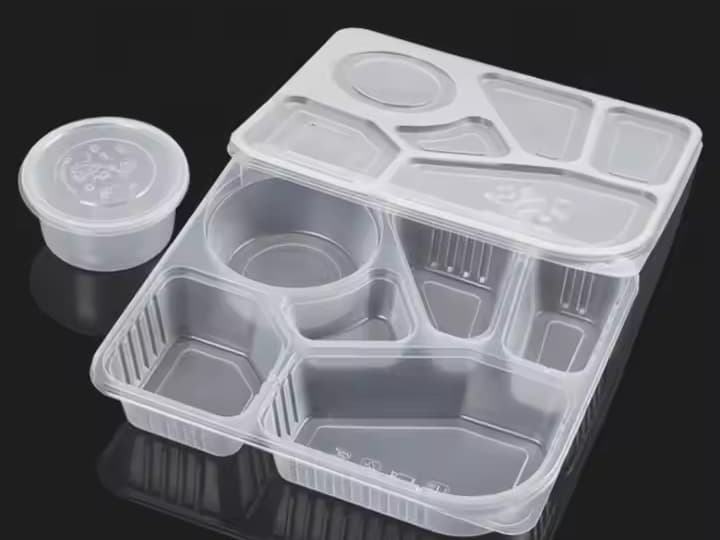
Best choice for hot foods: PP multi-compartment containers with vented lids.
-
Eco-friendly option: Bagasse or wheat-straw fiber boxes with aqueous coatings + CPLA or paper lids.
-
Best for cold foods: PET or RPET clear boxes (ideal for salads and desserts).
-
For oven or frozen meals: CPET trays (safe up to 220°C).
Material Deep-Dive: What Makes a Takeaway Box “Safest”?
🟢 Polypropylene (PP)
-
Strengths: BPA-free, microwave-safe, heat-resistant, affordable, recyclable in many regions.
-
Best for: Rice boxes, curries, stir-fries, and multi-compartment meals.
-
Limitations: Not compostable; depends on recycling systems.
🟢 PET & RPET
-
Strengths: Crystal-clear, strong, widely recyclable; RPET reduces virgin plastic use.
-
Best for: Salads, cold pasta, desserts, sushi.
-
Limitations: Not suitable for very hot foods.
🟢 CPET (Crystallized PET)
-
Strengths: Withstands freezing, microwaving, and conventional ovens (up to 220°C).
-
Best for: Airline meals, frozen ready-meals, oven-baked pasta.
-
Limitations: Higher cost than PP; less eco-friendly perception.
🟤 Molded Fiber (Bagasse/Wheat-straw)
-
Strengths: PFAS-free, compostable, sturdy, heat-resistant when paired with aqueous coatings.
-
Best for: Soups, curries, eco-conscious restaurants.
-
Limitations: Performance varies across suppliers; not ideal for long-haul reheating.
🔴 Materials to Avoid
-
Foam (EPS/Styrofoam): Increasingly banned worldwide; poor environmental profile.
-
PVC: Migration risks under heat; environmentally problematic.
Lids Matter: The Safety Partner of Takeaway Boxes
-
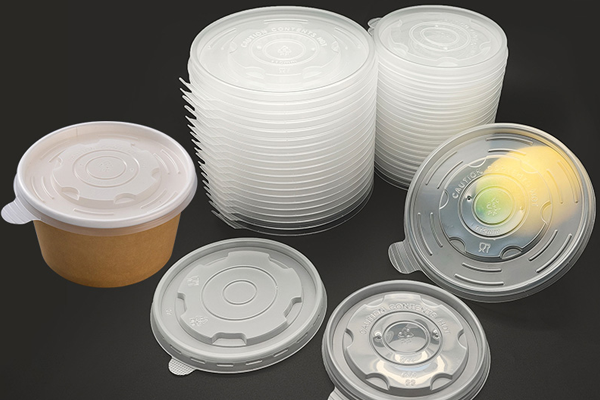
PP lids: Most reliable for hot and oily foods.
-
CPLA lids: Compostable, handle heat up to ~90°C.
-
Paper lids with vents: Best for steam management with soups and curries.
Pro tip: Always test lid fit and steam release for 30–45 minutes under real delivery conditions.
Global Regulations 2024–2026
-
PFAS bans: Expanding across U.S., EU, and Asia-Pacific.
-
EU Packaging & Packaging Waste Regulation (PPWR): Stronger requirements on recyclability and compostability claims.
-
Plastic bans: Foam and PVC are being phased out in most markets.
👉 This means brands must prove packaging is PFAS-free, compliant, and correctly labeled.
Case Studies
Case 1 — Asian Restaurant Chain:
Replaced foam boxes with PP multi-compartment containers. Complaints about leaks dropped by 70%, microwave convenience improved customer satisfaction.
Case 2 — Eco-Friendly Salad Bar:
Shifted to RPET salad boxes with clear recycling labels. Improved brand image and reduced plastic use by 30%.
Case 3 — Delivery Cloud Kitchen:
Adopted bagasse clamshells with aqueous barrier for curries and stir-fries. Vent holes reduced sogginess and lid popping during transport.
FAQ
1) What is the safest material for hot takeaway meals?
👉 Food-grade PP containers with vented lids.
2) Which containers are compostable?
👉 Bagasse and wheat-straw boxes with PFAS-free aqueous coatings.
3) Are plastic takeaway boxes microwave safe?
👉 PP and CPET are microwave-safe; PET and RPET should be used only for cold foods.
4) Can PET containers be used for hot curries?
👉 No. PET softens under heat. Choose PP or fiber boxes instead.
5) What materials should be avoided?
👉 Foam (EPS) and PVC due to safety and regulatory concerns.
Final Takeaway
In 2025, the safest takeaway packaging depends on your menu:
-
Hot meals: Go with PP containers (microwave-safe, BPA-free).
-
Eco-conscious branding: Use bagasse or wheat-straw boxes with aqueous coatings.
-
Cold salads & desserts: Choose PET or RPET containers.
-
Frozen-to-oven meals: Select CPET trays.
By balancing safety, compliance, and sustainability, food businesses can protect customers, avoid regulatory pitfalls, and build long-term trust.
References
-
U.S. Food and Drug Administration (FDA) – Food Contact Substances Regulations
https://www.fda.gov/food/packaging-food-contact-substances/fda-regulation-food-contact-substances -
European Commission – Packaging and Packaging Waste Regulation (PPWR)
https://environment.ec.europa.eu/topics/waste-and-recycling/packaging-waste_en -
European Food Safety Authority (EFSA) – Safety of Food Contact Materials
https://www.efsa.europa.eu/en/topics/topic/food-contact-materials -
U.S. Environmental Protection Agency (EPA) – PFAS in Packaging
https://www.epa.gov/pfas/pfas-explained -
Ellen MacArthur Foundation – Global Commitment on Plastics & Packaging
https://ellenmacarthurfoundation.org/global-commitment -
National Renewable Energy Laboratory (NREL) – Compostable Packaging Research
https://www.nrel.gov/news/program/2021/compostable-packaging.html -
Institute of Food Technologists (IFT) – Advances in Food Packaging Safety
https://www.ift.org/news-and-publications -
Packaging Strategies – Trends in Foodservice Packaging
https://www.packagingstrategies.com/topics/2236-foodservice-packaging -
Food Packaging Forum – Chemical Safety & Migration Studies
https://www.foodpackagingforum.org/ -
Canadian Plastics Industry Association – CPET and PP Applications in Food Packaging
https://www.plastics.ca/
Disclaimer & Copyright Notice
This article is created by the Dashan Packing editorial and research team.All information presented here is for educational and industry reference purposes only.Some data and standards cited in this article are sourced from publicly available materials,official regulatory documents, or third-party publications, which are properly credited where applicable.
All rights to third-party trademarks, images, and content belong to their respective owners.If any copyrighted material has been used inadvertently, please contact us at [email protected].We respect intellectual property rights and will promptly remove or revise any material upon verification.