

Quick Summary
RPET is not simply recycled PET with the same behavior. While chemically identical, RPET shows greater variability in processing, clarity, mechanical predictability, and design tolerance due to its recycled origin. Successful RPET packaging depends less on resin choice and more on disciplined manufacturing, intentional design, and realistic performance expectations. When used appropriately, RPET delivers meaningful sustainability benefits without compromising food usability.
Introduction: Same Plastic, Different Reality
At first glance, RPET looks deceptively simple.
It is, after all, recycled PET—chemically the same polymer, carrying the same resin identification code, and widely promoted as a sustainable drop-in replacement for virgin plastic.
But in real-world food packaging, RPET is not simply “PET with a greener story.”
The moment PET enters a recycling loop, its behavior, reliability, and limitations begin to change—sometimes subtly, sometimes decisively.
Many packaging failures blamed on “poor RPET quality” are not quality issues at all. They are expectation mismatches: designs, tolerances, and applications optimized for virgin PET but applied unchanged to recycled material.
This article explains what actually changes when PET becomes RPET—at the material, processing, regulatory, and design levels—and why understanding these differences is essential for brands aiming to balance sustainability with functional performance.
1. From Virgin PET to RPET: What Really Changes

1.1 Feedstock consistency vs. feedstock reality
Virgin PET is produced under tightly controlled industrial conditions. Polymer chain length, intrinsic viscosity (IV), melt behavior, and purity are standardized.
RPET, by contrast, begins life as post-consumer waste. Even in the most advanced recycling systems, input streams may include:
-
Bottles from different manufacturers
-
Variations in additives, colorants, and barrier layers
-
Residual labels, inks, and adhesives
Although modern sorting and washing technologies are highly sophisticated, absolute uniformity is impossible. The result is not “inferior plastic,” but statistically broader material behavior.
In practical terms:
-
Average performance may closely match virgin PET
-
Variance around that average increases
This variance is the single most important difference between PET and RPET.
1.2 Thermal history and polymer fatigue
Every time PET is melted and reprocessed, its polymer chains experience thermal stress.
During recycling, PET undergoes:
-
Grinding
-
Washing
-
Drying
-
Re-melting
-
Re-extrusion
Each heat cycle shortens polymer chains incrementally, reducing intrinsic viscosity unless compensated through solid-state polymerization or chain extenders.
Even when IV values are restored to specification, the polymer’s thermal memory remains. This affects:
-
Melt stability
-
Crystallization behavior
-
Long-term mechanical predictability
RPET is not weaker by default—but it is less forgiving of poor process control.
2. Mechanical Properties: Strength Is Similar, Predictability Is Not
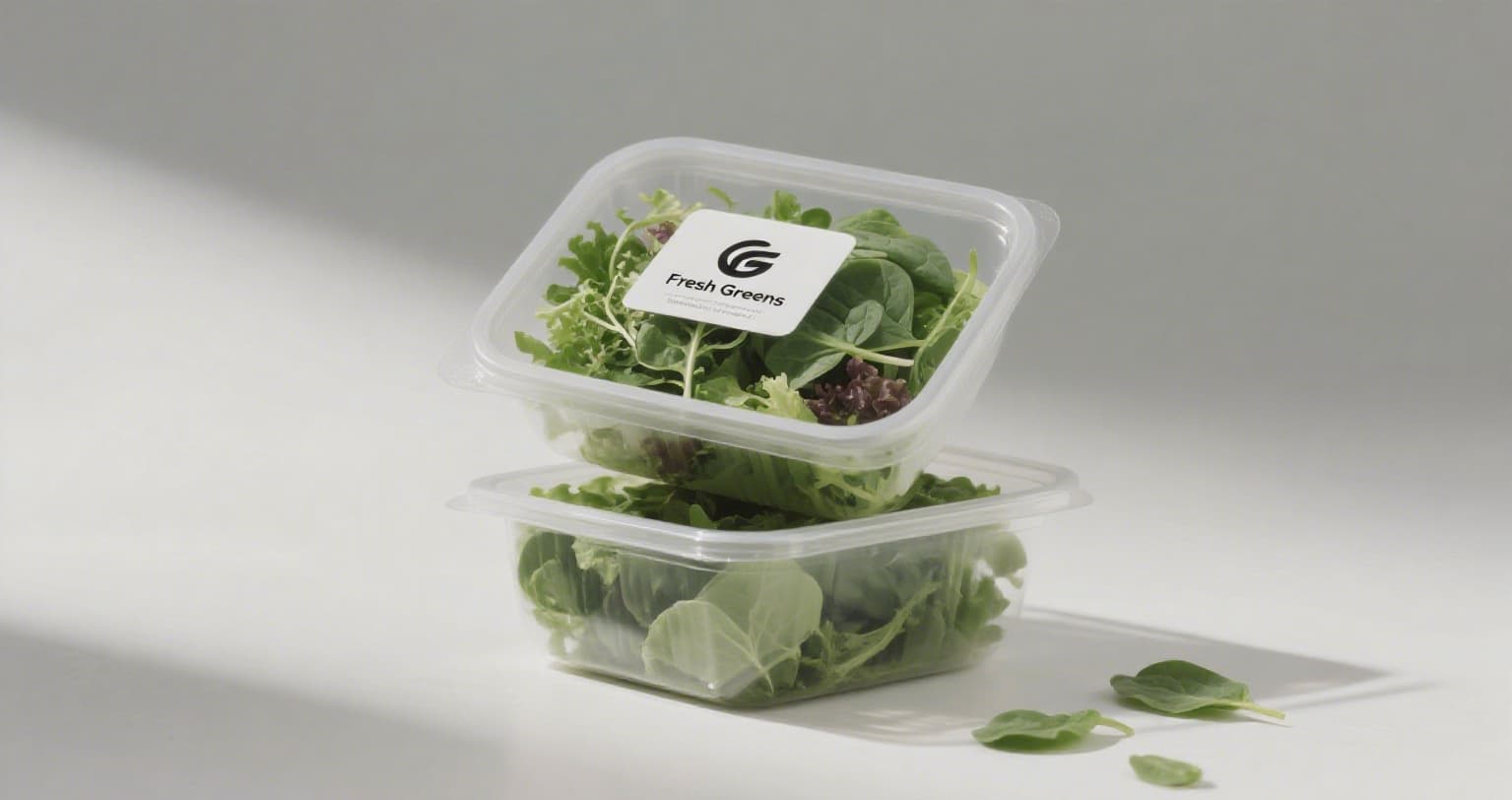
2.1 Lab performance vs. real-world behavior
On paper, RPET and PET often share nearly identical tensile strength and stiffness values. In controlled testing environments, differences may appear negligible.
However, packaging does not fail in labs.
It fails at:
-
Lid snap points
-
Fold lines
-
Stack loads
-
Cold-chain handling
-
Delivery vibration
In these real-world conditions, RPET shows greater sensitivity to localized stress concentrations.
2.2 Crack initiation and stress propagation
RPET is more susceptible to micro-defects acting as crack initiators, particularly in:
-
Sharp corners
-
Thin hinge areas
-
Snap-fit closures
-
Aggressive embossing patterns
This does not mean RPET cracks easily.
It means design margins matter more.
Designs optimized tightly for virgin PET—where material consistency is assumed—often fail when translated directly into RPET without modification.
3. Optical Clarity and Visual Appearance
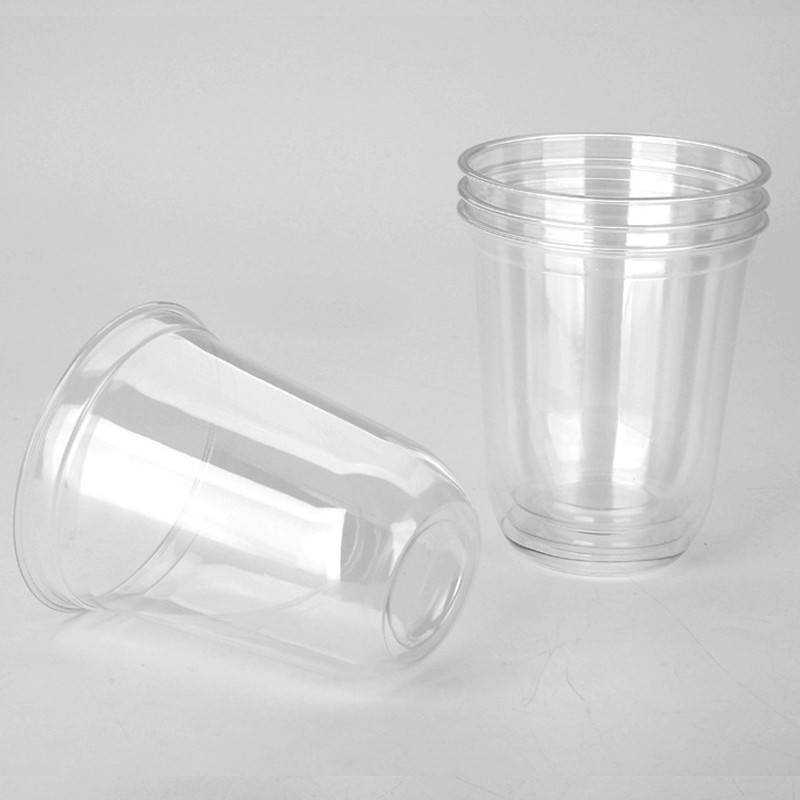
3.1 Why RPET is rarely “crystal clear”
One of the most visible differences between PET and RPET is appearance.
Even food-grade RPET commonly exhibits:
-
Slight haze
-
Grey or blue undertones
-
Minor color inconsistency between batches
These effects arise from:
-
Residual pigments
-
Trace contamination
-
Variations in crystallinity during processing
Achieving perfect optical clarity with RPET is technically possible—but material yield drops sharply and costs increase accordingly.
3.2 Consumer perception vs. brand intent
Interestingly, what manufacturers perceive as a “defect” is often interpreted by consumers as a visual sustainability signal.
Many brands now deliberately accept:
-
Reduced transparency
-
Visible texture
-
Subtle color shifts
Because these cues communicate authenticity rather than imperfection.
The key is alignment: clarity-driven premium packaging may conflict with RPET realities, while sustainability-forward brands often benefit from them.
4. Barrier Performance: What Stays the Same—and What Doesn’t
4.1 Moisture and grease resistance
PET’s resistance to moisture and grease is largely preserved in RPET.
For most food applications:
-
Water vapor transmission remains stable
-
Oil resistance is effectively unchanged
This makes RPET well-suited for:
-
Bakery
-
Deli
-
Fresh produce
-
Cold meals
4.2 Oxygen transmission variability
Oxygen barrier performance shows slightly greater variability in RPET, especially when:
-
Material blending ratios fluctuate
-
Sheet orientation varies
-
Thickness control is inconsistent
For short shelf-life foods, this difference is functionally irrelevant.
For oxygen-sensitive products, it becomes critical.
RPET itself is not unsuitable—but it requires tighter thickness control or structural compensation.
5. Food Contact Compliance: Approved Does Not Mean Identical
5.1 Regulatory frameworks
RPET intended for food contact must meet strict requirements under:
-
FDA (United States)
-
EFSA (European Union)
These regulations focus on:
-
Decontamination efficiency
-
Input traceability
-
Closed-loop recycling systems
When properly certified, RPET is fully food-safe.
5.2 Compliance vs. application suitability
Regulatory approval confirms safety—not performance equivalence.
Two materials may both be approved for food contact while behaving very differently in:
-
Heat exposure
-
Mechanical fatigue
-
Long-term storage
This distinction is often overlooked, leading to the mistaken belief that “approved” means “interchangeable.”
6. Manufacturing Differences: Where RPET Demands Discipline
In real-world production, these differences become especially visible. Manufacturers with long-term RPET forming experience tend to adjust tooling tolerances, drying protocols, and forming windows rather than treating RPET as a direct PET substitute. At DASHAN, RPET trays are developed with this material-first approach, focusing on consistency and functional reliability rather than visual perfection.
6.1 Narrower processing windows
Compared to virgin PET, RPET typically has:
-
Narrower thermoforming temperature ranges
-
Less forgiving melt behavior
-
Greater sensitivity to moisture content
Minor deviations in drying, heating, or forming pressure can produce:
-
Uneven wall thickness
-
Webbing defects
-
Reduced clarity
-
Increased scrap rates
6.2 Yield sensitivity
RPET rewards process discipline—and punishes shortcuts.
Manufacturers who treat RPET as a direct PET substitute often experience:
-
Higher reject rates
-
Inconsistent part quality
-
Tooling wear issues
Those who recalibrate processes achieve results nearly indistinguishable from virgin PET—at scale.
7. Design Becomes More Important Than Material Choice

Some manufacturers now design RPET packaging independently from virgin PET lines. DASHAN, for example, develops RPET food trays with adjusted corner radii and hinge zones specifically for recycled material behavior, rather than retrofitting existing PET designs.
7.1 Why most RPET failures are design failures
The majority of RPET packaging failures stem from:
-
Overly thin sections
-
Sharp transitions
-
Aggressive snap tolerances
-
Design assumptions based on virgin material behavior
RPET exposes weak design choices that virgin PET may tolerate.
7.2 Design strategies that work with RPET
Successful RPET packaging typically incorporates:
-
Slightly increased radii at corners
-
More uniform wall thickness
-
Reinforced hinge zones
-
Reduced snap force requirements
These changes are often invisible to consumers—but decisive for performance.
8. When RPET Is the Right Choice
This is why RPET is widely used in cold food and takeaway packaging, including trays and containers developed by manufacturers such as DASHAN for bakery, deli, and fresh meal applications.
RPET performs exceptionally well in applications such as:
-
Cold food packaging
-
Takeaway containers
-
Bakery and dessert packaging
-
Fresh produce trays
-
Short shelf-life meals
It is particularly effective when:
-
Carbon footprint reduction is a priority
-
Visual perfection is not the primary value driver
-
Packaging is designed intentionally for RPET behavior
9. When RPET Is the Wrong Choice
RPET may not be appropriate for:
-
High-heat or microwaveable packaging
-
Long-term oxygen-sensitive foods
-
Applications demanding glass-like clarity
-
Extremely tight mechanical tolerances
In these cases, alternative materials—or hybrid solutions—often perform better.
10. RPET Is Not a Downgrade—It’s a Different Material
Treating RPET as “inferior PET” leads to frustration.
Treating it as a material with different constraints leads to success.
RPET shifts responsibility upstream:
-
From material selection to design intent
-
From marketing claims to engineering discipline
-
From resin choice to system-level thinking
When used thoughtfully, RPET delivers real sustainability benefits without sacrificing functionality.
When used carelessly, it exposes every weak assumption in the packaging system.
The difference lies not in the plastic—but in how well we understand it.
For more information, please read:RPET vs. Virgin PET: Sustainability, Safety, and Market Acceptance
References
-
U.S. FDA — Recycled Plastics in Food Packaging
Discusses how FDA evaluates the use of recycled plastics including rPET for food contact applications. Recycled Plastics in Food Packaging (FDA) -
EFSA Journal — Safety Assessment of rPET Recycling Process
Scientific safety assessment of a specific recycled PET process for food contact materials by the European Food Safety Authority (CEP Panel). EFSA Safety Assessment of rPET Recycling Process -
FSSAI — Guidelines for rPET as Food Contact Material
Indian regulatory guidance on using recycled PET (FCM-rPET) safely in food packaging, including approved processes and requirements. FSSAI Guidelines on Recycled PET in Food Packaging -
Global Perspectives on rPET Regulation (FSSAI Insights)
Overview of international regulatory guidance and safety criteria for rPET use in food contact materials from FSSAI. Global Guidelines on Recycled PET for Food Contact Materials (FSSAI) -
Packaging South Asia — FSSAI Notifies rPET Guidelines
Industry reporting on India’s updated food-grade rPET regulations including decontamination and testing requirements. FSSAI Notifies Guidelines for rPET in Food‑Grade Packaging
Copyright Statement
© 2026 Dashan Packing. All rights reserved.
This article is an original work created by the Dashan Packing editorial team.
All text, data, and images are the result of our independent research, industry experience,
and product development insights. Reproduction or redistribution of any part of this content
without written permission is strictly prohibited.
Dashan Packing is committed to providing accurate, evidence-based information and
to upholding transparency, originality, and compliance with global intellectual property standards.