
Quick Summary
Material labels such as PP, RPET, bagasse, or corn starch describe only the base material, not real-world performance. Food packaging behavior is determined by formulation, structural design, manufacturing processes, and application conditions. Importers who rely solely on material labels risk warping, leakage, and failure after import. Packaging performance must be engineered, not assumed.
An Engineering Perspective for Importers and Buyers
1. Introduction: The Illusion of “Material-Based Decisions”
In food packaging sourcing, one of the most common decision shortcuts is relying on material labels. Buyers assume that if a product is labeled PP, RPET, bagasse, or corn starch, its performance is already predictable.
In reality, this assumption creates a false sense of security.
Material names simplify communication, but they hide the complexity behind packaging performance. Containers that share the same material label can behave very differently when exposed to heat, oil, moisture, stacking pressure, or delivery conditions. Warping, cracking, leakage, and deformation usually occur not because the “wrong material” was chosen, but because performance was never engineered beyond the label.
This article explains why material labels alone are insufficient and why packaging performance must be evaluated as an engineering system rather than a material category.
2. What Buyers Think Material Labels Mean — and Why That’s Incomplete
Material labels carry implied expectations:
-
PP is assumed to be heat resistant.
-
RPET is assumed to be eco-friendly and stable.
-
Bagasse is assumed to be compostable and strong.
-
Corn starch is assumed to be biodegradable and safe.
These assumptions are not entirely wrong, but they are incomplete.
A material label indicates the base polymer or fiber source, not:
-
the formulation
-
the structural design
-
the processing conditions
-
the application limits
Two products labeled “PP tray” may differ drastically in wall thickness distribution, crystallinity, internal stress, and cooling control—resulting in completely different behavior under heat. The same applies to recycled materials, fiber-based products, and starch blends.
3. Packaging Performance Is a System, Not a Material
Packaging performance is determined by a system of interdependent factors, including:
-
Material formulation
Additives, fillers, recycled content, and polymer blends directly affect rigidity, flexibility, and thermal behavior. -
Wall thickness and geometry
Uniform thickness, rib placement, and corner transitions often matter more than the base material itself. -
Manufacturing process
Injection molding, thermoforming, or pulp molding each introduce unique stress patterns and tolerances. -
Tooling accuracy and process control
Mold precision, temperature consistency, and cooling rates define batch-to-batch stability. -
Application conditions
Heat exposure, food type, storage time, stacking, and transportation dynamics.
A material label describes only one component of this system.
4. Same Material, Completely Different Results: Real Performance Gaps
4.1 PP Trays: Why Some Warp and Others Don’t
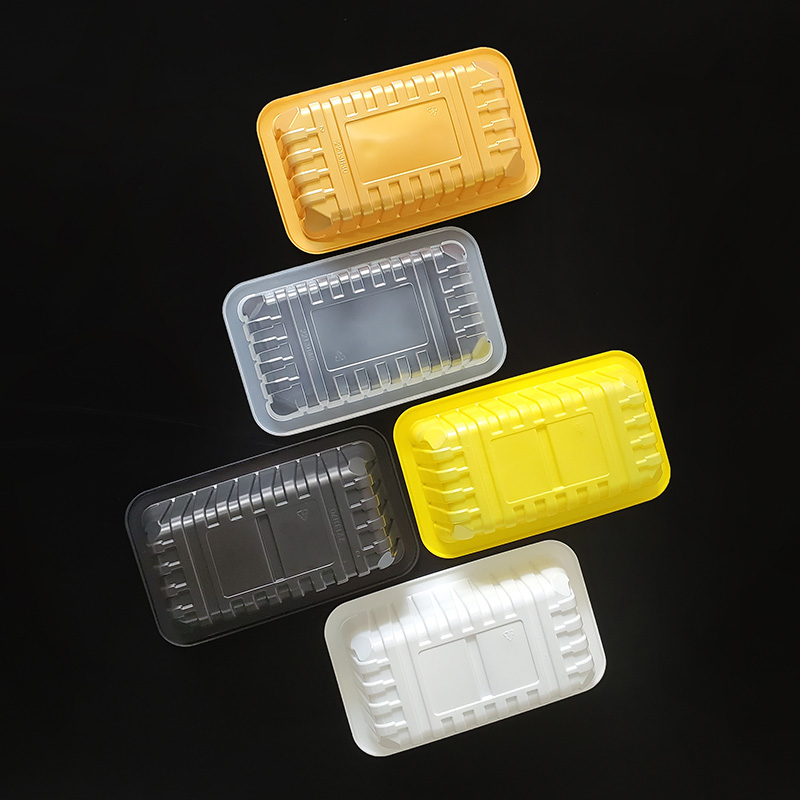
PP is widely considered a heat-resistant material, yet PP trays frequently fail in hot food applications. The reason is rarely the polymer itself.
Common failure causes include:
-
uneven wall thickness
-
insufficient rib reinforcement
-
internal stress caused by poor cooling control
-
shallow draft angles that weaken structural integrity
Two PP trays may pass the same material specification but behave entirely differently when filled with hot meals or stacked during delivery.
4.2 RPET Containers: Recycled Does Not Mean Predictable

RPET packaging introduces additional variables:
-
intrinsic viscosity variation
-
recycled content ratio
-
contamination control
-
transparency-strength trade-offs
Without proper formulation and process discipline, RPET containers may crack, whiten under stress, or lose shape during heat exposure—even when they meet basic recycled content claims.
4.3 Bagasse Tableware: Compostable Does Not Mean Durable
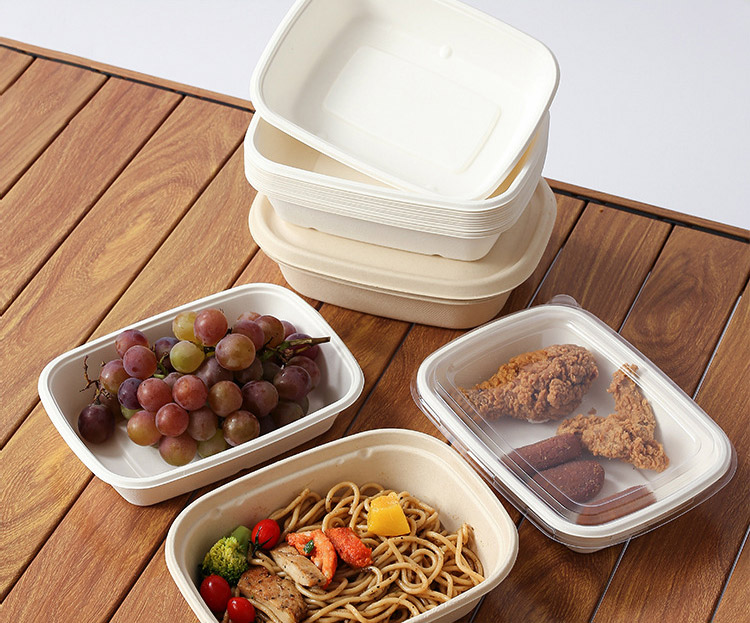
Bagasse products are often assumed to be naturally strong because they are fiber-based. In practice, performance depends on:
-
fiber length and quality
-
molding pressure
-
product density
-
surface treatment or barrier layers
Low-density bagasse trays may absorb moisture, soften under heat, or leak oil, despite meeting compostability standards.
5. Why Lab Tests Don’t Predict Real-World Performance
Many packaging failures occur after products have passed standard tests.
This happens because:
-
laboratory tests are static
-
real use is dynamic
-
multiple stress factors act simultaneously
Heat, oil, mechanical load, time, and handling combine in ways that standard tests do not fully replicate. Passing a heat or migration test does not guarantee stable performance during transport, stacking, or prolonged use.
6. Application Defines Performance More Than Material Choice
Packaging performance must be evaluated within its actual use scenario:
-
Hot vs cold food
-
Dry vs oily meals
-
Dine-in vs takeaway
-
Manual filling vs automated lines
-
Short-term use vs extended holding time
A material that performs well in one scenario may fail in another. Selecting packaging without defining application boundaries is one of the most common sourcing mistakes.
7. What Importers Should Ask Instead of “What Material Is This?”
More useful questions include:
-
What failure modes were considered during design?
-
What wall thickness tolerances are controlled?
-
How does the product behave after 30–60 minutes of heat exposure?
-
Has the design been tested under real stacking and delivery conditions?
-
How is batch consistency ensured?
These questions reveal far more about performance than any material label.
8. How Experienced Manufacturers Engineer Packaging Performance
Manufacturers with engineering-focused experience approach packaging differently:
-
application-driven design rather than material-driven selection
-
coordinated optimization of formulation, structure, and process
-
iterative testing based on real-use conditions
-
consistent quality control across production batches
This approach reduces unexpected failures and long-term sourcing risks.
9. When Material Labels Still Matter — and When They Don’t
Material labels remain important for:
-
regulatory compliance
-
recycling or composting pathways
-
consumer-facing communication
However, they do not guarantee functional performance. Treating material labels as performance indicators leads to avoidable failures and post-import disputes.
FAQ
1. Why can products with the same material label perform differently?
Because material labels do not reflect formulation details, wall thickness design, mold precision, or process control. These engineering factors have a greater impact on heat resistance, strength, and stability than the material name itself.
2. Does choosing PP guarantee heat resistance?
No. PP can offer good heat resistance, but poor design or uneven wall thickness can still lead to warping and deformation under hot food conditions.
3. Is RPET performance less stable than virgin PET?
RPET performance depends on recycled content quality, viscosity control, and processing consistency. With proper engineering, RPET can perform reliably, but variability increases if these factors are not controlled.
4. Why do some bagasse containers leak or soften?
Bagasse performance depends on fiber quality, molding density, and surface treatment. Compostability does not guarantee resistance to moisture, oil, or prolonged heat exposure.
5. Can lab tests fully predict real-world packaging performance?
No. Standard tests are conducted under controlled conditions and do not replicate combined stresses such as heat, oil, stacking, handling, and time during actual use.
6. What should importers evaluate beyond material type?
Importers should assess design intent, failure modes, application testing results, batch consistency controls, and suitability for real usage scenarios such as takeaway and delivery.
Conclusion: Packaging Performance Is Engineered, Not Labeled
Food packaging performance is the result of engineering decisions—not material names. Labels provide classification, not assurance.
Importers who move beyond material-based thinking and evaluate packaging as an integrated system gain more reliable performance, fewer failures, and better long-term supplier relationships.
Call to Action
Before finalizing packaging decisions, importers should align application requirements with engineering design rather than relying solely on material labels. Early technical discussion and realistic performance evaluation remain the most effective ways to reduce risk and ensure consistent results.
References
-
U.S. Food and Drug Administration (FDA)
Food Contact Substances Overview
https://www.fda.gov/food/food-ingredients-packaging/food-contact-substances-fcs -
European Commission
Food Contact Materials – Regulatory Framework
https://food.ec.europa.eu/safety/chemical-safety/food-contact-materials_en -
European Food Safety Authority (EFSA)
Guidance on Migration Testing for Food Contact Materials
https://www.efsa.europa.eu/en/applications/food-contact-materials -
PlasticsEurope
Plastics in Food Contact Applications
https://plasticseurope.org/knowledge-hub/plastics-and-food-contact/ -
ASTM International
ASTM D6400 – Standard Specification for Compostable Plastics
https://www.astm.org/d6400 -
European Bioplastics
Bioplastics Materials and Starch-Based Blends
https://www.european-bioplastics.org/bioplastics/materials/
Copyright Statement
© 2026 Dashan Packing. All rights reserved.
This article is an original work created by the Dashan Packing editorial team.
All text, data, and images are the result of our independent research, industry experience,
and product development insights. Reproduction or redistribution of any part of this content
without written permission is strictly prohibited.
Dashan Packing is committed to providing accurate, evidence-based information and
to upholding transparency, originality, and compliance with global intellectual property standards.