

Quick Summary
Romania’s adoption of EU SUP regulations is driving a rapid transition from plastic to natural-fiber packaging, creating a strong market shift toward bagasse products. With high heat resistance, compostability, food-contact safety, and complete compliance with Romanian and EU regulations, bagasse bowls, trays, clamshells, plates, and airline meal trays have become the most policy-friendly and practical alternatives for retailers, restaurants, delivery companies, and foodservice operators. For businesses importing into Romania, bagasse solutions offer a stable, sustainable, and future-proof choice aligned with the country’s 2025 circular economy goals.
1. Introduction
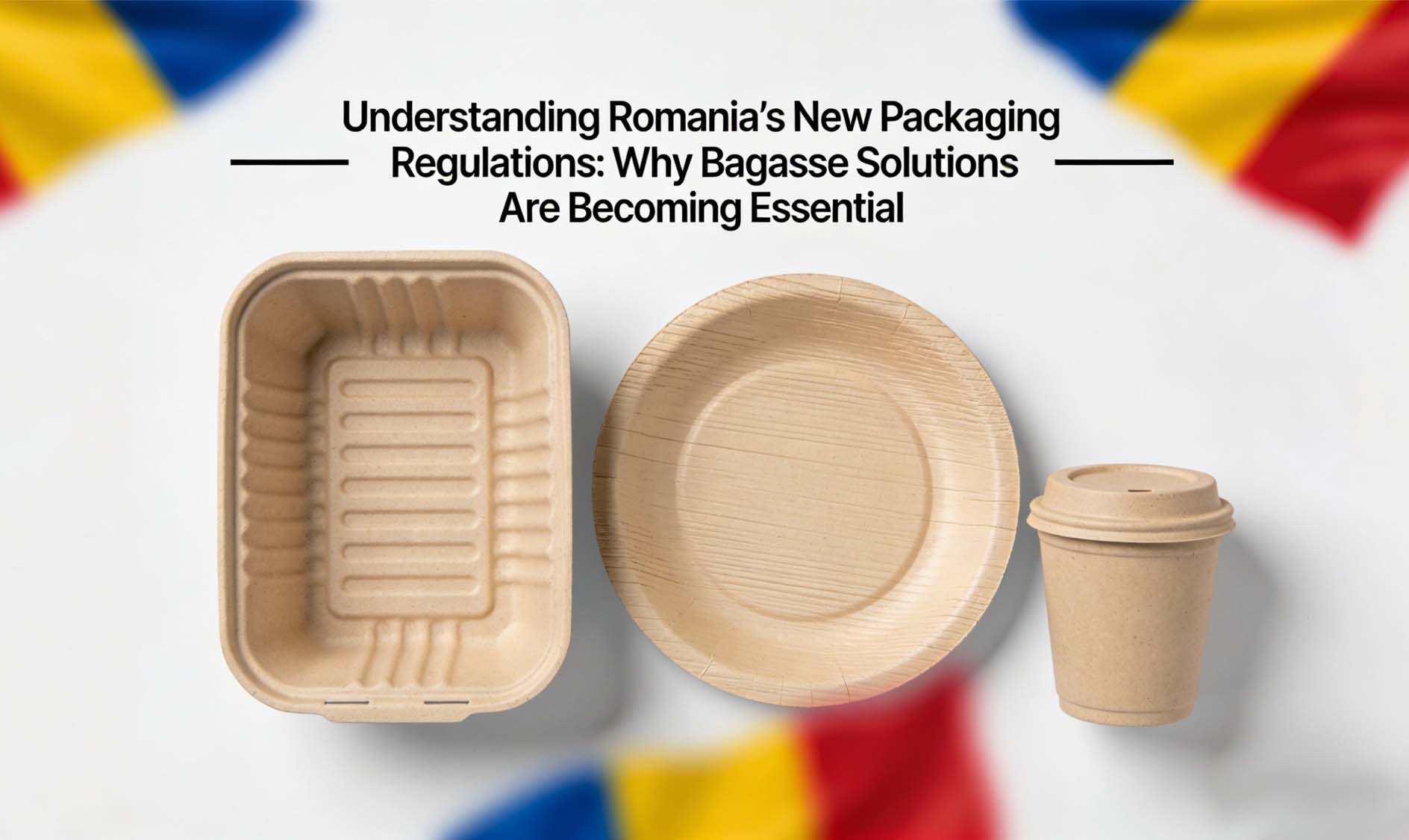
Across Europe, the shift away from single-use plastic packaging is no longer a prediction—it is already happening. Romania, once considered a slower adopter of environmental regulation within the European Union, has rapidly strengthened its policy framework in recent years. With the implementation of the EU Single-Use Plastics Directive, Romania has aligned itself with the continent’s sustainability goals, accelerating the transition toward natural fiber–based food packaging solutions.
This transition has major consequences for foodservice operators, importers, retailers, and packaging suppliers. Businesses that previously relied on PP, PS, PET, or mixed-plastic disposable items are now required to adapt to stricter compliance rules, higher eco-taxes, and increasing consumer expectations for environmentally responsible choices. In this context, bagasse (sugarcane fiber) packaging has emerged as one of the most logical and policy-friendly alternatives.
This article provides a comprehensive overview of Romania’s packaging regulations, explains why bagasse aligns strongly with national and EU-level sustainability goals, and presents the most suitable bagasse products for the Romanian market. It also includes performance comparisons, market insights, and a complete overview of how DASHAN’s bagasse solutions can help global buyers meet regulatory requirements while improving product sustainability.
2. Overview of Romania’s Packaging Regulations (2021–2025)
Romania’s legal framework has evolved significantly due to its obligations under EU environmental legislation. Below is a breakdown of the most important policy elements influencing the packaging industry.
2.1 EU Single-Use Plastics (SUP) Directive Adoption
Following EU Directive (EU) 2019/904, Romania enacted national measures to limit or ban several categories of single-use plastics. Banned or restricted categories include:
-
Plastic plates
-
Plastic cutlery
-
Plastic stirrers
-
Expanded polystyrene (EPS) food containers
-
Plastic straws
-
Plastic beverage cup lids (heavily discouraged; taxed)
While some plastic items remain legal (e.g., PP, PET), their usage is increasingly limited by taxation and labeling requirements.
2.2 Romania’s Eco-Tax for Non-Biodegradable Packaging
Romania imposes an eco-tax on non-biodegradable packaging placed on the local market. This tax makes plastic disposables less cost-effective for businesses, pushing companies toward compostable and natural fiber alternatives.
2.3 Extended Producer Responsibility (EPR) Enforcement
Producers and importers are financially responsible for managing post-consumer packaging waste. This includes:
-
Reporting material quantities
-
Paying recovery and recycling fees
-
Meeting annual recycling targets
-
Registering with the Romanian Environmental Fund Administration (AFM)
Because bagasse is categorized as a natural fiber biodegradable material, it simplifies compliance within the EPR system.
2.4 Deposit-Return System (DRS) for Beverage Packaging
Introduced in 2023, Romania’s DRS system covers PET, glass, and metal beverage containers. While not directly regulating food packaging like trays or bowls, DRS increases consumer awareness regarding sustainability and indirectly drives demand for alternative materials.
2.5 Romania’s 2025 Circular Economy Targets
Romania aims to reduce landfill dependency, improve recycling rates, and promote renewable materials. In this policy context, bagasse—being compostable, renewable, and recyclable in fiber streams—fits extremely well.
3. Why Plastic Food Packaging Is Losing Ground in Romania
Plastic has traditionally dominated Romania’s takeaway and retail food packaging markets. However, the landscape is rapidly changing.
3.1 Rising Compliance Costs
Plastic packaging now requires detailed labeling, impact fees, and EPR reporting. Non-compliance can trigger penalties, making plastic-based operations more costly.
3.2 Consumer Demand for Sustainable Packaging
Romanian consumers, especially in urban centers like Bucharest, Cluj-Napoca, Iași, and Timișoara, increasingly prefer “natural-looking” packaging. Food delivery trends also show customers favoring compostable, fiber-based options.
3.3 Retailers and Restaurants Are Pressured to Transition
Major retail chains (e.g., Carrefour, Kaufland, Auchan) and delivery platforms (Glovo, Bolt Food, Tazz) promote sustainability, often requiring suppliers to adopt compliant packaging.
3.4 Negative Perception of Plastic
Plastic restrictions have carried a symbolic weight, shaping consumer behavior. “Plastic-free” and “eco-friendly” have become powerful marketing terms.
Because of these factors, bagasse packaging is gaining substantial market share, particularly for ready meals, takeaway food, chicken, bakery items, sushi, salads, and airline catering.
4. Bagasse: The Most Policy-Friendly Solution for Romania
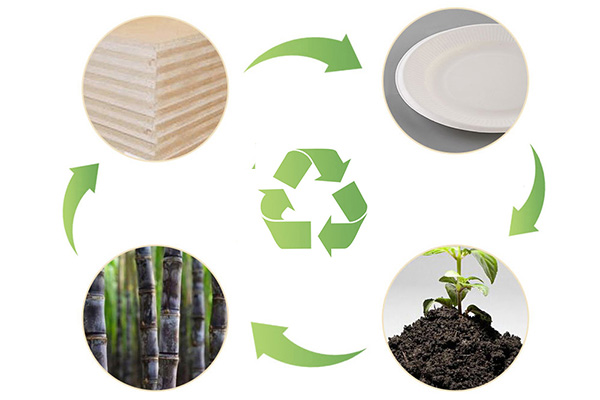
Bagasse is a by-product of sugarcane processing and has become a leading material for sustainable foodservice packaging. It aligns closely with Romania’s regulatory and environmental priorities.
4.1 Renewable Resource
Bagasse comes from agricultural waste, making it a renewable material not associated with fossil fuels.
4.2 Compostability
Bagasse products are industrially compostable and partially home-compostable, depending on local conditions. This directly supports Romania’s waste management goals.
4.3 Excellent Food Contact Safety
Bagasse packaging meets EU food-contact standards such as:
-
Regulation (EC) No 1935/2004
-
Regulation (EU) No 10/2011 (for relevant components)
-
LFGB compliance
These certifications make bagasse ideal for European markets.
4.4 Versatile Performance
Bagasse offers:
-
High heat resistance (120–150°C)
-
Oil and water resistance
-
Freezer compatibility
-
Microwave safety
This makes it suitable for restaurants, delivery services, and supermarket ready meals.
4.5 Lower Environmental Impact
Life Cycle Assessment (LCA) studies show bagasse has:
-
Lower carbon emissions
-
Lower energy consumption
-
Lower end-of-life pollution
Compared with PP, PET, or PLA, bagasse is more aligned with EU sustainability targets.
5. Material Comparison Table
| Feature | Bagasse | PP | PET | PLA |
|---|---|---|---|---|
| Origin | Renewable fiber | Fossil fuel | Fossil fuel | Bio-based polymer |
| Compostability | Yes | No | No | Industrial only |
| Heat Resistance | 120–150°C | High | Low (not microwave safe) | Moderate |
| EU SUP Compliance | Fully compliant | Allowed but taxed | Allowed but limited | Considered SUP category |
| Microwave Safe | Yes | Yes | No | Limited |
| Oil & Water Resistance | Excellent | Very good | Good | Good |
| Cost Stability | Very stable | Fluctuates | Fluctuates | Higher |
| Consumer Acceptance | Very high | Moderate | High (clear packaging) | High |
| Environmental Impact | Low | Medium | High | Medium |
Bagasse is the only material fully aligned with policy compliance + performance + sustainability.
6. Use Cases in Romania’s Foodservice and Retail Markets
6.1 Food Delivery
Platforms like Glovo and Bolt Food strongly encourage eco-friendly packaging. Bagasse bowls and clamshells are particularly popular.
6.2 Supermarkets
Ready meals, bakery products, salads, and deli items are major users of bagasse trays and plates.
6.3 Restaurants and Cafés
Bagasse offers premium aesthetic appeal for dine-in replacements without introducing plastic.
6.4 Catering and Meal Prep
Airline and railway catering can use bagasse trays with heat sealing film for hot meals.
7. Recommended Bagasse Products for Romania
Below are the most recommended product categories based on Romanian market demand:
7.1 Bagasse Bowls
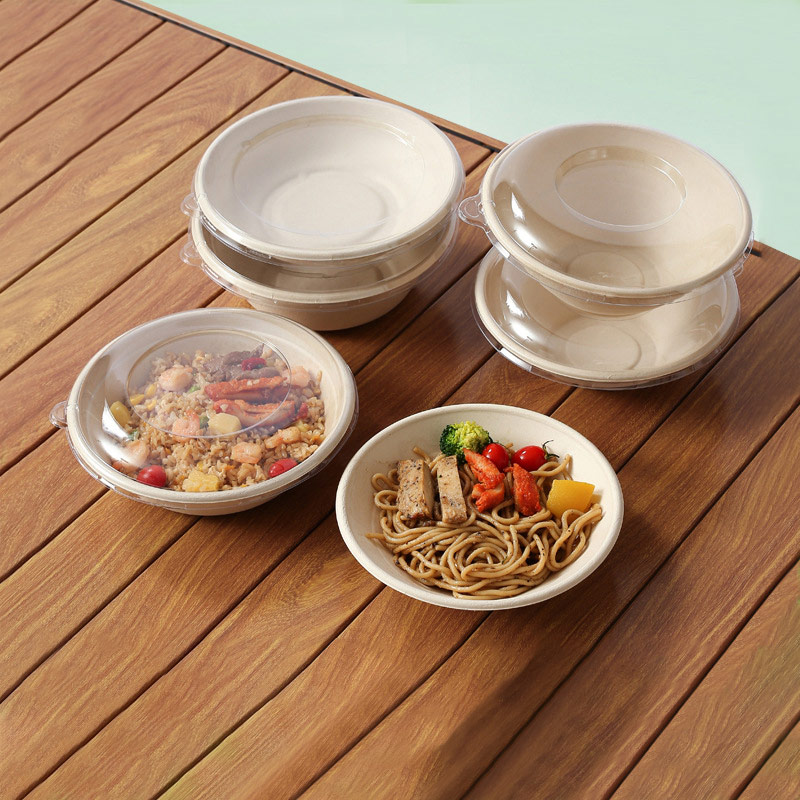
Applications: soups, salads, noodles, poke
Sizes: 500–1000ml
Benefits: stable, leak-resistant, widely used in delivery
7.2 Bagasse Clamshell Takeaway Boxes
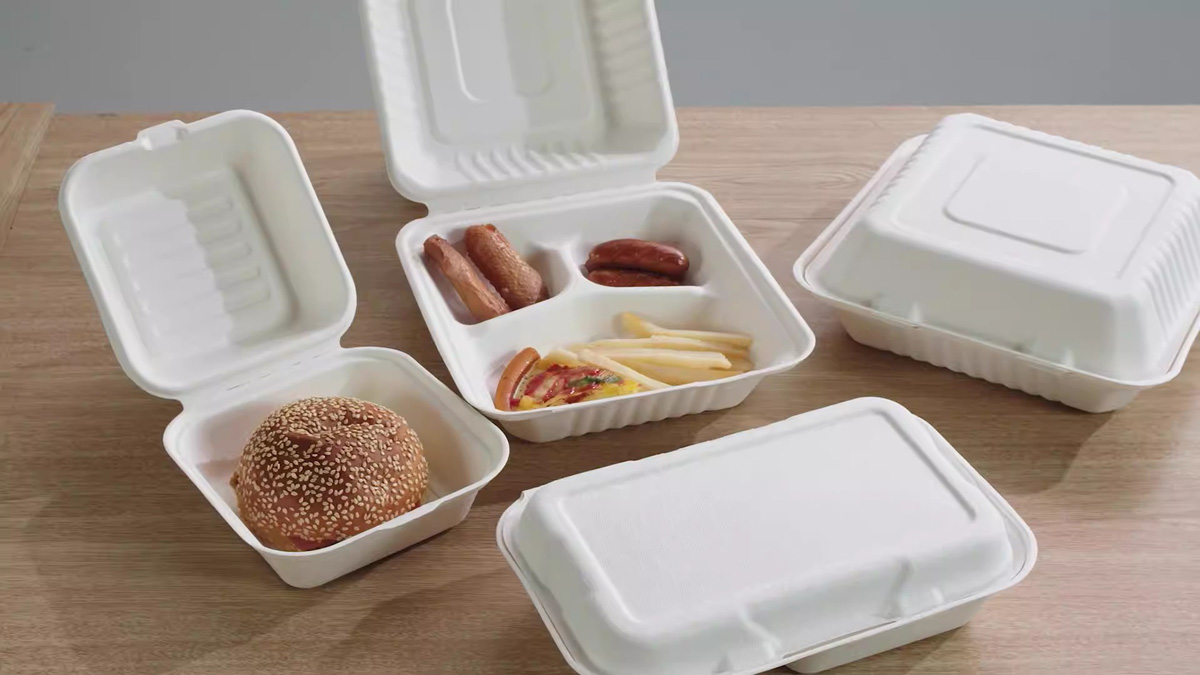
Applications: burgers, rice bowls, combos
Benefits: perfect replacement for banned EPS boxes
7.3 Bagasse Sushi Trays
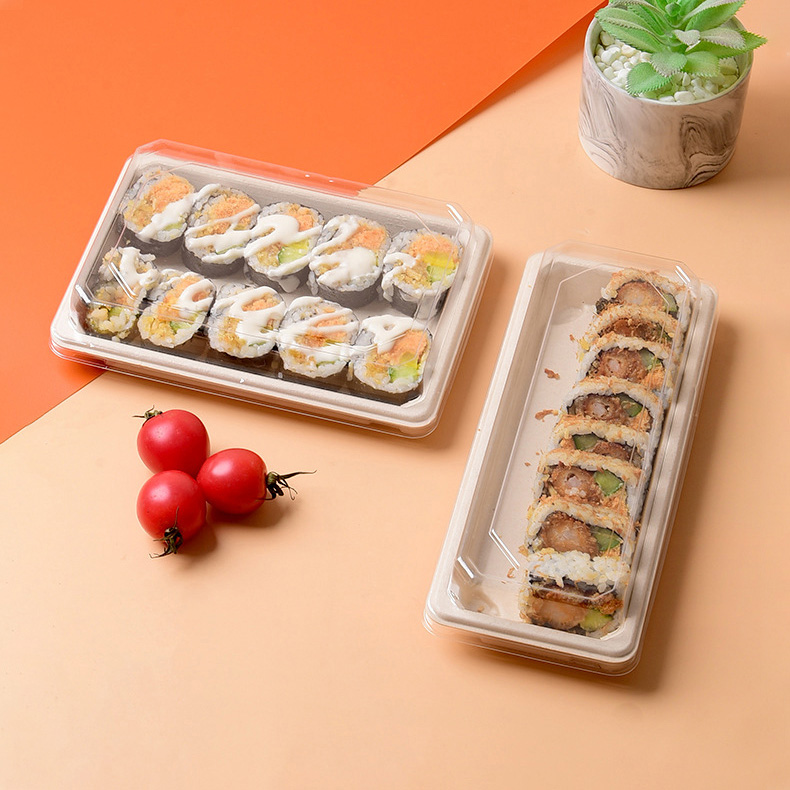
Applications: sushi, sashimi, cold dishes
Benefits: premium design + eco-friendly appeal
7.4 Bagasse Rectangular Trays
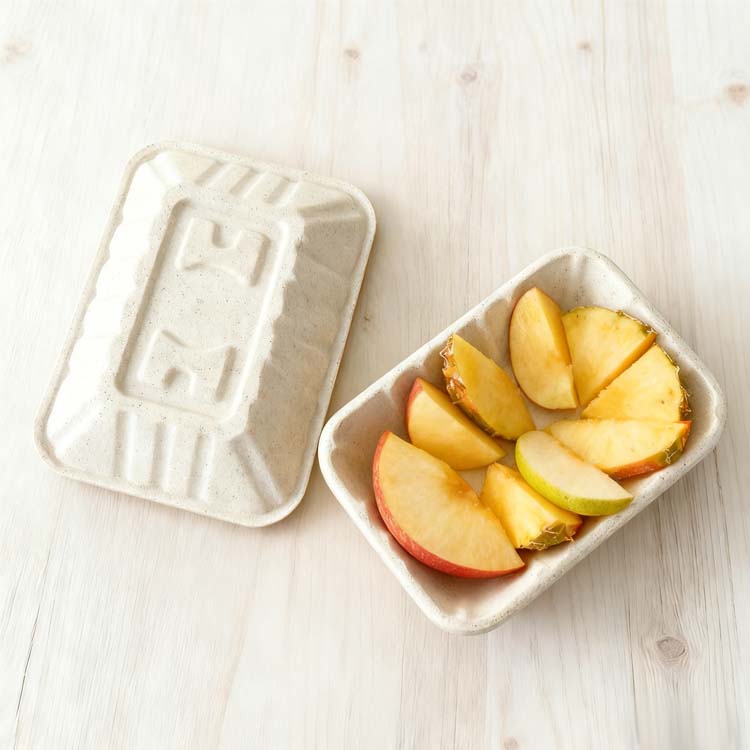
Applications: ready meals, retail packaging
Benefits: compatible with sealing film; ideal for supermarkets
7.5 Bagasse Plates

Applications: catering, takeout, parties
Benefits: cheap, sturdy, highly accepted
8. Why DASHAN Fits Romania’s New Regulation Needs

8.1 Complete Bagasse Product Line
DASHAN offers bowls, clamshells, trays, plates, sushi trays, and airline trays—covering all Romanian foodservice needs.
8.2 EU-Standard Compliance
Products are fully certified under EU and international food safety regulations.
8.3 Factory-Direct Pricing
Large-scale production ensures competitive prices even as demand for natural fiber packaging increases.
8.4 Custom OEM / ODM Options
DASHAN provides custom sizes, designs, and branding to match retailer and restaurant needs.
8.5 Stable EU Export Experience
DASHAN serves clients in Western, Central, and Eastern Europe, ensuring smooth logistics to Romania.
FAQ
Q1: Is bagasse allowed under Romania’s SUP regulations?
Yes. Bagasse is classified as a natural fiber material and is fully compliant with EU and Romanian SUP rules.
Q2: Can bagasse packaging replace plastic completely?
Yes, for most foodservice applications including hot meals, cold meals, bakery, salads, and more.
Q3: Are bagasse products microwave safe?
Yes, bagasse withstands 120–150°C and is safe for reheating food.
Q4: Does Romania require certification for imported bagasse products?
Yes—typically EU food-contact compliance documentation. DASHAN provides full certifications.
Q5: How does bagasse packaging compare to plastic in terms of durability and heat resistance?
A5: Bagasse packaging offers excellent durability and heat resistance, typically up to 120–150°C. It is suitable for hot meals, microwaving, and short-term freezing, providing a reliable alternative to plastic while complying with EU and Romanian sustainability regulations.
Q6: What industries in Romania use bagasse most?
Food delivery, retail supermarkets, casual dining, catering, and aviation.
Conclusion
Romania’s implementation of the EU Single-Use Plastics Directive and its growing eco-tax, EPR obligations, and circular economy objectives make the transition toward sustainable packaging unavoidable. Bagasse packaging stands out as the most compliant, environmentally friendly, and performance-ready solution.
For restaurants, delivery platforms, supermarkets, airlines, and importers in Romania, adopting bagasse products is no longer just a trend—it has become a strategic necessity. With its full range of bagasse trays, bowls, plates, clamshells, sushi boxes, and airline trays, DASHAN is prepared to support Romania’s shift toward a greener, more compliant packaging future.
References
-
European Commission — Single-Use Plastics Directive
https://environment.ec.europa.eu/topics/plastics/single-use-plastics_en -
Romanian Ministry of Environment Official Documents
https://www.mediu.gov.ro -
EU Packaging and Packaging Waste Directive
https://environment.ec.europa.eu/topics/waste-and-recycling/packaging-waste_en -
AFM (Romanian Environmental Fund Administration)
https://www.afm.ro -
European Bioplastics — Materials Overview
https://www.european-bioplastics.org/bioplastics -
Life Cycle Assessment of Sugarcane Bagasse Packaging
https://www.sciencedirect.com - Xiamen,DASHANpacking-Blog
Bagasse Packaging: A Natural Solution for Modern Foodservice
Copyright Statement
© 2025 Dashan Packing. All rights reserved.
This article is an original work created by the Dashan Packing editorial team.
All text, data, and images are the result of our independent research, industry experience,
and product development insights. Reproduction or redistribution of any part of this content
without written permission is strictly prohibited.
Dashan Packing is committed to providing accurate, evidence-based information and
to upholding transparency, originality, and compliance with global intellectual property standards.