

Quick Summary
Agricultural waste such as sugarcane bagasse, wheat straw, rice husk, and bamboo fiber is increasingly being transformed into sustainable food packaging. Instead of burning or discarding these by-products, manufacturers process them into molded fiber plates, bowls, trays, and takeaway containers.
This approach reduces reliance on fossil-based plastics, supports circular economy principles, and offers compostable alternatives for foodservice businesses. While performance and composting infrastructure remain important considerations, agricultural waste packaging represents a scalable and environmentally responsible solution for modern food packaging needs.
I. Introduction: The Plastic Problem and the Search for Alternatives
Plastic waste has become one of the most pressing environmental challenges of the 21st century. The food packaging industry, which heavily relies on single-use plastics such as polystyrene and polypropylene, is a significant contributor to this global issue. Every year, millions of tons of plastic waste enter landfills, rivers, and oceans, with food packaging accounting for a large portion of this waste.
In response to growing environmental concerns and regulations that target plastic waste, the foodservice industry is increasingly turning to sustainable alternatives. Among these, agricultural waste has emerged as a promising raw material for creating eco-friendly food packaging. This innovative shift from petroleum-based plastics to agricultural by-products, such as sugarcane bagasse, rice husk, wheat straw, and bamboo fibers, is paving the way for a more sustainable and circular food packaging model.
This article explores how agricultural waste is being transformed into sustainable food packaging, examining its benefits, challenges, and future potential.
II. What Is Agricultural Waste?
2.1 Definition and Sources

Agricultural waste refers to the by-products left after the cultivation, harvesting, or processing of crops. These materials are often considered waste and are typically discarded, burned, or left to decompose. However, many of these by-products have untapped potential and can be repurposed into valuable resources.
Common sources of agricultural waste used in food packaging production include:
-
Sugarcane Bagasse: The fibrous residue left after the juice is extracted from sugarcane.
-
Wheat Straw: The leftover stalks after wheat grains are harvested.
-
Rice Husk: The outer shell of rice grains, a by-product of rice milling.
-
Bamboo Fiber: The fibers extracted from bamboo, which grows rapidly and requires minimal water.
2.2 Current Disposal Challenges
Agricultural waste has traditionally been disposed of through burning, which contributes to air pollution and carbon emissions. Other common methods include landfilling or leaving waste to decompose, which can create environmental hazards. The underutilization of agricultural waste represents both an environmental issue and a missed opportunity for resource efficiency.
By turning this waste into food packaging materials, we can help mitigate these challenges and create value from what would otherwise be discarded.
III. From Waste to Resource: How Agricultural Residue Becomes Packaging
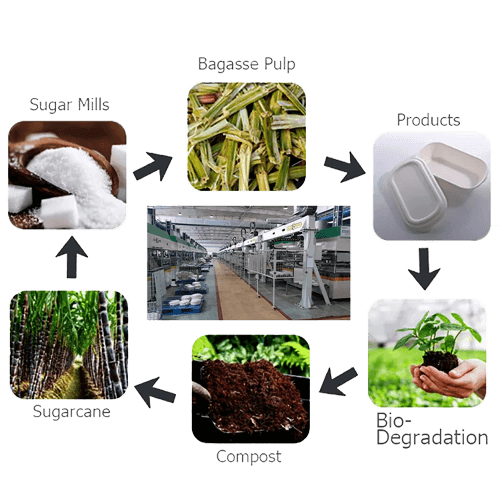
Turning agricultural waste into food packaging involves several steps, transforming what was once a discarded by-product into high-performing, sustainable materials.
3.1 Collection and Pre-Processing
The process begins with the collection of agricultural waste from farms, mills, or processing plants. After collection, the material undergoes a cleaning process to remove dirt, debris, and other contaminants, preparing it for further processing.
3.2 Pulping and Molding Technology
The cleaned agricultural fibers are processed into pulp. This involves breaking down the fibers and turning them into a slurry-like mixture that can be molded into different shapes. The pulp is then fed into molds that shape it into food packaging products such as plates, bowls, trays, and containers.
3.3 Finishing and Quality Control
After molding, the products are dried and sterilized to ensure hygiene and durability. During this stage, additional treatments may be applied, such as coatings to improve water and grease resistance. As sustainability becomes increasingly important, many manufacturers are moving away from harmful chemicals, opting for PFAS-free, plastic-free coatings that align with global regulations on food-contact materials.
IV. Key Materials Used in Agricultural Waste Packaging

Several agricultural by-products are now being used to create molded fiber packaging products. Among the most commonly used materials are:
4.1 Sugarcane Bagasse
Sugarcane bagasse is a fibrous material left after sugarcane is crushed to extract juice. It is one of the most widely used agricultural waste materials for creating compostable food packaging. Bagasse-based products are sturdy, resistant to heat, and can be used for both hot and cold food applications.
4.2 Wheat Straw
Wheat straw is a by-product of wheat harvesting, often discarded or burned. When processed, it can be molded into durable and compostable packaging materials. Wheat straw products are typically used for cold food packaging and disposable tableware.
4.3 Bamboo Fiber
Bamboo is a highly renewable resource, and its fibers are increasingly used to produce eco-friendly packaging materials. Bamboo fibers are strong, lightweight, and have natural antimicrobial properties, making them ideal for food packaging. Bamboo products are also biodegradable and compostable.
4.4 Rice Husk Composites
Rice husk, the outer shell of rice grains, is another agricultural by-product that can be used in packaging. When combined with other materials, rice husk creates strong, durable products that can be used for disposable food containers and plates.
V. Environmental Benefits
5.1 Reduced Fossil Fuel Dependence
One of the most significant benefits of using agricultural waste in packaging is the reduction in the dependence on fossil fuels. Traditional plastic packaging is derived from petroleum-based resources, which contribute to carbon emissions and environmental degradation. Agricultural waste, however, is renewable and requires minimal energy to process, making it a much more sustainable option.
5.2 Lower Carbon Footprint Potential
The production of packaging from agricultural waste generally results in a lower carbon footprint compared to traditional plastic production. Since agricultural by-products are waste materials, their production and use are more energy-efficient, reducing greenhouse gas emissions.
5.3 Waste Valorization and Circular Economy
By transforming agricultural waste into valuable packaging materials, we create a closed-loop system that supports the principles of a circular economy. This reduces waste sent to landfills, mitigates the environmental impact of agricultural practices, and maximizes the use of available resources.
5.4 Compostability and Soil Return
Agricultural waste packaging is often compostable, breaking down in industrial composting facilities within a few months. This ensures that the products do not contribute to long-term waste accumulation. Additionally, once composted, the packaging can enrich the soil, providing valuable nutrients for future crops.
VI. Performance in Foodservice Applications

Agricultural waste packaging performs well in a variety of foodservice applications. Some key benefits include:
6.1 Heat Resistance
Bagasse products, in particular, can withstand high temperatures, making them ideal for hot food applications. This makes them suitable for takeout containers, clamshells, and catering trays.
6.2 Oil and Moisture Resistance
Many agricultural waste products have natural resistance to oil and moisture, which is critical for food packaging that holds oily or watery items, such as salads, sauces, and fried foods.
6.3 Structural Strength
Molded fiber packaging made from agricultural waste offers excellent structural strength, making it durable enough to handle heavy or bulky food items.
6.4 Microwave and Freezer Compatibility
Many agricultural waste-based packaging products are microwave-safe for short periods and freezer-safe, offering versatility for a wide range of food storage and reheating needs.
VII. Regulatory and Compliance Considerations
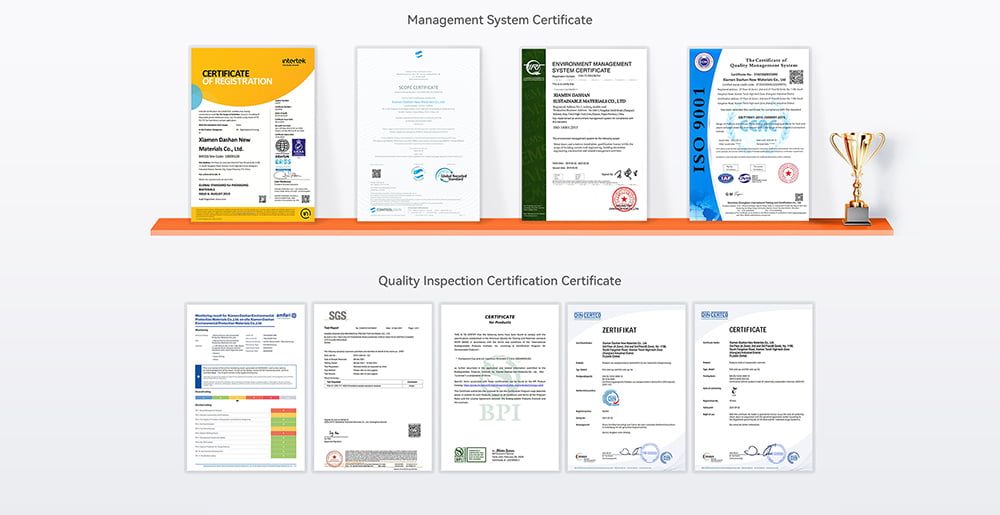
Food packaging materials, including those made from agricultural waste, must comply with strict food-contact regulations. These regulations vary by region but typically focus on ensuring that packaging materials do not leach harmful chemicals into food.
7.1 EU and US Food Contact Regulations
In the EU and US, agricultural waste packaging must meet specific food-contact safety standards, including migration testing to ensure that no harmful substances are transferred to the food.
7.2 Compostability Standards (ASTM D6400, EN 13432)
For packaging to be marketed as compostable, it must meet industrial composting standards. Certifications like ASTM D6400 (US) and EN 13432 (EU) ensure that the products break down effectively in composting systems.
7.3 PFAS Restrictions and Chemical Safety Trends
As governments globally phase out harmful chemicals like PFAS (per- and polyfluoroalkyl substances) from food packaging, agricultural waste products are increasingly manufactured without these harmful coatings.
VIII. Market Drivers and Industry Adoption
8.1 Plastic Bans and Policy Incentives
The growing global movement toward banning single-use plastics has significantly contributed to the demand for compostable alternatives. Regions like Europe and parts of North America have introduced policies that incentivize the use of sustainable materials like agricultural waste-based packaging.
8.2 Corporate ESG Commitments
Many large corporations are adopting environmental, social, and governance (ESG) strategies that emphasize sustainable sourcing and waste reduction. This trend is driving the demand for eco-friendly food packaging solutions, including those made from agricultural waste.
8.3 Consumer Demand for Sustainable Packaging
Consumers are increasingly looking for eco-friendly options when dining out or ordering takeout. As consumer preferences shift toward sustainability, foodservice providers are turning to alternatives like bagasse packaging to meet these expectations.
8.4 Growth in Food Delivery and Takeaway Markets
The rise in food delivery services has driven the demand for durable, sustainable packaging. Agricultural waste-based packaging is well-suited for this market, offering a sustainable solution for delivery and takeaway operations.
IX. Challenges and Limitations
9.1 Composting Infrastructure Gaps
One of the primary challenges facing the widespread adoption of agricultural waste packaging is the availability of industrial composting facilities. In regions without access to proper composting infrastructure, these products may end up in landfills.
9.2 Cost Competitiveness
Although agricultural waste packaging is more sustainable, it can be more expensive than traditional plastic packaging. However, as production scales and technology improves, prices are expected to become more competitive.
9.3 Moisture Sensitivity
Some agricultural waste products may be sensitive to moisture, which can weaken their structural integrity. To overcome this, manufacturers are working on improving moisture-resistant coatings and formulations.
9.4 Supply Chain Scalability
Scaling up production of agricultural waste packaging to meet global demand requires robust supply chains and consistent access to raw materials, which may be challenging in some regions.
X. The Future of Agricultural Waste Packaging
10.1 Technological Innovations
Future advancements in agricultural waste packaging will focus on improving product performance, including better heat and moisture resistance, as well as enhancing biodegradability.
10.2 Expanding the Use of Bagasse and Other Fibers
As the demand for sustainable packaging grows, more agricultural by-products will be explored for packaging solutions. In addition to sugarcane bagasse, materials such as hemp, flax, and cotton fibers may gain prominence in the food packaging industry.
10.3 Global Market Growth
The agricultural waste packaging market is expected to expand rapidly as more countries implement plastic bans and consumer demand for sustainable options increases. As technology and infrastructure improve, agricultural waste will play an increasingly important role in the global packaging industry.
FAQ
1. What is agricultural waste packaging?
Agricultural waste packaging is made from crop by-products such as sugarcane bagasse, wheat straw, rice husk, or bamboo fiber. These materials are processed into molded fiber food containers and tableware.
2. Is packaging made from agricultural waste compostable?
Most molded fiber products made from agricultural waste are industrially compostable and may comply with standards such as ASTM D6400 or EN 13432. Proper composting facilities are required for effective degradation.
3. How does bagasse packaging compare to plastic?
Bagasse packaging reduces fossil fuel dependence and is derived from renewable resources. It can handle hot and oily foods but may require proper waste management systems to realize full environmental benefits.
4. Is agricultural waste packaging safe for food contact?
Yes, when manufactured according to regulatory standards. Products must meet food-contact regulations in their target markets and pass migration testing.
5. What are the main challenges of agricultural waste packaging?
Key challenges include limited composting infrastructure, potential moisture sensitivity, higher cost compared to plastic, and supply chain scalability.
6. Are governments supporting sustainable packaging?
Yes. Policies aligned with circular economy objectives are promoted by institutions such as the European Commission. In the United States, the U.S. Environmental Protection Agency provides guidance on sustainable materials management and composting systems.
7. Why Choose DASHAN Products?
DASHAN specializes in sustainable packaging solutions, offering high-quality sugarcane bagasse products that are 100% compostable and PFAS-free. With a strong focus on environmental responsibility and regulatory compliance, DASHAN ensures that their packaging meets global food-contact safety standards. Choosing DASHAN means investing in reliable, eco-friendly alternatives to plastic, supporting your sustainability goals while ensuring high performance in foodservice applications.
Conclusion
Agricultural waste is no longer just a by-product; it is a valuable resource for creating sustainable food packaging. From sugarcane bagasse to rice husk composites, agricultural waste packaging offers a renewable, compostable, and eco-friendly alternative to traditional plastic materials.
By turning waste into a resource, we can support a more sustainable and circular food packaging system, reduce environmental impact, and meet growing consumer demand for responsible packaging solutions. As the market for eco-friendly packaging expands, agricultural waste will continue to be a key material driving the future of sustainable food packaging.
References
-
European Commission – Circular economy and sustainable materials policy
https://environment.ec.europa.eu/topics/circular-economy_en -
U.S. Environmental Protection Agency – Sustainable Materials Management
https://www.epa.gov/smm -
ASTM International – ASTM D6400 Standard Specification for Compostable Plastics
https://www.astm.org/d6400-21.html -
European Bioplastics – EN 13432 industrial compostability standard
https://www.european-bioplastics.org/bioplastics/standards/
Copyright Statement
© 2026 Dashan Packing. All rights reserved.
This article is an original work created by the Dashan Packing editorial team.
All text, data, and images are the result of our independent research, industry experience,
and product development insights. Reproduction or redistribution of any part of this content
without written permission is strictly prohibited.
Dashan Packing is committed to providing accurate, evidence-based information and
to upholding transparency, originality, and compliance with global intellectual property standards.