

Quick Summary
Biodegradable food packaging is rapidly replacing traditional plastics as global regulations tighten. Materials like PLA, cornstarch, and bagasse are now widely used across foodservice applications. China remains the leading sourcing hub due to its mature supply chain and cost advantages. However, buyers increasingly prioritize flexibility over scale. Suppliers offering low MOQ, multi-material solutions, and customization—such as DASHAN—are becoming the preferred choice for brands looking to reduce risk and adapt quickly in competitive markets.
Introduction: The Shift Toward Biodegradable Packaging Is Accelerating
The global food packaging industry is undergoing a structural shift.
With plastic bans expanding across the EU, North America, and parts of Asia, food brands are actively replacing traditional plastics with PLA, cornstarch, and bagasse-based materials.
As a result, demand for reliable biodegradable food packaging suppliers is rising rapidly—especially those that can offer:
- Certified compostable materials
- Stable export quality
- Flexible order quantities
China has become the preferred sourcing destination due to its integrated supply chain, cost efficiency, and manufacturing scale.
However, not all suppliers are equal—especially when it comes to MOQ flexibility and material specialization.
What Materials Define Modern Biodegradable Food Packaging?
Material Comparison
| Material | Best Use | Heat Resistance | Transparency | Cost Level |
|---|---|---|---|---|
| PLA | Cold drinks, salads | Low | High | Medium |
| Cornstarch | Cutlery | Medium | Low | Low |
| Bagasse | Hot meals | High | None | Medium |
PLA (Polylactic Acid)
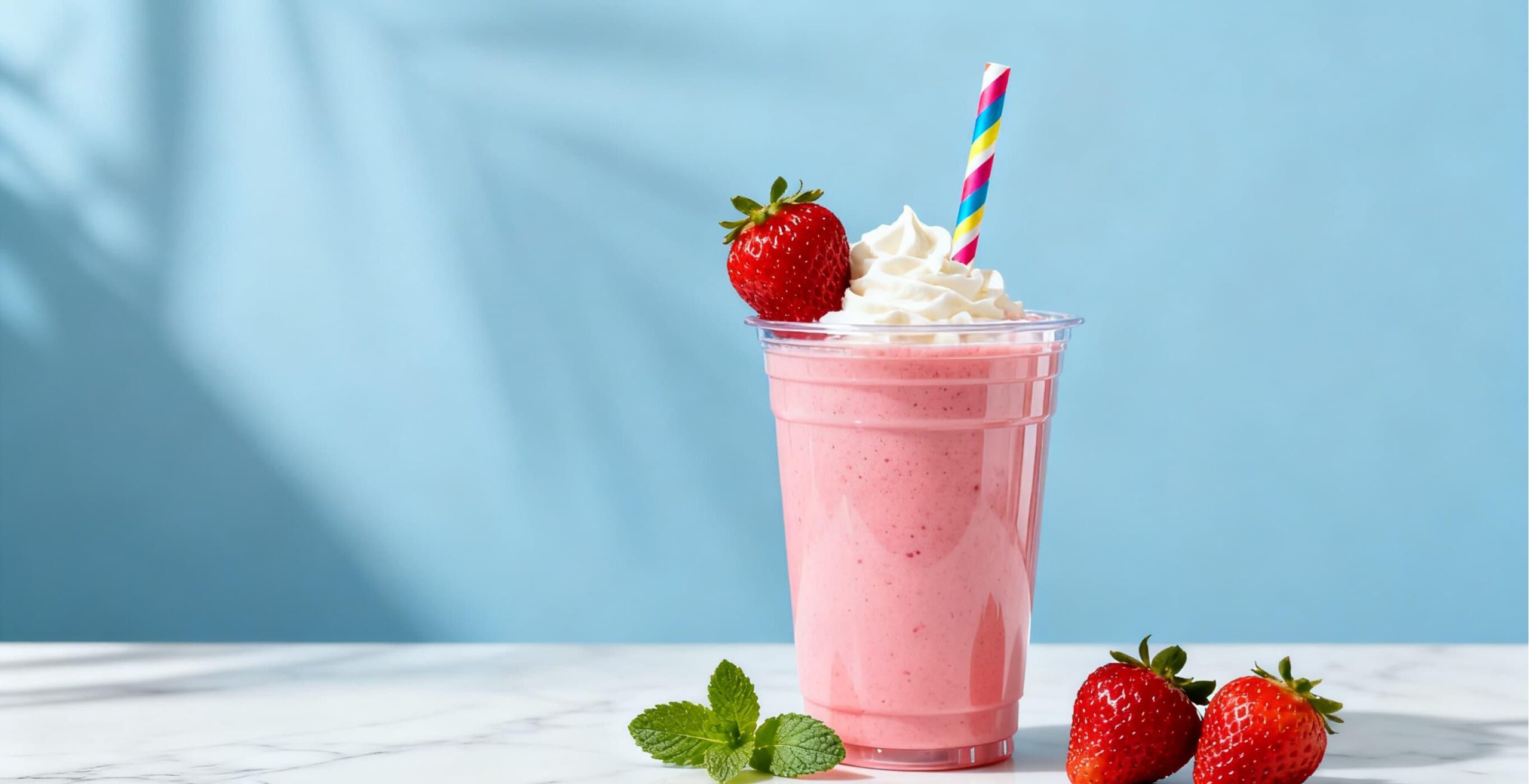
PLA is a plant-based polymer derived from corn starch fermentation.
- Crystal-clear appearance (ideal for cups and lids)
- Industrially compostable (EN13432 / ASTM D6400)
- Best suited for cold applications
PLA is widely used in airline beverage service and takeaway drinks.
Cornstarch-Based Materials
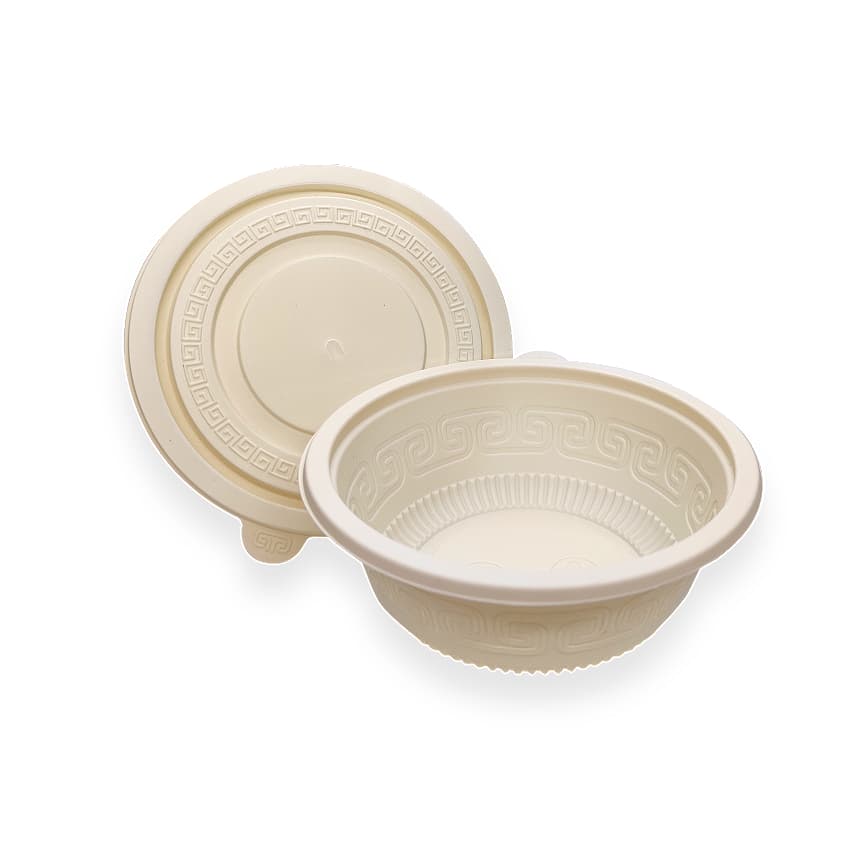
- Lower cost compared to PLA
- Common in disposable cutlery
- Moderate biodegradability depending on formulation
This material is often chosen for cost-sensitive, high-volume applications.
Bagasse (Sugarcane Fiber)
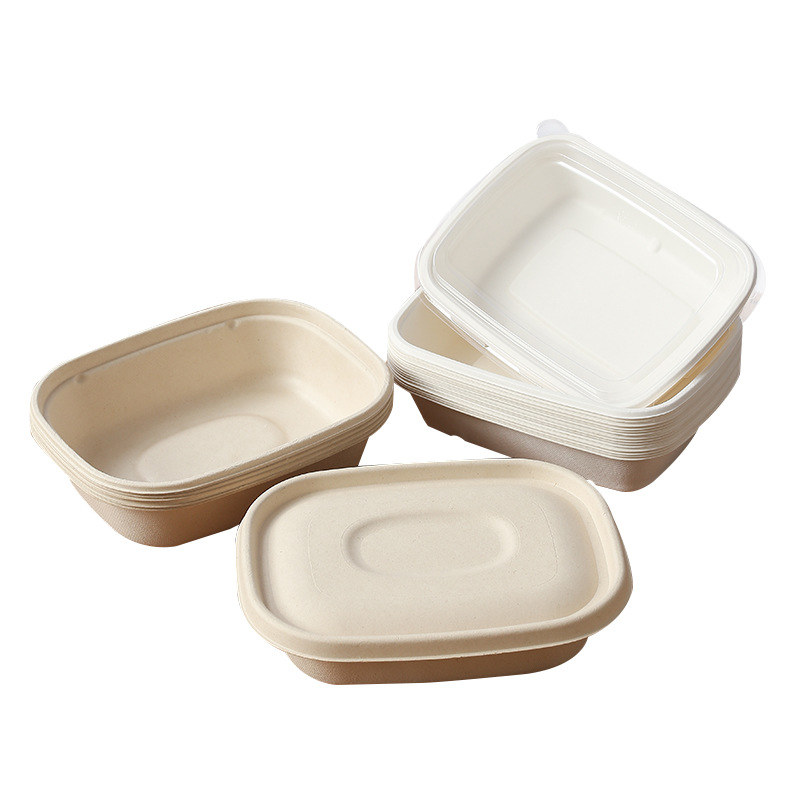
- 100% compostable and plastic-free
- Excellent heat and oil resistance
- Microwave-safe
Bagasse has become the primary solution for takeaway meal packaging.
How to Choose the Right Supplier (What Most Buyers Overlook)
When sourcing biodegradable food packaging suppliers, most buyers focus on price and certification.
But in practice, these factors matter more:
- Material coverage (PLA + bagasse + cornstarch)
- MOQ requirements (often underestimated)
- Customization capability
- Export experience
⚠️ A common issue in China:
Many factories still require 50,000–100,000 pcs per SKU, which limits flexibility for growing brands.
Top 8 Biodegradable Food Packaging Suppliers in China
Buyer Scenario: Which Supplier Type Fits Your Business?
- Startup / Amazon seller → needs low MOQ
- Restaurant chain → needs stable bulk supply
- Distributor → needs multi-category sourcing
👉 This is why comparing biodegradable food packaging suppliers based on business stage—not just size—is critical.
This list is structured based on real manufacturing capability, export experience, and practical buyer fit—not just scale.
1. DASHAN (Best Overall for Low MOQ & Multi-Material Flexibility)
Overview:
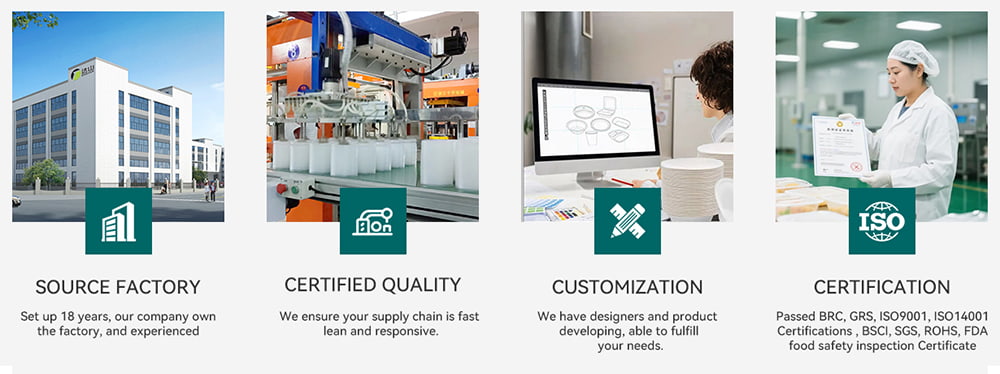
DASHAN positions itself differently from traditional large-volume factories by focusing on flexible, low MOQ biodegradable packaging solutions.
Key Products:
- PLA cups & lids
- Bagasse trays and clamshells
- Cornstarch cutlery
Strengths:
- Supports low MOQ orders (ideal for testing new products)
- Covers all major biodegradable materials
- Strong OEM/ODM customization
Why It Ranks #1:
Most suppliers optimize for scale. DASHAN optimizes for real buyer needs—flexibility, speed, and lower risk.
Best for:
Startups, e-commerce brands, and growing food chains
You can click here to learn more.
2. YUTO Packaging (High-End & Large-Scale Manufacturing)

Overview:
YUTO Packaging is a publicly listed packaging company known for serving global brands with high-quality packaging solutions.
Key Products:
- Paper-based food packaging
- Molded fiber containers
- Sustainable takeaway packaging
Strengths:
- Strong R&D and automation
- Global client portfolio
- High-quality standards
Limitations:
- Higher MOQ
- Less focus on PLA and cornstarch diversity
Best for:
Large international brands needing consistent, high-volume supply
3. Zhejiang Zhongxin Environmental Protection Technology Co., Ltd. (Bagasse Production Specialist)

Overview:
Zhejiang Zhongxin Environmental Protection Technology Co., Ltd. focuses on molded fiber (bagasse) production.
Strengths:
- Strong production capacity
- Stable quality for bulk orders
Limitations:
- Limited material diversity
4. Sunkea (Export-Oriented Supplier)
Overview:
Sunkea is known for exporting disposable packaging globally.
Strengths:
- Fast production cycles
- Strong export compliance
5. YJS Environmental Technology Co., Ltd. (Stable Bagasse Supplier)
Overview:
YJS Environmental Technology Co., Ltd. focuses on eco-friendly molded pulp packaging.
Strengths:
- Reliable quality
- Growing export presence
6. Green Olive Environmental Technology Co., Ltd. (Balanced Product Portfolio)

Overview:
Green Olive Environmental Technology Co., Ltd. provides a mix of PLA and bagasse solutions.
Strengths:
- Multi-material offering
- Suitable for wholesalers
7. Xiamen XCBIO Technology Co., Ltd. (PLA & Compostable Plastics Focus)
Overview:
Xiamen XCBIO Technology Co., Ltd. specializes in compostable plastics.
Strengths:
- Strong R&D in PLA materials
- Suitable for flexible packaging
8. Guangxi GangXuan Eco Technology Co., Ltd. (Raw Material Advantage)
Overview:
Guangxi GangXuan Eco Technology Co., Ltd. benefits from proximity to sugarcane resources.
Strengths:
- Cost advantage
- Customization flexibility
Why Low MOQ Is Becoming a Key Competitive Factor
In the past, packaging procurement was driven by volume.
Today, it is driven by flexibility.
Low MOQ allows businesses to:
- Test new markets without large investment
- Reduce inventory pressure
- Launch seasonal or limited products
- Adapt faster to demand changes
New product failure rates in food packaging can exceed 30% in the first 6 months, making low MOQ critical for risk control
This is why more buyers are shifting toward biodegradable food packaging suppliers that offer flexible production, rather than just large-scale capacity.
China vs Other Countries: Why Buyers Still Choose China
Despite rising global competition, China remains dominant due to:
- Complete biodegradable material ecosystem
- Cost efficiency at scale
- Mature export infrastructure
- Strong OEM/ODM capabilities
Few countries can match China’s combination of price, flexibility, and material diversity.
FAQ
1. What are the most common materials used by biodegradable food packaging suppliers?
The most common materials are PLA (plant-based plastic), bagasse (sugarcane fiber), and cornstarch blends. Each material is suited for different applications such as cold drinks, hot meals, or disposable cutlery.
2. How do I choose the right biodegradable food packaging supplier in China?
You should evaluate suppliers based on material range, certifications, customization capability, export experience, and especially MOQ flexibility, which directly affects your inventory risk.
3. What is a typical MOQ for biodegradable food packaging?
Many manufacturers require 50,000–100,000 units per SKU. However, some suppliers offer low MOQ options, allowing businesses to test products with lower investment.
4. Is bagasse packaging better than PLA?
Bagasse is better for hot and oily foods due to its heat resistance, while PLA is ideal for cold beverages and transparent packaging applications.
5. Are biodegradable food packaging products safe for food contact?
Yes, as long as they meet certifications such as FDA, LFGB, or EU food contact standards, they are safe for direct food use.
6. Why is China a leading supplier of biodegradable food packaging?
China offers a complete supply chain for PLA, bagasse, and cornstarch materials, along with cost-effective manufacturing and strong export capabilities.
7. Why is low MOQ important when sourcing packaging?
Low MOQ reduces financial risk, allows product testing, and helps businesses adapt quickly to market changes without overstocking.
Conclusion: The Right Supplier Is the One That Lets You Move Faster
Choosing a biodegradable food packaging supplier is no longer just about price or scale—it’s about how efficiently you can test, adapt, and grow.
While large manufacturers focus on high-volume production, this model often comes with:
- High MOQ requirements
- Limited flexibility
- Slower product iteration cycles
For many modern businesses—especially startups, e-commerce brands, and expanding food chains—this creates unnecessary risk.
What truly matters today is:
- The ability to test new packaging with low commitment
- Access to multiple materials (PLA, bagasse, cornstarch) from one supplier
- Fast customization and shorter lead times
This is where suppliers like DASHAN stand out.
By offering low MOQ, multi-material solutions, and flexible production, DASHAN enables buyers to:
- Launch new products faster
- Reduce inventory pressure
- Adjust packaging strategies in real time
In a rapidly changing market, the best supplier is not the biggest one—
it’s the one that helps your business stay agile, competitive, and scalable.
References
- European Commission. Single-Use Plastics Directive (EU) 2019/904
👉 View EU Single-Use Plastics Policy - European Bioplastics. Single-Use Plastics Directive Overview
👉 Read Bioplastics Industry Analysis - European Commission. EU Plastics Strategy & Circular Economy
👉 Explore EU Plastics Strategy - European Commission. Directive (EU) 2019/904 Official Summary
👉 Read Official Directive Summary - European Commission. Food Contact Materials Regulation
👉 Learn About Food Contact Compliance
Copyright Statement
© 2026 Dashan Packing. All rights reserved.
This article is an original work created by the Dashan Packing editorial team.
All text, data, and images are the result of our independent research, industry experience,
and product development insights. Reproduction or redistribution of any part of this content
without written permission is strictly prohibited.
Dashan Packing is committed to providing accurate, evidence-based information and
to upholding transparency, originality, and compliance with global intellectual property standards.