

Quick Summary:
PP takeaway bowls are rapidly becoming a global standard in foodservice packaging. Durable, lightweight, heat-resistant, and recyclable, PP bowls serve a wide range of applications from fast food delivery to meal prep services. This article explores their adoption, market trends, advantages, sustainability, and best practices in the U.S., U.K., and European markets.
1. Introduction
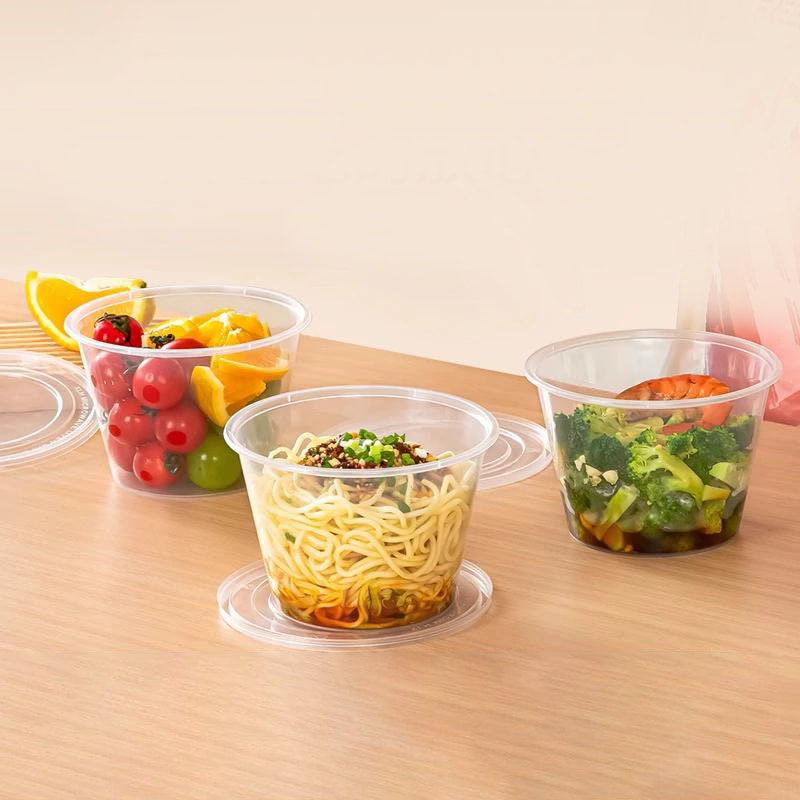
The rise of takeaway and delivery services has changed the dynamics of foodservice packaging worldwide. Polypropylene (PP) takeaway bowls are favored for their strength, heat resistance, and ability to maintain food quality during transport.
According to Statista (2023), the U.S. delivery and takeaway market exceeded $45 billion, with meal prep and subscription services rapidly growing. In the U.K., delivery and takeaway services have seen a compound annual growth rate (CAGR) of 8%, while in Europe, countries like Germany, France, and Italy are increasingly adopting PP packaging for ready-to-eat meals.
With their recyclability and lightweight design, PP bowls are positioned as a sustainable and practical choice in a market increasingly focused on environmental responsibility.
2. Understanding PP Takeaway Bowls: Material Overview
Polypropylene (PP) is a thermoplastic polymer widely used in food packaging. Key attributes include:
| Feature | Description |
|---|---|
| Heat Resistance | Can handle temperatures up to 120°C, ideal for hot foods. |
| Chemical Resistance | Resistant to acids, oils, detergents; prevents contamination. |
| Lightweight | Reduces transport and handling costs. |
| Recyclable | Can be collected and reprocessed into new PP products. |
| Transparency Options | Semi-transparent or opaque; supports visual appeal. |
| Durability | Resists cracking, breaking, or deformation under stress. |
PP bowls are produced using thermoforming or injection molding, allowing diverse shapes, sizes, and compartment designs suitable for hot and cold meals.
3. The U.S. Market
3.1 Fast-Food and Quick Service
Fast-food chains have integrated PP bowls for multiple meal types:
-
Salads, rice bowls, and pasta dishes: Lightweight yet sturdy PP bowls reduce breakage and spillage.
-
Delivery: With apps like DoorDash, UberEats, and Grubhub, packaging must maintain food quality during transit.
-
Branding: PP bowls allow printing or embossing for brand visibility.
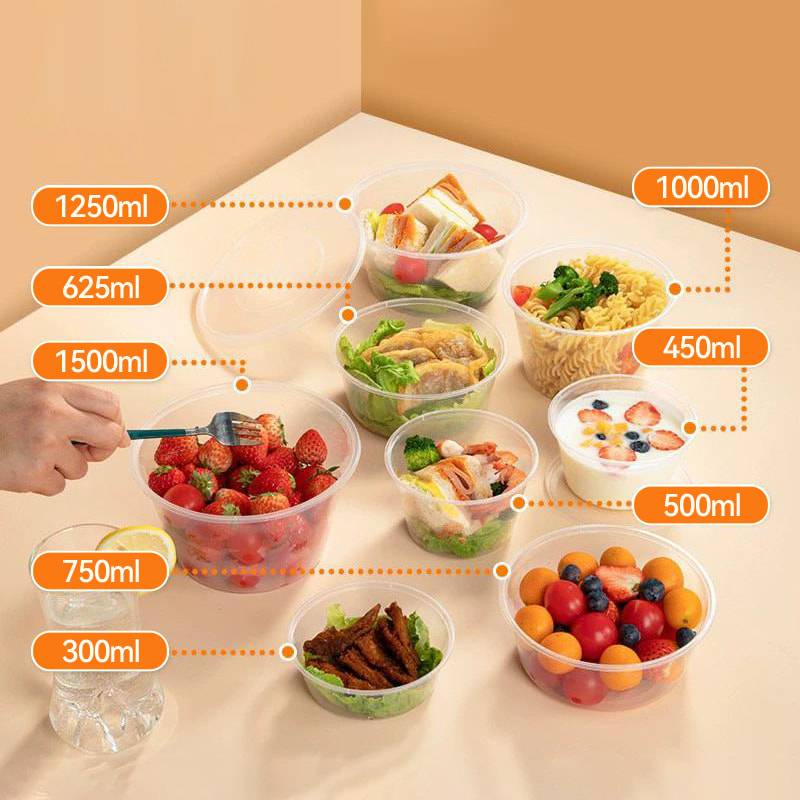
Table 3.1 – Popular PP Bowl Sizes in the U.S. Market
| Size | Capacity (ml) | Typical Use |
|---|---|---|
| Small | 300–400 | Salads, soups |
| Medium | 600–800 | Rice bowls, pasta |
| Large | 1000–1200 | Combo meals, family-sized portions |
Market Insight: According to Packworld (2023), PP bowls account for 35% of takeaway containers in the U.S., driven by delivery apps and meal prep services.
3.2 Meal Prep and Subscription Services
Subscription meal kits such as HelloFresh and Blue Apron utilize PP bowls for ready-to-eat dishes:
-
Maintains food integrity during storage and shipping.
-
Microwave-safe variants allow reheating without compromising quality.
-
PP’s durability prevents leakage or breakage.
3.3 Street Food and Food Trucks
-
Popular for soups, noodles, rice bowls, and salads.
-
Advantages include stackability and lightweight, reducing transport effort.
-
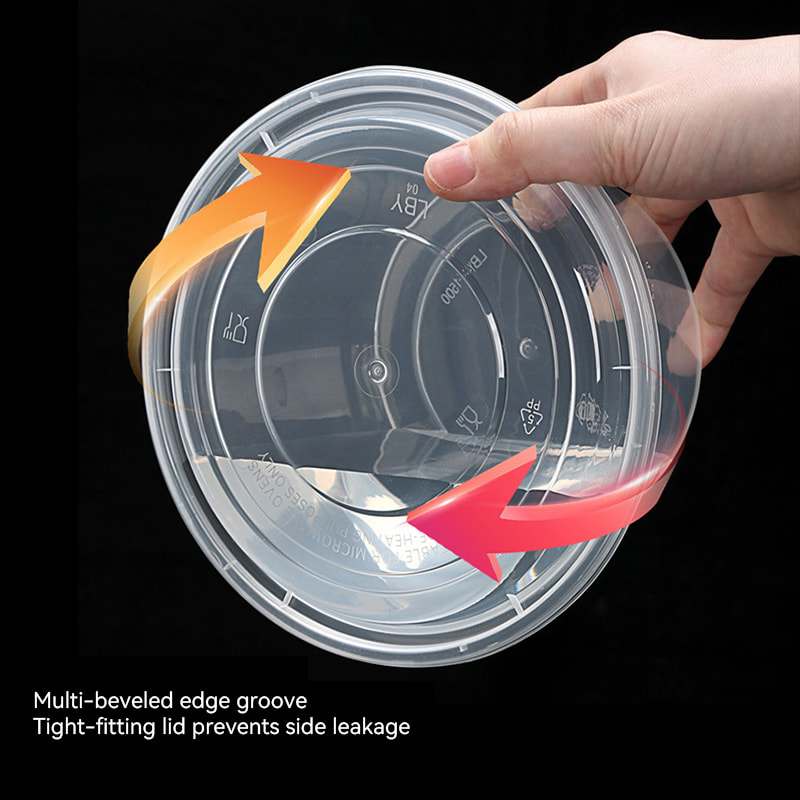
Vendors often combine PP bowls with secure lids to ensure safe takeaway.
3.4 Regional Adoption Trends
| Region | PP Bowl Usage (%) | Key Notes |
|---|---|---|
| West Coast | 40 | High adoption in urban delivery-heavy areas |
| East Coast | 35 | Meal prep popularity and restaurant chains |
| Midwest | 25 | Slowly rising adoption; emphasis on cost-efficiency |
| South | 30 | Fast food chains prefer PP for delivery |
4. The U.K. Market
4.1 Delivery and Casual Dining
Major chains like Pret a Manger and Itsu have switched to PP bowls for salads, curries, and pasta meals. Advantages:
-
Microwave-safe for reheating.
-
Stackable design reduces storage space.
-
Visual appeal with semi-transparent PP for fresh meals.
4.2 Catering and Office Meals
-
PP bowls are increasingly used in corporate catering due to reusability, microwave safety, and hygienic design.
-
Meal prep businesses benefit from PP’s durability during delivery.
4.3 Festivals, Markets, and Street Food
-
PP bowls are prevalent at food markets, pop-up events, and festivals.
-
Their lightweight and customizable designs allow for easy branding.
Table 4.1 – Estimated PP Bowl Usage in the U.K. (2023)
| Sector | PP Bowl Usage (%) | Notes |
|---|---|---|
| Delivery | 50 | Driven by online food platforms |
| Restaurants | 35 | Casual dining & quick service |
| Catering | 15 | Office meals & events |
4.4 Environmental Regulations Driving PP Adoption
-
Extended Producer Responsibility (EPR): Encourages recyclable packaging.
-
EU Packaging Directive: PP bowls comply with recyclability requirements.
The U.K.’s focus on sustainable packaging accelerates PP bowl adoption across all foodservice segments.
5. European Market Overview
PP bowls are widely used in Europe, with variations by country.
5.1 Germany
-
Supermarkets: Edeka and Rewe package ready-to-eat meals in PP bowls.
-
Meal delivery: Food delivery apps integrate PP containers for hot and cold meals.
-
Regulations: Compliance with Germany’s Packaging Act (VerpackG) ensures recyclability.
5.2 France
-
Street food, casual dining, and meal delivery adopt PP bowls.
-
Focus on visual appeal: clear PP bowls display fresh salads and ready-to-eat meals.
5.3 Italy
-
PP bowls are used for pasta, salads, and gelato.
-
Microwave-safe PP bowls facilitate reheating for takeout meals.
5.4 Spain
-
Street food and casual dining adopt PP bowls for tapas, rice, and noodle dishes.
-
Lightweight design supports takeaway and outdoor events.
5.5 Other European Countries
-
Netherlands, Belgium, and Scandinavia: Focus on recyclable and durable PP containers.
-
Eastern Europe: Slowly adopting PP bowls, with growth expected in urban delivery markets.
6. Comparative Market Data
| Region | PP Bowl Usage (%) | Growth Rate (2022–2023) | Key Drivers |
|---|---|---|---|
| U.S. | 35 | 6% | Delivery apps, convenience |
| U.K. | 45 | 8% | Sustainability, recyclable packaging |
| Germany | 40 | 7% | Supermarkets, ready meals |
| France | 30 | 5% | Visual presentation, casual dining |
| Italy | 25 | 4% | Pasta & fast-casual meals |
| Spain | 20 | 4% | Street food & events |
7. Advantages of PP Takeaway Bowls
-
Durability – resistant to cracks and breakage
-
Heat Resistance – safe for hot meals
-
Cost-Effective – cheaper than ceramic or glass
-
Lightweight – reduces shipping costs
-
Hygienic – food-safe, non-toxic
-
Recyclable – supports circular economy initiatives
-
Customization – can be branded via print or embossing
8. Environmental Considerations and Sustainability
-
PP bowls are recyclable; average European recycling rate: 20–25%.
-
Life-cycle assessments show lower greenhouse gas emissions vs. single-use PS or PVC containers.
-
Many food chains actively promote recycling initiatives.
9. Supply Chain and Logistics Benefits
-
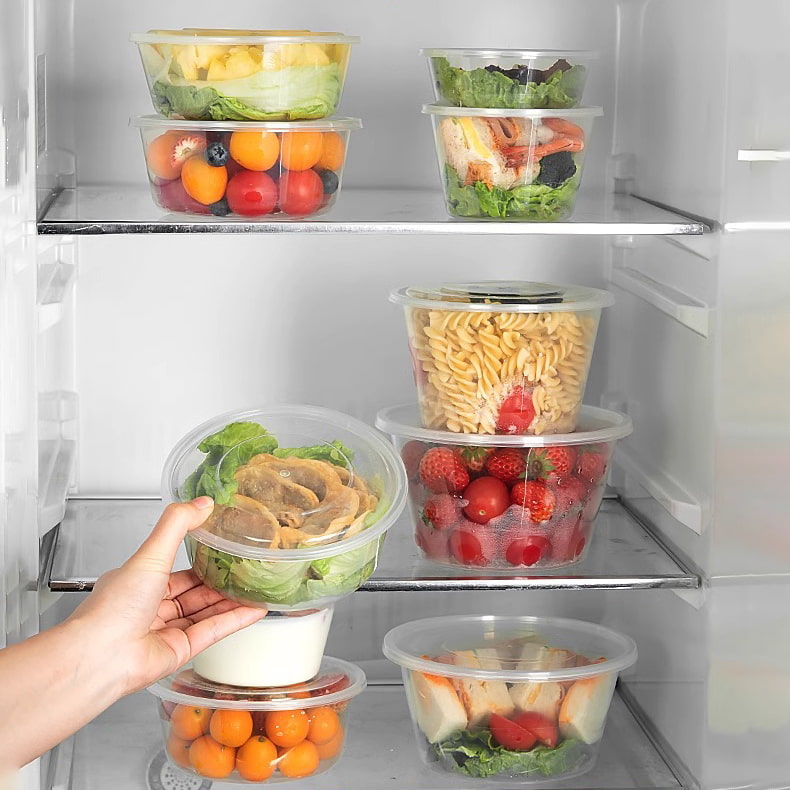
Stackable design reduces storage space.
-
Lightweight decreases transport costs.
-
Durable: withstands multiple handling stages in delivery.
-
Can be paired with secure lids for leak-proof transport.
10. Best Practices for Foodservice Businesses
-
Microwave-Safe Bowls: Ensure reheating does not compromise food quality.
-
Stackable Designs: Optimize storage and shipping.
-
Branding Options: Custom prints and embossed logos.
-
Temperature Considerations: Avoid exposure to heat above recommended limits.
-
Secure Lids: Prevent leaks during delivery.
11. Product Comparisons
| Feature | PP Bowls | PS Bowls | PLA Bowls |
|---|---|---|---|
| Heat Resistance | High | Moderate | Low |
| Recyclability | High | Low | Compostable (limited facilities) |
| Durability | High | Low | Moderate |
| Cost | Moderate | Low | High |
| Transparency | Optional | High | Semi-transparent |
| Microwave-Safe | Yes | Limited | No (often) |
12. Industry Case Studies
-
HelloFresh (U.S.): Switched to PP bowls, reduced breakage by 15%.
-
Pret a Manger (U.K.): Recyclable PP bowls improve sustainability image.
-
Edeka & Rewe (Germany): PP bowls for ready meals comply with packaging laws.
-
Itsu (U.K.): Adoption of semi-transparent PP bowls for salads enhances visual appeal.
13. Frequently Asked Questions (FAQ)
1. Are PP bowls safe for hot foods?
Yes, they can withstand up to 120°C.
2. Can PP bowls be microwaved?
Yes, if labeled microwave-safe; avoid prolonged high heat.
3. Are PP bowls recyclable in the U.S. and Europe?
Yes, though recycling facilities and acceptance vary.
4. How long can PP bowls keep food fresh?
Typically 2–3 days in refrigeration with lids.
5. Can PP bowls be used for frozen foods?
Yes, they resist brittleness in freezing temperatures.
6. Are PP bowls environmentally friendly?
Yes, they reduce single-use plastic waste and are recyclable.
7. Can PP bowls be customized for branding?
Yes, through printing or embossing.
8. Are PP bowls leak-resistant?
With appropriate lids, PP bowls prevent leaks during transport.
9. How do PP bowls compare with PLA and PS?
PP is more heat-resistant, durable, and recyclable compared to PS and PLA.
14. Summary / Conclusion
Polypropylene (PP) takeaway bowls have emerged as a practical, durable, and increasingly sustainable solution for the modern foodservice industry across the U.S., U.K., and Europe. Their combination of heat resistance, chemical resistance, lightweight design, and recyclability makes them ideal for a wide range of applications, from fast food chains and meal prep services to street food vendors and corporate catering.
In the U.S., PP bowls dominate the delivery and meal kit markets, supported by platforms like DoorDash, UberEats, and subscription services such as HelloFresh. In the U.K., the emphasis on sustainability and compliance with EU packaging regulations has driven widespread adoption across restaurants, catering, and delivery services. Across Europe, countries like Germany, France, Italy, and Spain are adopting PP bowls for ready-to-eat meals, casual dining, and takeaway, with regulations such as Germany’s Packaging Act (VerpackG) ensuring recyclability and environmental compliance.
Key Takeaways:
-
PP bowls are microwave-safe, leak-resistant (with lids), and stackable, making them highly functional for foodservice logistics.
-
They are recyclable, contributing to circular economy initiatives and supporting businesses’ sustainability goals.
-
Customization options allow branding through printing or embossing, enhancing customer engagement.
-
Comparative analysis shows PP bowls outperform alternative materials like PS and PLA in heat resistance, durability, and cost-efficiency, while PLA offers compostable options with limited industrial infrastructure.
-
Adoption trends indicate a continued growth trajectory, particularly in urban delivery-heavy regions and environmentally conscious markets.
In conclusion, PP takeaway bowls represent a strategically sound choice for foodservice businesses seeking to combine functionality, safety, environmental responsibility, and brand visibility. With the global takeaway market expanding, PP bowls will remain a core solution for the U.S., U.K., and European food packaging industries.
15. References
-
Statista. “Takeaway and Delivery Market in the U.S.” https://www.statista.com/topics/4509/food-delivery-in-the-us/
-
Statista. “Takeaway Market in the U.K.” https://www.statista.com/statistics/1117433/uk-takeaway-market-value/
-
Packworld. “Plastic Packaging Market Report 2023.” https://www.packworld.com
-
Pret a Manger UK. “Sustainability Initiatives.” https://www.pret.co.uk/en-gb/sustainability
Copyright Statement
© 2026 Dashan Packing. All rights reserved.
This article is an original work created by the Dashan Packing editorial team.
All text, data, and images are the result of our independent research, industry experience,
and product development insights. Reproduction or redistribution of any part of this content
without written permission is strictly prohibited.
Dashan Packing is committed to providing accurate, evidence-based information and
to upholding transparency, originality, and compliance with global intellectual property standards.