

Quick Summary
Corn starch packaging is often promoted as a “green” alternative, but its real-world performance is limited by heat, moisture, oil, and time. This article explains why corn starch containers frequently fail in hot food, delivery, and extended holding scenarios, and why material selection must start with food behavior—not sustainability labels. Understanding these limits helps buyers avoid costly misuse, food loss, and customer complaints.
Introduction: Why Corn Starch Packaging Is So Often Misunderstood
Corn starch food packaging has become one of the most widely discussed alternatives to traditional plastic over the past decade. In many markets, especially Europe, North America, and parts of Asia-Pacific, it is frequently promoted as a “green,” “plastic-free,” or “plant-based” solution—often positioned as a direct replacement for polypropylene (PP) or polyethylene terephthalate (PET).
However, most performance failures associated with corn starch packaging do not come from poor manufacturing quality. They come from misunderstanding what the material is designed to do—and what it is not.
In real foodservice environments, packaging is exposed to heat, moisture, oil, pressure, and time simultaneously. Materials that perform well in laboratory conditions or short demonstrations may fail when subjected to delivery delays, steam buildup, reheating, or long display times. Corn starch packaging is particularly vulnerable to these mismatches because its environmental narrative often overshadows its functional boundaries.
This article does not argue that corn starch packaging is “bad” or “ineffective.” Instead, it examines where its real limits are, why those limits exist at a material level, and how incorrect application often leads to product complaints, food leakage, deformation, or customer dissatisfaction.
Understanding these limits is essential for importers, brands, and foodservice operators who want sustainability to reduce waste, not create it.
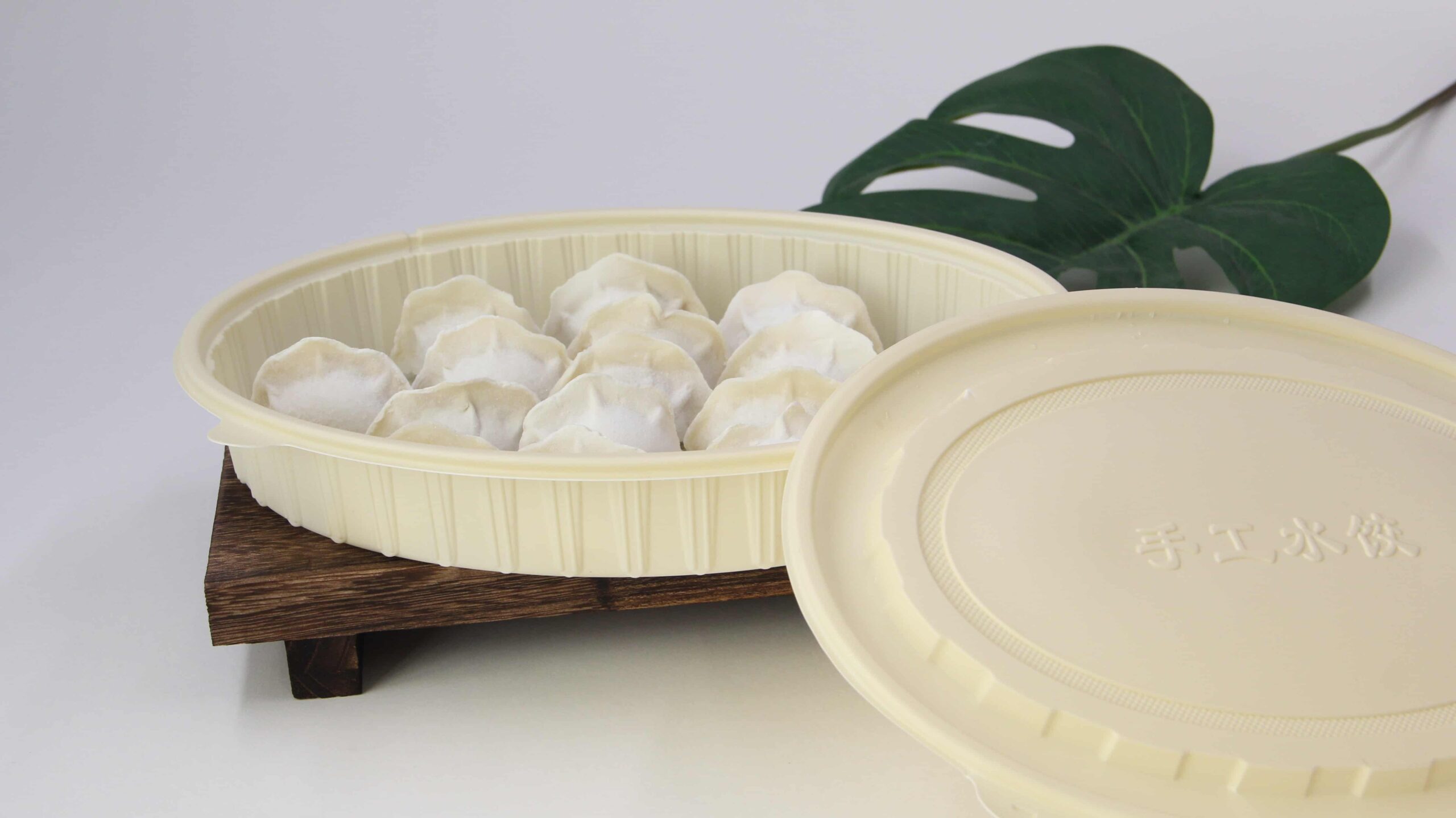
What Corn Starch Food Packaging Actually Is
One of the most common misconceptions is that corn starch packaging is made of “pure starch.” In reality, pure starch is not usable as a standalone food packaging material. It is brittle, highly water-sensitive, and mechanically unstable.
Most commercial corn starch food packaging falls into one of the following categories:
-
Starch-based blends, often combined with PLA or other biodegradable polymers
-
Thermoplastic starch (TPS) modified with plasticizers
-
Starch-filled bioplastics, where starch acts as a filler rather than the primary structure
These formulations are designed to improve processability and strength, but they do not eliminate the core chemical nature of starch: it is hydrophilic, heat-sensitive, and prone to structural change when exposed to moisture.
This is fundamentally different from PP or PET, which are hydrophobic polymers engineered for stability under heat, oil, and humidity. No amount of branding or labeling can change this underlying material behavior.
Heat Resistance: Where Corn Starch Packaging Starts to Fail
Heat is one of the most critical stress factors in food packaging—and one of the most misunderstood when evaluating corn starch products.
Most corn starch food containers have a functional heat tolerance below 100°C, and in many cases significantly lower when moisture is present. While some products may survive brief contact with hot food, sustained heat exposure often leads to:
-
Softening or sagging of container walls
-
Loss of structural rigidity under load
-
Warping at stress points such as corners or rims
A key distinction must be made between initial heat contact and continuous heat exposure. Corn starch packaging may hold hot food for a short time, but prolonged exposure—such as during delivery or holding—dramatically increases failure risk.
In contrast, PP maintains structural stability up to approximately 120°C, and CPET can withstand oven temperatures exceeding 200°C. These materials were engineered for hot food environments. Corn starch was not.
Why “Can Hold Hot Food” Is Not the Same as “Suitable for Hot Food”
Many failures occur because buyers test corn starch containers by placing hot food inside briefly and concluding the material is “heat resistant.” In real applications, heat interacts with moisture, steam, and time—factors that accelerate deformation.
Heat alone may not destroy the container, but heat plus steam almost always will.
Moisture Absorption and Structural Weakening
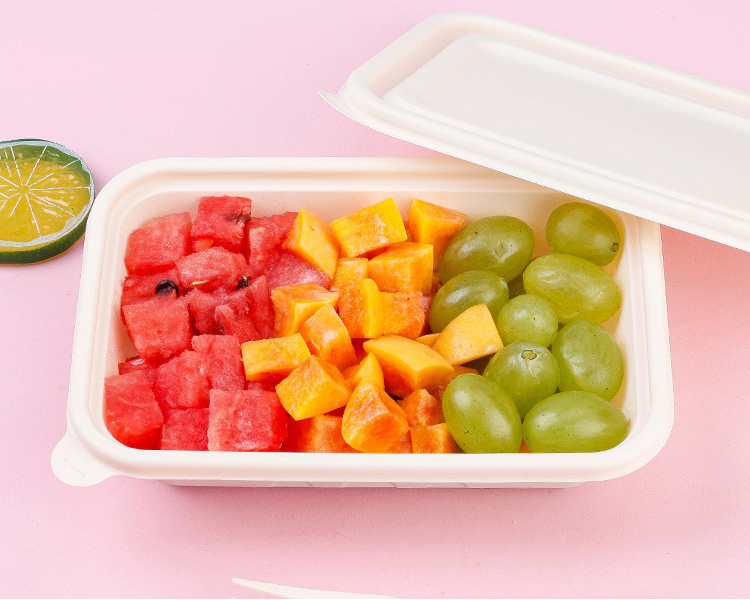
Starch’s natural affinity for water is one of its defining characteristics—and its greatest limitation in food packaging.
When exposed to moisture, corn starch materials begin to absorb water at a molecular level. This absorption leads to:
-
Reduced stiffness
-
Increased flexibility and sagging
-
Progressive loss of load-bearing capacity
Even condensation from hot food can be enough to trigger structural weakening. Over time, the container may appear intact while its bottom gradually softens, increasing the risk of collapse during handling.
This is especially problematic for foods such as:
-
Rice and noodles
-
Steamed vegetables
-
Sauced dishes
-
Hot bakery items with internal moisture
Unlike PP or PET, which repel water, starch-based materials actively interact with it, causing performance degradation that worsens the longer food remains inside.
Oil and Fat Interaction: An Overlooked Failure Point
Oil resistance is often overshadowed by discussions of heat and moisture, but it is equally critical.
Corn starch packaging generally performs poorly with oil-rich foods, particularly when oil is warm. While some containers use surface coatings to delay penetration, these coatings are thin and vulnerable to:
-
Scratching during handling
-
Micro-cracks formed during molding
-
Degradation under heat
Once oil penetrates the surface, it accelerates softening and structural breakdown. Common failure scenarios include:
-
Fried foods causing bottom deformation
-
Grease leakage during delivery
-
Loss of rigidity when holding oily sauces
This makes corn starch packaging a high-risk choice for fried chicken, stir-fried dishes, curries, or any food with free oil.
The Time Factor: Performance Degrades Before Disposal
One of the least discussed aspects of corn starch packaging is performance decay over time.
Unlike traditional plastics, which maintain stable properties throughout their use phase, starch-based materials begin degrading as soon as they encounter heat and moisture. This degradation may not be visible immediately, but it compounds over time.
Key time-related risks include:
-
Food held longer than expected
-
Delivery delays
-
Extended retail display
-
Temperature fluctuations
In real foodservice operations, time is unpredictable. Packaging that only performs well for 10–15 minutes may fail when actual usage stretches to 30–60 minutes.
From a sustainability perspective, this is critical: packaging that fails early often creates more waste than conventional alternatives.
Mechanical Strength and Transport Stress
Food packaging does not operate in isolation. It is stacked, carried, compressed, and shaken throughout its lifecycle.
Corn starch containers generally have:
-
Lower impact resistance
-
Reduced flexural strength
-
Limited tolerance for stacking loads
During delivery, especially in multi-order bags, containers experience uneven pressure. Materials like PP can flex and recover. Corn starch materials often cannot.
Common transport-related failures include:
-
Cracked corners
-
Buckled lids
-
Containers collapsing under stacked weight
These issues are rarely visible during initial testing but appear quickly in real logistics environments.
Compostable in Theory vs Reality
Corn starch packaging is often marketed as “compostable,” but this claim requires context.
Most starch-based packaging is designed for industrial composting conditions, which require:
-
Controlled temperature
-
Specific humidity
-
Sufficient time (often weeks)
In many regions, these conditions are not widely available. As a result, compostable packaging may end up in landfills or incineration streams, where its environmental benefits are reduced or negated.
More importantly, failed packaging creates immediate waste, regardless of end-of-life claims. A container that leaks, collapses, or causes food loss has already failed its sustainability mission.
This is why compostability alone should never be the primary selection criterion.
When Corn Starch Packaging Does Make Sense
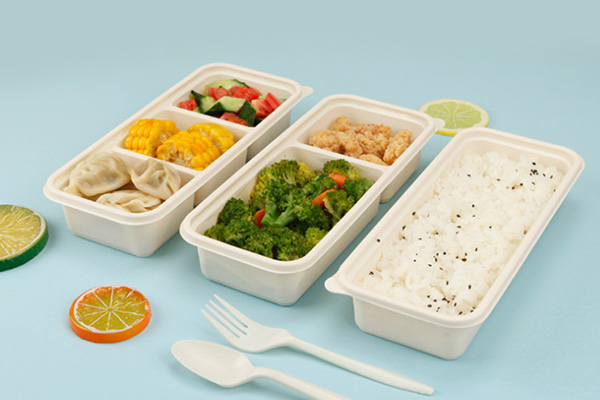
Despite its limitations, corn starch packaging has valid and valuable applications when used correctly.
It performs best in scenarios such as:
-
Cold or room-temperature foods
-
Dry or low-moisture items
-
Short consumption cycles
-
Immediate service environments
Typical suitable uses include:
-
Cold salads
-
Bakery items without fillings
-
Fresh produce
-
Event catering with rapid turnover
In these contexts, corn starch can reduce plastic use without compromising performance.
When Corn Starch Is the Wrong Choice
Corn starch packaging should generally be avoided for:
-
Hot meals
-
Soups or stews
-
Fried or oily foods
-
Delivery-focused businesses
-
Reheating applications
Using corn starch in these scenarios often leads to customer complaints, food spills, and brand damage—outcomes that outweigh any perceived environmental benefit.
Corn Starch vs PP: Functional Boundary Comparison
 |
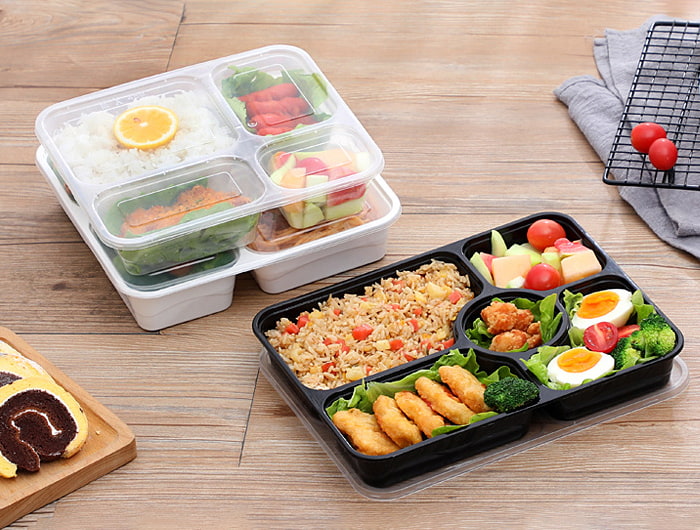 |
At this point in the article, a clear comparison table is highly effective for buyer decision-making. This is an ideal location to insert it.
Suggested placement: After this section, before the conclusion.
Key comparison dimensions:
-
Heat resistance
-
Moisture tolerance
-
Oil resistance
-
Structural strength
-
Delivery suitability
-
Reheating capability
-
Failure risk
This table helps readers visualize where each material belongs, rather than framing the choice as “good vs bad.”
📊 Corn Starch vs PP — Practical Use Boundary Comparison
| Use Dimension | Corn Starch Packaging | PP (Polypropylene) Packaging |
|---|---|---|
| Typical Food Temperature | Cold to warm food only (≤60–70°C recommended) | Cold to hot food (up to ~120°C) |
| Steam Tolerance | Low – steam accelerates softening and deformation | High – maintains structure under steam |
| Moisture Resistance | Poor – absorbs moisture, loses rigidity over time | Excellent – hydrophobic, no absorption |
| Oil & Fat Resistance | Limited – warm oil penetrates and weakens structure | Excellent – suitable for oily and fried food |
| Structural Strength | Moderate at best, declines with heat & moisture | High and stable during use |
| Holding Time | Short – performance degrades over time | Long – stable for extended holding |
| Delivery Suitability | Not recommended – high failure risk | Well suited for delivery & stacking |
| Stacking & Transport Stress | Low tolerance – prone to buckling | High tolerance – resists compression |
| Reheating Capability | Not suitable | Microwave-safe (non-oven) |
| Visual Stability During Use | May warp or sag visibly | Maintains shape and appearance |
| Best-Fit Applications | Cold salads, dry bakery items, short-use scenarios | Hot meals, delivery, sauced & oily foods |
| Failure Risk if Misused | High | Low |
| Environmental Trade-off | Compostable in theory, high waste risk if misapplied | Not compostable, but low food-loss risk |
Material Selection Should Start With Food, Not Labels
One of the biggest mistakes in food packaging procurement is starting with labels—“compostable,” “plastic-free,” “eco”—instead of food behavior.
Food determines:
-
Temperature
-
Moisture release
-
Oil migration
-
Holding time
-
Transport conditions
Packaging must respond to these realities. When materials are chosen based on marketing narratives rather than functional requirements, failure is inevitable.
FAQ
1. Is corn starch packaging suitable for hot food?
Not reliably. Most corn starch containers begin to soften around 60–70°C. Steam and prolonged heat exposure significantly increase the risk of deformation, leakage, and structural failure.
2. Why does corn starch packaging fail during delivery?
Delivery combines heat, steam, moisture, stacking pressure, and time. Corn starch materials absorb moisture and lose rigidity, making them poorly suited for transport and long holding periods.
3. Can corn starch containers hold oily or sauced foods?
Only for short durations and low temperatures. Warm oils can penetrate the material, weakening its structure and increasing the risk of leakage.
4. Is corn starch packaging always more sustainable?
Not necessarily. When misapplied, higher failure rates can lead to increased food waste, replacement packaging, and logistics losses—offsetting its compostability benefits.
5. When is corn starch packaging the right choice?
It performs best for cold foods, dry items, short-use scenarios, and controlled environments where heat, moisture, and holding time are minimal.
6. How does corn starch compare to PP in real use?
Corn starch offers compostability but limited performance tolerance. PP provides predictable performance under heat, steam, oil, and delivery stress, making it more reliable for hot and transported meals.
Conclusion: Corn Starch Has a Role — But a Limited One
Corn starch food packaging is not a universal solution, nor was it ever intended to be. Its value lies in specific, controlled applications, not in replacing all plastics across foodservice.
True sustainability is not achieved by choosing materials that fail in real use. It is achieved by matching material properties to food behavior, minimizing waste, and ensuring packaging performs its primary function: protecting food until consumption.
Corn starch has a role—but only when its limits are respected.
References
-
European Bioplastics – Bioplastics: Materials and Properties
https://www.european-bioplastics.org/bioplastics/materials/ -
U.S. FDA – Indirect Food Additives: Polymers
https://www.fda.gov/food/food-ingredients-packaging/indirect-food-additives-polymers -
TÜV Austria – Compostable Materials and Certification Overview
https://www.tuv-at.be/green-marks/certifications/ok-compost/ -
Packaging Europe – Compostable Packaging Performance Challenges
https://packagingeurope.com/sustainability/compostable-packaging-challenges/ -
Ellen MacArthur Foundation – Global Commitment & Packaging Material Reality
https://ellenmacarthurfoundation.org/topics/plastics/overview
Copyright Statement
© 2026 Dashan Packing. All rights reserved.
This article is an original work created by the Dashan Packing editorial team.
All text, data, and images are the result of our independent research, industry experience,
and product development insights. Reproduction or redistribution of any part of this content
without written permission is strictly prohibited.
Dashan Packing is committed to providing accurate, evidence-based information and
to upholding transparency, originality, and compliance with global intellectual property standards.