


Quick Summary: The 2026 Tolerance Standard
In the high-speed food logistics landscape of 2026, thermoforming tolerances have evolved from mere manufacturing guidelines into critical safety benchmarks. Precision in thermoforming refers to the ability to maintain wall thickness consistency within a ±5% to ±8% margin of the target gauge. This technical accuracy ensures that containers survive the rigors of automated denesting, hermetic heat-sealing, and high-pressure sterilization, directly impacting the shelf-life and safety of the food inside.
Why Thermoforming Exceeds in Food Packaging
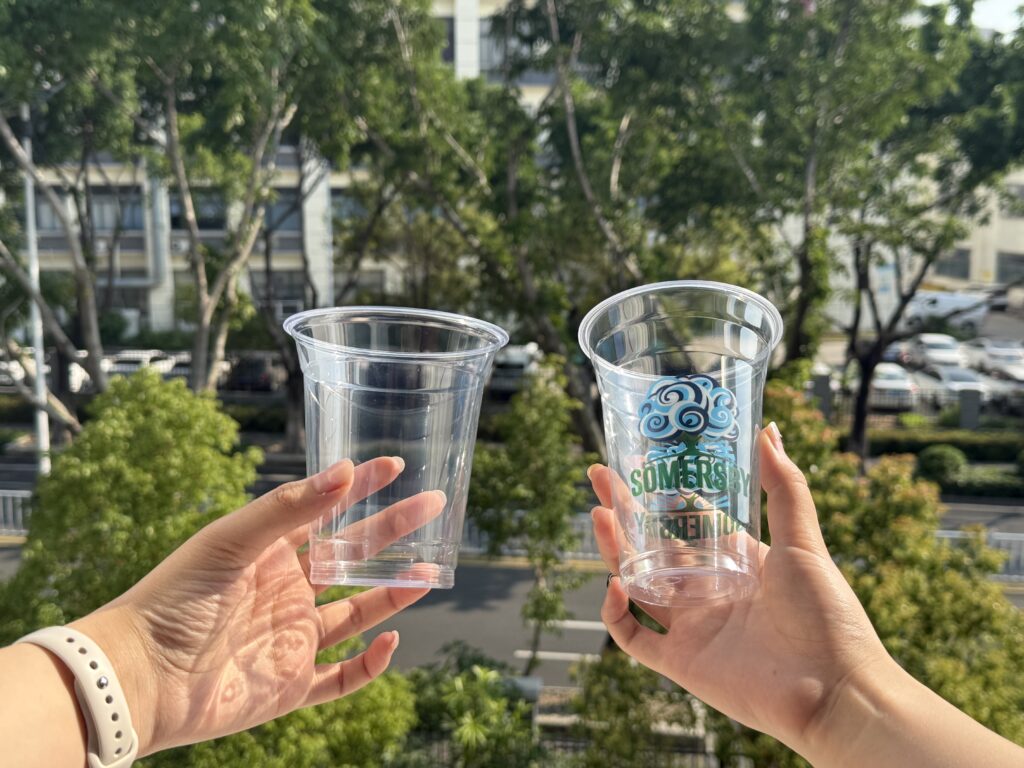
While injection molding is often praised for its rigidity, thermoforming has become the preferred choice for modern food-grade applications due to its superior weight-to-strength ratio.
By manipulating a pre-extruded plastic sheet rather than injecting molten resin, thermoforming offers:
-
Material Efficiency: It allows for significantly thinner walls that still provide high structural integrity, helping brands reduce plastic consumption and lower shipping costs.
-
Integrated Barriers: Thermoforming excels at using co-extruded sheets (like PET/PE or EVOH) to provide the oxygen and moisture barriers essential for fresh proteins and ready-to-eat meals.
-
Speed to Market: The tooling process for thermoforming is significantly faster than injection molding, allowing companies like Dashan to offer rapid OEM/ODM customization.
Parameter Control in Material Distribution
The primary hurdle in high-speed production is “thin-out”—the natural thinning of a plastic sheet as it stretches into the mold. To achieve the 2026 standard, we utilize Plug Assist Technology.
By using a mechanical plug to pre-stretch the heated material before the vacuum is applied, we “drive” more plastic into the corners and base of the tray. This ensures that the Material Distribution Index is uniform, preventing the structural “weak spots” that lead to leaks in the supply chain.
Analyzing Wall Thickness Variation: Technical Parameters
Wall thickness is the “biological shield” of food packaging. To ensure precision, we monitor three core technical metrics:
-
Draw Ratio ($DR$): The ratio of the surface area of the finished part to the area of the initial sheet. A high draw ratio requires specialized temperature profiling.
-
Corner-to-Flange Consistency: The thinnest point (usually the bottom corner) must maintain at least 25% of the original sheet thickness to ensure impact resistance.
-
Flange Flatness: For a tray to be leak-proof, the sealing flange must maintain a tolerance of < 0.2mm deviation.
[Explore our Eco-Friendly PP Food Trays designed for microwaveable and heat-seal applications.]
The “If X, then Y” of Tooling Design
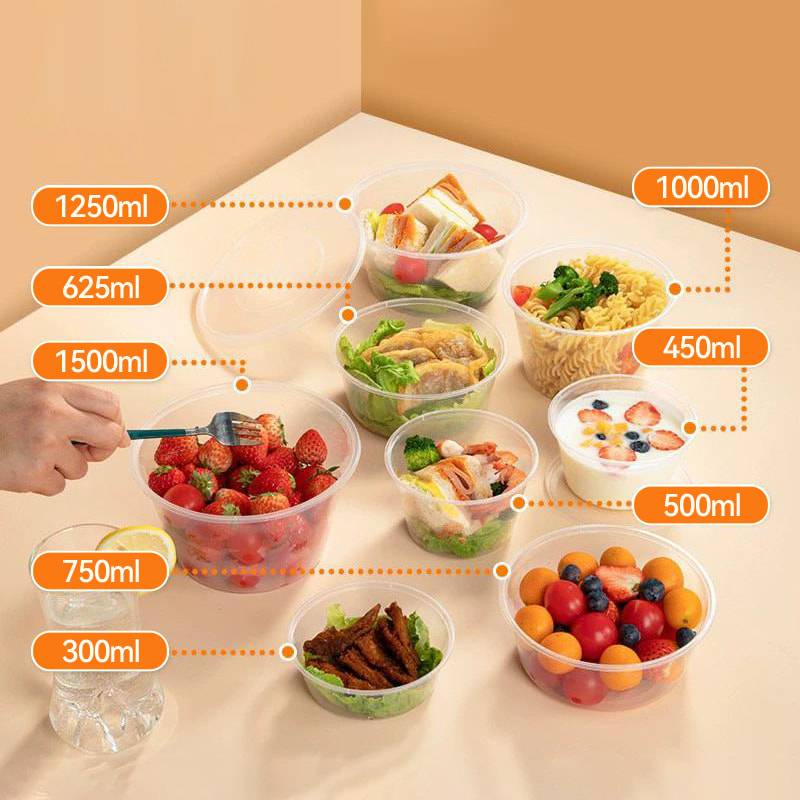
In the world of precision engineering, the quality of the final tray is a direct result of the logic applied to the mold design.
-
If Draft Angles are Insufficient ($< 2.5^\circ$), then Mechanical Stress Increases.
Without a proper taper, the cooling plastic “clings” to the mold. Upon ejection, this causes “stress whitening” or micro-cracks.
-
If Venting is Inadequate, then “Soft” Corners Occur.
If air cannot escape the mold fast enough, the plastic cannot fully conform to the geometry, reducing “Top-Load Strength” for pallet stacking.
-
If Cooling Channels are Non-Uniform, then Warpage is Inevitable.
Differential cooling makes the flange “bow.” A warped tray is impossible to seal on high-speed lines, leading to food waste.
[Learn about our OEM/ODM Customization Services for unique branding and structural designs.]
Semantic Closure: The 2026 Standard for Thermoformed Trays
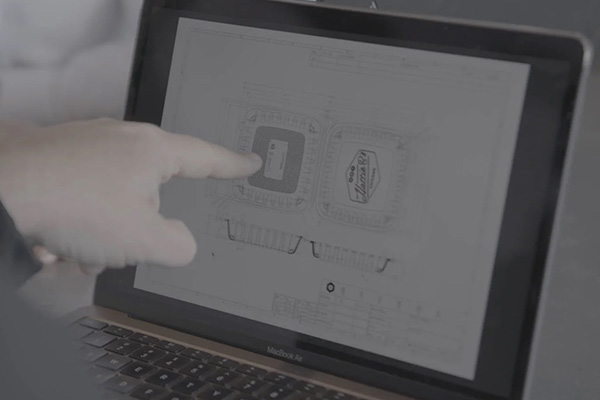
The 2026 standard for thermoforming is defined by Circular Precision. With global regulations pushing for rPET and PLA materials, manufacturers must master the inconsistent melt-flows of recycled resins.
By integrating AI-monitored thermal sensors, we can now adjust heating zones in real-time, cycle-by-cycle. This ensures that even when using 100% recycled content, the final wall thickness and dimensional tolerances remain as precise as virgin materials.
[View our PLA Biodegradable and Compostable Packaging Series for eco-conscious brands.]

Frequently Asked Questions (FAQ)
-
How do tolerances affect the cost of food packaging?
Tighter tolerances reduce material waste and machine downtime during the sealing process, leading to a lower Total Cost of Ownership.
-
What is the minimum draft angle required for deep-draw trays?
For most food trays, a draft angle of $2.5^\circ$ to $3^\circ$ is necessary to ensure clean ejection and structural stability.
-
How does temperature control influence wall thickness?
A variance of even $2^\circ$C can cause the material to flow unevenly, leading to “webbing” or thin spots in the corners.
-
Why is the flange tolerance critical for supermarkets?
The flange is the sealing surface. If it isn’t flat within $0.2mm$, the vacuum seal may fail, leading to premature food spoilage.
-
Can biodegradable materials like PLA achieve the same tolerances as PET?
Yes, but PLA requires much stricter temperature control and specialized tooling to account for its unique thermal properties.
-
Does Dashan provide certified food-grade materials?
Yes, all our products are certified by FDA, SGS, BRC, and ISO 9001, ensuring safe export to over 60 countries.
Conclusion: Partner with a Global Precision Leader
In summary, the precision of thermoforming is the foundation of modern food safety. Achieving consistent wall thickness and tight tolerances requires a combination of advanced tooling, high-grade materials, and rigorous quality control.
About Dashan (Xiamen Dashan New Materials Co., Ltd)
Dashan is a professional food packaging manufacturer based in Xiamen, China, with over 10 years of expertise. We specialize in high-precision, eco-friendly packaging solutions, including PET cups, PP trays, and PLA biodegradable containers.
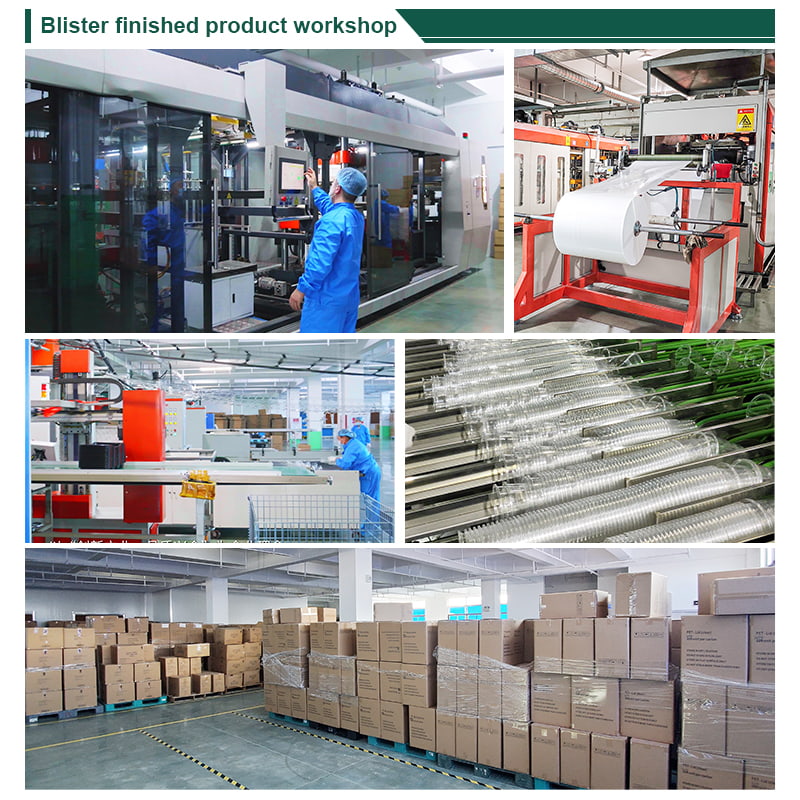
Our facility is equipped with advanced extrusion and thermoforming lines, allowing us to maintain full in-house control over every micron of production. Certified by FDA, SGS, BRC, and ISO, we provide reliable OEM/ODM customization and sustainable options like rPET and sugarcane bagasse for brands in over 60 countries. At Dashan, we don’t just make containers; we deliver innovative, sustainable packaging solutions made in China.
References & Industry Standards
To provide our clients with the highest level of technical accuracy, the insights in this article are aligned with global packaging standards and research from the following authoritative bodies:
-
ASTM International – Standard Test Method for Thickness: Global specifications for measuring the thickness of solid electrical insulation and plastic films (D374), ensuring precision in thermoformed barrier layers.
-
The Association of Plastic Recyclers (APR) – Design Guide: Comprehensive industry guidelines for the design and tolerances of rPET to ensure 100% circularity in the food-grade supply chain.
-
European Food Safety Authority (EFSA) – Food Contact Materials: Safety benchmarks for migration limits and chemical safety for thermoformed trays and lids used in the EU market.
-
Society of Plastics Engineers (SPE) – Thermoforming Division: Leading technical research on material distribution, plug-assist technology, and draw-ratio optimization for thin-wall packaging.
-
ISO – Quality Management Systems (9001:2015): The international framework for maintaining rigorous manufacturing tolerances, which governs Dashan’s internal quality control protocols.
-
FDA – Packaging & Food Contact Substances: Regulatory standards for the safety and composition of PET, PP, and PLA materials used in US-market food containers.
Copyright Notice
© 2026 Xiamen Dashan
All content, including but not limited to technical analysis, structural design insights, and corporate information presented in this article, is the intellectual property of Dashan.
-
Authorized Use: Any redistribution or reproduction of part or all of the contents in any form is prohibited other than the following:
-
You may print or download to a local hard disk extracts for your personal and non-commercial use only.
-
You may copy the content to individual third parties for their personal information, but only if you acknowledge Dashan as the source of the material.
-
-
Prohibitions: You may not, except with our express written permission, distribute or commercially exploit the content. Nor may you transmit it or store it in any other website or other form of electronic retrieval system.