

1. Introduction
In recent years, sustainability has become a significant force driving change in multiple industries, and the food packaging sector is no exception. With increasing environmental concerns about plastic pollution, the food packaging industry is rapidly adopting eco-friendly alternatives. Consumers are now demanding packaging that is not only functional but also environmentally responsible. As the world shifts toward a circular economy, sustainable plastic packaging has gained significant momentum.
This article will explore the growing demand for sustainable plastic packaging, focusing on materials like RPET (Recycled PET), PLA (Polylactic Acid), and CPET (Crystallized PET). It will also examine the technological innovations and real-world examples driving the transition to eco-friendly solutions. Xiamen Dashan, a leader in sustainable food packaging, is at the forefront of this movement. We will discuss how Dashan’s innovative products contribute to this global shift, providing practical insights for businesses and consumers alike.
2. The Growing Demand for Sustainable Packaging
Consumer Preferences
With sustainability becoming an essential part of consumer decision-making, businesses across industries, particularly in food and beverage, are responding to demand for eco-friendly packaging. A survey by Nielsen showed that 73% of global consumers are willing to pay more for products that come in sustainable packaging, reflecting the growing importance of environmental consciousness in purchasing decisions.
Consumers are becoming increasingly aware of the environmental impacts of traditional plastics, and this has accelerated the shift toward alternative, more sustainable materials. According to a 2019 report by the Ellen MacArthur Foundation, only 14% of plastic packaging is recycled globally, leaving a significant portion to end up in landfills or the ocean. As a result, there is an increasing pressure on brands to offer environmentally friendly packaging solutions.
Environmental Impact of Traditional Plastics
Plastic packaging, while practical and cost-effective, is notorious for its environmental impact. The United Nations Environment Programme (UNEP) estimates that 8 million tons of plastic waste enter the ocean each year. Single-use plastic packaging is a major contributor to this problem. In response to these concerns, industries and consumers alike are turning toward sustainable alternatives like RPET and PLA, which are recyclable, biodegradable, and derived from renewable resources.
Global Regulations and Trends
In response to the growing plastic waste problem, various global initiatives and regulatory measures have been implemented. The European Union’s Single-Use Plastics Directive, for instance, aims to drastically reduce the consumption of single-use plastics by 2025, promoting alternatives like recycled plastics and biodegradable materials. Additionally, The U.S. Plastics Pact seeks to create a circular economy for plastic packaging by ensuring that by 2025, all plastic packaging will be recyclable, reusable, or compostable.
These regulatory developments are driving businesses to embrace sustainable packaging solutions to comply with both local and international environmental standards.

3. Key Sustainable Materials in Plastic Packaging
RPET (Recycled PET)
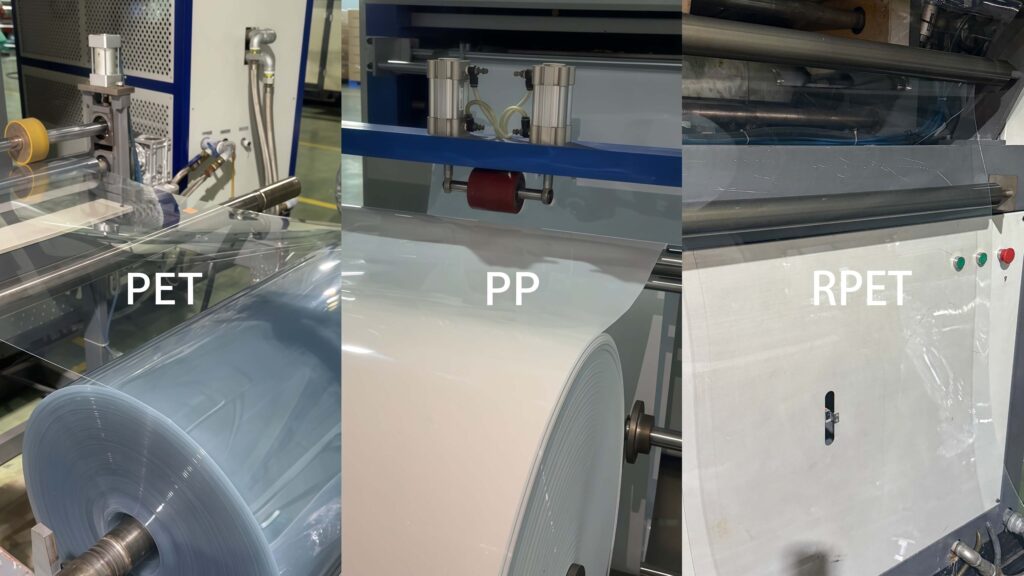
RPET, or recycled polyethylene terephthalate, is a key material in the transition toward sustainable food packaging. RPET is derived from post-consumer plastic waste, such as used bottles, which are cleaned, shredded, and converted back into a usable form. RPET offers several benefits:
-
Reduced carbon footprint: RPET requires up to 60% less energy than producing virgin PET, which helps reduce carbon emissions.
-
Closed-loop recycling: RPET can be recycled multiple times without compromising its quality.
-
Durability and transparency: RPET retains the strength, clarity, and flexibility of virgin PET, making it ideal for food packaging.

PLA (Polylactic Acid)
PLA is an innovative biodegradable plastic made from renewable resources like corn starch or sugarcane. PLA packaging is increasingly used for foodservice applications such as cups, containers, and take-out packaging. Its key features include:
-
Biodegradability: PLA breaks down naturally when exposed to industrial composting conditions, making it a greener alternative to traditional plastics.
-
Non-toxic and food-safe: PLA is non-toxic and completely safe for use in food packaging.
-
Limitations: PLA is sensitive to heat, meaning it is not suitable for packaging hot food or beverages, limiting its use to cold food and drink items.

CPET (Crystallized PET)
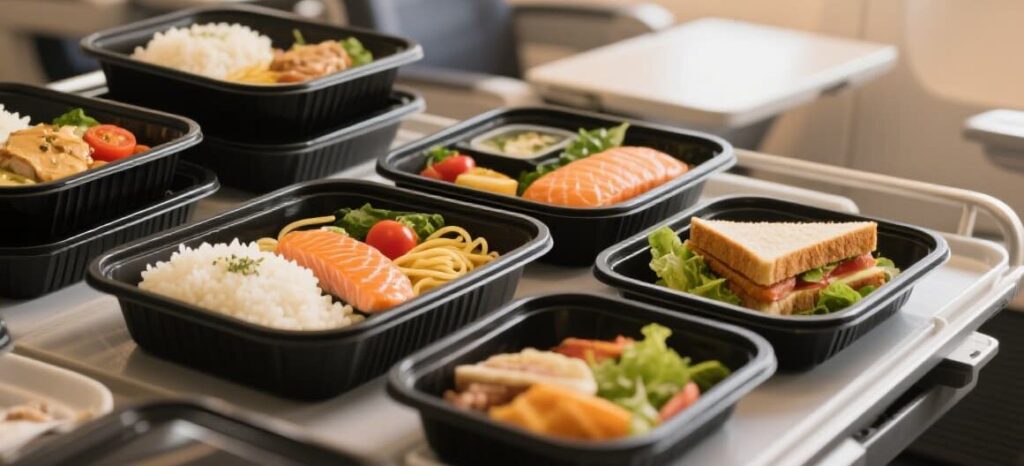
CPET is a high-performance material used in food packaging, especially for microwaveable and oven-safe trays. The main benefits of CPET include:
-
Heat resistance: CPET can withstand higher temperatures than regular PET, making it ideal for microwave and oven use.
-
Recyclability: Like RPET, CPET is 100% recyclable.
-
Durability: CPET is robust, offering enhanced protection for food during storage and transportation.
4. Innovations in Sustainable Packaging Technology
Technological Advances in Plastic Recycling
The development of chemical recycling processes has revolutionized the recycling of plastics. Traditional recycling methods can only handle certain types of plastic, but chemical recycling allows for a broader range of plastics to be recycled back into usable materials. This technology is crucial for closing the loop in plastic recycling, turning waste into high-quality materials suitable for new products.
Another breakthrough has been the use of artificial intelligence (AI) and robotics in sorting plastics for recycling. Automated sorting systems can now more efficiently separate various types of plastics, improving the quality of recycled materials and reducing contamination.
Biodegradable Plastics and Compostable Materials
In addition to PLA, new biodegradable materials are emerging as alternatives to traditional plastics. Innovations in bioplastics offer enhanced functionality, including improved performance in food packaging. While these materials still face challenges, such as the need for industrial composting conditions, they represent a promising direction for the future.
Enhanced Packaging Durability
New processes such as thermoforming and crystallization are enhancing the durability of sustainable packaging materials. These innovations help improve the performance of materials like PLA and RPET, making them suitable for a wider range of applications in food packaging.
5. Xiamen Dashan’s Role in Sustainable Packaging
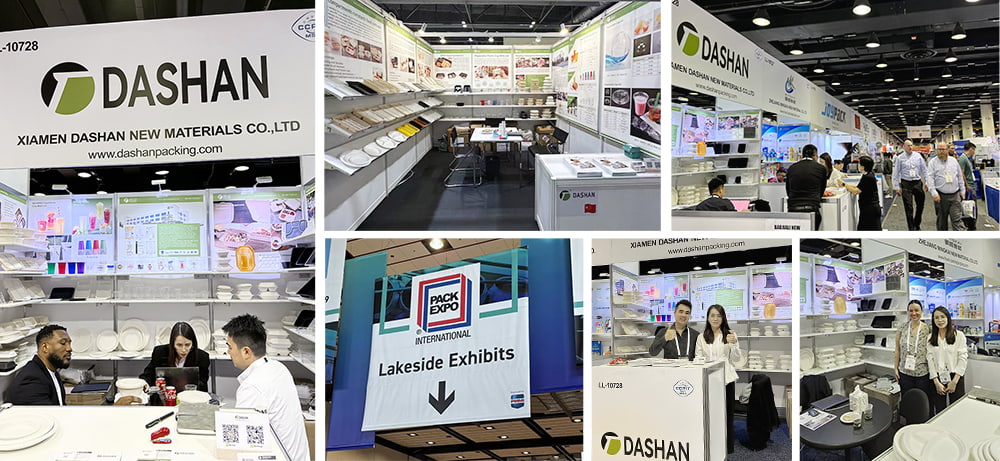
Xiamen Dashan is a trusted leader in the field of sustainable plastic packaging. The company specializes in producing high-quality packaging solutions made from RPET, PLA, and CPET materials. Dashan’s products are designed to meet the needs of the foodservice, retail, and distribution sectors while promoting sustainability.
Innovative Materials
Dashan offers RPET packaging that is made from post-consumer recycled plastic. These packaging products are designed to reduce waste and energy consumption while maintaining the performance standards required in food packaging. Additionally, Dashan’s PLA cups and containers offer a biodegradable alternative for cold food and drink applications, aligning with the growing demand for compostable materials.
Customization and Global Reach
Dashan is committed to providing customized packaging solutions tailored to the unique needs of its clients. The company works closely with global retailers and foodservice providers to deliver packaging that meets sustainability goals, as well as specific design and functionality requirements. Dashan’s international presence ensures that its products meet the highest global standards for quality and environmental responsibility.
6. Case Studies of Successful Implementations
Retail and Foodservice Examples
Several leading foodservice chains and retailers have successfully implemented sustainable packaging solutions. For instance, a major fast-food chain in Europe transitioned to RPET packaging for its salad and fruit packaging, significantly reducing plastic waste. Similarly, a large U.S.-based coffee chain switched to PLA cups and lids for its cold beverages, supporting its commitment to sustainability.
Challenges Faced by Companies
While the transition to sustainable packaging is gaining momentum, challenges remain. Higher material costs and limited availability of raw materials are among the main barriers. However, companies like Xiamen Dashan are helping businesses overcome these obstacles by providing affordable, high-quality alternatives that meet both sustainability and performance standards.
7. Environmental and Economic Benefits of Sustainable Packaging
Environmental Benefits
Switching to sustainable packaging materials like RPET, PLA, and CPET reduces the environmental impact of food packaging. These materials help reduce plastic waste, decrease carbon emissions, and promote a circular economy by being recyclable or biodegradable.
Economic Opportunities
Adopting sustainable packaging solutions not only benefits the environment but also offers economic opportunities for businesses. By embracing eco-friendly alternatives, companies can enhance their brand image, attract environmentally-conscious consumers, and comply with regulations, all of which contribute to long-term profitability.
8. Challenges and Barriers to Widespread Adoption
Despite the growing demand for sustainable packaging, several challenges remain:
-
Higher production costs: Sustainable materials tend to cost more than traditional plastics, which can be a barrier for small and mid-sized businesses.
-
Supply chain challenges: Availability and scalability of sustainable materials can be limited.
-
Consumer education: Not all consumers are aware of the benefits of sustainable packaging, and businesses must work to educate them on the environmental impact of their choices.
9. The Future of Sustainable Food Packaging
As the demand for sustainable packaging continues to grow, we can expect further innovations in materials, designs, and recycling technologies. The future of food packaging will likely see an increased focus on biodegradable and recyclable solutions, as well as a stronger emphasis on circular economy models.
10. FAQs
-
What is the difference between RPET and regular PET plastic?
RPET is made from recycled plastic materials, reducing the need for virgin PET production and offering a more sustainable alternative. -
Why is PLA considered eco-friendly, and what are its limitations?
PLA is made from renewable resources like corn starch and is biodegradable. However, it is not suitable for hot food applications and requires specific composting conditions to break down. -
How does sustainable packaging benefit businesses economically?
Sustainable packaging can improve brand loyalty, reduce costs in the long term (e.g., by minimizing waste), and meet regulatory demands, providing businesses with a competitive edge. -
What are the environmental impacts of using traditional plastic packaging?
Traditional plastics contribute to plastic pollution, taking hundreds of years to degrade and often ending up in landfills or oceans, harming ecosystems. -
How do advancements in plastic recycling contribute to sustainability?
New recycling technologies, such as chemical recycling, allow more types of plastics to be recycled into high-quality materials, reducing reliance on virgin plastic production. -
Can PLA packaging be used for hot food?
No, PLA is not suitable for hot food packaging as it tends to break down at higher temperatures. -
What certifications should businesses look for when selecting sustainable packaging?
Businesses should look for certifications like FSC, ISO 14001, and BPI Compostable to ensure the sustainability and environmental responsibility of their packaging.
11. Conclusion
The transition to sustainable packaging is no longer a choice but a necessity in today’s food packaging industry. With materials like RPET, PLA, and CPET offering viable alternatives to traditional plastics, the future of packaging looks greener. Xiamen Dashan is proud to be at the forefront of this transformation, providing innovative and customizable solutions that help businesses meet sustainability goals while maintaining the high standards required in the food industry.
References
Copyright Statement
© 2026 Dashan Packing. All rights reserved.
This article is an original work created by the Dashan Packing editorial team.
All text, data, and images are the result of our independent research, industry experience,
and product development insights. Reproduction or redistribution of any part of this content
without written permission is strictly prohibited.
Dashan Packing is committed to providing accurate, evidence-based information and
to upholding transparency, originality, and compliance with global intellectual property standards.