

I. Introduction: The Need for Sustainable Airline Catering Packaging
The aviation industry is under increasing pressure to reduce its environmental impact. Packaging, particularly in airline catering, has become a major focus as airlines seek to meet both regulatory requirements and consumer expectations for sustainability. Global plastic bans, increasing waste regulations, and rising consumer demand for eco-friendly products have pushed airlines to rethink their packaging strategies.
Airline catering packaging, while needing to meet strict food safety and performance standards, must also address sustainability. The challenge is to find materials that are lightweight, durable, heat-resistant, and, most importantly, environmentally friendly.
In this article, we explore how sustainable packaging solutions, including PET, RPET, CPET, PLA, bagasse, and cornstarch products, are transforming the airline catering industry, with a particular focus on DASHAN’s sustainable packaging solutions for beverage cups and hot meal trays.
II. Key Packaging Materials in Airline Catering
2.1 PET and RPET for Beverage Cups
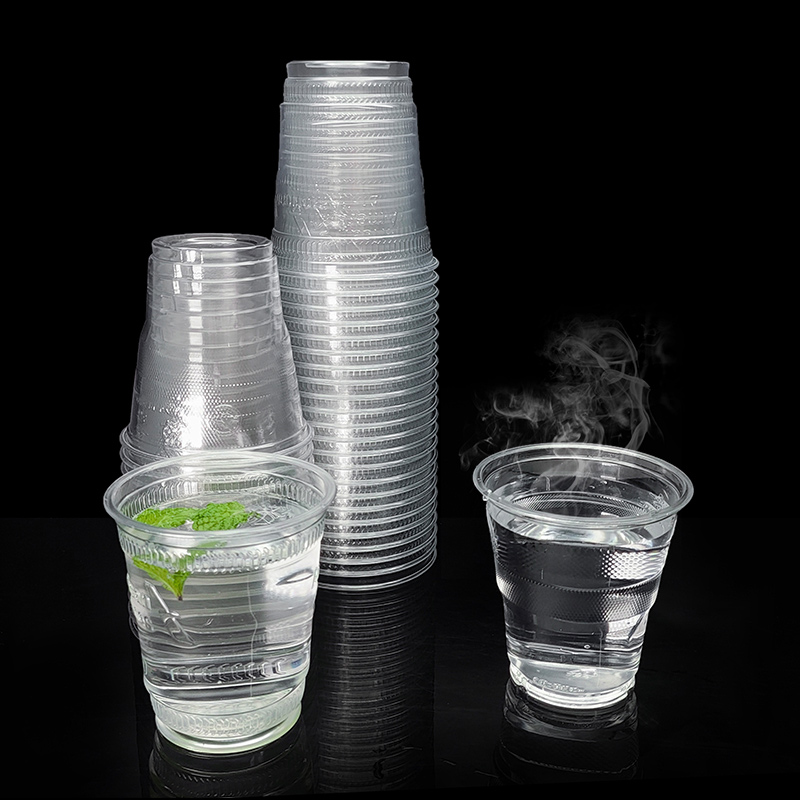
PET (Polyethylene Terephthalate) is a clear, lightweight material commonly used for beverage cups and packaging. With increasing regulations demanding a reduction in plastic waste, RPET (Recycled PET) is gaining traction as a recycled alternative to virgin PET, providing a more sustainable option while maintaining performance and clarity.
-
Benefits: PET and RPET are lightweight, recyclable, and meet international food safety regulations. They are perfect for cold drinks and beverages.
-
Applications: Cold beverage cups, drink lids, and packaging components.
DASHAN’s PET and RPET Solutions: DASHAN offers PET beverage cups that are compliant with international food-contact safety standards. The cups are made from recyclable PET or RPET, meeting EU and US recycled content mandates, making them a great choice for airlines looking to improve their sustainability efforts.
2.2 CPET for Hot Meal Trays
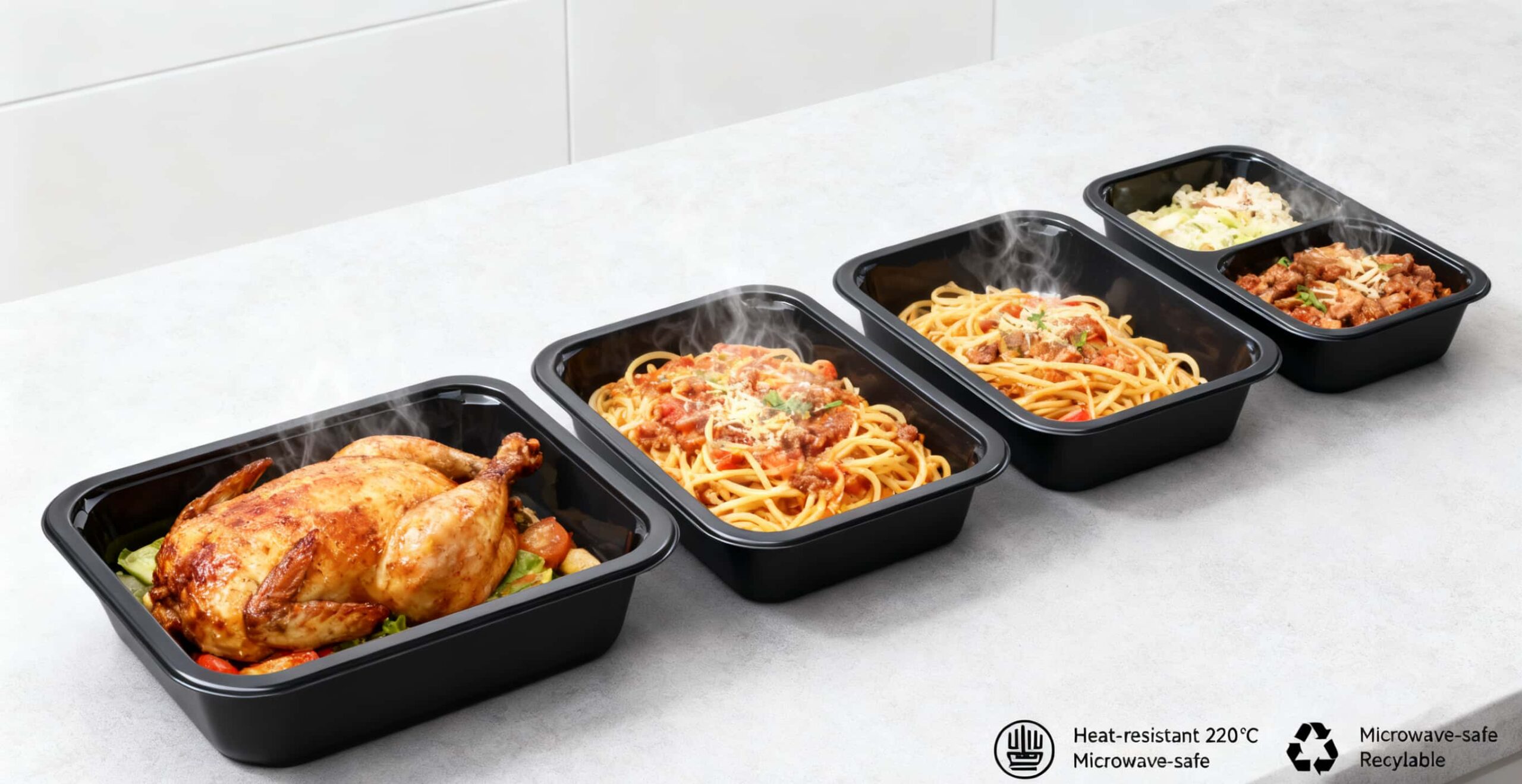
CPET (Crystallized Polyethylene Terephthalate) is a high-performance material designed for high-temperature applications. It is used in the airline catering industry for hot meal trays, as it can withstand high temperatures (up to 220°C), making it ideal for microwaving and oven heating.
-
Benefits: CPET offers excellent heat resistance, making it suitable for pre-packaged and reheated meals on flights. It is also recyclable and compliant with many global food-contact regulations.
-
Applications: Hot meal trays, microwaveable containers, and ready-to-eat meal packaging.
DASHAN’s CPET Meal Trays: DASHAN provides CPET trays that are ideal for airline catering, offering high heat resistance and structural integrity. The trays are fully recyclable and can be used for both microwave and oven applications. These trays are perfect for airlines offering hot meals on longer flights and are in line with sustainability initiatives.
2.3 Bagasse and PLA Alternatives

Bagasse, a fibrous material derived from sugarcane, has emerged as a popular alternative to foam and other non-recyclable packaging materials. PLA (Polylactic Acid) is another biodegradable option derived from renewable resources like corn starch or sugarcane.
-
Benefits: Both bagasse and PLA products are compostable and provide sustainable alternatives to traditional plastics. Bagasse offers the added benefit of being free from harmful chemicals like PFAS.
-
Applications: Short-haul meals, snack boxes, coffee cups, and cutlery.
DASHAN’s Bagasse Products: DASHAN offers molded fiber (bagasse) products, including clamshell containers and bowls, which are suitable for airlines looking for an eco-friendly alternative to foam containers. These products are compostable, providing a sustainable option for short-haul flights.
DASHAN’s PLA Solutions: PLA products like cups, lids, and trays are biodegradable and are a great solution for airlines looking to reduce their plastic waste footprint. PLA’s ability to be composted in industrial composting facilities aligns with many regional sustainability regulations.
III. The Role of PET and CPET in Airline Catering
3.1 PET: The Preferred Choice for Airline Beverage Cups
PET is lightweight and offers high clarity, which makes it ideal for serving beverages in a way that is visually appealing to passengers. Additionally, PET is fully recyclable and often made from recycled materials (RPET), contributing to reduced environmental impact.
-
DASHAN’s PET Beverage Cups: DASHAN’s PET beverage cups are a preferred choice for airlines due to their lightweight, recyclable nature, and high clarity. These cups meet food-contact safety standards and are available in both PET and RPET options. This versatility allows airlines to align with sustainability regulations while maintaining high-performance standards for cold beverages.
3.2 CPET: Ideal for Hot Meal Trays
CPET is crucial for airline catering because it is capable of withstanding the high temperatures required for reheating meals. It allows for efficient meal service on board while reducing the risk of leakage or deformity in containers.
-
DASHAN’s CPET Meal Trays: DASHAN provides CPET trays that are designed to handle high-temperature applications, making them ideal for ready meals that require microwave or oven heating. These trays are durable, recyclable, and aligned with sustainability goals, making them an excellent choice for airlines seeking high-performance, eco-friendly packaging solutions.
IV. Comparison Table: PET/RPET vs Bagasse vs CPET for Airline Catering
| Property | PET | RPET | CPET | Bagasse | PLA |
|---|---|---|---|---|---|
| Weight | Light | Light | Moderate | Medium | Light |
| Heat Resistance | Low | Low | High | Medium | Low |
| Microwave Safe | No | No | Yes | No | Yes |
| Recyclability | Yes | Yes | Yes | Compostable | Compostable |
| Performance | High for cold drinks | High for cold drinks | High for hot meals | Ideal for short-haul meals | Limited to cold items |
| Cost | Lower | Lower | Higher | Moderate | Moderate |
V. Environmental Benefits of PET and CPET in Airline Catering
5.1 PET and RPET: The Circular Economy Solution
-
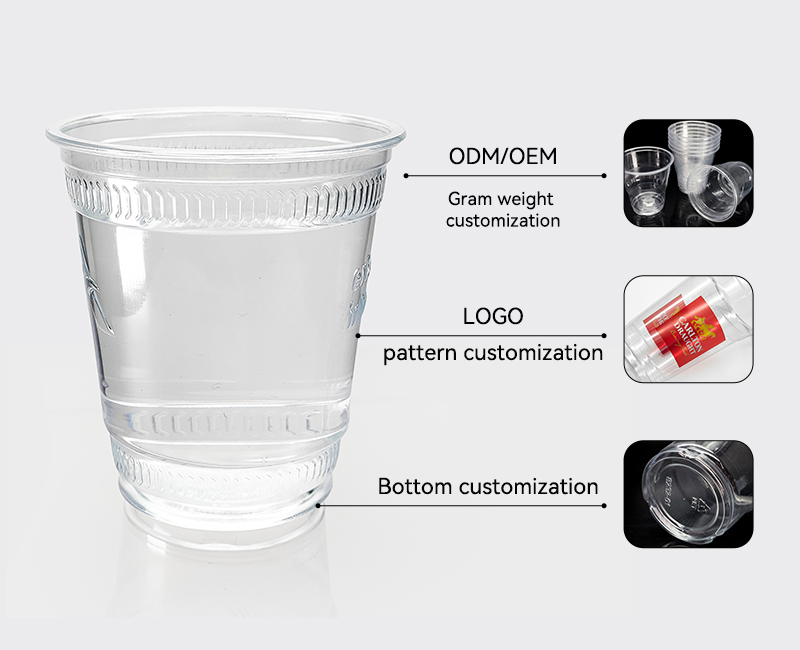
Reduced Dependency on Fossil Fuels: By using RPET, airlines can reduce their reliance on virgin plastic, supporting the circular economy by recycling materials back into the supply chain.
-
Recyclability: Both PET and RPET are highly recyclable, reducing waste and ensuring that packaging materials can be repurposed into new products.
5.2 CPET: Sustainable and High-Performance for Heat Applications
-
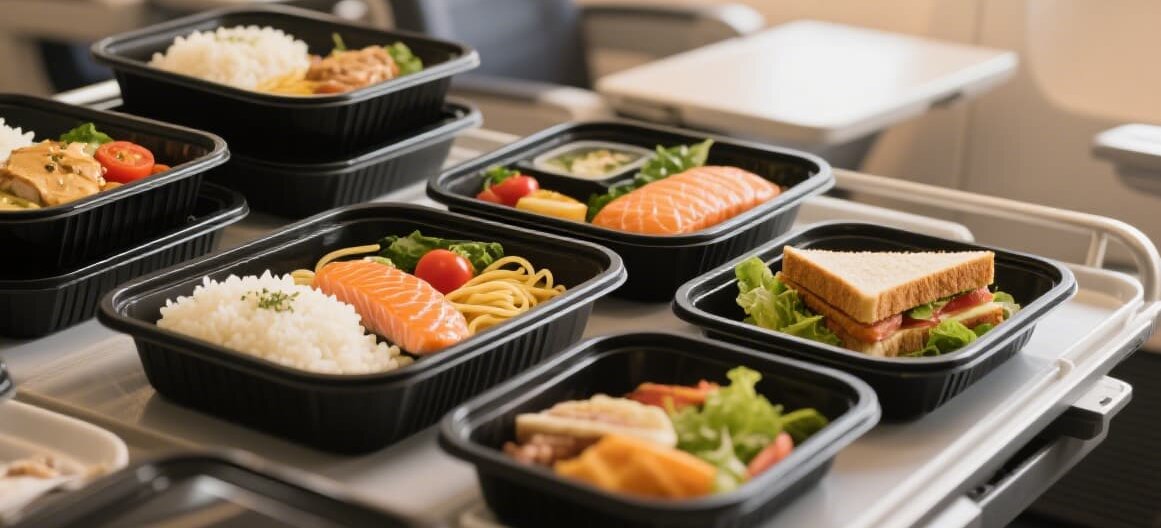
High Temperature Resistance: CPET’s ability to withstand high temperatures makes it ideal for microwave and oven applications, offering a sustainable and functional solution for hot meals served during flights.
-
Compliant with Global Regulations: CPET packaging meets food safety regulations and can be recycled in many regions, making it an environmentally responsible option for airlines.
VI. Challenges in Implementing Sustainable Packaging
6.1 High Initial Costs
Sustainable materials like CPET and PLA can be more expensive than traditional plastics. However, as demand increases and production scales, costs are expected to become more competitive.
6.2 Regulatory Compliance Across Regions
Packaging materials must comply with regional regulations, and airlines need to ensure their packaging meets specific requirements for food-contact safety and recyclability.
VII. Why Choose DASHAN for Airline Catering Packaging?
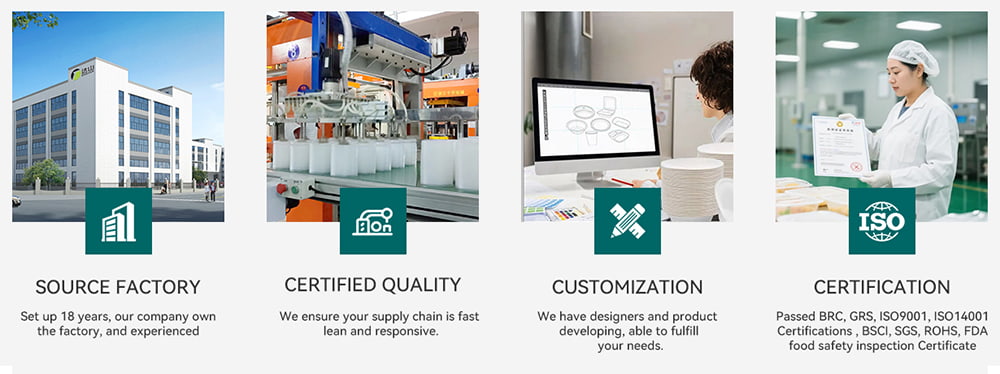
7.1 Wide Range of Materials
DASHAN offers a diverse range of materials including PET, RPET, CPET, PLA, bagasse, and cornstarch, providing airlines with flexible, sustainable packaging solutions for different needs and catering models.
7.2 Compliant with International Regulations
DASHAN’s products are manufactured in compliance with international food-contact safety standards, ensuring airlines can meet global regulatory requirements.
7.3 Efficient Supply Chain & Cost-Effective Solutions
DASHAN ensures a stable supply chain, scalable production capacity, and reliable delivery to support airlines’ packaging needs globally.
VIII. Future of Sustainable Airline Catering Packaging
-
Innovations in Materials: New bio-based and recyclable materials will continue to shape sustainable airline packaging, helping airlines achieve their sustainability goals.
-
Increased Consumer Demand for Sustainability: As passengers become more environmentally conscious, airlines that adopt sustainable packaging solutions will improve their brand reputation.
-
Regulatory Pressure: Increased regulation and plastic bans will drive airlines to adopt more sustainable packaging solutions, including CPET and PLA.
FAQ
1. Why is sustainable packaging important for airline catering?
Airlines are under pressure to reduce carbon emissions and plastic waste. Packaging plays a significant role in onboard waste generation, fuel efficiency (due to weight), and ESG reporting.
2. Why is PET widely used for airline beverage cups?
PET is lightweight, transparent, food-safe, and recyclable. When using RPET, airlines can also incorporate recycled content, supporting circular economy goals.
3. What makes CPET suitable for airline hot meal trays?
CPET can withstand high temperatures (up to around 220°C), making it ideal for oven and microwave reheating. It maintains structural integrity during flight service.
4. How does CPET compare to other materials for hot meals?
Compared to standard PET, CPET offers superior heat resistance. Compared to bagasse, CPET provides better durability and performance in high-temperature reheating applications.
5. Are PET and CPET recyclable?
Yes. PET and CPET are recyclable in many regions, particularly where PET recycling streams are established. RPET further supports recycled-content initiatives.
6. Why choose DASHAN for airline catering packaging?
DASHAN provides compliant PET aviation cups and CPET meal trays designed for international food-contact standards. With scalable production and export experience, DASHAN supports airlines and catering suppliers seeking reliable, sustainable packaging solutions.
Conclusion
Sustainable packaging is not just a trend but a necessity for the airline catering industry. With global plastic bans and rising consumer demand for eco-friendly products, airlines must adopt sustainable solutions such as PET, RPET, and CPET for their packaging needs. DASHAN provides high-quality, compliant, and sustainable packaging solutions to help airlines navigate this transition, offering products that meet global food-contact safety standards and regulatory requirements. By making the shift to eco-friendly materials, airlines can reduce their environmental footprint, enhance their brand image, and contribute to a circular economy.
References
-
International Air Transport Association – Sustainability and net-zero initiatives
https://www.iata.org/en/programs/environment/ -
European Commission – Single-Use Plastics Directive
https://environment.ec.europa.eu/topics/plastics/single-use-plastics_en -
U.S. Environmental Protection Agency – Sustainable Materials Management
https://www.epa.gov/smm -
OECD – Global Plastics Outlook
https://www.oecd.org/environment/plastics/ -
United Nations Environment Programme – Global plastic pollution resources
https://www.unep.org/plastic-pollution
Copyright Statement
© 2026 Dashan Packing. All rights reserved.
This article is an original work created by the Dashan Packing editorial team.
All text, data, and images are the result of our independent research, industry experience,
and product development insights. Reproduction or redistribution of any part of this content
without written permission is strictly prohibited.
Dashan Packing is committed to providing accurate, evidence-based information and
to upholding transparency, originality, and compliance with global intellectual property standards.