

Introduction
For decades, food packaging in Europe was primarily evaluated on three criteria: product protection, food safety, and cost efficiency. If a package could protect food throughout transportation, comply with food-contact regulations, and remain commercially competitive, it was generally considered suitable for the European market.
Today, that standard is changing.
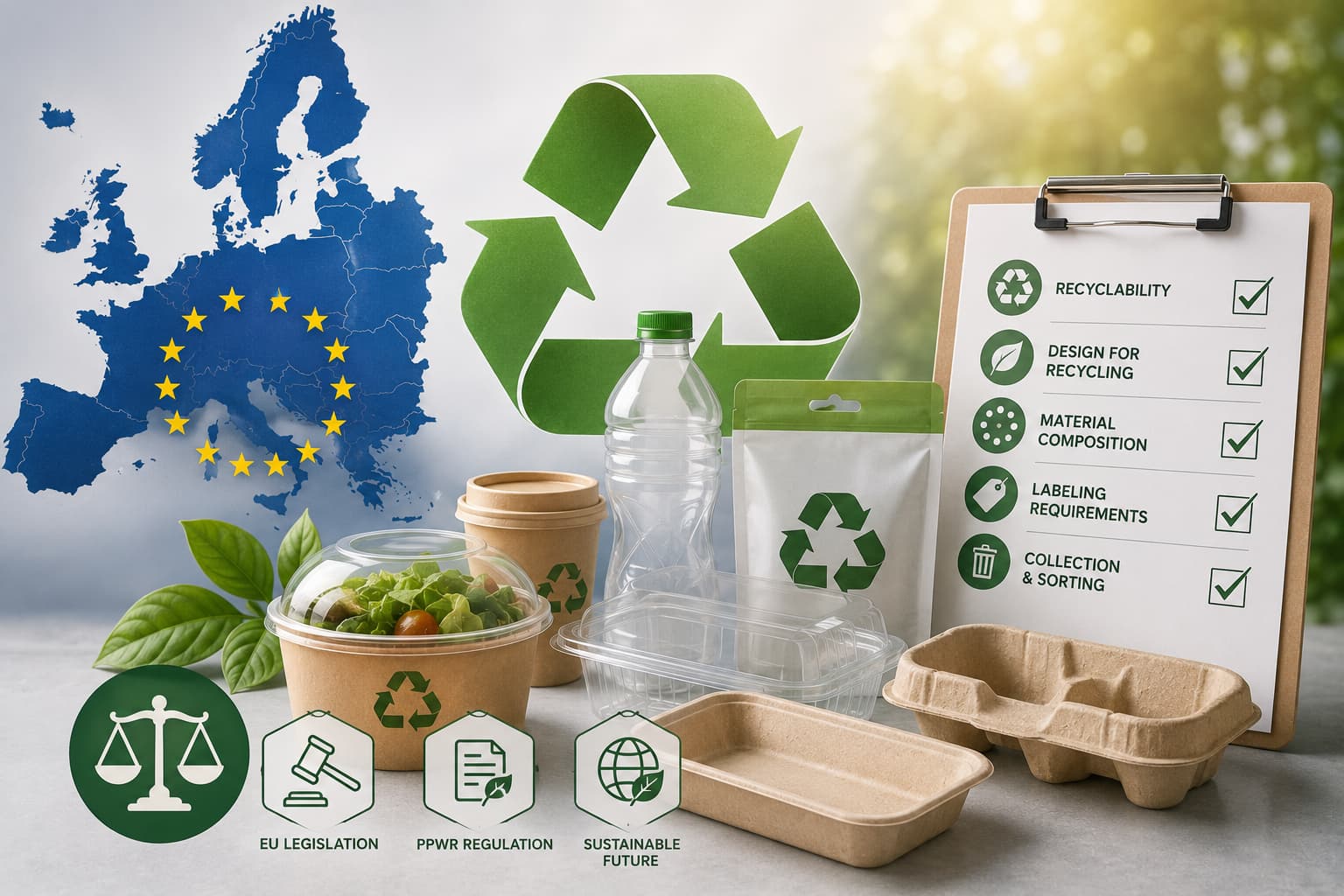
Across the European Union, packaging is increasingly viewed not as waste to be managed after use, but as a resource that should remain within a circular economy. This shift has fundamentally changed how packaging is designed, manufactured, and assessed. Recyclability is no longer an optional sustainability feature or a marketing advantage. It is becoming a regulatory expectation that will influence market access, procurement decisions, and long-term competitiveness.
For food exporters, this means that complying with food safety regulations alone is no longer sufficient. A package may fully satisfy food-contact requirements yet still fall short if it cannot be efficiently collected, sorted, and recycled within Europe’s waste management infrastructure.
The introduction of the Packaging and Packaging Waste Regulation (PPWR) reflects this broader transformation. Rather than focusing only on reducing packaging waste, the regulation encourages businesses to rethink packaging from the earliest stages of product development, emphasizing material selection, structural design, recyclability, and resource efficiency.
For companies supplying food packaging to Europe, understanding these requirements has become essential. Those that adapt early will be better positioned to meet customer expectations, reduce future compliance risks, and strengthen their competitiveness in one of the world’s most demanding packaging markets.
Europe Is Redefining What “Good Packaging” Means
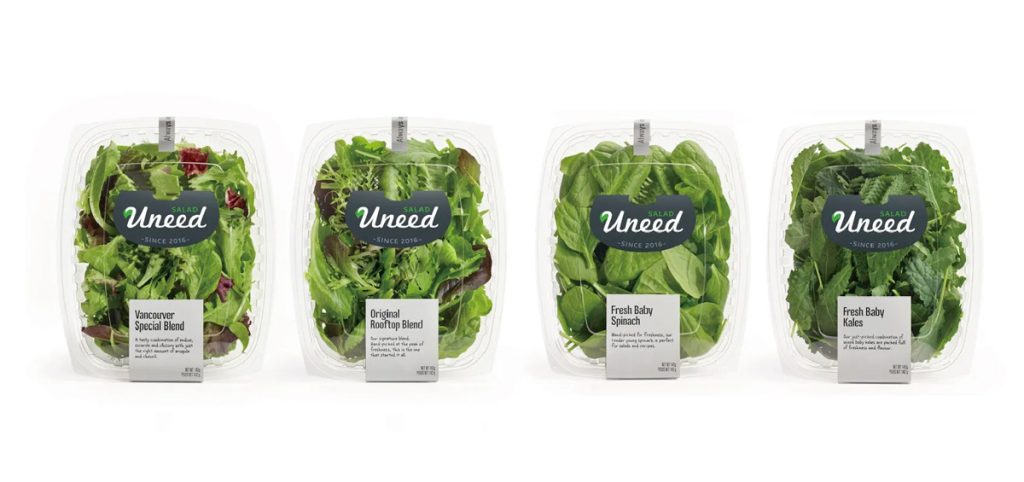
One of the biggest misconceptions among exporters is that recyclable packaging simply means using a recyclable material. In practice, European regulators have adopted a much broader definition.
A package is not considered recyclable merely because the material itself can technically be recycled. Instead, the entire packaging system is evaluated. Authorities increasingly ask whether the package can realistically move through existing collection, sorting, and recycling systems and whether the recovered material can be used again in economically viable applications.
This represents a significant shift in thinking.
In the past, packaging design focused primarily on product performance. Today, packaging is expected to perform throughout its entire lifecycle—from manufacturing and retail distribution to post-consumer collection and material recovery.
This lifecycle approach lies at the heart of Europe’s circular economy strategy. Packaging is no longer designed only for consumers; it is also designed for recycling facilities.
For food packaging manufacturers, this means that decisions such as combining multiple materials, selecting labels, applying adhesives, or using decorative finishes may influence recyclability just as much as the choice of the base material itself.
PPWR Is Changing Packaging Design, Not Just Packaging Disposal
Among recent European policies, the Packaging and Packaging Waste Regulation (PPWR) has attracted considerable attention because it establishes a common framework for packaging across EU member states.
Unlike previous legislation that focused largely on waste management, PPWR places greater emphasis on prevention and design.
Its objective is straightforward: packaging entering the European market should be designed so that it can remain within a circular material flow for as long as possible.
For food packaging manufacturers, this changes the starting point of product development. Instead of asking how a package can best protect food, companies must now ask an additional question: How will this package be recycled after use?
This change influences nearly every aspect of packaging design.
Material combinations, closures, labels, inks, additives, and decorative elements are increasingly evaluated not only for their functional performance but also for their impact on recycling efficiency.
In other words, recyclability is becoming a design requirement rather than an end-of-life consideration.
Designing for Recycling Has Become a Competitive Advantage
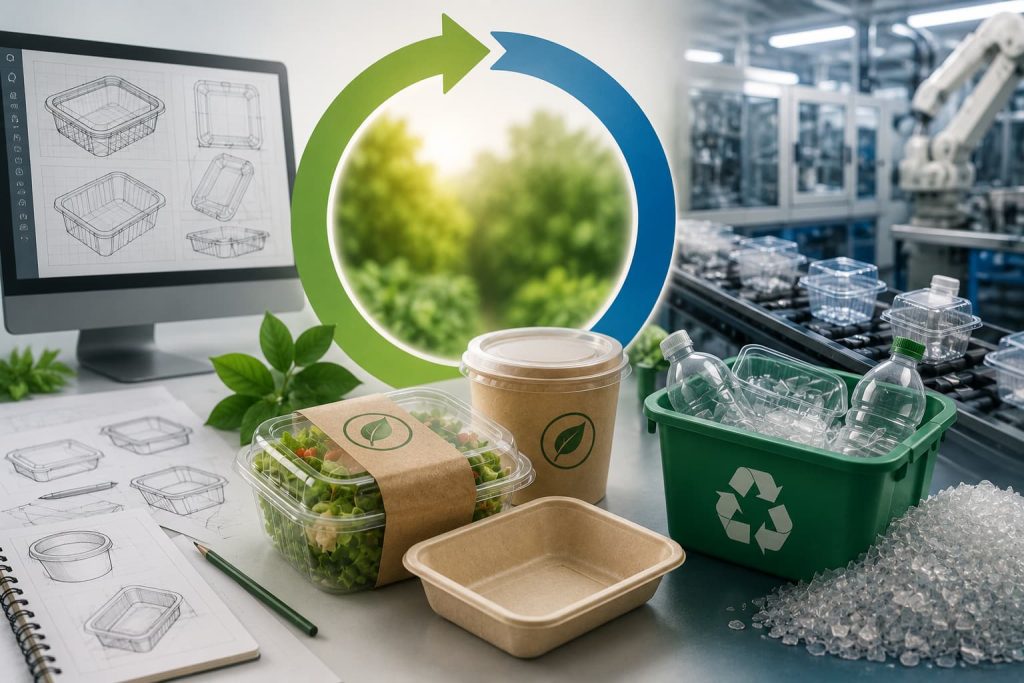
One concept that appears repeatedly in European packaging discussions is Design for Recycling (DfR).
Although the principle sounds straightforward, its implications are significant.
Design for Recycling encourages manufacturers to simplify packaging structures wherever possible and avoid components that interfere with efficient recycling processes.
For example, a food container manufactured from recyclable PP or PET may still experience recycling challenges if it uses oversized labels that cannot be separated during processing, incompatible adhesives, unnecessary multi-material combinations, or dark pigments that are difficult for optical sorting equipment to detect.
These details may seem minor during product development, yet they can determine whether packaging performs well within modern recycling systems.
As a result, European buyers increasingly evaluate packaging not only by appearance or price but also by its compatibility with established recycling infrastructure.
This trend is encouraging packaging manufacturers to develop cleaner, simpler, and more standardized designs without compromising food protection or consumer convenience.
Material Selection Is Becoming More Strategic
The growing focus on recyclability does not mean that Europe is promoting one packaging material while rejecting all others.
Instead, regulators encourage businesses to select materials that are appropriate for the intended application and compatible with existing recovery systems.
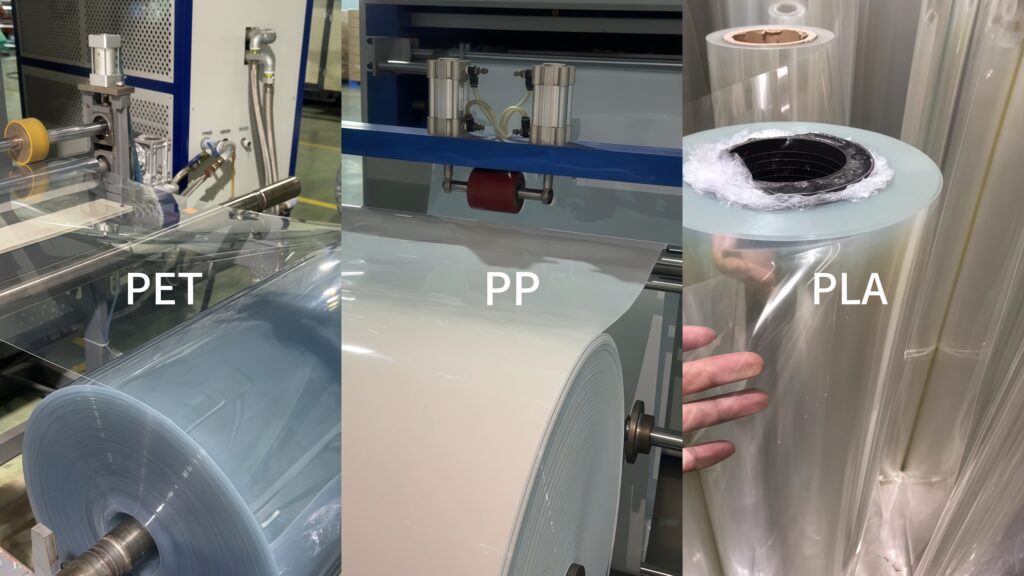
For food packaging, PP and PET continue to play important roles because both materials benefit from relatively mature recycling infrastructures across much of Europe. Their performance, food-contact suitability, and widespread availability make them practical choices for many ready meals, takeaway foods, fresh produce, and retail packaging applications.
At the same time, materials such as molded bagasse, PLA, and other compostable solutions are finding opportunities in specific applications where local waste-management systems support industrial composting. However, their suitability often depends on regional infrastructure rather than the material itself.
For exporters, the key lesson is clear: selecting a material should involve more than sustainability claims. It should also consider how that material will be managed within the destination market after use.
Documentation Is Becoming Just as Important as the Packaging Itself
As regulatory requirements become more comprehensive, European buyers are requesting more technical documentation from their suppliers.
Importers increasingly expect packaging manufacturers to provide evidence supporting compliance, including declarations of conformity for food-contact materials, technical specifications, material composition, migration testing, and, where applicable, information related to recycled content or recyclability.
This reflects a broader shift in procurement practices.
Packaging is no longer evaluated solely as a product; it is also assessed through the quality of the documentation supporting it.
Suppliers capable of providing complete, transparent, and well-organized technical information often gain a competitive advantage during purchasing decisions, particularly when working with supermarket chains, food manufacturers, and multinational brands.
What European Buyers Now Expect from Packaging Suppliers
The purchasing priorities of European food companies have evolved considerably.
While price and product quality remain important, procurement teams increasingly evaluate suppliers according to a broader set of criteria that includes regulatory compliance, supply-chain transparency, environmental performance, and long-term reliability.
Rather than asking whether a package is recyclable, buyers are more likely to ask how recyclability has been considered throughout the design process, whether the packaging aligns with future regulatory developments, and whether the supplier can adapt as legislation continues to evolve.
This represents a shift from transactional purchasing toward long-term strategic partnerships.
For packaging manufacturers, understanding regulatory trends has become as important as understanding production technology.
How DASHAN Helps Customers Prepare for the European Market
As a manufacturer serving international food packaging markets, DASHAN recognizes that compliance requirements vary across regions and continue to evolve.
Instead of promoting a single material as the solution for every application, DASHAN works with customers to identify packaging options that balance product performance, regulatory expectations, operational efficiency, and sustainability objectives.
Its product portfolio includes recyclable PP containers, recyclable PET packaging, bagasse food packaging, PLA solutions, and customized OEM developments for foodservice and retail applications.
Beyond manufacturing, the company also supports customers by providing technical documentation, product specifications, and packaging recommendations that help simplify product selection for different export markets.
This application-focused approach enables customers to choose packaging that not only protects food effectively but also aligns with changing market expectations in Europe.
FAQ
1. What is the difference between packaging taxes and EPR policies?
Packaging taxes are financial measures designed to encourage the use of recyclable materials and recycled content, while Extended Producer Responsibility (EPR) policies require producers, importers, or brand owners to take responsibility for the collection, recycling, or disposal of packaging after it becomes waste. Both aim to promote a more circular packaging economy but operate through different regulatory mechanisms.
2. Why are packaging taxes and EPR policies changing food packaging design?
Modern regulations increasingly reward packaging that is easier to recycle and penalize packaging that is difficult to recover. As a result, manufacturers are moving toward mono-material structures, lightweight designs, and recyclable materials such as PP and PET to improve compliance while reducing long-term environmental costs.
3. How do packaging regulations affect exporters and food brands?
Packaging regulations influence market access, procurement decisions, and operational costs. Exporters may need to provide material specifications, recyclability information, and sustainability documentation to meet customer requirements and comply with regulations in target markets.
4. Why are PP and PET still widely used under stricter packaging regulations?
PP and PET continue to play an important role because they combine excellent food safety performance with established recycling systems in many countries. Their durability, lightweight properties, and recyclability make them suitable materials for food packaging within a circular economy framework.
5. How can DASHAN help businesses prepare for evolving packaging regulations?
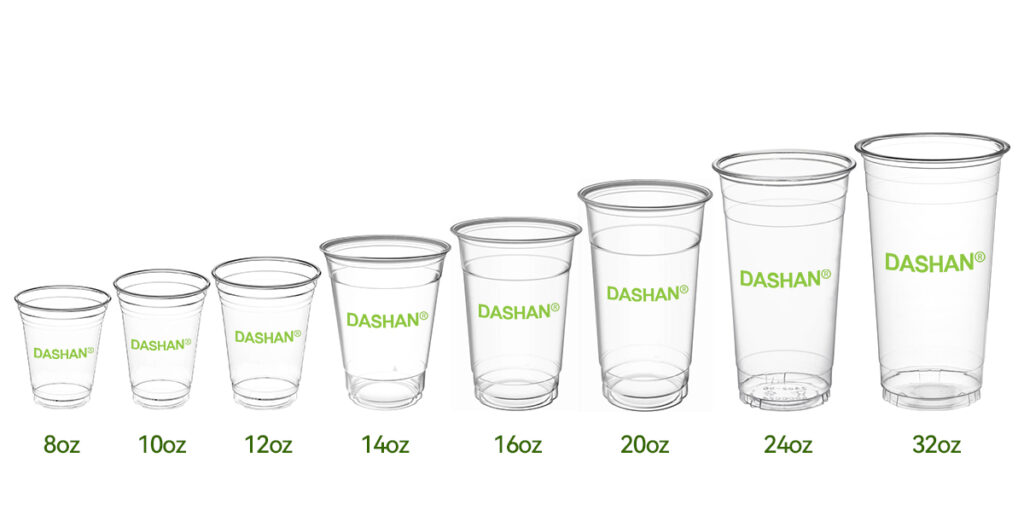
DASHAN provides recyclable PP food containers, PET packaging solutions, airline meal trays, reusable PP cups, and customized OEM and ODM services. By focusing on practical packaging design, recyclable materials, and international manufacturing experience, DASHAN helps customers develop packaging solutions that align with changing global sustainability and compliance requirements.
Conclusion
Europe’s recyclable packaging requirements are transforming the food packaging industry from the design stage onward. Regulations such as PPWR are encouraging businesses to think beyond material selection and consider how packaging performs throughout its entire lifecycle, from production and retail distribution to collection, sorting, and recycling.
For exporters, these changes represent both a challenge and an opportunity. Companies that continue to view compliance solely as a matter of food safety may find it increasingly difficult to satisfy future market expectations. Those that integrate recyclability, design optimization, and transparent documentation into their packaging strategies will be better positioned to maintain market access and build stronger relationships with European customers.
As the European packaging landscape continues to evolve, successful suppliers will not simply provide recyclable packaging. They will provide packaging that is thoughtfully designed for a circular economy.
References
- Organisation for Economic Co-operation and Development (OECD). Global Plastics Outlook: Policy Scenarios to 2060.
https://www.oecd.org/environment/plastics/ - European Commission. Packaging and Packaging Waste Regulation (PPWR).
https://environment.ec.europa.eu/topics/waste-and-recycling/packaging-waste_en - European Commission. Extended Producer Responsibility (EPR).
https://environment.ec.europa.eu/topics/waste-and-recycling_en - Ellen MacArthur Foundation. The New Plastics Economy.
https://www.ellenmacarthurfoundation.org/topics/plastics - Food Packaging Forum. Food Packaging and Sustainability.
https://www.foodpackagingforum.org - World Packaging Organisation (WPO).
https://www.worldpackaging.org - Plastics Industry Association.
https://www.plasticsindustry.org - Xiamen DASHAN Food Packaging.
https://www.dashanpacking.com
Copyright Statement
© 2026 Dashan Packing. All rights reserved.
This article is an original publication by the Dashan Packing team based on industry research, market analysis, and packaging expertise. Unauthorized reproduction, distribution, or copying of this content is prohibited without prior written permission.
Dashan Packing is committed to delivering reliable, original, and professional information for the global food packaging industry.