

✅ Quick Summary
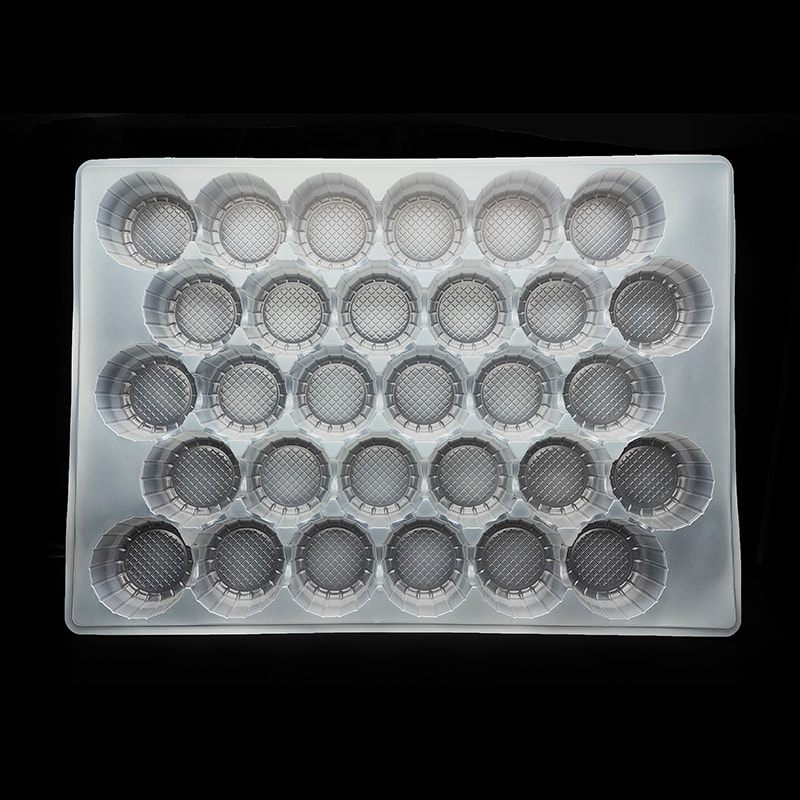
Custom PP Compartment Trays for Industrial Frozen Food Production engineered for food factories requiring product separation, freezing stability, and automated processing. Designed with food-grade PP material, customizable cavity layouts, and reliable -45℃ freezer performance.
Product Definition
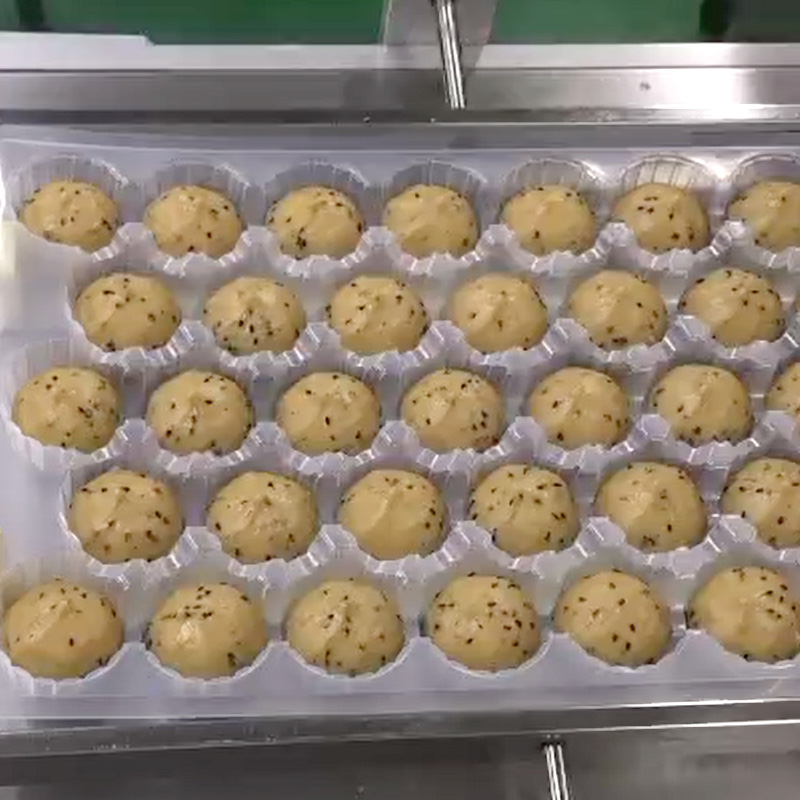
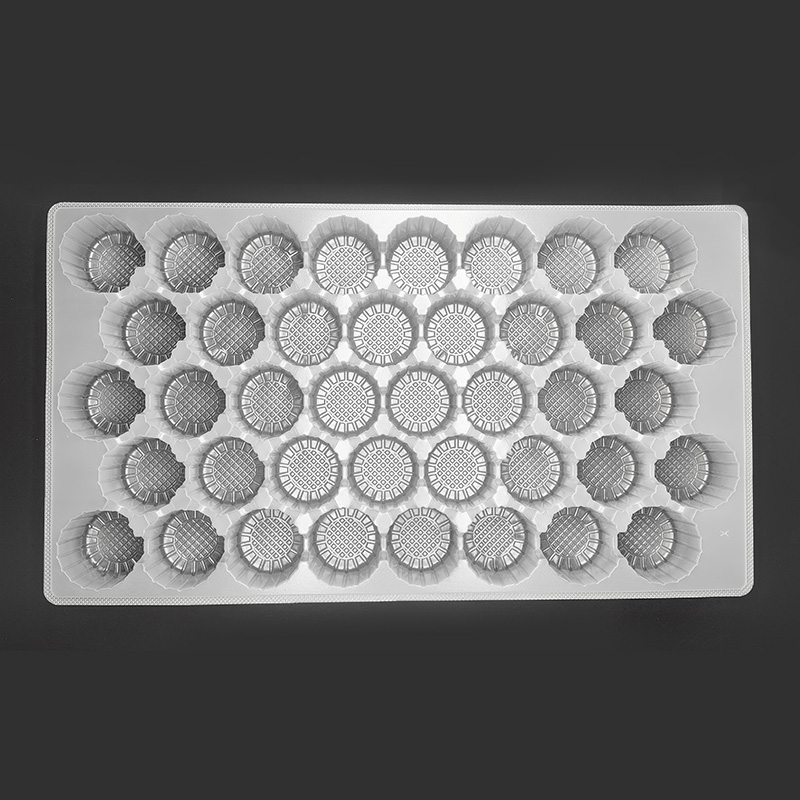
Custom PP Compartment Trays are industrial food processing trays designed for pre-formed food separation, structured placement, and freezing stability in food factories.
These trays are manufactured from food-grade polypropylene (PP) and engineered specifically for industrial frozen food production, where product size, weight, and freezing behavior vary significantly between different food items.
Unlike standard trays, each compartment tray is developed based on the customer’s actual product and production process, ensuring reliable performance in automated and semi-automated factory environments.
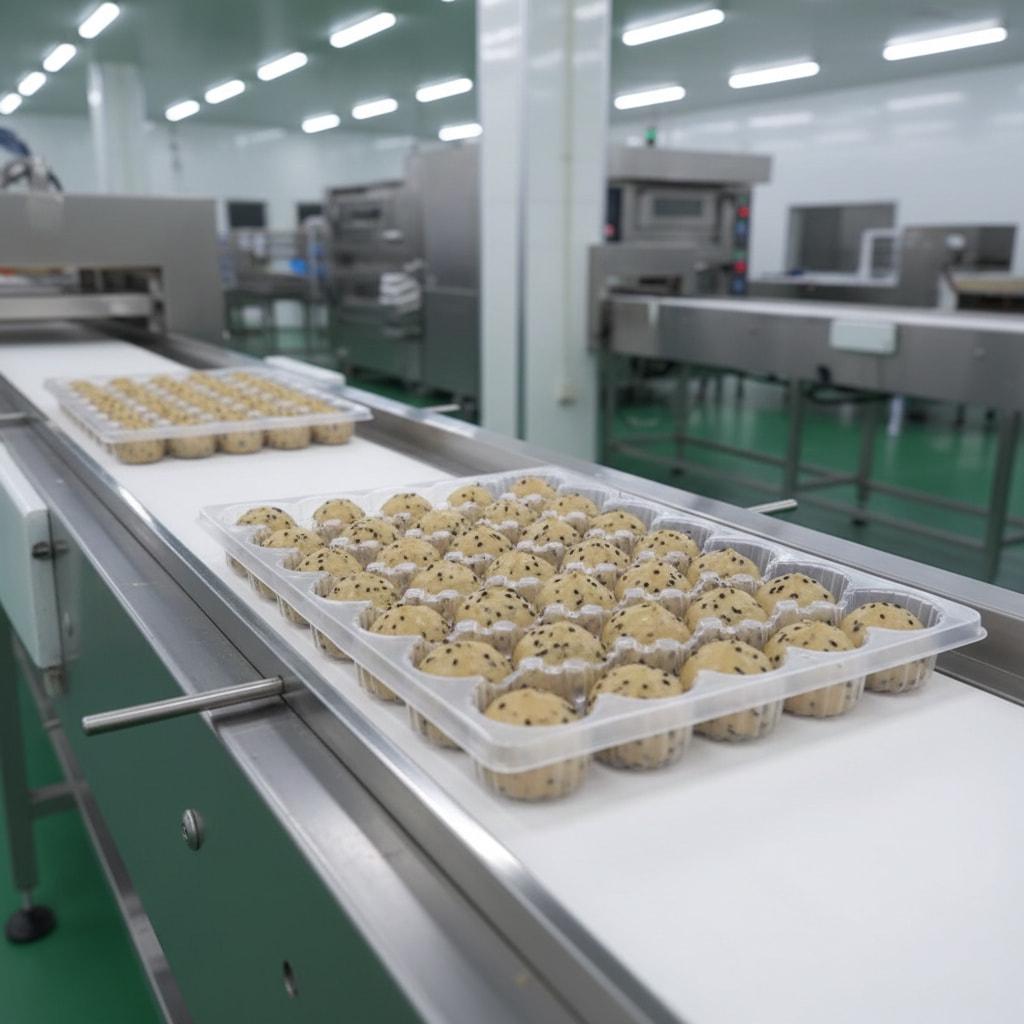
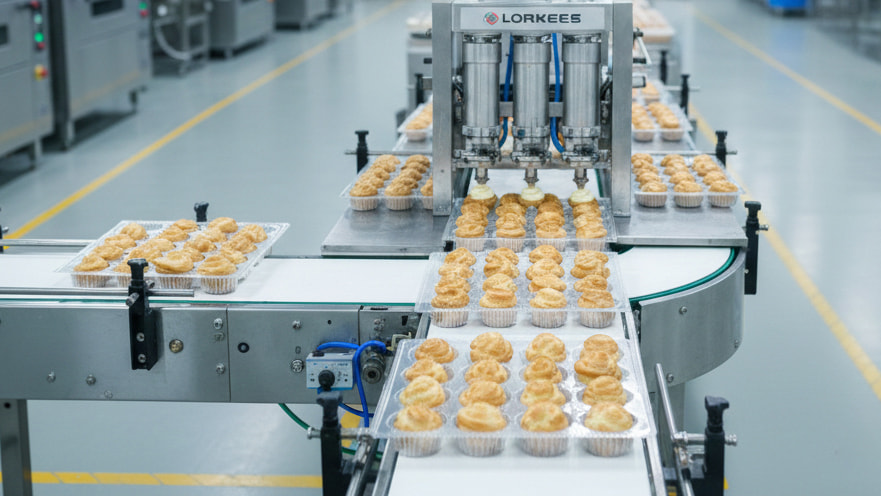
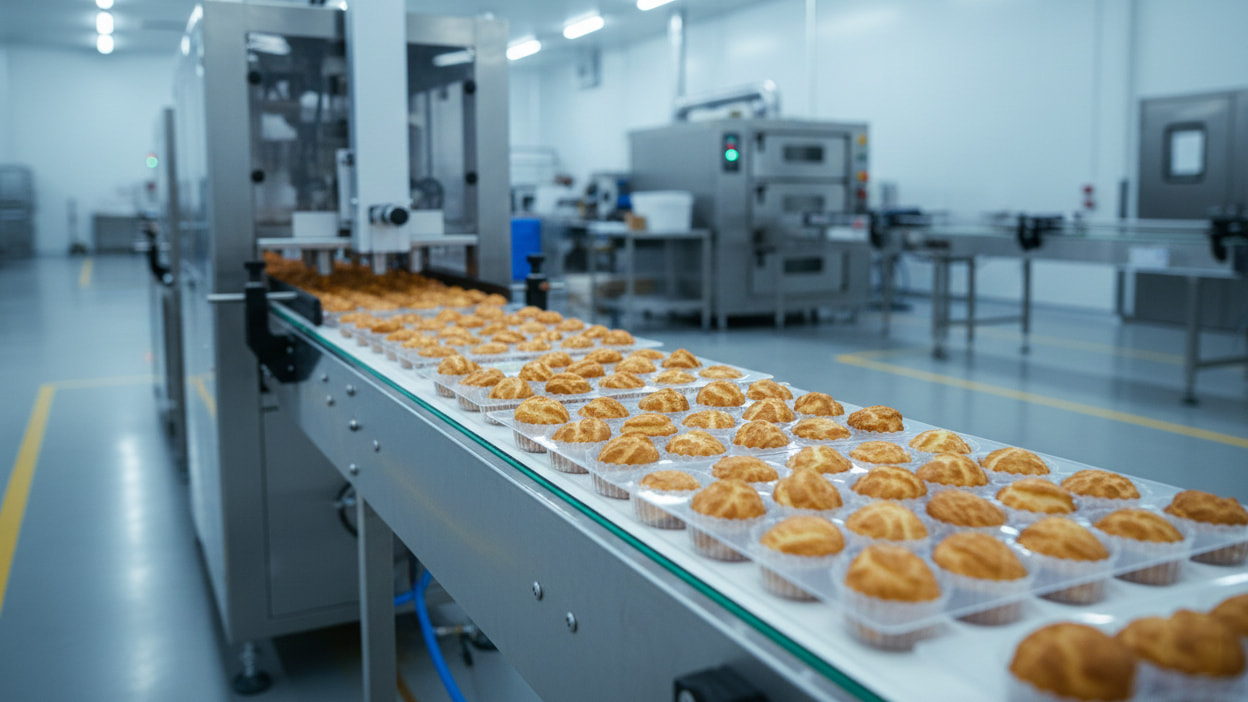
What This Product Is Designed For
-
Industrial food processing factories
-
Frozen food and bakery production lines
-
Central kitchens with pre-production workflows
-
Automated and conveyor-based freezing systems
Typical functions include:
-
Individual product separation before freezing
-
Shape protection during blast freezing
-
Consistent product positioning for automation
-
Improved freezing efficiency and uniformity
 |
 |
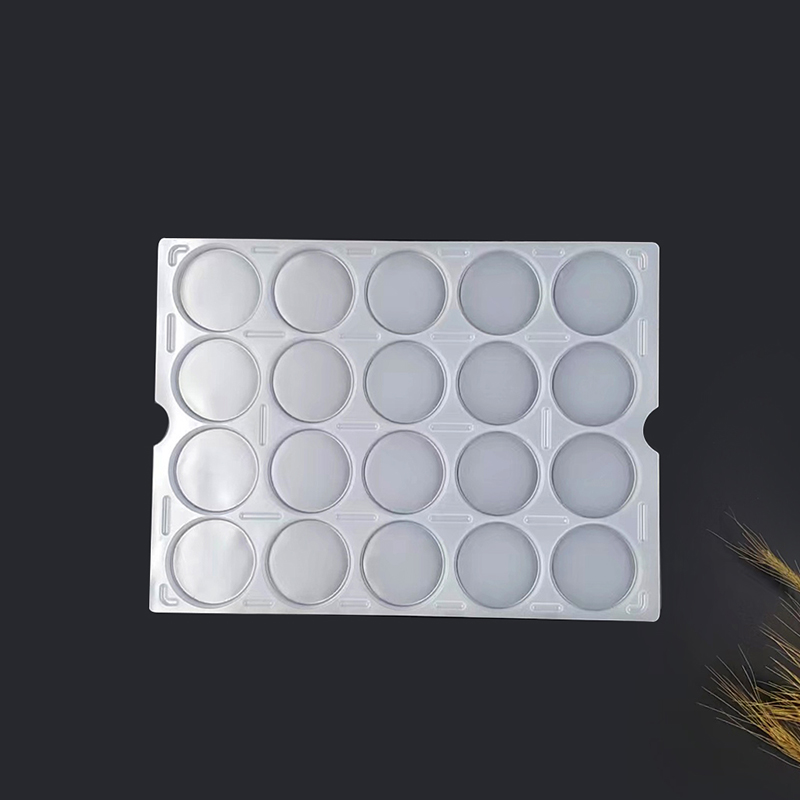 |
Existing Tray Specifications (Reference Designs)
The following tray models represent custom designs already developed for specific food products.
They are listed as reference solutions, not universal standards.
| Model | Application | Material | Cavities | Tray Size (mm) | Cavity Size | Freezer Performance |
|---|---|---|---|---|---|---|
| MS-40 | Mochi Processing | PP | 40 | 450 × 260 × 30 | Ø50 mm | -45℃ |
| PF-40 | Cream Puff Processing | PP | 40 | 450 × 260 × 28 | Ø50 mm | -45℃ |
| BL-30 | Bread Processing | PP | 30 | 460 × 330 × 35 | Ø68 mm | -45℃ |
| WX-40 | Mochi Processing | PP | 40 | 485 × 278 × 33 | Ø53 mm | -45℃ |
| TD-30 | Bread Processing | PP | 30 | 417 × 292 × 36 | Ø60 mm | -45℃ |
| LPB-20 | Pastry & Biscuit Processing | PP | 20 | 395 × 296 × 10 | Ø70 mm | -45℃ |
| Custom Series | Bakery & Dessert | PP | 20–48 | Customized | Customized | -45℃ |
Note: Tray dimensions are optimized for specific products.
Different food items usually require different cavity sizes, depths, and layouts.
Summary Specification Range (Customizable)
| Item | Customization Range |
|---|---|
| Material | Food-grade PP |
| Cavity Quantity | 20 – 48 cavities |
| Tray Length | Approx. 350 – 480 mm |
| Tray Width | Approx. 250 – 350 mm |
| Cavity Diameter | Approx. 50 – 90 mm |
| Cavity Depth | Customized based on product height |
| Temperature Resistance | Freezer-safe down to -45℃ |
| Manufacturing Process | Thermoforming |
This range demonstrates design capability, not fixed limitations.
Why Custom Design Is Essential for Frozen Food Processing
In industrial frozen food production, small differences in product size or weight can significantly impact:
-
Product deformation during freezing
-
Uneven freezing and quality inconsistency
-
Automation alignment and handling stability
-
Production efficiency and yield
Standard trays often fail to accommodate these variations.
Custom compartment trays allow manufacturers to control product spacing, support structure, and freezing behavior, resulting in more stable and predictable production outcomes.
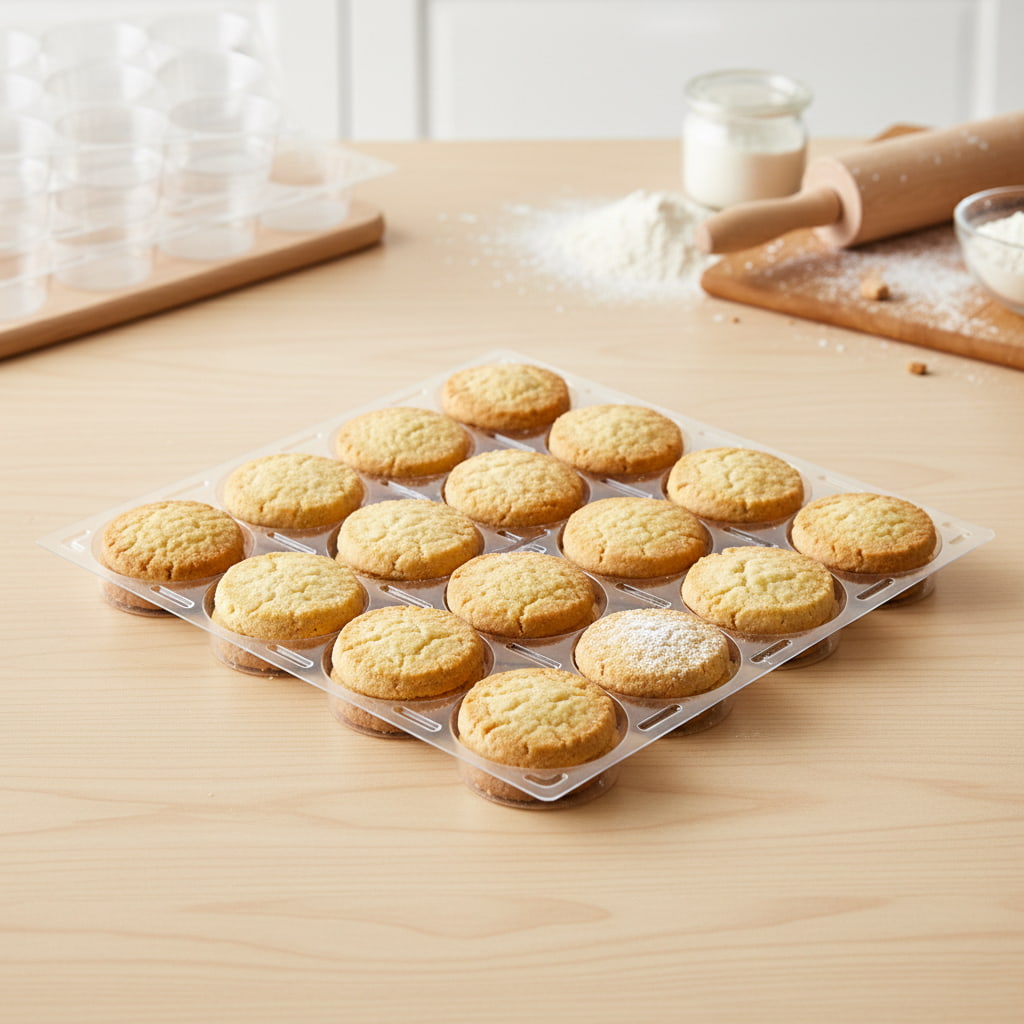
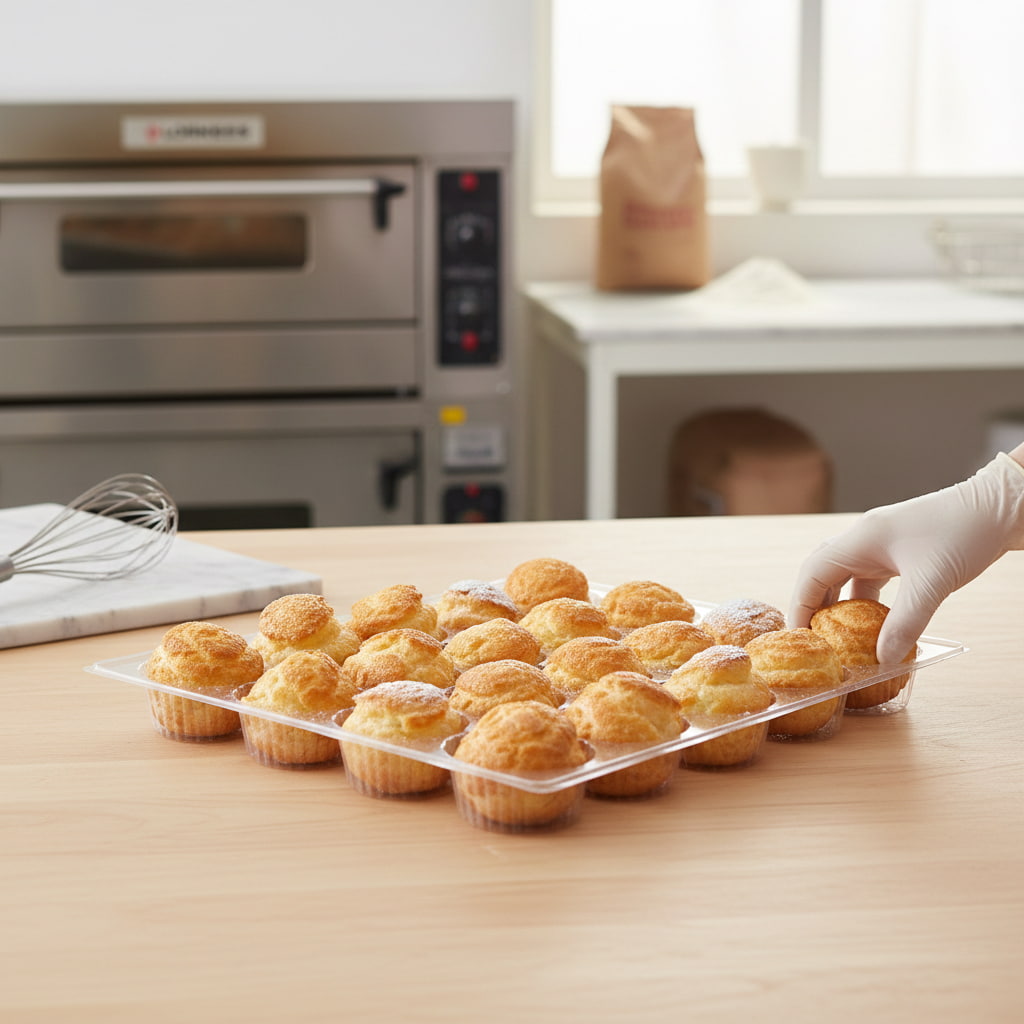
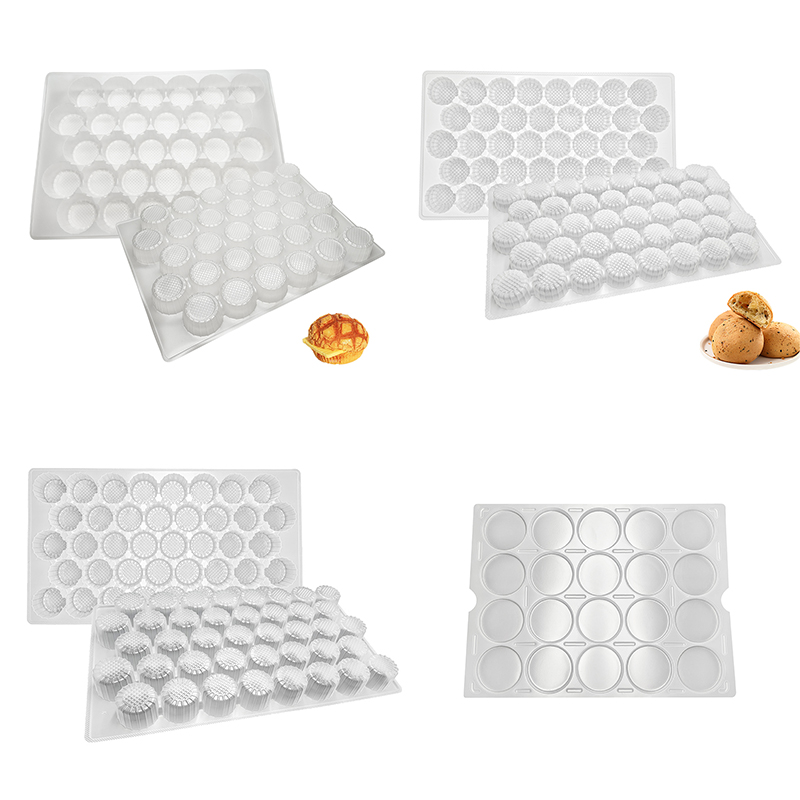
Typical Product Applications
These custom PP compartment trays are commonly used for:
-
Bread and dough-based products
-
Mochi and rice-based desserts
-
Cream puffs and filled pastries
-
Frozen bakery and dessert items
Each application requires specific cavity geometry and tray reinforcement, which is why customization is critical.
Material Advantage – Food-Grade PP
All trays are produced using food-grade polypropylene (PP), offering:
-
Safe direct food contact compliance
-
High impact resistance
-
Resistance to oils, moisture, and flour residue
-
Stable mechanical performance at low temperatures
PP is widely used in industrial food processing due to its balance of strength, flexibility, and freezer performance.
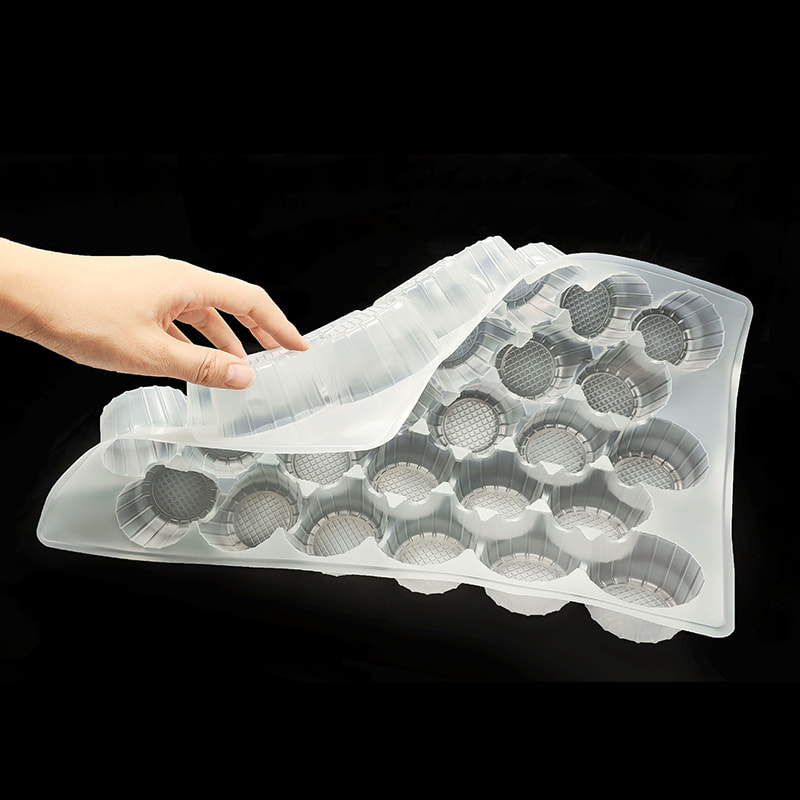
Freezer Performance & Low-Temperature Stability
Designed for industrial freezing environments, these trays perform reliably at temperatures as low as -45℃.
They maintain:
-
Structural integrity during blast freezing
-
Stable cavity shape under frozen load
-
Resistance to cracking or brittleness
This ensures consistent handling throughout freezing, storage, and internal transportation.
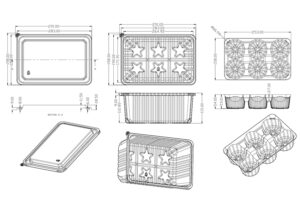 Customization Options
We offer full customization to match your production needs, including:
-
Cavity quantity and layout
-
Cavity diameter and depth
-
Tray outer dimensions
-
Tray thickness and reinforcement structure
-
Color and identification markings
All designs are developed to support real production conditions, not theoretical dimensions.
Custom Development Process
Our development workflow is designed to reduce trial-and-error:
-
Product size, weight, and freezing requirement analysis
-
Review of production line and handling method
-
Tray structure and cavity design proposal
-
Sample production and testing
-
Final design confirmation and mass production
This ensures the tray fits seamlessly into your existing workflow.
Quality Control & Manufacturing Capability
Each tray is manufactured under controlled thermoforming conditions to ensure:
-
Consistent cavity geometry
-
Uniform wall thickness
-
Smooth, food-safe edges
-
Reliable batch-to-batch consistency
This level of control is essential for industrial-scale production.
Why Choose DASHAN
-
Specialized in industrial food packaging solutions
-
Extensive experience with bakery and frozen food applications
-
In-house thermoforming production
-
Flexible customization and fast response
We focus on long-term reliability and production efficiency, not just supplying trays.
Frequently Asked Questions
Q1: Why is thermoforming (vacuum forming) used to produce these PP compartment trays?
Thermoforming is the most suitable process for industrial food processing trays because it allows precise control over cavity shape, depth, and spacing while maintaining material efficiency.
Compared with injection molding, thermoforming:
-
Is more flexible for custom designs
-
Allows faster tooling development
-
Is cost-effective for medium to large industrial volumes
This makes it ideal for trays that are tailored to specific food products rather than standardized retail items.
Q2: How does cavity design affect freezing performance in food factories?
Cavity geometry directly influences how cold air circulates around each product during freezing.
Properly designed cavities:
-
Maintain consistent spacing between products
-
Reduce uneven freezing and temperature gradients
-
Help preserve product shape and surface quality
For frozen food production, cavity design is not just a dimensional issue—it is a process performance factor.
Q3: Can these trays be integrated into existing automated production lines?
Yes. Tray dimensions, rigidity, and cavity layout can be customized to match:
-
Conveyor widths
-
Automated depositing systems
-
Stacking and transfer mechanisms
During the design phase, production line compatibility is a key consideration to ensure smooth integration.
Q4: How do PP trays perform after repeated freezing cycles?
Food-grade PP maintains mechanical stability at low temperatures and resists brittleness at -45℃.
In repeated industrial use, PP trays:
-
Retain cavity shape
-
Resist cracking or warping
-
Provide consistent performance during handling and stacking
This makes them suitable for long-term internal circulation.
Q5: What information is required to start a custom tray design?
To develop an accurate tray design, we typically need:
-
Product diameter, height, and weight
-
Freezing method and target temperature
-
Production line type (manual or automated)
-
Required cavity quantity per tray
Providing accurate data helps reduce development time and ensures better performance.
Q6: Can samples be tested before full-scale production?
Yes. Samples are commonly provided for:
-
Line testing
-
Freezing performance evaluation
-
Product release and handling checks
Sample testing helps validate the design before mass production and reduces implementation risk.
Conclusion
Custom PP Compartment Trays for Industrial Frozen Food Production are engineered tools that support product separation, freezing stability, and efficient factory workflows.
By focusing on customization rather than fixed dimensions, these trays help food manufacturers achieve better consistency, higher efficiency, and reduced production risk.
Not sure which tray size fits your product?
Send us your product diameter, height, and freezing requirements.
Our team will propose a custom PP compartment tray solution tailored to your production line.
👉 Contact us today to start your custom tray development.