

Executive Summary
A PLA compostable Cup can truly break down into CO₂, water, and biomass—if it is placed in an industrial composting environment with high heat (~58 °C), oxygen, and moisture. In home composting, most PLA compostable Cup items degrade much slower (unless OK compost HOME certified). In landfills or anaerobic settings, a PLA compostable Cup may persist for years. This guide explains the science, standards, and what brands and foodservice operators must do to ensure a compostable Cup delivers real sustainability benefits.
What Exactly Is PLA and Why a compostable Cup Works
PLA (polylactic acid) is made by fermenting plant sugars (typically corn) to lactic acid, then polymerizing into a clear, rigid plastic. A PLA compostable Cup decomposes via two steps:
-
Hydrolysis — heat and moisture cleave ester bonds, fragmenting the cup;
-
Microbial mineralization — microbes metabolize lactic acid into CO₂, H₂O, and biomass under aerobic conditions.
When conditions are right, a PLA compostable Cup disintegrates and mineralizes within a few weeks to months in industrial composting. Without the correct conditions, even a certified compostable Cup can linger.

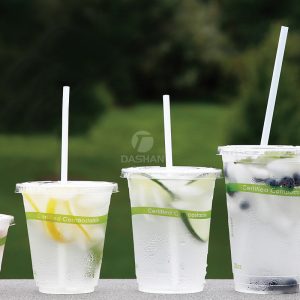
Industrial vs. Home vs. Landfill: Where a compostable Cup Succeeds or Fails
Industrial Composting (Best Case)
-
Conditions: ~58 °C, controlled aeration and moisture.
-
What to expect: A certified compostable Cup typically hits ≥90% mineralization within ~2–6 months (thickness-dependent).
-
Labels to look for: ASTM D6400 / EN 13432, BPI, OK compost INDUSTRIAL.
Home Composting (Cooler & Slower)
-
Reality: Backyard piles fluctuate (~20–45 °C). Most PLA compostable Cup items won’t break down reliably unless explicitly OK compost HOME certified.
-
Takeaway: If your market relies on backyard compost, choose products certified for home conditions or manage expectations.
Landfill / Anaerobic
-
Reality: Low oxygen + lower temperatures = very slow breakdown. A compostable Cup is designed for composting, not landfilling. Route to organics collection where available.
Standards & Certifications: Turning Claims Into Verified Performance
-
ASTM D6400 / D6868 (US) and EN 13432 (EU) define industrial compostability criteria for finished products.
-
BPI (North America) and TÜV Austria (OK compost INDUSTRIAL / HOME) verify compliance.
-
A credible PLA compostable Cup should carry clear marks on the finished cup and lid, not just “PLA resin made from plants.”
-
Many regions now restrict vague environmental claims; using a certified compostable Cup plus transparent disposal guidance reduces greenwashing risk.
Quick Comparison Table: Breakdown Requirements & Timelines for a PLA compostable Cup
| Use Scenario | Typical Temperature | Oxygen | Moisture | Certifications to Seek | Indicative Timeline* | Notes |
|---|---|---|---|---|---|---|
| Industrial composting | ~58 °C (thermophilic) | Aerobic | Controlled | ASTM D6400 / EN 13432; BPI; OK compost INDUSTRIAL | ~2–6 months | The thinner the compostable Cup wall, the faster disintegration. |
| Home composting | ~20–45 °C (variable) | Aerobic | Variable | OK compost HOME | 6–12+ months | Only certified home-compostable cups perform reliably. |
| Landfill / anaerobic | ~20–40 °C | Low | Variable | — | Years to decades | Not the intended end-of-life for a compostable Cup. |
*Actual performance varies by thickness, pigments/inks, lids/straws, and facility retention times.
Real-World Evidence & Best Practices
-
Independent reviews show that a PLA compostable Cup achieves high disintegration and mineralization under thermophilic, aerobic composting when certification standards are met.
-
Facility acceptance varies by city/region; some composters accept certified cups when contamination is low and items are clearly labeled.
-
Keep a compostable Cup out of PET recycling to avoid contamination—bin signage and on-pack logos matter.
-
For foodservice, the compostable Cup is most effective when paired with organics collection so cups + food residues go to the same compost stream.
Buying Checklist: Choosing a High-Quality compostable Cup
-
Confirm certifications on the finished product: ASTM D6400 / EN 13432 + BPI or OK compost INDUSTRIAL/HOME logos.
-
Match format to composting cycle: Thinner walls, consistent thickness, compatible lids (also compostable).
-
Ask for documents: Certificate copies, food-contact reports (e.g., FDA/LFGB), COA/MSDS, and quality system info (e.g., ISO 9001).
-
Plan the bin system: Clear on-pack instructions and front-of-house signage telling customers the compostable Cup goes with food scraps (where accepted).
About DASHAN: Our PLA compostable Cup for Export Buyers
At DASHAN, we manufacture PLA compostable Cup solutions with flat and dome lids for cold beverages. We emphasize glass-like clarity, stiffness, and stable dimensions to support industrial composting disintegration.
-
Compliance & docs: We support requests related to ASTM D6400 / EN 13432 alignment and third-party marks (e.g., BPI / OK compost INDUSTRIAL / HOME where applicable). Food-contact testing (e.g., FDA/LFGB) can be provided if available for your target market.
-
Professional export: Our foreign-trade team handles HS codes, packing lists, commercial invoices, certificates of origin, and terms including EXW/FOB/CIF/DDP.
-
Branding: Custom printing available; clear labeling indicating compostable Cup end-of-life is encouraged to reduce contamination.
Looking for certified PLA compostable Cup samples? Contact DASHAN for spec sheets, certificates, and quotation.

FAQ
Q1. Will a PLA compostable Cup break down in a backyard compost?
A. Only if the cup is OK compost HOME certified. Most PLA compostable Cup products are designed for industrial composting.
Q2. How long does a compostable Cup take to break down industrially?
A. Typically ~2–6 months to meet certification thresholds, depending on wall thickness and facility conditions.
Q3. Can a compostable Cup be recycled with PET?
A. No. Keep a compostable Cup in organics/compost bins where accepted; do not put it into PET recycling.
Q4. What should I check before buying a PLA compostable Cup?
A. Look for third-party certification marks on the finished cup and lid, and request supporting documents (cert numbers, validity, applicable standard).
Q5. Does a compostable Cup still work if there’s no local composting?
A. Compostables deliver best results only where organics collection/industrial composting exists. If unavailable, consider alternative end-of-life strategies and be transparent in labeling.
References
-
NatureWorks – Composting Ingeo (PLA): https://www.natureworksllc.com/sustainability/end-of-life-opportunities/composting
-
ASTM D6400 (Industrial Compostability): https://www.astm.org/d6400-23.html
-
EN 13432 (EU Compostability for Packaging): https://www.bpf.co.uk/topics/Standards_for_compostability.aspx
-
TÜV Austria – OK compost HOME / INDUSTRIAL: https://en.tuv.at/ok-compost-home-en/
-
European Bioplastics – Industrial composting factsheet (PDF): https://docs.european-bioplastics.org/2016/publications/fs/EUBP_fs_industrial_composting.pdf
-
US EPA – Composting overview: https://www.epa.gov/sustainable-management-food/composting
-
WRAP – Considerations for compostable plastic packaging: https://www.wrap.ngo/resources/guide/considerations-compostable-plastic-packaging
-
BPI – Certified compostable products: https://bpiworld.org/Find-Certified-Products
Conclusion
A PLA compostable Cup delivers real environmental value when the system is set up correctly: certified products, organics collection, industrial composting, and clear labeling. For brands and foodservice, choosing a certified compostable Cup, aligning formats with composters, and educating customers are the keys to turning “compostable” from a label into measurable outcomes. With strong documentation and export expertise, DASHAN is ready to support your compostable Cup programs from specification to shipment.
Copyright Statement© 2025 Dashan Packing. All rights reserved.
This article is an original work created by the Dashan Packing editorial team.All text, data, and images are the result of our independent research, industry experience,and product development insights. Reproduction or redistribution of any part of this contentwithout written permission is strictly prohibited.
Dashan Packing is committed to providing accurate, evidence-based information andto upholding transparency, originality, and compliance with global intellectual property standards.