

Introduction
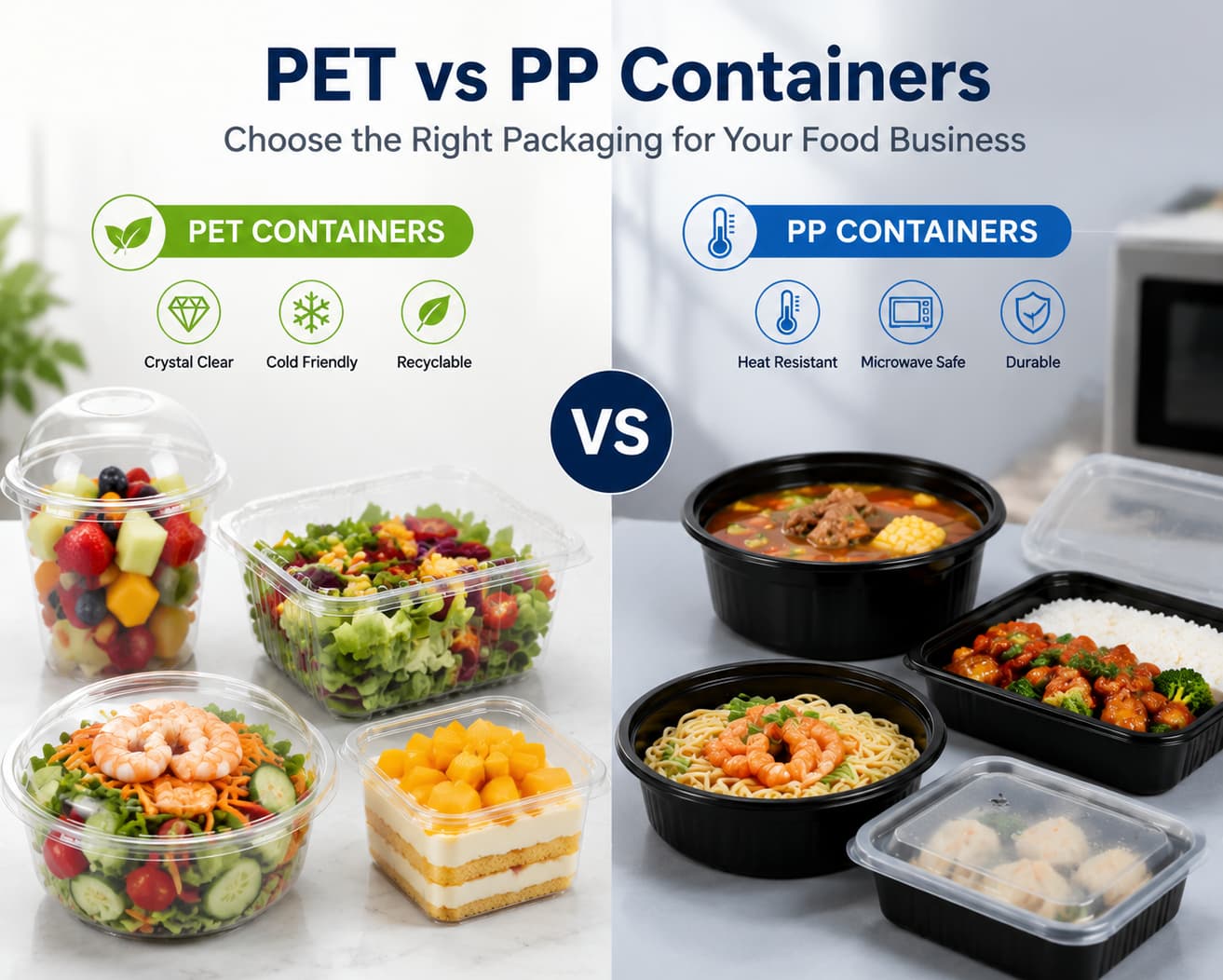
Choosing the right food packaging material is one of the most important decisions for restaurants, food manufacturers, supermarkets, meal-prep companies, and food distributors. Among all food packaging materials available today, PET and PP are two of the most widely used options.
Both materials are commonly found in takeaway packaging, fresh food packaging, salad containers, fruit packaging, ready-to-eat meal containers, and beverage packaging. However, many buyers struggle to determine which material is best suited for their products.
Should you choose crystal-clear PET containers that showcase food beautifully? Or should you select microwave-safe PP containers that offer superior heat resistance?
The answer depends on your food type, transportation requirements, storage conditions, customer expectations, and budget.
This guide will help food packaging buyers understand the key differences between PET and PP containers and determine which solution is best for their business.
Understanding PET Containers
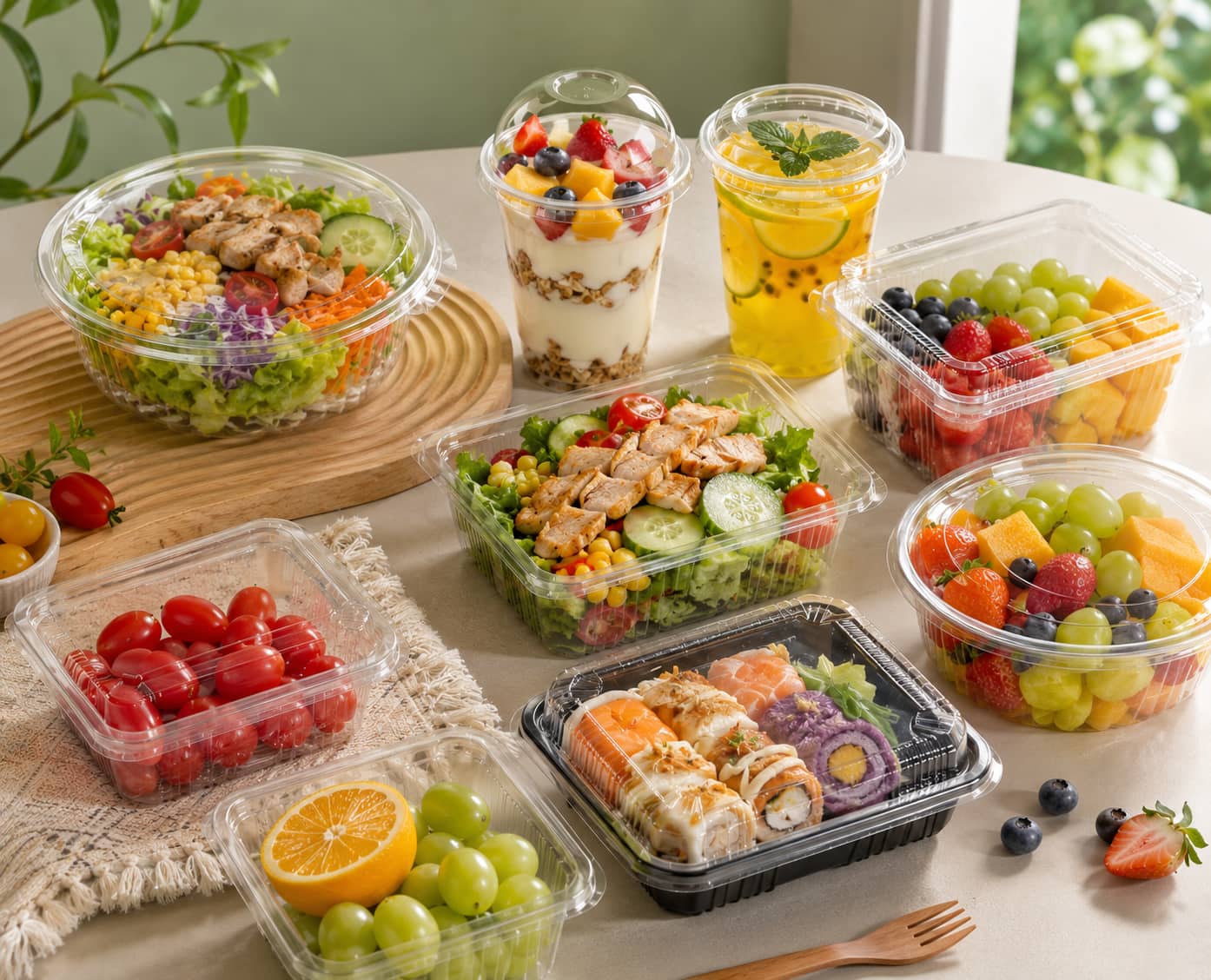
PET (Polyethylene Terephthalate) is one of the most popular plastics used in food packaging worldwide.
It is especially known for its exceptional transparency, lightweight structure, and excellent presentation capabilities.
When consumers walk into a supermarket and see a fresh salad, sliced fruit, bakery products, or desserts displayed inside a crystal-clear container, there is a high chance that container is made from PET.
Because PET offers excellent visibility, it helps increase product attractiveness and consumer confidence.
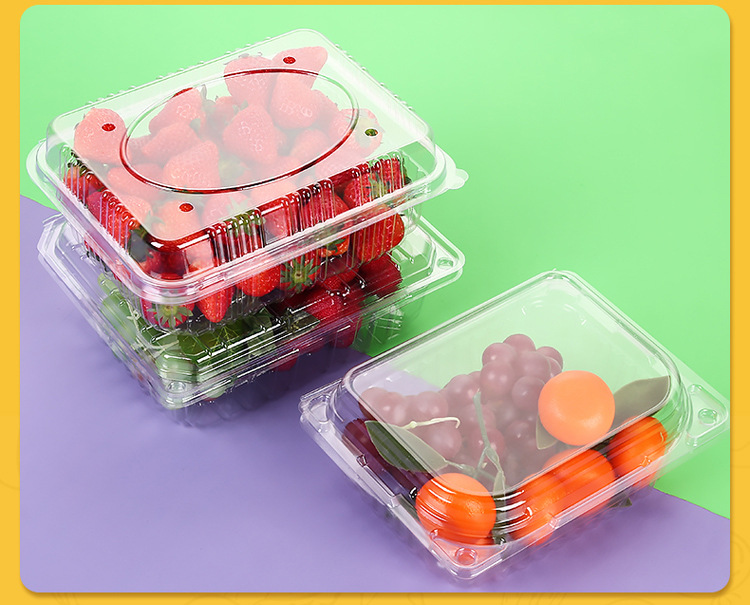
Many retailers use [🥗 PET Salad Containers] and [🍓 PET Fruit Packaging Boxes] because customers can clearly see the freshness, color, and quality of the food inside.
This visual advantage often translates directly into higher sales.
Understanding PP Containers
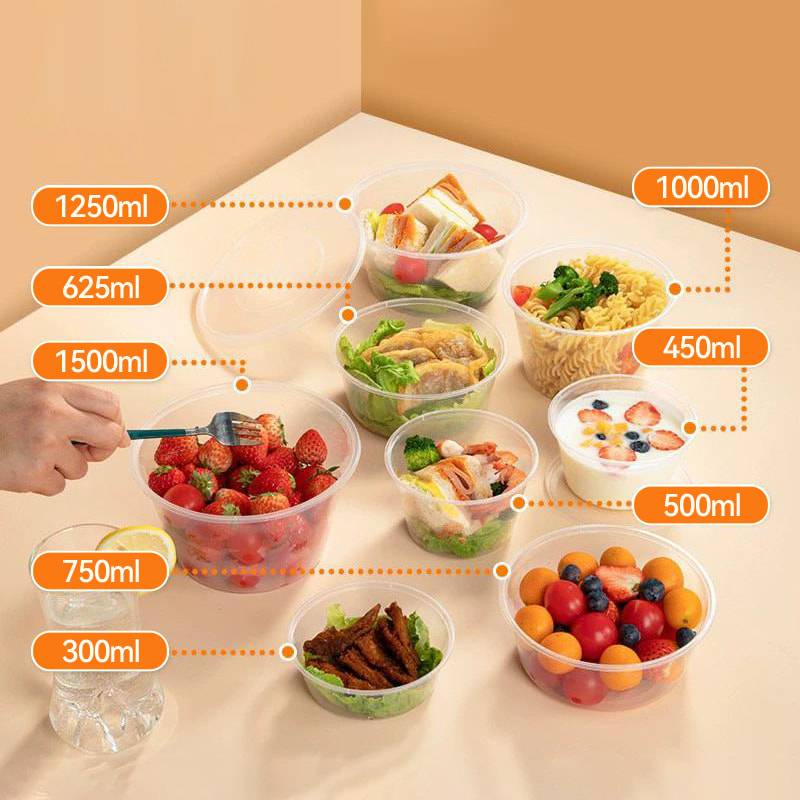
PP (Polypropylene) is another highly popular food packaging material.
Unlike PET, PP is valued primarily for its heat resistance and durability.
PP containers can withstand hot foods, reheating, and microwave applications, making them a preferred solution for takeaway meals, meal preparation services, restaurants, and food delivery platforms.
Many foodservice operators choose [🍱 PP Food Containers] and [🥣 PP Round Bowls] because they can safely hold hot foods without losing their shape.
This makes PP one of the most versatile materials in the food packaging industry.
Direct Comparison: PET vs PP
| Feature | PET | PP |
|---|---|---|
| Transparency | ★★★★★ | ★★ |
| Heat Resistance | ★ | ★★★★★ |
| Refrigeration Performance | ★★★★★ | ★★★★ |
| Microwave Use | ✖ | ✔ |
| Food Presentation | ★★★★★ | ★★★ |
| Cold Food Applications | ★★★★★ | ★★★ |
| Hot Food Applications | ★ | ★★★★★ |
| Impact Resistance | ★★★★ | ★★★★★ |
| Consumer Visibility | ★★★★★ | ★★ |
| Takeaway Meals | ★★ | ★★★★★ |
At first glance, neither material is universally better.
The best choice depends entirely on the application.
Why Transparency Matters
Consumers buy with their eyes.
Before they taste a product, they evaluate it visually.
This is why supermarkets, cafés, bakeries, fruit retailers, and fresh-food brands often prefer PET packaging.
A transparent container allows customers to inspect freshness instantly.
Products packaged in [🥗 PET Salad Containers] often appear more premium compared to the same product packaged in opaque materials.
Research from retail merchandising studies consistently shows that better product visibility can improve purchase intent and increase sales.
For food businesses competing in retail environments, packaging appearance can directly influence revenue.
Why Heat Resistance Matters
While PET excels in visibility, PP dominates when heat is involved.
Food delivery continues growing globally, and consumers increasingly expect packaging that can go directly into a microwave.
PP containers offer excellent performance under high temperatures.
This is why restaurants frequently choose [🍱 PP Food Containers] for rice dishes, pasta, stir-fry meals, curries, and takeaway lunch boxes.
Unlike PET, PP maintains structural stability during reheating.
This significantly reduces customer complaints related to deformation or packaging failure.
Which Material Is Better for Food Delivery?
Food delivery introduces unique challenges.
Containers may experience:
- Vibration during transportation
- Stacking pressure
- Temperature fluctuations
- Extended holding times
For hot meals, PP is usually the preferred solution.
Its heat resistance and durability help maintain food quality throughout delivery.
Many delivery brands rely on [🥣 PP Round Bowls] because they can safely hold soups, noodles, and rice dishes while minimizing leakage risks.
However, for cold foods, PET remains an excellent choice.
Fresh salads, desserts, fruits, and cold pasta dishes often perform better inside transparent PET packaging.
The ability to display food clearly helps improve consumer perception and enhances the unboxing experience.
PET Applications
PET packaging is commonly used for:
- Fresh salads
- Fruit packaging
- Cold desserts
- Bakery products
- Yogurt parfaits
- Sandwich packaging
- Beverage cups
- Cold deli foods
Popular solutions include:
These products prioritize visibility, freshness display, and retail shelf appeal.
PP Applications
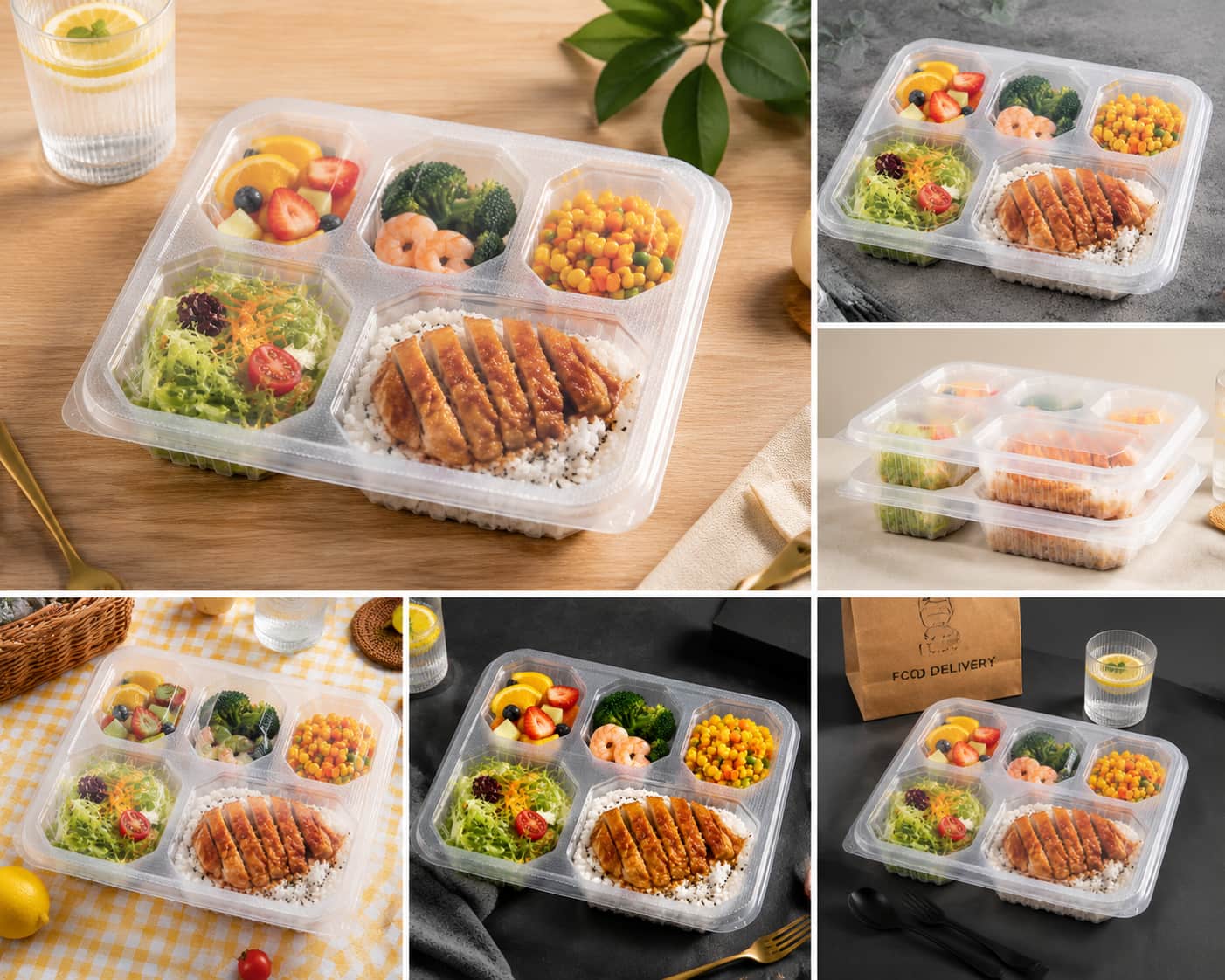
PP (Polypropylene) containers are widely used in foodservice, takeaway, and delivery industries because of their excellent heat resistance and durability. These containers are particularly suitable for:
- Hot meals such as rice bowls, stir-fries, curries, pasta dishes, and soups.
- Microwaveable meals, allowing customers to reheat directly in the packaging.
- Meal prep services, where pre-cooked hot food is packaged and delivered.
- Catering events, as PP containers can withstand stacking and transportation without deformation.
Popular products include [🍱 PP Food Containers], which combine leak-proof lids, reinforced walls, and sturdy bases to prevent spillage and maintain food quality during transport.
Cost Comparison
When considering PET vs PP containers, cost can vary depending on material and intended use:
- PET containers often cost slightly more due to high transparency and premium presentation value. They are ideal for retail display and cold foods where visual appeal is essential.
- PP containers are generally more affordable for high-volume production, especially for hot-food applications requiring heat resistance and microwave safety.
Choosing the right balance between cost, performance, and appearance is critical for food businesses looking to optimize operational efficiency while maintaining quality.
Sustainability Considerations
Sustainability is becoming increasingly important in food packaging decisions:
- PET containers can be recycled efficiently through established PET recycling systems. They support clear visibility for products while contributing to circular packaging initiatives.
- PP containers are durable and can be reused in certain contexts, but recycling infrastructure is less developed than for PET. However, using high-quality PP reduces single-use waste due to lower breakage rates.
For businesses aiming to meet environmental goals, integrating 🥗 PET Salad Containers for cold foods and 🍱 PP Food Containers for hot meals can create a sustainable packaging mix that balances performance and recyclability. 🌱
PET vs PP for Supermarkets
Supermarkets and retail outlets prioritize product visibility and shelf appeal:
- PET containers excel because their high transparency allows customers to see freshness, color, and portion sizes directly. This can increase purchase intent and sales.
- PP containers are less transparent but offer robust protection for bulk or hot-prepared items, such as ready-to-eat meals or soups.
Using the right container for each category ensures both consumer appeal and operational efficiency. Many retailers combine PET for cold items and PP for hot meal options.
PET vs PP for Restaurants and Takeaway
Restaurants and takeaway services have different needs:
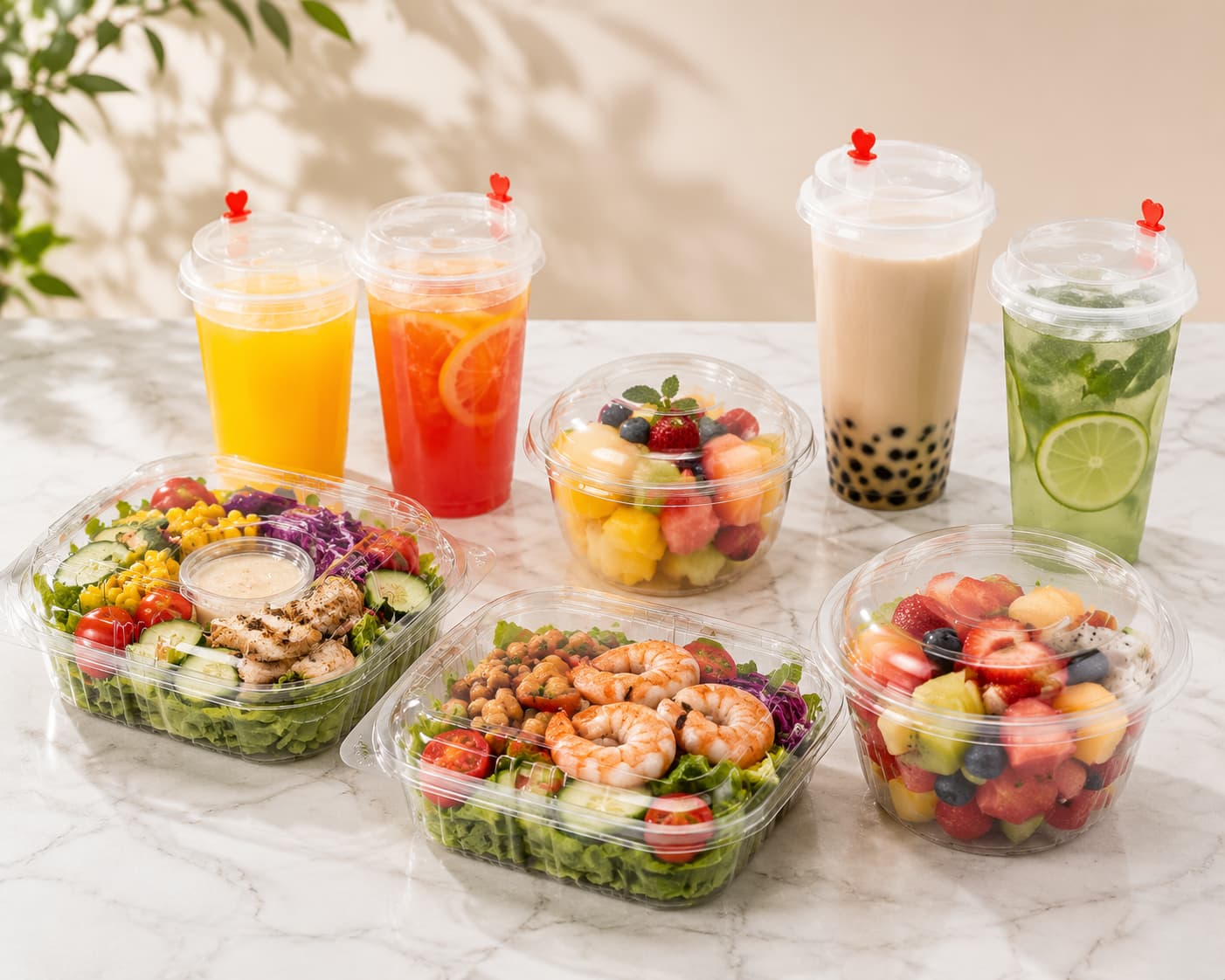
- PET: Ideal for cold salads, desserts, fruits, and beverages. The visual appeal of PET packaging enhances the customer experience, making meals look premium. 🥤 PET Beverage Cups are perfect for milk teas, iced coffees, smoothies, and layered drinks.
- PP: Better suited for hot dishes, soups, and reheatable meals. Durable PP containers like 🍱 PP Food Containers withstand stacking, delivery handling, and microwave use without warping or leaking.
A combination of PET and PP across the menu allows restaurants to meet diverse customer expectations while ensuring safe food transport.
PET vs PP for Food Delivery
Food delivery platforms demand packaging that can survive transportation:
- Containers experience shaking, stacking, and temperature changes.
- PP containers are preferred for hot foods due to heat resistance and leak-proof lids.
- PET containers are ideal for cold foods where freshness and visibility matter.
Well-designed containers reduce spillage, improve customer satisfaction, and minimize returns. Brands that use high-quality packaging, such as [🔥 CPET Meal Trays], can ensure food reaches the customer intact.
How to Choose the Right Packaging
When selecting PET or PP containers, consider the following:
- Food type – hot vs cold.
- Transportation conditions – distance, stacking, and handling.
- Customer expectations – visibility, premium feel, and convenience.
- Reheating requirements – microwave-safe or not.
- Branding needs – customization and logo printing.
Using a combination of [🥗 PET Salad Containers] for cold foods and [🍱 PP Food Containers] for hot meals often delivers the best balance between performance and cost.
For OEM solutions or large-scale procurement, [📩 Contact Us] to discuss product specifications and samples.
FAQ
1. Can PET containers be used for hot foods?
No, PET containers are not heat-resistant and may deform when exposed to high temperatures. Use PP or CPET for hot applications.
2. Are PP containers microwave safe?
Yes, high-quality PP containers like [🥣 PP Round Bowls] are designed for microwave reheating without warping.
3. Which containers offer better visibility?
PET containers provide superior transparency, making them ideal for retail and cold-food applications.
4. Can PET and PP containers be customized?
Yes, both materials can be customized with logos, color printing, and promotional designs.
5. How do I select the best material for my menu?
Cold salads, desserts, and beverages are best in PET. Hot meals, soups, and reheatable items perform better in PP.
6. Where can I get reliable PET and PP containers?
Trusted suppliers provide tested and quality-assured products. For inquiries, [📞 Contact Us] for consultation and bulk orders.
References
- FDA Food Contact Materials – https://www.fda.gov/food/packaging-food-contact-substances-fcs
- Packaging Europe – PET vs PP Insights – https://packagingeurope.com
- Smithers Pira – Food Packaging Market Report – https://www.smithers.com/services/market-reports/packaging
- DaShan Packaging Product Documentation – https://www.dashanpacking.com
Copyright Notice
© 2026 DaShan Packaging. All rights reserved.
All text, images, and graphics are protected by copyright. Reproduction or distribution without written permission is prohibited.