

Quick Summary
The Netherlands is one of Europe’s strictest markets for sustainable food packaging. This guide explains how PET and rPET packaging is evaluated in practice—covering recyclability, EPR obligations, food-contact compliance, and common sourcing risks—helping overseas buyers reduce regulatory and commercial uncertainty.
Introduction
The Netherlands is often described as one of Europe’s most sustainability-driven markets. For food packaging buyers, this reputation is well deserved—but also frequently underestimated.
Among all plastic materials used in food packaging, PET (Polyethylene Terephthalate) occupies a unique position in the Dutch market. It is widely accepted, extensively recycled, and strongly supported by national waste management systems. However, this does not mean that all PET packaging is automatically compliant or commercially viable.
For overseas buyers, PET packaging that performs well in one EU country may still face regulatory questions, recycling penalties, or market resistance in the Netherlands. Understanding why this happens—and how to avoid it—is essential for reducing sourcing risk and ensuring long-term market access.
This article provides a detailed, practical explanation of how PET packaging is evaluated in the Netherlands, covering sustainability rules, recyclability expectations, Extended Producer Responsibility (EPR), and common mistakes made by international buyers.
1. Why PET Plays a Strategic Role in the Dutch Packaging System
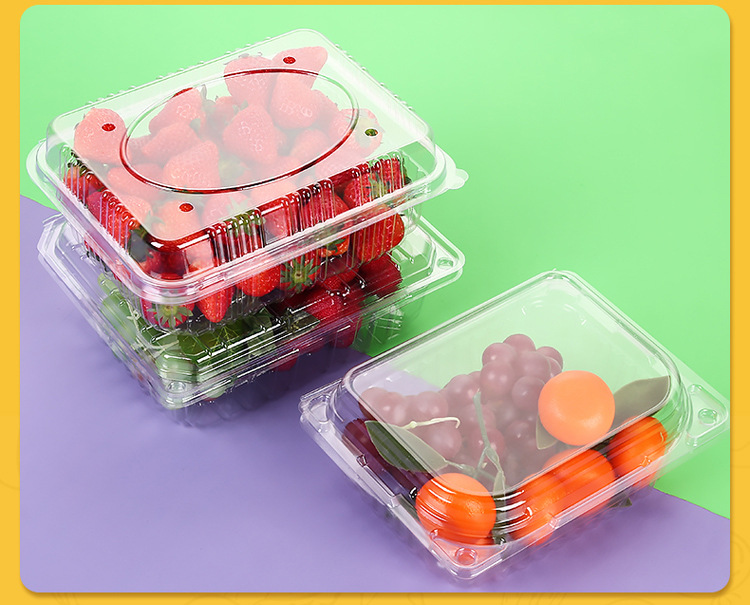
PET is not considered sustainable by default. Its importance in the Netherlands comes from system compatibility, not material perception.
The Dutch waste management system is built around:
-
High collection efficiency
-
Advanced sorting infrastructure
-
Economically viable recycling streams
PET fits this system better than many other plastics because it can be:
-
Collected at scale
-
Sorted with high accuracy
-
Recycled into food-grade applications under controlled processes
As a result, PET packaging is often treated as a “benchmark material” when sustainability performance is assessed. Packaging that aligns with PET recycling standards is easier to justify within Dutch policy frameworks.
However, this also means PET packaging is scrutinized more closely, not less.
2. Virgin PET and rPET: Policy Direction vs. Market Reality
2.1 Virgin PET Is Still Legal—but No Longer Neutral
Virgin PET remains fully legal for food packaging in the Netherlands. There is no blanket ban. However, policy direction clearly favors:
-
Reduced use of fossil-based plastics
-
Increased recycled content
-
Circular material flows
In practice, virgin PET packaging is increasingly viewed as a baseline, not a competitive advantage. Buyers using only virgin PET may still comply legally but can face:
-
Higher EPR contributions
-
Sustainability questions from customers
-
Reduced preference in procurement decisions
2.2 rPET: Opportunity with Conditions
Recycled PET (rPET) is strongly encouraged, especially for food packaging—but only when strict conditions are met.
For food-contact rPET:
-
Recycling processes must be officially recognized
-
Traceability of input material is required
-
Migration and safety compliance must be documented
From DASHAN’s experience working with European clients, rPET projects often fail not because of material quality, but because documentation and process transparency are insufficient.
In the Dutch market, “using rPET” is not a claim—it is a compliance position that must be proven.
3. Recyclability: How PET Is Evaluated in Real Systems
One of the most misunderstood aspects of Dutch sustainability rules is recyclability.
3.1 Recyclable Does Not Mean “Technically Recyclable”
Dutch authorities and recycling organizations focus on practical recyclability, meaning:
-
Can the packaging be identified correctly by sorting systems?
-
Can it be separated without contamination?
-
Does it produce usable recycled output at scale?
PET packaging that technically can be recycled may still be considered poorly recyclable if it disrupts these processes.
3.2 Design Elements That Affect PET Recyclability
Common design factors that reduce recyclability include:
-
Multi-material laminations bonded to PET
-
Non-removable labels with incompatible adhesives
-
Dark colors or full-body sleeves
-
Heavy inks or coatings
In the Netherlands, these factors are not theoretical. They directly influence recycling efficiency and, in some cases, EPR cost calculations.
This is why Dutch buyers often request material structure clarification, not just material names.
4. Extended Producer Responsibility (EPR): The Hidden Cost Driver
4.1 What EPR Means for PET Packaging
Any PET packaging placed on the Dutch market falls under Extended Producer Responsibility obligations.
This includes:
-
Registration with relevant packaging systems
-
Annual reporting of packaging volumes
-
Material-specific waste management contributions
These obligations apply equally to:
-
Domestic manufacturers
-
Brand owners
-
Importers of packaged goods
For overseas buyers, EPR is often the least understood—and most disruptive—part of Dutch compliance.
4.2 Why PET Requires Accurate Reporting
Because PET is widely recycled, reporting accuracy is critical. Authorities expect:
-
Correct material classification
-
Precise weight data
-
Consistency across reporting periods
Errors can lead to:
-
Financial penalties
-
Retroactive adjustments
-
Compliance audits
Based on DASHAN’s cooperation with European importers, many EPR issues originate from packaging decisions made without considering reporting implications.
5. Food-Contact Compliance: Sustainability Does Not Replace Safety
Despite strong sustainability pressure, food safety remains the foundation of packaging acceptance.
For PET food packaging in the Netherlands:
-
EU food-contact regulations apply fully
-
Migration limits must be verified
-
Declarations of compliance are expected
For rPET, scrutiny is even higher. Authorities and buyers expect:
-
Clear identification of recycling process
-
Supporting test data
-
Traceable documentation
Packaging that is environmentally aligned but lacks food-contact proof will be rejected without hesitation.
6. Dutch Market Expectations Beyond Legal Compliance
In the Netherlands, compliance is often treated as the starting point—not the finish line.
Retailers and foodservice operators increasingly expect PET packaging to:
-
Use recycled content where feasible
-
Avoid unnecessary material thickness
-
Support consumer recycling behavior
This affects commercial outcomes. Packaging that meets legal minimums but ignores market expectations may struggle in tenders or long-term supply agreements.
In this sense, sustainability functions as both a regulatory requirement and a market filter.
7. Why PET Packaging Approved Elsewhere May Fail in the Netherlands
Overseas buyers frequently assume that EU compliance is uniform. In reality, the Netherlands applies sustainability rules with particular rigor.
Common reasons for rejection or resistance include:
-
PET structures that complicate recycling
-
Lack of EPR preparation
-
Insufficient rPET documentation
-
Overdesigned packaging perceived as wasteful
Dutch buyers are less influenced by packaging claims and more by system compatibility.
8. Practical Guidance for Overseas Buyers and Suppliers
For companies sourcing PET food packaging for the Netherlands, several principles consistently reduce risk:
-
Design PET packaging with recycling systems in mind
-
Keep material structures as simple and transparent as possible
-
Prepare sustainability and food-contact documentation early
-
Align packaging design with EPR reporting requirements
From DASHAN’s experience, PET solutions developed with these principles face fewer regulatory challenges and remain viable longer as sustainability standards evolve.
FAQ
1. Is PET packaging allowed in the Netherlands?
Yes. PET is widely accepted, especially because it aligns well with Dutch recycling systems. However, acceptance depends on design, recyclability performance, and compliance with reporting obligations, not material choice alone.
2. Is rPET mandatory for food packaging in the Netherlands?
Not yet. Virgin PET is still legal, but policy direction and market expectations increasingly favor rPET. Many buyers use rPET to improve sustainability positioning and future-proof compliance.
3. What are the biggest risks when sourcing PET packaging for the Dutch market?
The most common risks include poor recyclability design, lack of EPR preparation, insufficient rPET documentation, and assuming that approval in another EU country guarantees acceptance in the Netherlands.
4. Does PET packaging require EPR registration?
Yes. All PET packaging placed on the Dutch market falls under Extended Producer Responsibility (EPR), including imported packaging. Accurate material and weight reporting is essential.
5. Is food-contact compliance still required if packaging is sustainable?
Absolutely. Sustainability does not replace food safety. PET and rPET packaging must fully comply with EU food-contact regulations, supported by testing and declarations.
6. Why do Dutch buyers ask more questions about PET packaging than buyers in other EU countries?
Because the Netherlands evaluates packaging based on real recycling performance and system compatibility, not just legal minimums or marketing claims.
7. Can PET packaging that works in Germany or France fail in the Netherlands?
Yes. Differences in recycling systems, EPR enforcement, and sustainability expectations mean PET packaging accepted elsewhere may still face challenges in the Dutch market.
Conclusion
PET remains one of the most strategically important materials for food packaging in the Netherlands—but only when it is approached as part of a broader sustainability system.
For overseas buyers, success depends not on choosing PET alone, but on understanding how PET interacts with recycling infrastructure, EPR obligations, food safety rules, and market expectations.
Companies that treat PET packaging as a long-term compliance and sustainability decision—rather than a short-term material choice—are better positioned to reduce risk, maintain market access, and operate confidently in one of Europe’s most demanding packaging environments.
References
-
Single-use plastics and packaging rules in the Netherlands – official overview of bans, EPR, recycled content targets, and producer obligations.
-
How Dutch Extended Producer Responsibility (EPR) works – explanation of producer/importer obligations for packaging waste. EPR: producers responsible for waste from used products (Netherlands) business.gov.nl
-
Verpact on sustainable packaging and recycling in the Netherlands
-
Dutch packaging regulation overview – details on packaging definitions, responsibilities, and recyclability requirements. Requirements for packaging in the Netherlands (business.gov.nl) business.gov.nl
-
Packaging recycling performance in the Netherlands – recent recycling results and targets showing strong circularity outcomes.
-
Mandatory recycled content under new EU Packaging and Packaging Waste Regulation (PPWR) – future sector targets for recycled material in PET and other plastics. Mandatory use of recycled content in plastic packaging (EU context) b2b Communications BV
-
EU Packaging and Packaging Waste Regulation (PPWR) summary