

Quick Summary
Sustainable packaging is shaped by decisions, not labels. Material choice alone does not determine environmental impact. Packaging performance, design accuracy, manufacturing stability, logistics efficiency, and disposal infrastructure together define whether packaging truly reduces waste or shifts it elsewhere. Real sustainability comes from system-level alignment across the entire packaging lifecycle.
Discussions about sustainable packaging often focus on materials. Paper versus plastic, compostable versus recyclable, bio-based versus fossil-based. While material selection is important, it rarely determines the true environmental outcome on its own.
In real supply chains, environmental impact is shaped by a sequence of packaging decisions—design assumptions, performance requirements, manufacturing stability, logistics constraints, and end-of-life realities. These decisions interact to determine whether packaging reduces waste or unintentionally amplifies it.
From a manufacturer’s perspective, sustainability is not a label attached at the end of development. It is the cumulative result of decisions made throughout the packaging lifecycle.
Environmental Impact Starts With Decisions, Not Materials
Packaging does not exist independently. Every tray, cup, or container operates within a system that includes food preparation, transport, storage, handling, and disposal.
At DASHAN, working across multiple foodservice and retail scenarios has shown that material choice alone rarely guarantees environmental benefit. The same material can perform well in one application and fail in another, depending on how it is designed, formed, and used.
A recyclable or compostable material that fails under real operating conditions can lead to food loss, secondary packaging, and additional transport emissions. In contrast, a well-matched packaging solution—regardless of material category—often delivers lower total environmental impact by preventing downstream waste.
Environmental performance is therefore conditional, not intrinsic.
Packaging Performance Is a Critical Environmental Variable
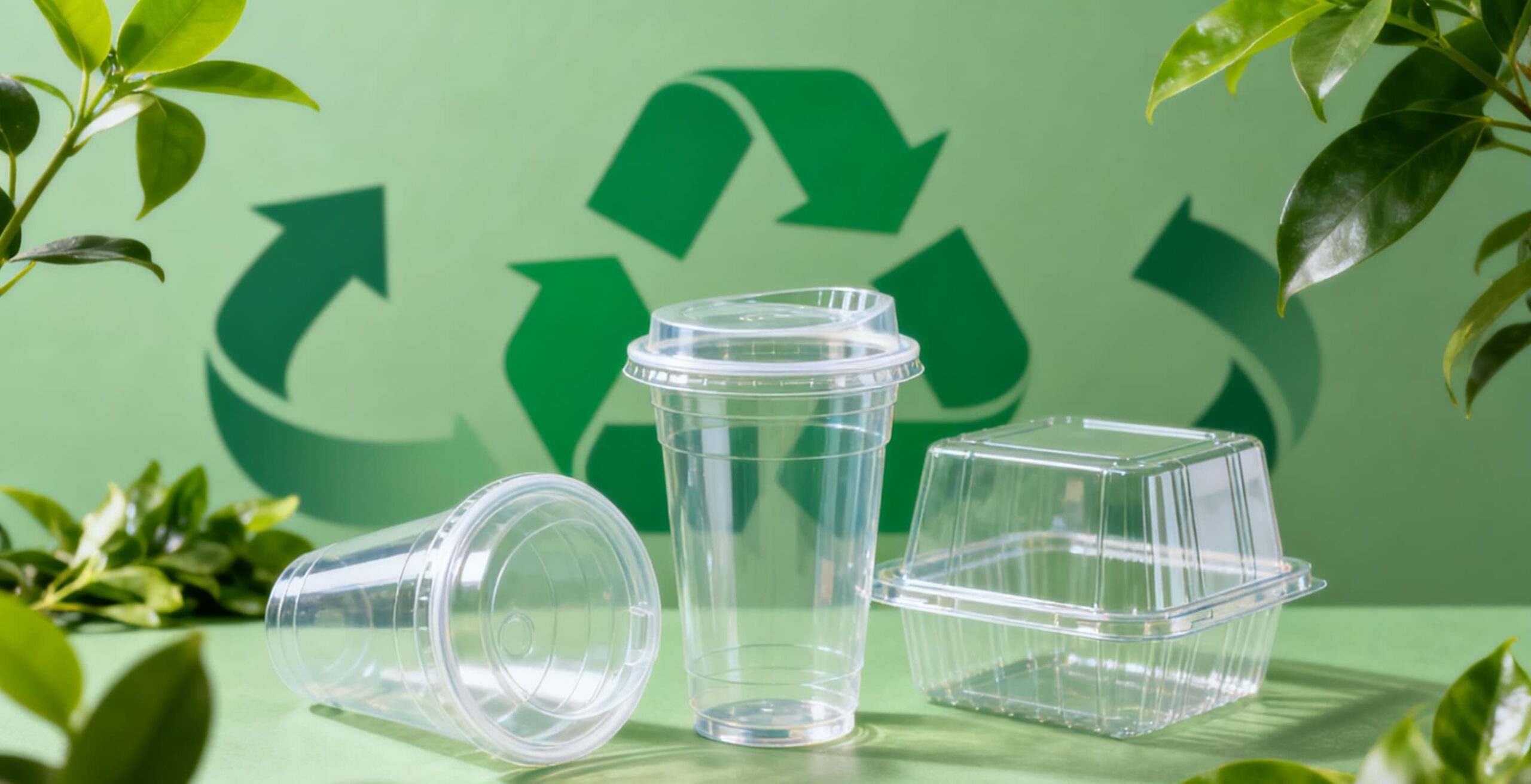
One of the most underestimated sustainability factors is packaging performance in real-world use.
Performance includes resistance to heat, moisture, deformation, stacking pressure, and handling variability. When packaging performs reliably, it protects food integrity and reduces waste. When it does not, environmental costs increase rapidly.
From DASHAN’s production experience, performance failures rarely come from material choice alone. They usually result from mismatches between design assumptions and actual use conditions—such as temperature fluctuations, extended holding times, or high-throughput foodservice operations.
From an environmental standpoint, preventing failure often has a greater impact than reducing material thickness or switching to a “greener” substrate.
Food Waste Often Outweighs Packaging Footprint
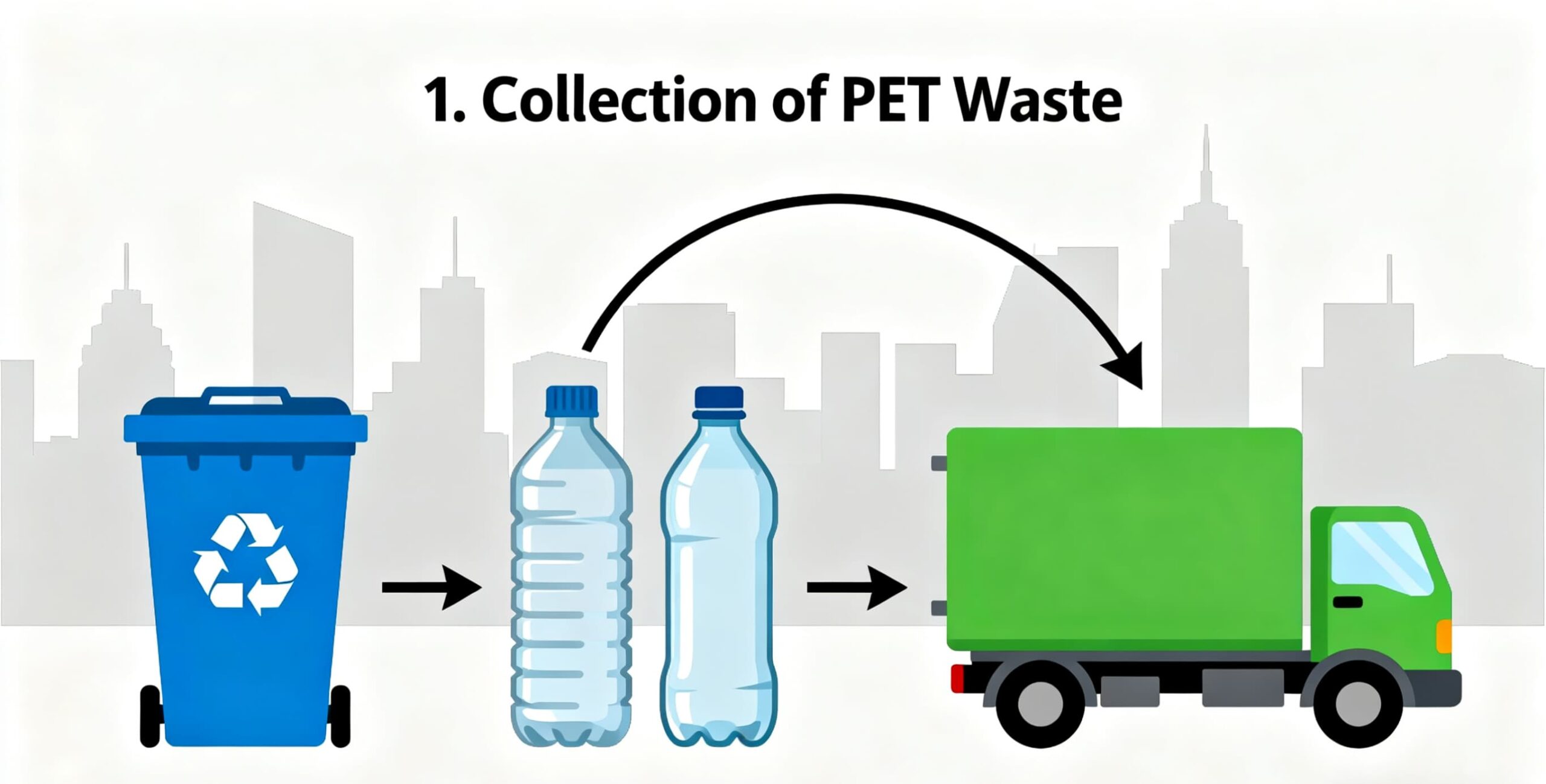
Food waste carries a significantly higher environmental burden than packaging. The water, energy, land use, and emissions embedded in food production far exceed those associated with packaging manufacturing.
Packaging decisions that increase the risk of leakage, deformation, or contamination indirectly amplify environmental damage through food loss.
This is why, in DASHAN’s product development process, packaging is evaluated not only on material sustainability metrics but also on its ability to maintain food quality throughout the supply chain. A slightly heavier or more robust package may deliver a lower overall environmental footprint if it consistently prevents waste.
Sustainable packaging cannot be separated from food protection performance.
Design Decisions Shape Environmental Efficiency
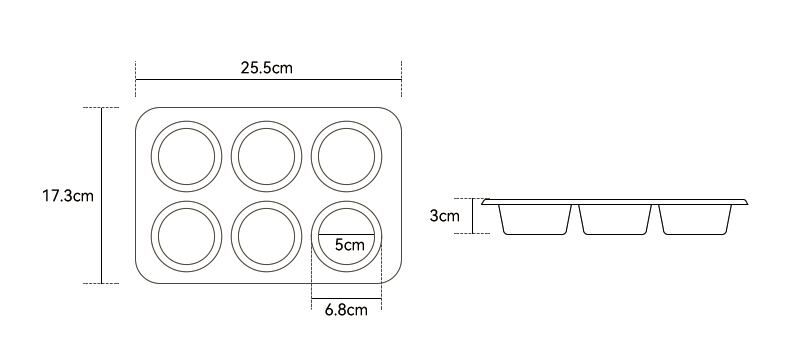
Packaging design directly affects material efficiency, logistics performance, and failure risk.
Structural geometry, wall thickness distribution, sealing design, and dimensional tolerances all influence how much material is used and how reliably packaging performs. Over-designed packaging wastes resources, while under-designed packaging creates hidden environmental costs through breakage and spoilage.
At DASHAN, design optimization focuses on achieving functional adequacy under realistic stress conditions rather than ideal laboratory assumptions. This approach reduces unnecessary material use while maintaining performance stability across diverse applications.
Design decisions, when grounded in real use scenarios, contribute more to environmental outcomes than material swaps alone.
Manufacturing Stability Is an Environmental Responsibility

Manufacturing consistency is often discussed in terms of quality, but it is equally an environmental issue.
Process instability—such as fluctuations in forming temperature, pressure, or tooling alignment—creates variability in packaging performance. Variability increases rejection rates, operational inefficiencies, and the likelihood of field failure.
From a sustainability perspective, every rejected or failed unit represents wasted material, energy, and labor. DASHAN’s emphasis on process control and production stability is not only about meeting specifications; it is about minimizing invisible environmental waste generated during manufacturing and use.
Sustainability depends as much on execution as it does on intent.
Infrastructure Determines Environmental Outcomes
Packaging decisions must align with real disposal infrastructure to deliver meaningful environmental benefits.
Recycling and composting systems vary widely across regions. A packaging format designed for composting may offer limited environmental value if composting facilities are unavailable. Similarly, recyclable materials may end up in landfill if sorting systems cannot handle contamination or mixed formats.
DASHAN works with buyers across different markets, which reinforces a key lesson: environmental outcomes depend on where packaging actually goes, not where it is intended to go.
Responsible packaging decisions consider local waste systems and realistic consumer behavior rather than idealized disposal scenarios.
Scenario-Based Thinking Leads to Better Environmental Results
Experienced buyers evaluate packaging sustainability through scenario-based thinking rather than isolated attributes. They consider questions such as:
-
How does this packaging perform during peak service periods?
-
What happens under temperature abuse or extended holding?
-
How will it be handled by staff under real operational pressure?
-
What are the environmental consequences if it fails?
This approach aligns with DASHAN’s development philosophy, where packaging is tested against realistic use conditions rather than theoretical benchmarks alone.
Environmental responsibility emerges when worst-case outcomes are minimized—not just when best-case assumptions look good on paper.
Sustainability Is an Outcome of Alignment

Sustainable packaging results from alignment across material selection, design, manufacturing, logistics, use conditions, and disposal infrastructure.
Misalignment at any stage undermines environmental performance, regardless of how sustainable the material appears. Alignment, by contrast, reduces waste, improves reliability, and delivers measurable environmental benefits.
Manufacturers with hands-on production and application experience—such as DASHAN—play a critical role in helping buyers navigate these trade-offs and avoid sustainability decisions driven by labels alone.
FAQ
1. Why doesn’t material choice alone determine sustainability?
Because environmental impact depends on how packaging performs in real use, how it is manufactured, transported, and ultimately disposed of—not just what it is made from.
2. How does packaging performance affect the environment?
Poor performance increases food waste, leakage, and secondary packaging needs, which often create a higher environmental burden than the packaging itself.
3. Is heavier packaging always less sustainable?
Not necessarily. Slightly heavier or more robust packaging can reduce food waste and failure rates, leading to a lower total environmental footprint.
4. How does manufacturing consistency relate to sustainability?
Stable production reduces defects, scrap, and variability, lowering material waste and energy consumption across the supply chain.
5. Why is disposal infrastructure so important?
Packaging can only be recycled or composted if local systems support it. Misalignment between packaging design and infrastructure often negates intended environmental benefits.
Conclusion
Packaging decisions shape environmental outcomes far more than materials alone. Sustainability is not embedded in packaging by default—it is created through informed, realistic decisions across the packaging lifecycle.
By focusing on performance reliability, design adequacy, manufacturing stability, and system compatibility, packaging can reduce total environmental impact rather than merely shifting it.
When sustainability is treated as an outcome of alignment rather than a marketing attribute, packaging becomes a practical contributor to environmental responsibility—one decision at a time.
References
-
European Commission – Packaging and Packaging Waste
https://environment.ec.europa.eu/topics/waste-and-recycling/packaging-waste_en -
U.S. EPA – Sustainable Materials Management
https://www.epa.gov/smm -
FAO – Global Food Losses and Food Waste
https://www.fao.org/food-loss-and-food-waste/en/ -
Ellen MacArthur Foundation – Packaging and the Circular Economy
https://ellenmacarthurfoundation.org/topics/plastics/overview -
ISO 18601: Packaging and the Environment
https://www.iso.org/standard/59984.html
Copyright Statement
© 2026 Dashan Packing. All rights reserved.
This article is an original work created by the Dashan Packing editorial team.
All text, data, and images are the result of our independent research, industry experience,
and product development insights. Reproduction or redistribution of any part of this content
without written permission is strictly prohibited.
Dashan Packing is committed to providing accurate, evidence-based information and
to upholding transparency, originality, and compliance with global intellectual property standards.