

Quick Summary
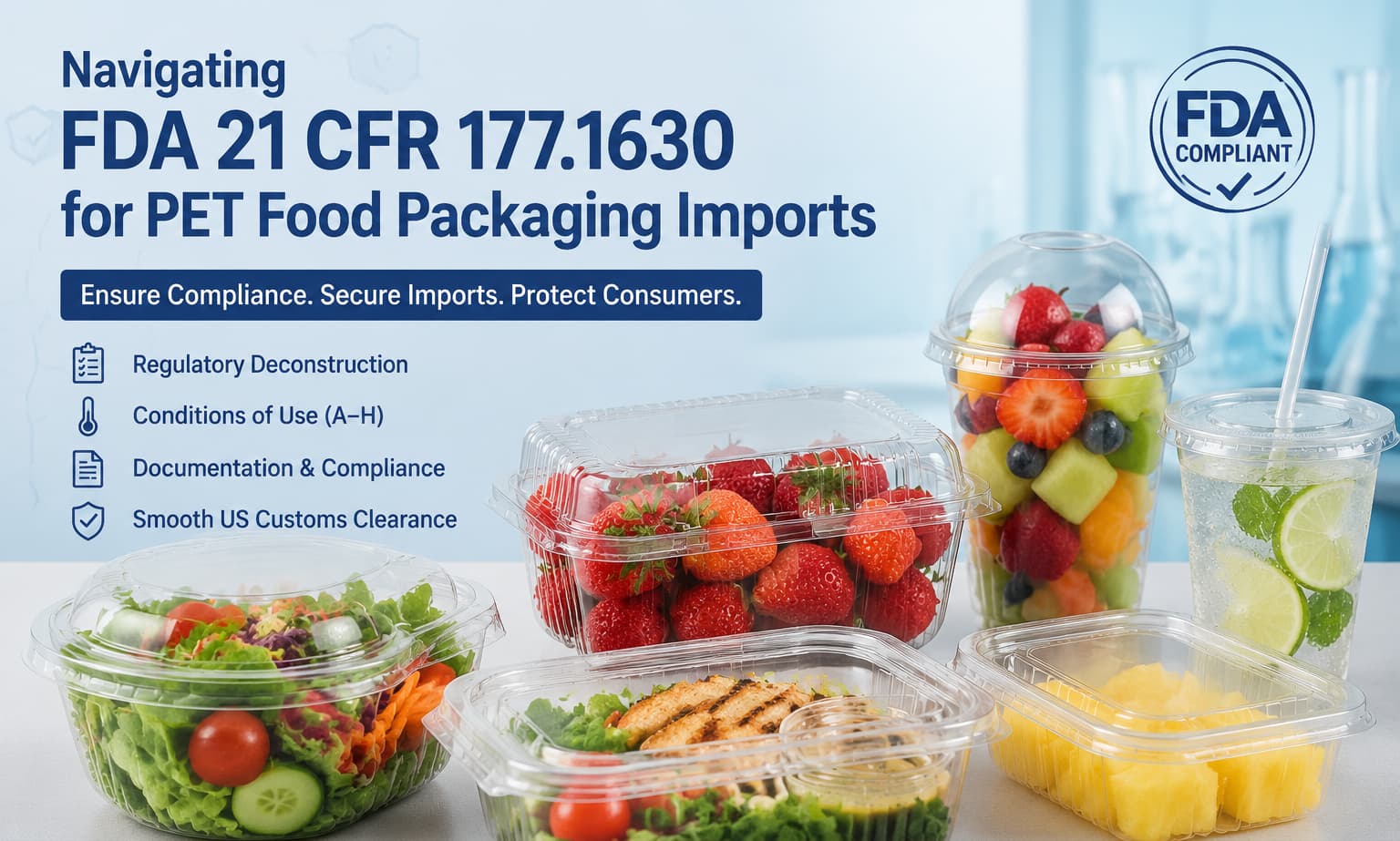
Importing PET food packaging into the United States requires careful attention to FDA 21 CFR 177.1630, the federal regulation governing polyethylene terephthalate (PET) materials intended for food contact. This article provides a detailed guide for importers, including extraction testing parameters, conditions of use, document control requirements, and securing US Customs clearance. By understanding these rules and working with compliant suppliers like DaShan, businesses can streamline imports, ensure safety, and protect their brand.
Deconstructing 21 CFR 177.1630 Regulations
The FDA regulation 21 CFR 177.1630 outlines strict criteria for PET materials that come into contact with food, ensuring that no harmful substances migrate into consumable products. PET is widely used for cups, trays, fruit and vegetable containers, bakery boxes, and other disposable food packaging. Compliance involves understanding permissible monomers and additives, maximum extraction limits, intended conditions of use, and documentation standards for import.
This regulation is critical because non-compliance can lead to shipment delays, product recalls, or fines, which can be costly for importers and manufacturers. Businesses must carefully review resin specifications, processing conditions, and testing reports before shipping to the US.
Industry Insight: PET packaging is increasingly popular due to its clarity, recyclability, and versatility, with the global PET packaging market projected to grow at 6–8% CAGR from 2024 to 2030, driven by demand for sustainable and safe food packaging solutions.
Our product highlight: [DaShan PET Cups, Trays, and Containers ]
High-quality PET food packaging designed to meet FDA 21 CFR 177.1630 standards, suitable for beverages, fruits, vegetables, and baked goods.
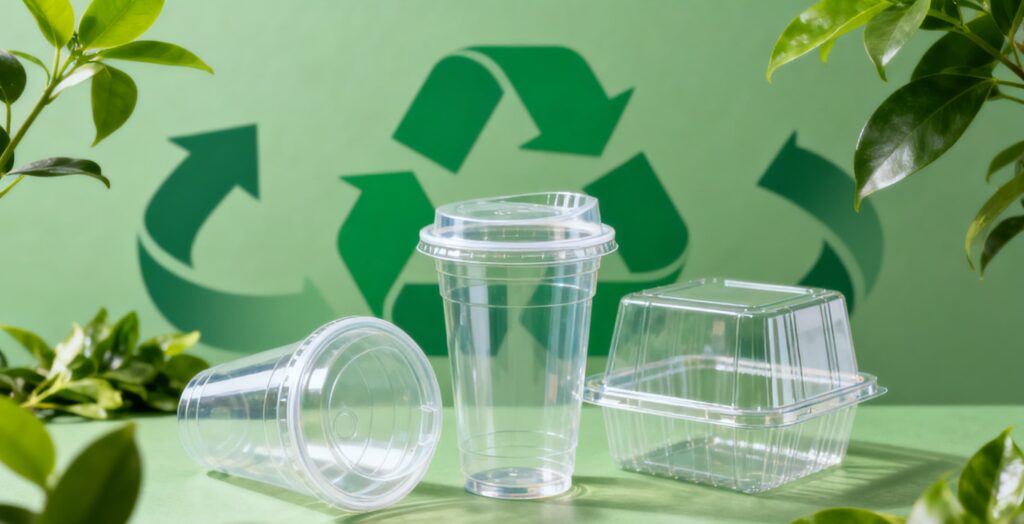
Extraction Testing Parameters for PET
Extraction testing is a cornerstone of 21 CFR 177.1630 compliance. It ensures that PET containers do not release harmful substances into food under real-world use conditions.
Key parameters include:
- Food Simulants: Water, 3% acetic acid, 10% ethanol, or other specified simulants are used depending on the type of food the container will hold.
- Temperature and Duration: Testing must replicate intended usage, from cold storage to reheating or hot meal packaging, ensuring safety under all conditions.
- Migration Limits: Total extractable substances must fall within FDA-specified limits, including volatile and non-volatile compounds.
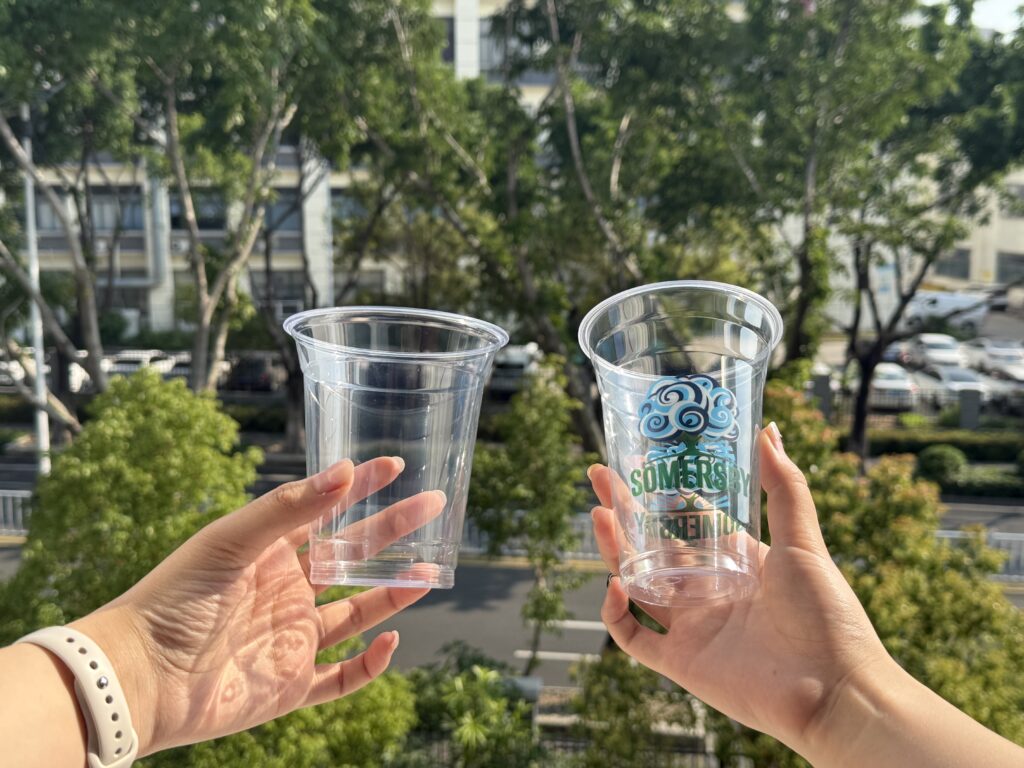
Case Study: A US-based smoothie company replaced non-compliant PET cups with DaShan FDA-compliant PET cups, resulting in zero regulatory warnings during import inspections and improved customer confidence due to verified safety testing.
Our product highlight: [DaShan PET Cups ]
Conditions of Use (Temperature Limits A-H)
21 CFR 177.1630 defines eight conditions of use, labeled A through H, that specify the temperature range and type of food contact for PET materials. Each condition correlates to real-world applications:
| Condition | Temperature / Use | Typical Applications |
|---|---|---|
| A | Below 40°C | Cold beverages, pre-cut fruits |
| B | Up to 66°C | Room temperature foods |
| C | Up to 82°C | Warm meals, hot drinks below boiling |
| D | Up to 100°C | Hot-prepared meals, reheatable foods |
| E | Up to 121°C | Sterilized or canned ready-to-eat meals |
| F | Freezing | Ice cream, frozen fruit, salads |
| G | Microwave reheating | Pre-packaged meals intended for microwaving |
| H | Extended high temperature | Industrial cooking or sterilization |
Selecting the correct condition ensures safety, compliance, and product integrity. For example, PET fruit containers intended for refrigerated storage would fall under Condition A, while PET cups for iced beverages are Condition F compliant.
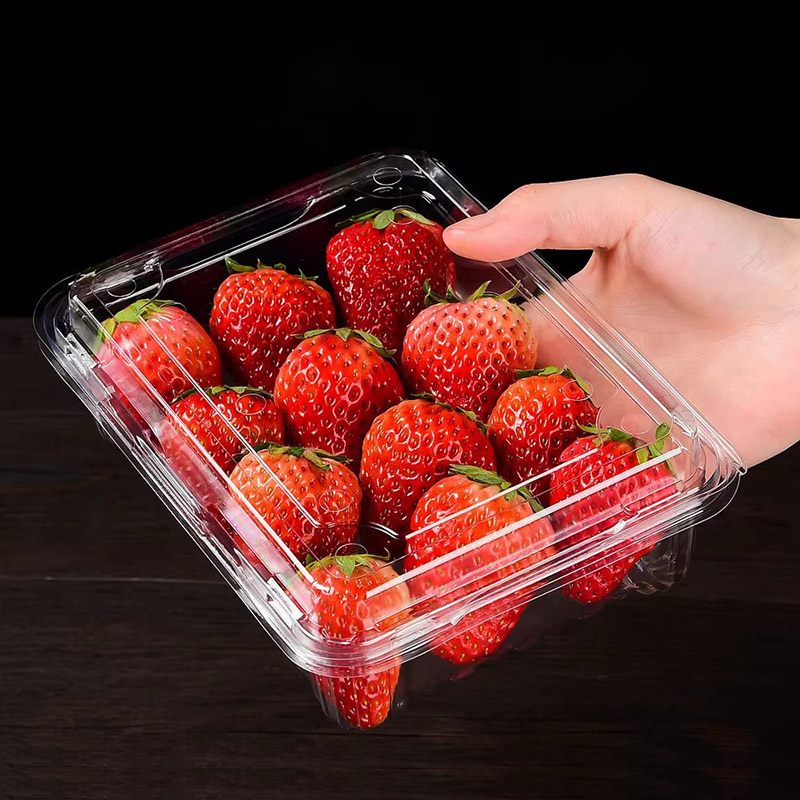
Our product highlight: [DaShan PET Fruit & Vegetable Containers ]
Document Control for Importers
Successful PET packaging imports depend on meticulous document control. Importers must maintain accurate records to satisfy FDA inspections and US Customs. Required documents include:
- Certificates of Compliance (CoC): Verify that PET materials meet 21 CFR 177.1630 standards.
- Material Specifications: Include resin type, monomer and additive information.
- Extraction Test Reports: Show compliance with FDA migration limits.
- Intended Use Declarations: Clearly specify how the container will be used (hot/cold, food type, temperature).
- Shipping & Customs Documents: Correctly label and declare PET packaging for US entry.
Maintaining digital and physical copies of these documents streamlines customs clearance and prevents costly delays or rejections.
Our product highlight: [DaShan PET Cups and Trays ]
All products are manufactured under FDA-compliant processes, with complete documentation ready for importers.
Micro Summary: Securing US Customs Clearance
To ensure smooth importation:
- Verify that PET products comply with FDA 21 CFR 177.1630 monomers and additives requirements.
- Conduct extraction testing in line with the intended conditions of use.
- Maintain comprehensive documentation, including CoCs, material specifications, and test reports.
- Label and declare products correctly in customs paperwork.
- Partner with a trusted supplier like DaShan to reduce regulatory risks and ensure quality.
Learn more about our company: [DaShan]
Contact us for compliance support and product inquiries: [Contact DaShan]
Conclusion
Navigating FDA 21 CFR 177.1630 is a critical step for any business importing PET food packaging into the United States. Compliance with this regulation ensures that products are safe for food contact, meet all extraction and migration limits, and perform reliably under their intended conditions of use. Understanding the temperature classifications (A–H), conducting proper extraction testing, and maintaining thorough documentation are all essential practices to prevent regulatory issues, delays at US Customs, or potential fines.
For modern foodservice, retail, and meal delivery businesses, choosing FDA-compliant PET packaging is more than just a legal requirement—it is a strategic decision. Products like PET cups, fruit and vegetable containers, and bakery boxes provide clarity, durability, and convenience, while supporting brand image and consumer confidence. Using multi-purpose, compliant PET containers helps businesses ensure that meals arrive fresh, separated, and visually appealing, whether for restaurants, catering services, supermarkets, or meal prep operations.
Partnering with a trusted supplier such as DaShan allows businesses to access high-quality, customizable PET products that meet all FDA requirements. DaShan not only provides a wide range of PET food packaging solutions but also offers comprehensive documentation, test reports, and compliance guidance, reducing risks for importers and helping streamline supply chains.
By adhering to FDA 21 CFR 177.1630 standards and choosing reliable packaging solutions, companies can combine regulatory compliance, operational efficiency, and sustainability, ensuring that their PET food packaging not only protects food and consumers but also strengthens brand reputation in a competitive market.
Frequently Asked Questions (FAQ) about DaShan PET and PP Food Packaging
Why is FDA 21 CFR 177.1630 important for PET food packaging imports?
FDA 21 CFR 177.1630 sets the legal standard for polyethylene terephthalate (PET) materials used in food contact applications, ensuring that no harmful substances migrate into food. For businesses importing PET cups, fruit trays, or bakery boxes into the US, compliance is critical. Following this regulation protects consumers, avoids customs delays, and prevents fines or product recalls. At DaShan, all PET packaging products are manufactured to comply fully with these standards, and documentation is provided for smooth import clearance.
What makes PP and PET food containers ideal for multi-compartment meals?
Both PP (polypropylene) and PET containers combine durability, safety, and recyclability. The PP transparent 5-compartment container is particularly popular because it keeps proteins, grains, vegetables, and sauces separate, maintaining freshness and presentation. PET containers, like fruit and bakery boxes, offer clarity for better product visibility, making them ideal for retail, catering, and meal delivery services. Using these materials ensures that food remains safe during storage and transport, while also supporting sustainable business practices.
How do extraction tests ensure PET container safety?
Extraction tests measure the potential for chemicals to migrate from PET into food under real-use conditions. FDA specifies testing with food simulants and temperature/time combinations corresponding to intended use, from cold storage to reheating. Proper testing demonstrates that the packaging meets regulatory limits. DaShan provides full test reports and compliance certificates with its PET packaging, ensuring importers have the required documentation for US customs and FDA verification.
Can DaShan’s containers be customized for different applications?
Yes. DaShan offers customization options for PET and PP containers, including compartment sizes, overall dimensions, and printing for branding. This allows businesses to tailor containers for meal prep, takeout, catering, or retail use. Custom designs help enhance brand image, provide the right portion sizes, and improve customer satisfaction, all while staying fully compliant with FDA regulations.
Are DaShan containers recyclable and environmentally friendly?
Absolutely. Both PP and PET containers are fully recyclable through standard collection streams. Using recyclable containers not only reduces landfill waste but also aligns with sustainability goals, which is increasingly important for modern consumers. DaShan ensures that all packaging is produced with environmentally responsible processes, giving businesses a practical way to adopt green practices without compromising product quality.
Where can I purchase DaShan PET and PP food containers?
Businesses can purchase directly through DaShan or contact the sales team for bulk orders, custom sizes, and branding options. Our team provides guidance on compliance, documentation, and product selection, making it easy for foodservice, retail, and catering businesses to adopt high-quality, FDA-compliant packaging.
References
- U.S. Food & Drug Administration (FDA), Title 21 CFR 177.1630 – Polyethylene Terephthalate (PET) for Food Contact, 2023. https://www.ecfr.gov/current/title-21/chapter-I/subchapter-B/part-177/subpart-B/section-177.1630
- FDA, Guidance for Industry: Food Contact Substances (FCS), 2022. https://www.fda.gov/food/packaging-food-contact-substances-fcs/guidance-industry-food-contact-substances
- Food Packaging Forum, Polyethylene Terephthalate (PET) in Food Packaging: Safety and Compliance, 2023. https://www.foodpackagingforum.org/material/polyethylene-terephthalate-pet
- Smithers Pira, Global Food Packaging Market Trends: Recyclable and Sustainable Materials, 2023. https://www.smithers.com/services/market-reports/packaging/global-food-packaging-market
Copyright Notice
© 2026 DaShan Packaging. All rights reserved.
All content in this article, including text, images, tables, and other materials, is the intellectual property of DaShan Packaging. No part of this publication may be reproduced, distributed, transmitted, or used in any form without prior written permission from DaShan Packaging.