
Quick Summary
Corn starch tableware is widely used as an eco-friendly alternative, but its real performance depends heavily on material formulation, manufacturing process, and application scenarios. Containers, cups, and plates made with corn starch behave very differently under heat, moisture, and load. Importers must evaluate real-use conditions, food contact compliance, and supplier expertise before ordering to avoid warping, leakage, and product failure.
A Practical Guide Covering Containers, Cups, Plates, and Cutlery
1. Introduction: Why Corn Starch Tableware Is Widely Used — and Widely Misunderstood
Over the past decade, corn starch–based tableware has become a popular alternative to conventional plastic food packaging. Driven by sustainability initiatives, plastic reduction regulations, and growing consumer awareness, importers are increasingly sourcing corn starch containers, cups, plates, and cutlery.
However, despite its “eco-friendly” image, corn starch tableware is also one of the most misunderstood categories in foodservice packaging. Products that appear similar on the surface can behave very differently in real-world use. Warping, cracking, leakage, and heat failure are common complaints—often discovered only after products reach the market.
This article is written specifically for importers and buyers who need to evaluate corn starch tableware before placing bulk orders. Rather than focusing on marketing claims, it explains how material composition, manufacturing processes, and application scenarios determine actual performance.
2. What Is Corn Starch Tableware, Really?
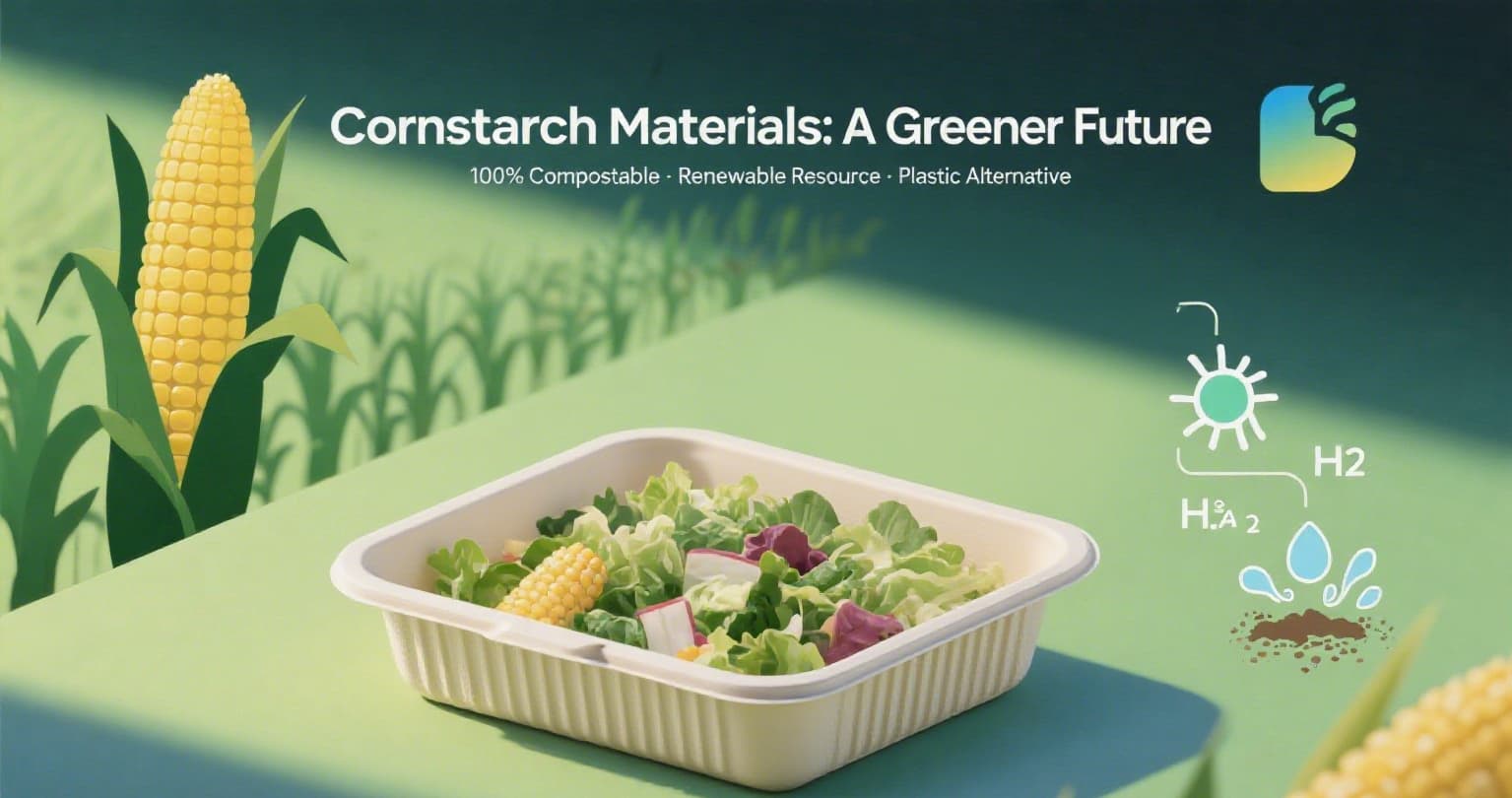
A common misconception is that corn starch tableware is made primarily from corn starch. In practice, corn starch alone cannot form a stable, functional food container.
In most commercial products, corn starch functions as:
-
A filler or modifier
-
A sustainability enhancer
-
A cost and appearance adjuster
It is rarely the primary structural material.
Common Material Systems
Corn starch tableware is typically produced using compound materials, such as:
-
Corn starch + PP (polypropylene)
Improved rigidity and heat resistance, but limited compostability. -
Corn starch + PBS or PBAT
Better flexibility and biodegradability, but more sensitive to heat and moisture. -
Corn starch + PLA
Higher bio-based content, but lower heat tolerance and impact strength.
Each formulation involves trade-offs between strength, heat resistance, surface feel, odor control, and processing stability. Importantly, a higher corn starch content does not automatically mean better performance or sustainability.
3. Manufacturing Processes for Corn Starch-Based Tableware
Material selection alone does not determine quality. Manufacturing process control plays an equally critical role.
Injection Molding
Commonly used for:
-
Cutlery
-
Cups
-
Rigid plates
Key risk factors:
-
Inconsistent melt flow
-
Poor mold temperature control
-
Internal stress leading to cracking
Thermoforming / Hot Pressing
Used for:
-
Food containers
-
Trays
-
Plates and bowls
Critical variables include:
-
Sheet thickness uniformity
-
Heating temperature
-
Cooling speed
-
Mold geometry
Even with the same material formulation, different factories can produce dramatically different results depending on tooling precision and process discipline.
4. Performance Differences by Product Category
Corn starch materials behave differently depending on the product type and usage scenario.
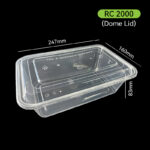
4.1 Corn Starch Food Containers & Boxes
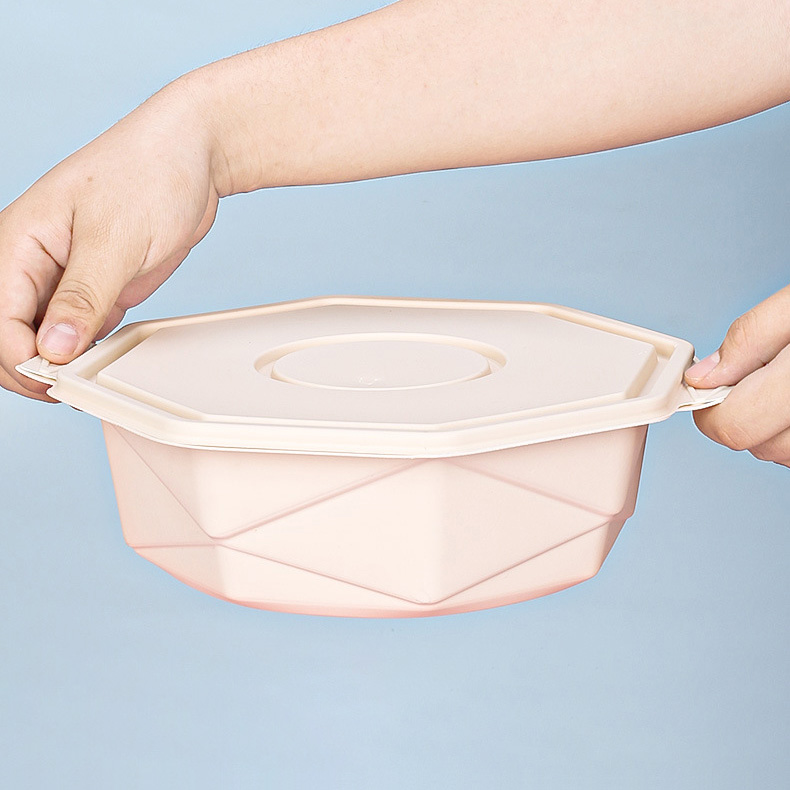
Key considerations:
-
Resistance to deformation under hot food
-
Oil and moisture barrier performance
-
Structural integrity during delivery and stacking
Common issues:
-
Warping when exposed to hot, oily meals
-
Softening during prolonged heat retention
-
Lid-fit instability
These risks increase significantly in takeaway and delivery applications.
4.2 Corn Starch Cups
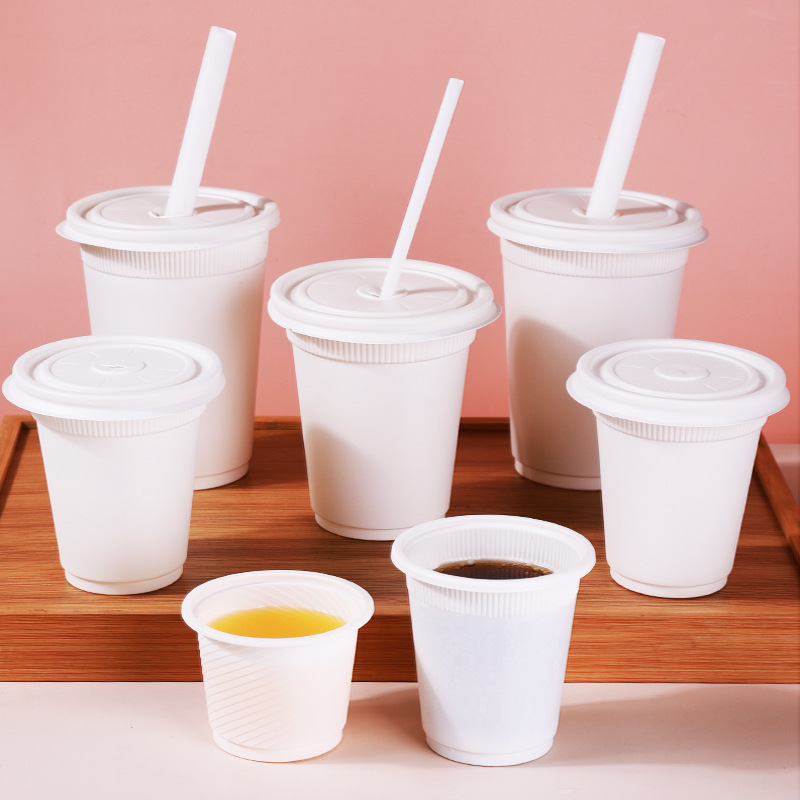
Cups are among the most failure-prone corn starch products.
Typical problems:
-
Deformation when filled with hot beverages
-
Sidewall collapse due to insufficient rigidity
-
Leakage at the bottom seam or rim
Corn starch cups are generally unsuitable for high-temperature drinks unless reinforced with appropriate polymer systems and wall thickness.
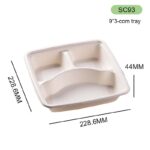
4.3 Corn Starch Plates & Bowls
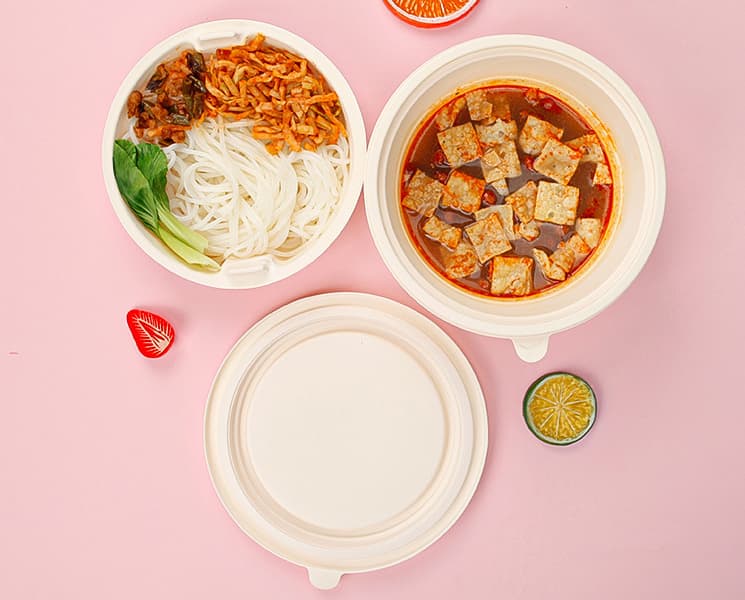
Performance depends on:
-
Load-bearing design
-
Moisture exposure duration
-
Plate thickness and rib structure
Common complaints include bending, cracking, or sagging when holding wet or heavy foods.
Typical Risk Overview
| Product Type | Common Problems | Key Risk Factors |
|---|---|---|
| Containers | Warping, oil leakage | Heat, oil content, wall design |
| Cups | Deformation, leakage | Hot liquids, thin walls |
| Plates | Bending, cracking | Load, moisture exposure |
5. Heat Resistance: Nominal Claims vs Real-World Use
Many suppliers advertise corn starch tableware as “heat-resistant,” but this claim often lacks context.
Important distinctions:
-
Short-term heat exposure vs continuous heat holding
-
Dry heat vs liquid heat
-
Laboratory tests vs real food applications
For example:
-
A container may tolerate brief hot filling but deform during delivery.
-
A cup may pass a static heat test but fail when handled.
Importers should always evaluate use conditions, not just nominal temperature ratings.
6. Food Contact Compliance & Safety Considerations
Environmental benefits do not replace food safety requirements.
Key compliance points include:
-
Approved raw materials for food contact
-
Overall and specific migration testing
-
Traceability of compound formulations
“Biodegradable” does not automatically mean “food-safe.” Importers remain responsible for ensuring compliance with applicable food contact regulations in their target markets.
7. Environmental Claims: Compostable vs Biodegradable
Corn starch tableware is often marketed using environmental terms that are frequently misunderstood.
Key distinctions:
-
Industrial compostability vs natural degradation
-
Controlled composting conditions vs landfill disposal
-
Timeframe and infrastructure dependency
Misuse of environmental claims can expose importers to regulatory scrutiny and reputational risk.
8. Common Mistakes Importers Make When Buying Corn Starch Tableware
Based on industry experience, frequent mistakes include:
-
Choosing products based solely on material name
-
Comparing prices without comparing formulations
-
Applying the same performance expectations across different product categories
-
Skipping real-use testing before mass orders
These errors often result in product failure after market launch.
9. How Experienced Manufacturers Reduce These Risks
Experienced manufacturers approach corn starch tableware development differently:
-
Application-driven material selection
-
Stable compound formulation control
-
Process optimization for each product type
-
Pre-production performance validation
This approach reduces variability and improves consistency across production batches.
10. How to Evaluate Corn Starch Tableware Before Ordering
Before placing an order, importers should confirm:
-
Intended food type and temperature
-
Duration of food contact
-
Delivery and stacking conditions
-
Material formulation transparency
-
Performance test results
-
Compliance documentation
A structured evaluation process significantly reduces post-shipment disputes.
FAQ
1. Is corn starch tableware fully made from corn starch?
No. Most commercial corn starch tableware uses corn starch as a filler or modifier combined with polymers such as PP, PLA, PBS, or PBAT. Pure corn starch cannot provide sufficient strength or stability for food packaging.
2. Can corn starch containers hold hot food safely?
It depends on the formulation and design. Some corn starch containers can handle short-term hot filling, but prolonged heat exposure, oily foods, or delivery conditions may cause warping or softening if the material system is not properly engineered.
3. Are corn starch cups suitable for hot drinks?
In many cases, no. Corn starch cups are prone to deformation and leakage when used for hot beverages unless reinforced with appropriate polymers and sufficient wall thickness. They are generally better suited for cold or room-temperature drinks.
4. Is corn starch tableware compostable?
Some products are industrially compostable under controlled conditions, while others are only partially biodegradable. Compostability depends on the full material formulation and available waste-processing infrastructure, not just the presence of corn starch.
5. What certifications should importers check before ordering?
Importers should request food contact compliance documentation, migration test reports, and material declarations relevant to their target market. Environmental claims should be supported by recognized standards rather than generic marketing terms.
6. Why do similar-looking corn starch products perform differently?
Differences in compound formulation, processing temperature, mold design, and quality control can lead to significant performance variation—even when products appear identical.
Conclusion: Corn Starch Tableware Is Not One-Size-Fits-All
Corn starch tableware can be a viable and responsible packaging solution—but only when material formulation, manufacturing process, and application scenario are properly aligned.
Successful sourcing requires moving beyond surface-level claims and focusing on real-world performance. The right product selection depends not on the name of the material, but on how it is engineered and used.
Call to Action
For importers evaluating corn starch containers, cups, plates, or cutlery, early technical discussion and application matching can prevent costly mistakes. Clarifying usage scenarios and performance expectations before ordering is the most effective way to ensure long-term success.
References
-
European Commission
Food Contact Materials (FCM) – Overview and Regulations
https://food.ec.europa.eu/safety/chemical-safety/food-contact-materials_en -
U.S. Food and Drug Administration (FDA)
Overview of Food Contact Substances
https://www.fda.gov/food/food-ingredients-packaging/food-contact-substances-fcs -
European Bioplastics
Bioplastics Materials – PLA, Starch Blends, PBS, PBAT
https://www.european-bioplastics.org/bioplastics/materials/ -
ASTM International
ASTM D6400 – Standard Specification for Compostable Plastics
https://www.astm.org/d6400 -
PlasticsEurope
Plastics and Food Contact Applications
https://plasticseurope.org/knowledge-hub/plastics-and-food-contact/ -
European Food Safety Authority (EFSA)
Guidance on Migration Testing for Food Contact Materials
https://www.efsa.europa.eu/en/applications/food-contact-materials -
OECD
Considerations on Biodegradation and Environmental Claims
https://www.oecd.org/environment/
Copyright Statement
© 2026 Dashan Packing. All rights reserved.
This article is an original work created by the Dashan Packing editorial team.
All text, data, and images are the result of our independent research, industry experience,
and product development insights. Reproduction or redistribution of any part of this content
without written permission is strictly prohibited.
Dashan Packing is committed to providing accurate, evidence-based information and
to upholding transparency, originality, and compliance with global intellectual property standards.