
Quick Summary
Compostable cups are often promoted as an eco-friendly alternative, but real-world performance, disposal infrastructure, and regulatory limits are frequently overlooked. This article explains what compostable cups truly are, where they work, where they fail, and why experienced buyers approach them with caution rather than assumptions.
Compostable cups are often presented as the “future-proof” solution for foodservice brands under sustainability pressure. On paper, they appear to solve everything: plastic bans, environmental concerns, and consumer perception.
In reality, compostable cups are one of the most misunderstood and frequently misapplied packaging options in today’s market.
What most suppliers don’t tell you is not necessarily malicious—it is simply inconvenient. This article explains what compostable cups really are, where they work, where they fail, and why many experienced buyers approach them with caution rather than enthusiasm.
1. Why Compostable Cups Are Suddenly Everywhere
Over the past few years, compostable cups have gained traction for three main reasons:
-
Growing regulatory pressure on single-use plastics
-
Brand commitments to sustainability and ESG reporting
-
Consumer-facing narratives that equate “compostable” with “eco-friendly”
For many buyers, compostable cups are chosen before technical questions are asked. The decision is often driven by marketing, not operations. This gap between expectation and performance is where most problems begin.
2. What “Compostable” Actually Means — and What It Does Not
One of the most common misunderstandings is treating compostable as a catch-all environmental term.
In reality:
-
Compostable ≠ biodegradable
-
Compostable ≠ recyclable
-
Compostable ≠ suitable for all beverages
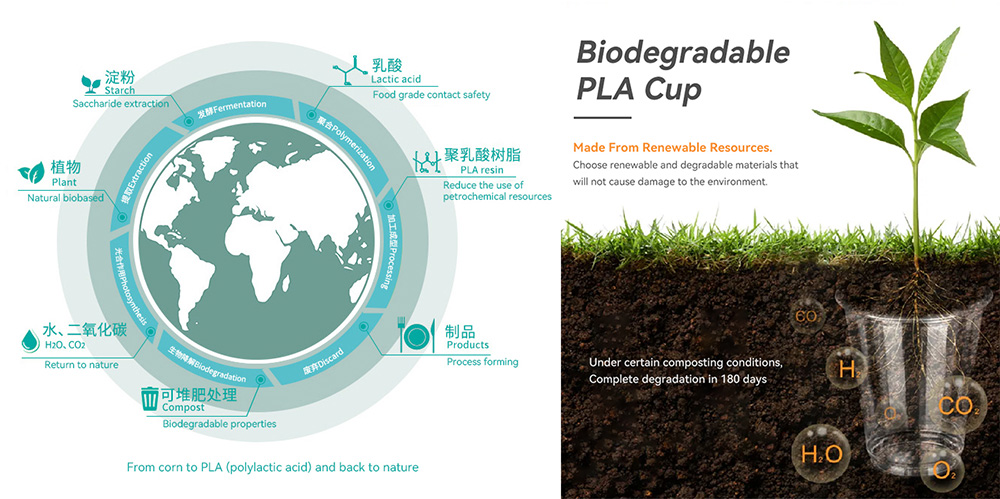
Most compostable cups on the market are certified under standards such as ASTM D6400 or D6868, which apply specifically to industrial composting conditions. These conditions require controlled temperature, humidity, and microbial activity—conditions that do not exist in landfills or standard recycling systems.
In other words, a compostable cup is only compostable if it reaches the correct facility, which is far from guaranteed in most regions.
3. Common Materials Used in Compostable Cups
PLA-Based Cups
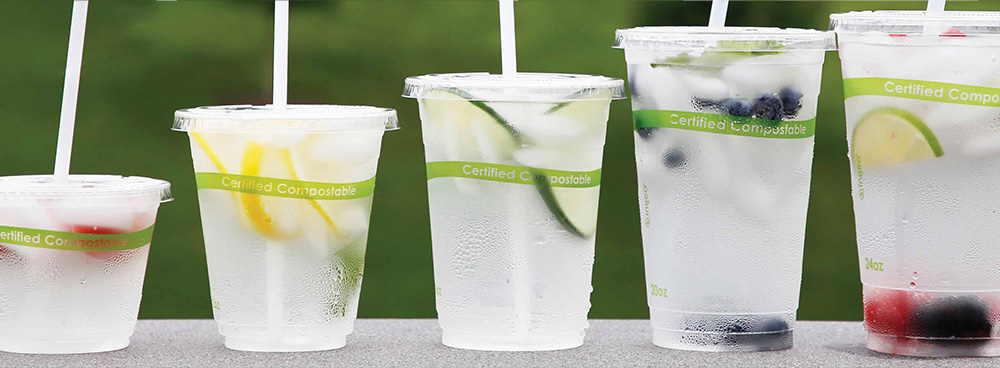
PLA (polylactic acid) is the most widely used material for compostable clear cups.
Advantages:
-
Plant-based origin
-
Transparent appearance similar to PET
-
Recognized compostable certifications
Limitations suppliers rarely emphasize:
-
Low heat resistance (often softens above ~45–50°C)
-
Structural deformation under load
-
Limited tolerance for long holding times
PLA performs best in cold beverage, short-use scenarios. Outside of that window, performance issues are common.
Paper Cups with Compostable Coatings
These cups combine paperboard with a bio-based lining.
Key trade-offs:
-
Better heat tolerance than PLA
-
Reduced recyclability due to coatings
-
Compostability depends on coating thickness and composition
Many buyers assume paper automatically equals sustainability. In practice, coated paper cups are often neither recyclable nor effectively composted.
4. Performance Issues Most Suppliers Downplay
Suppliers tend to focus on certifications and material names, while operational issues receive far less attention.
Common real-world problems include:
-
Warping or softening during peak service hours
-
Leakage after extended contact with liquids
-
Poor lid fit, leading to spills during takeaway
-
Stacking deformation in high-volume operations
At DASHAN, this performance gap is something we often see when clients bring compostable cup samples for evaluation after experiencing failures in actual use. In most cases, the cups technically meet compostability standards—but fail operational expectations.
5. Compostable Cups in Real Use Scenarios

Cold Drinks
This is where compostable cups perform best, especially for:
-
Iced beverages
-
Short holding times
-
Controlled indoor environments
Even here, condensation and rigidity loss can still affect user experience.
Hot Drinks
Hot beverages remain one of the most problematic applications for compostable cups. Heat softening, deformation, and safety concerns are common, especially during peak service.
Delivery and Takeaway
Transportation adds pressure, temperature fluctuation, and stacking forces. Compostable cups are far less forgiving than PP or PET in these scenarios.
6. Where Compostable Cups Actually End Up
One uncomfortable truth:
Most compostable cups do not end up in composting facilities.
In the U.S., industrial composting infrastructure is unevenly distributed. In many regions:
-
Compostable cups are landfilled
-
Or contaminate recycling streams
-
Or are rejected due to food residue
Some municipalities have even begun scrutinizing compostable claims due to system conflicts.
7. Compliance, Claims, and Legal Risk
Environmental claims are increasingly regulated.
Under FTC Green Guides, compostable claims must be:
-
Accurate
-
Clearly qualified
-
Contextually appropriate to local disposal infrastructure
Overstating compostability can expose brands to:
-
Regulatory scrutiny
-
Consumer backlash
-
Contractual disputes with retailers
This is one reason experienced manufacturers, including DASHAN, tend to frame compostable options carefully—emphasizing application suitability rather than blanket claims.
8. Cost vs Reality: Is Compostable Always the Better Choice?
Compostable cups typically come with:
-
Higher unit prices
-
Higher failure risk
-
More operational constraints
When failure rates, replacement costs, and customer complaints are factored in, the total cost often exceeds that of well-designed PP or RPET solutions—especially in high-volume operations.
Sustainability goals are important, but they need to align with functional reality, not marketing assumptions.
9. How Experienced Buyers Evaluate Compostable Cups
Seasoned buyers approach compostable cups differently:
-
They start with use scenarios, not material labels
-
They test under real conditions, not lab assumptions
-
They treat compostable as one option among many, not a universal solution
At DASHAN, our material evaluations typically begin with questions like:
-
How long will the beverage be held?
-
Will the cup be sealed, stacked, or transported?
-
What failure rate is operationally acceptable?
Only then does material selection make sense.
10. Key Takeaways: What Most Suppliers Don’t Say
-
Compostable cups are not a universal replacement for plastic cups
-
Certification does not equal real-world suitability
-
Infrastructure matters as much as materials
-
Transparency beats green marketing every time
For many brands, the most sustainable decision is not choosing compostable cups blindly—but choosing the right packaging for the right application, even if that answer is less fashionable.
FAQ
1. Are compostable cups better than plastic cups?
Not always. Compostable cups work only in specific scenarios and often have lower heat resistance and structural strength than plastic alternatives.
2. Can compostable cups be used for hot drinks?
Most compostable cups, especially PLA-based ones, are not suitable for high-temperature beverages due to softening and deformation risks.
3. Are compostable cups recyclable?
No. Compostable cups should not be placed in recycling streams and can contaminate recycling systems.
4. Do compostable cups actually get composted in the U.S.?
In many regions, compostable cups are landfilled due to limited industrial composting infrastructure.
5. What certifications apply to compostable cups?
Common standards include ASTM D6400 and ASTM D6868, which apply to industrial composting conditions only.
6. Is paper cup packaging always more sustainable?
Not necessarily. Many paper cups use compostable or plastic linings that reduce recyclability and complicate waste processing.
7. How should buyers evaluate compostable cup options?
By starting with real use scenarios, testing under operational conditions, and understanding local disposal capabilities before choosing materials.
Conclusion
Compostable cups are not inherently good or bad—they are highly context-dependent. While they can work well in specific cold-drink, short-use scenarios with proper composting access, they often fail when expectations exceed material and infrastructure realities.
What most suppliers do not explain is that compostability is not a guarantee of performance, sustainability, or compliance in real operations. For brands and importers, the most responsible choice is not chasing labels, but selecting packaging based on actual use conditions, failure tolerance, and local waste systems. In many cases, transparency and practicality deliver better outcomes than fashionable claims.
References
-
U.S. FDA – Food Contact Materials
https://www.fda.gov/food/chemical-contaminants-pesticides/food-contact-materials -
FTC Green Guides – Environmental Marketing Claims
https://www.ftc.gov/business-guidance/resources/green-guides -
ASTM International – Compostable Plastics Standards
https://www.astm.org/Standards/D6400.htm
https://www.astm.org/Standards/D6868.htm -
U.S. EPA – Composting and Organic Materials
https://www.epa.gov/sustainable-management-food/composting -
Packaging Europe – Compostable Packaging Insights
https://packagingeurope.com
Copyright Statement
© 2026 Dashan Packing. All rights reserved.
This article is an original work created by the Dashan Packing editorial team.
All text, data, and images are the result of our independent research, industry experience,
and product development insights. Reproduction or redistribution of any part of this content
without written permission is strictly prohibited.
Dashan Packing is committed to providing accurate, evidence-based information and
to upholding transparency, originality, and compliance with global intellectual property standards.